What Topaz Is
Topaz is an aluminium silicate containing fluorine and hydroxyl, and it is one of the most misunderstood gemstones in the trade — partly because for centuries the name was applied to almost any yellow stone, and partly because the material most people encounter today is not really representative of the species.
Two facts govern everything below.
The first is that topaz is hard but cleavable. At 8 on the Mohs scale it sits above quartz, tourmaline, emerald and garnet, and scratches very little. But it has perfect basal cleavage — a plane along which the crystal will split cleanly if struck in the wrong direction with enough force. Hardness and toughness are different properties, and topaz is a textbook demonstration of the difference.
The second is that the topaz market is really two markets. There is inexpensive treated blue topaz, available clean and enormous for very little money. And there is naturally coloured topaz — imperial, pink, sherry — which is rare, untreated and priced in a different league. They share a name and almost nothing else.
Blue Topaz, and Where the Colour Comes From
Natural blue topaz exists. It is very pale, and it is uncommon.
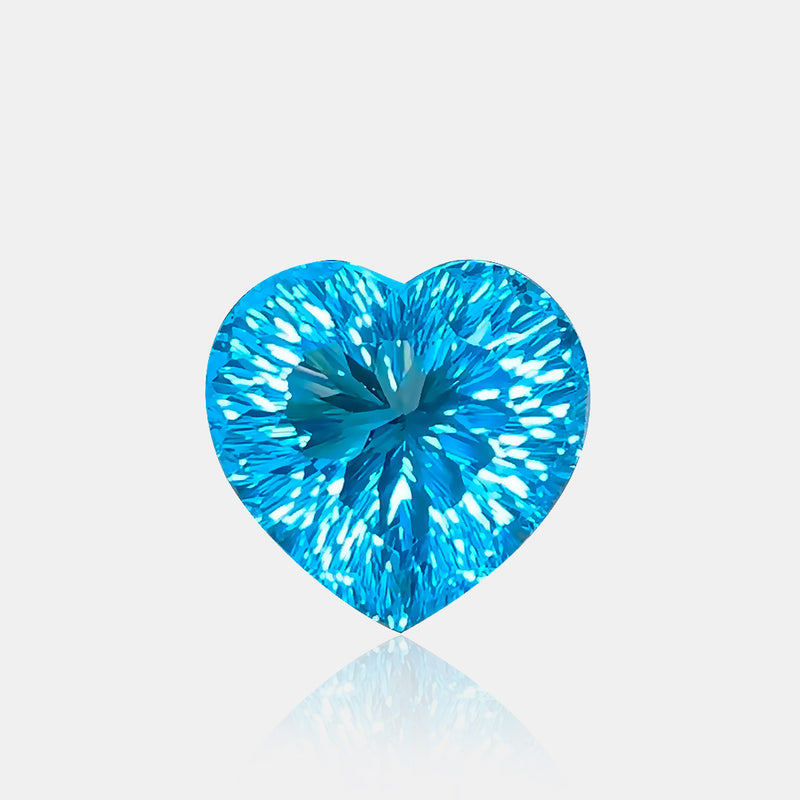
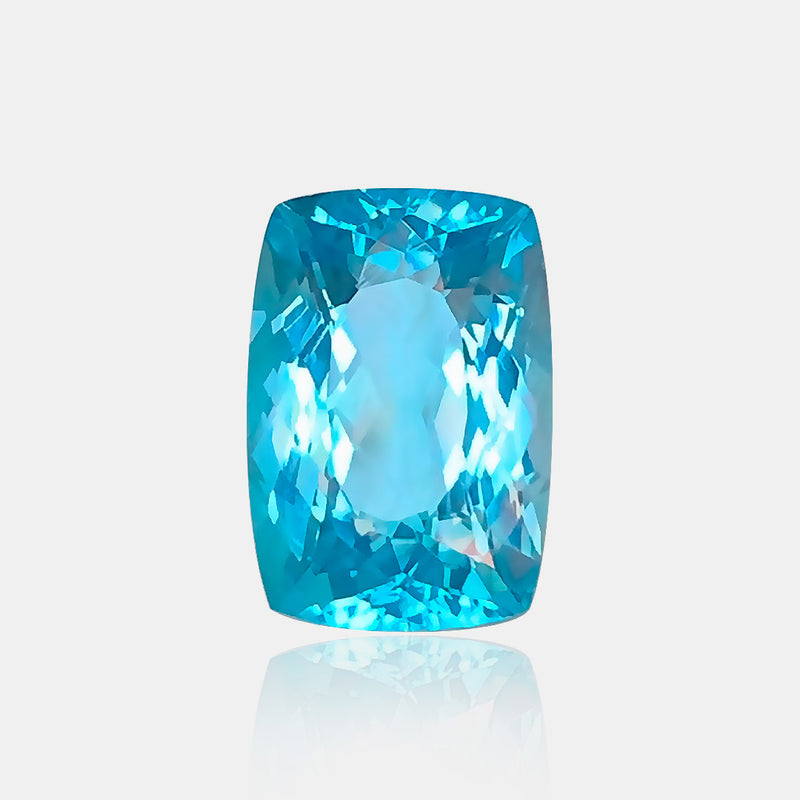
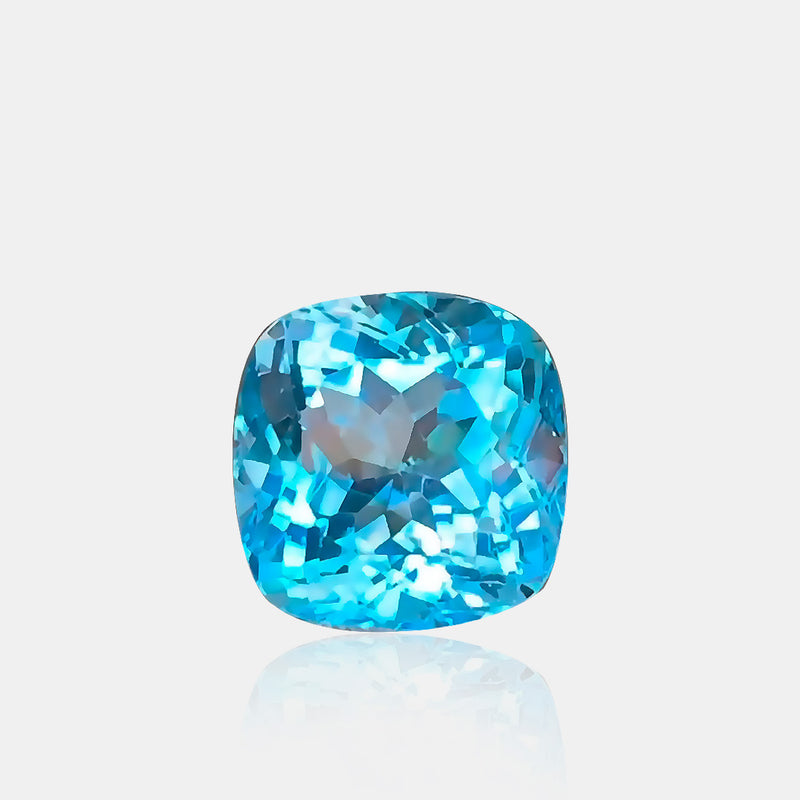
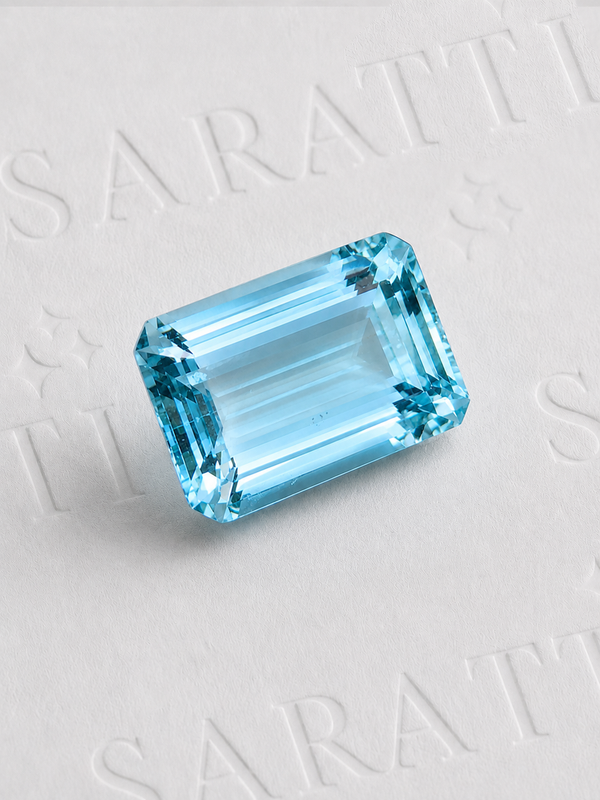
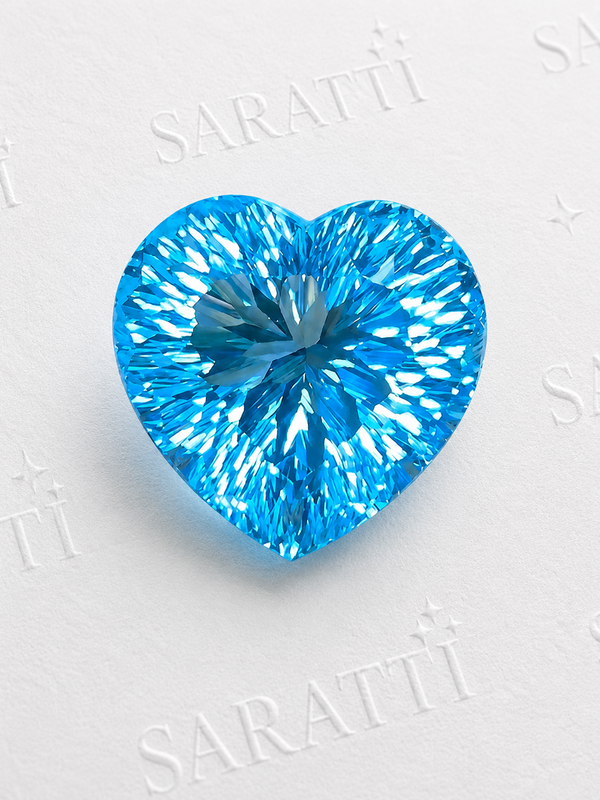
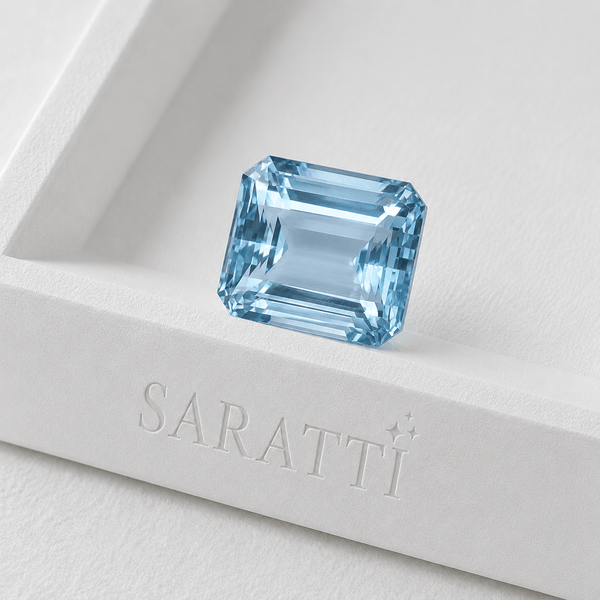
Essentially all the blue topaz on the market — the sky blue, Swiss blue and London blue you will see everywhere — began as colourless material and was irradiated and then heated to produce colour. The process was commercialised in the 1970s and transformed the stone from a curiosity into one of the highest-volume gemstones in the world.
The trade names describe intensity, not origin:
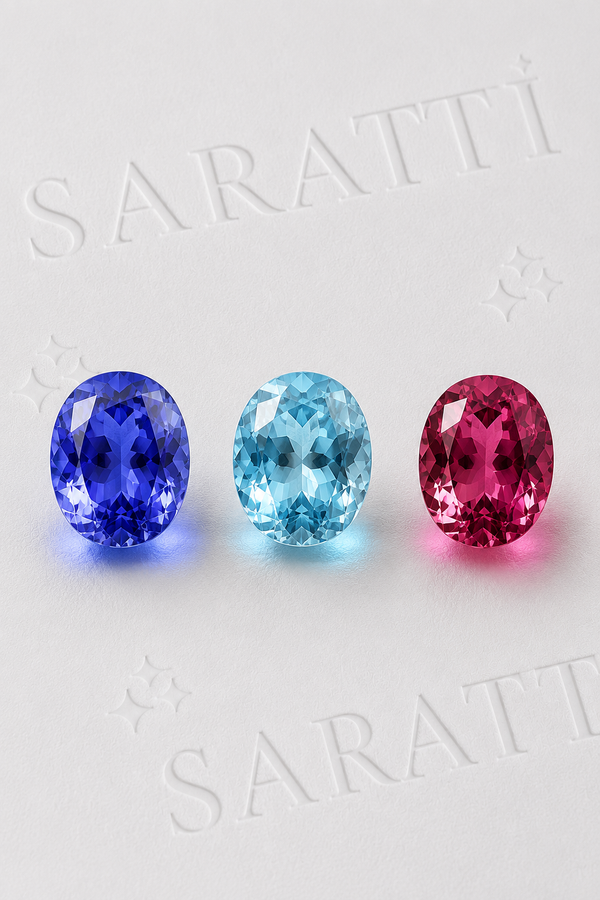
Sky blue — the palest, a soft light blue. Swiss blue — a bright, vivid medium blue. The most popular. London blue — the deepest, with a slightly steely or inky cast.
All three come from the same process controlled to different degrees. The colour is permanent and stable in normal wear, and irradiated topaz is held for a period before sale until residual radioactivity has decayed to levels regulators consider safe.
None of this makes blue topaz a lesser stone, but it should be understood for what it is: a treated material available in essentially unlimited quantity, which is why a flawless twenty-carat blue topaz costs a fraction of a one-carat sapphire. Buy it for size, clarity and colour at a price nothing else can match — not as a rarity.
It is also frequently confused with aquamarine, and the two are separated easily by a gemmologist. Our note on aquamarine versus blue topaz sets out the differences.
Imperial Topaz, and Natural Colour
At the other end of the species sits the material that made topaz's reputation.
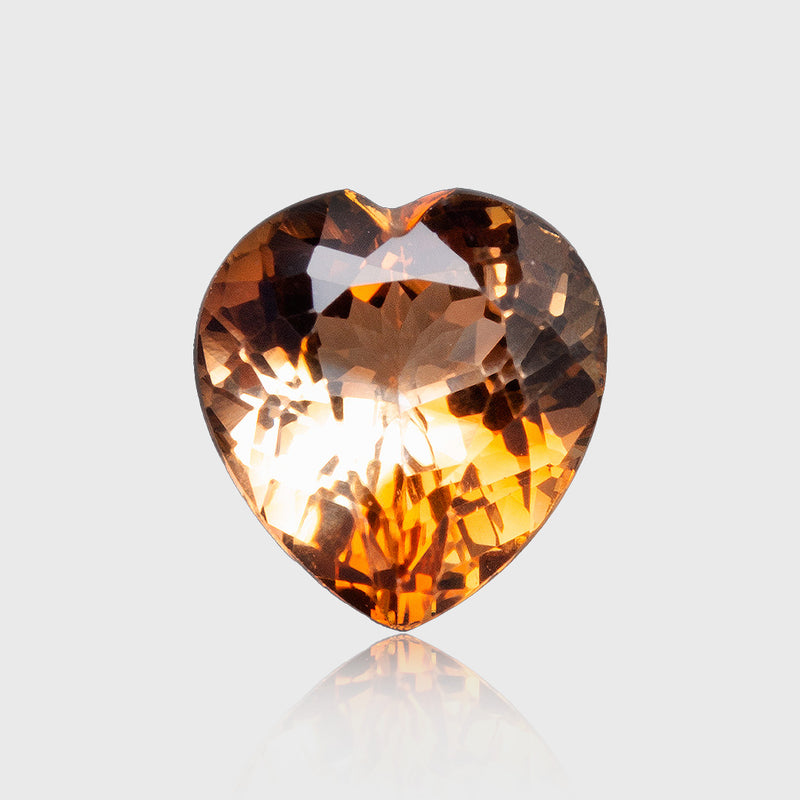
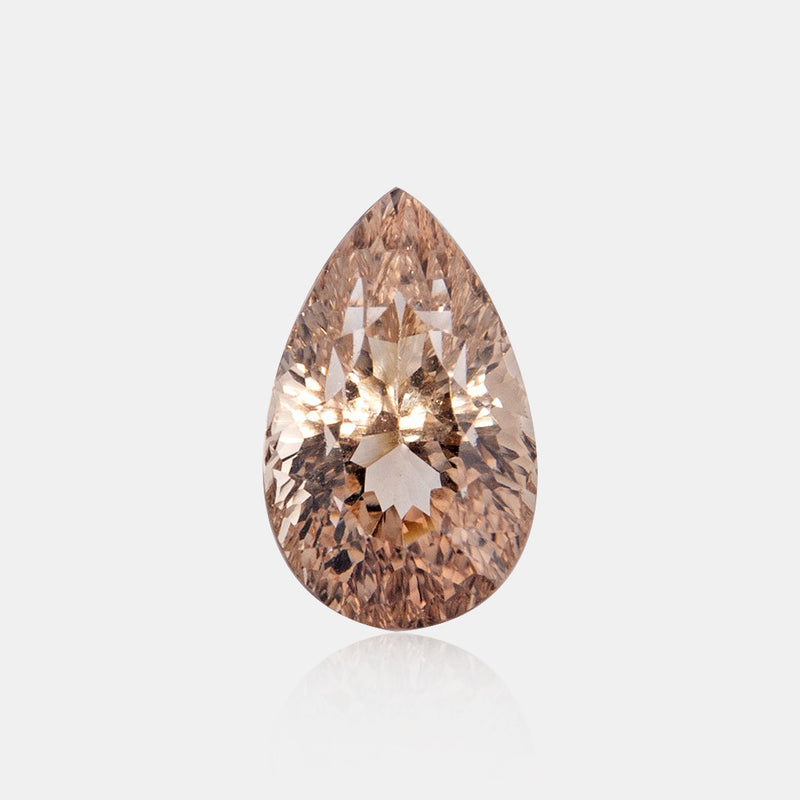
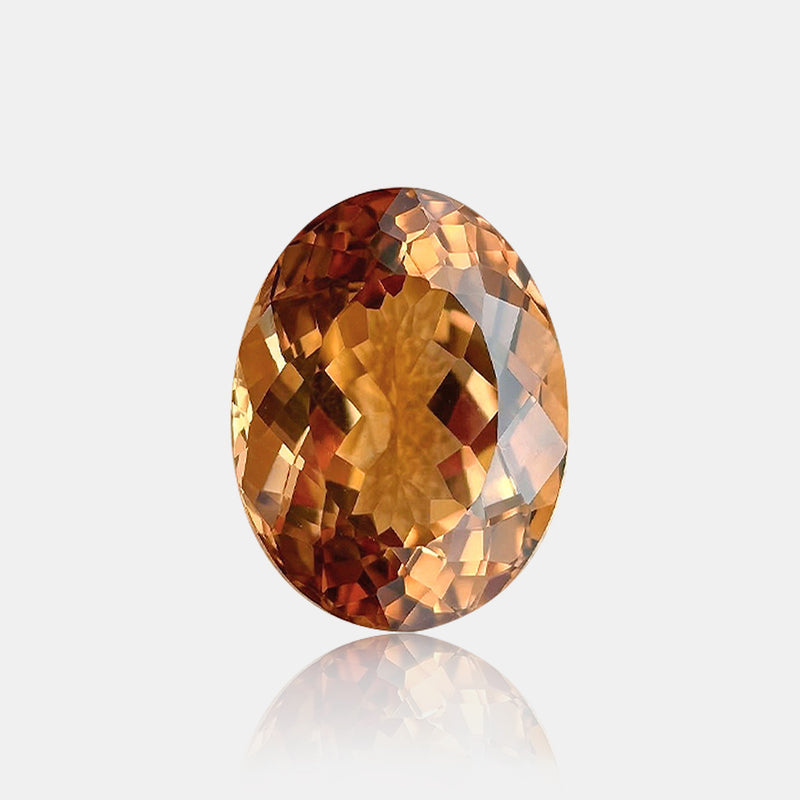
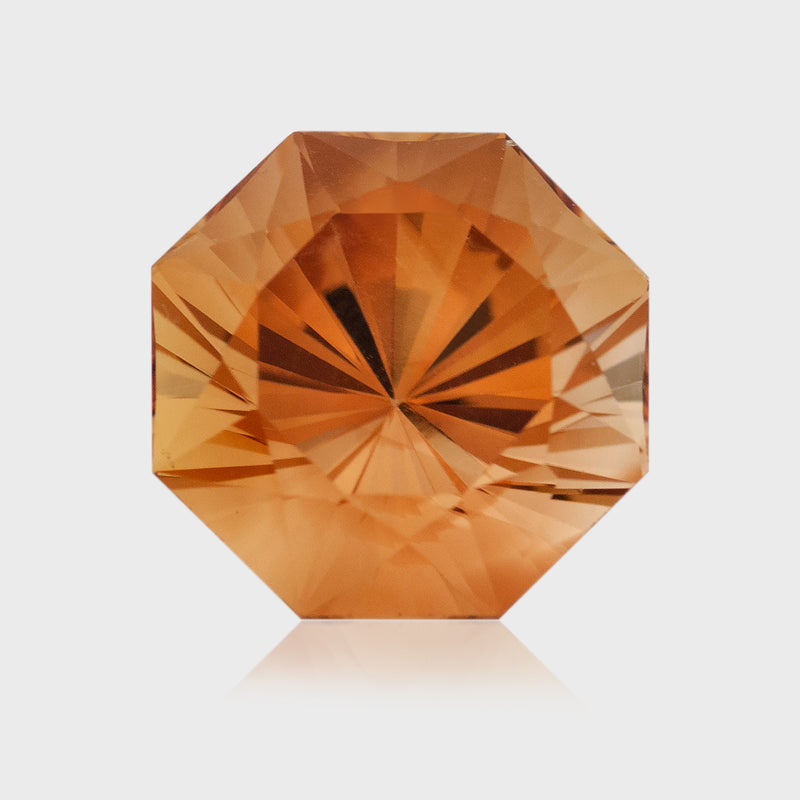
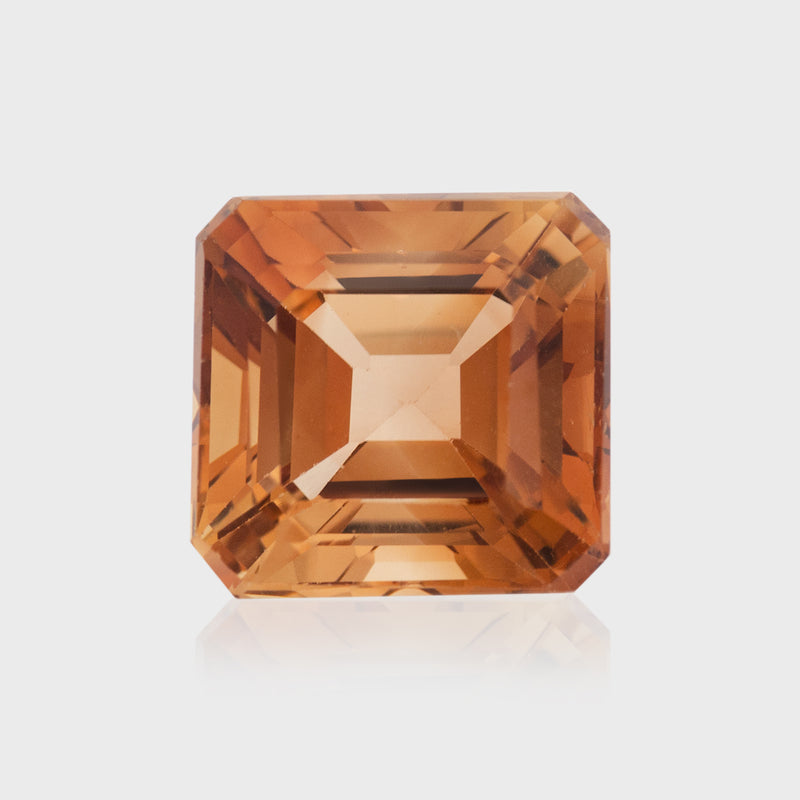
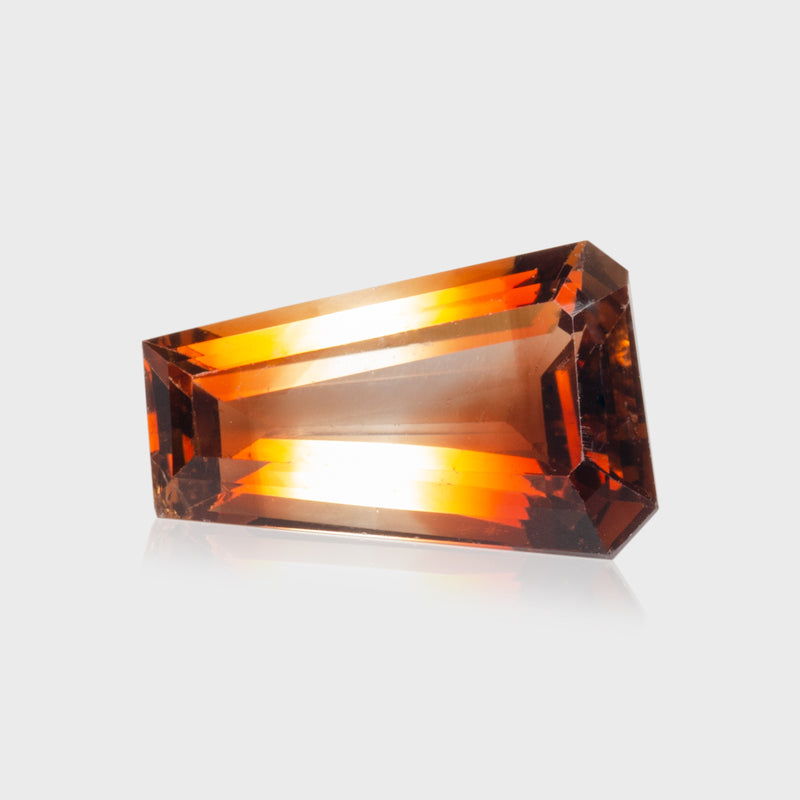
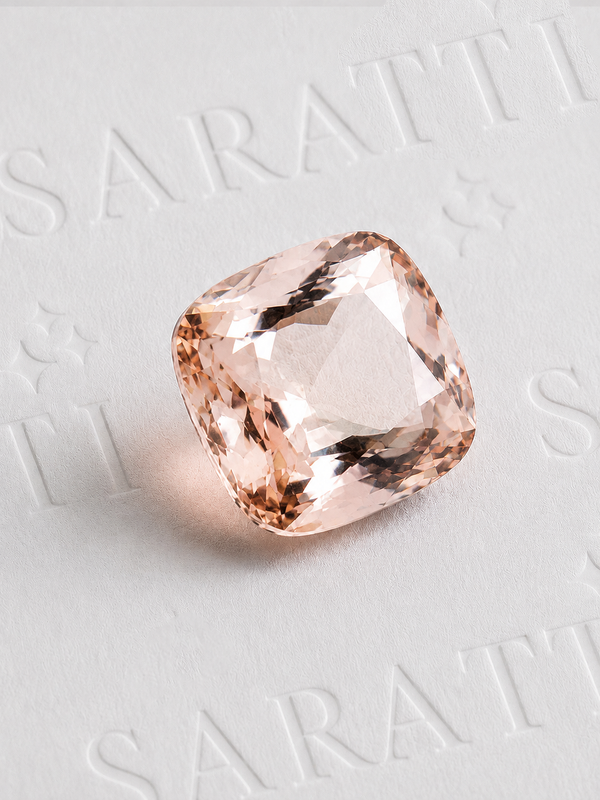
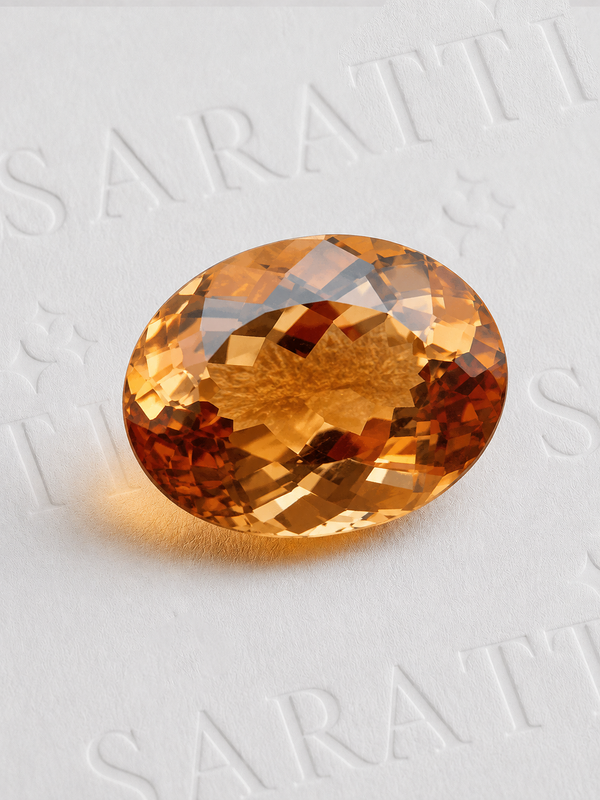
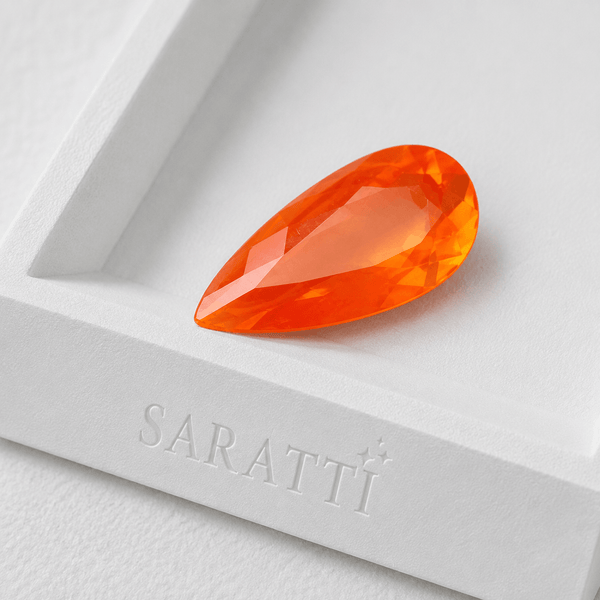
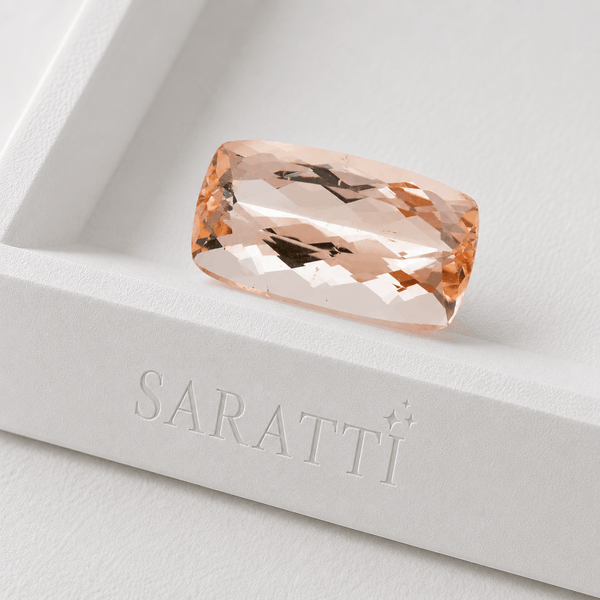
Imperial topaz is the pinkish-orange to orange-red variety, sometimes described as sherry or peach, and its colour is natural rather than treated. The historic source is Ouro Preto in Minas Gerais, Brazil, which has produced it for more than two centuries. The name is generally attributed to nineteenth-century Russian ownership of the Ural deposits, where the pinkish stones were reserved for the imperial family.
Fine imperial topaz is genuinely rare, particularly with a distinct pink component, and it is priced accordingly — a different market from blue topaz by orders of magnitude. It has its own collection here.
Pink topaz occurs naturally and is rare. Some pink material on the market is heat-treated from yellow or brown stones, and that should be disclosed.
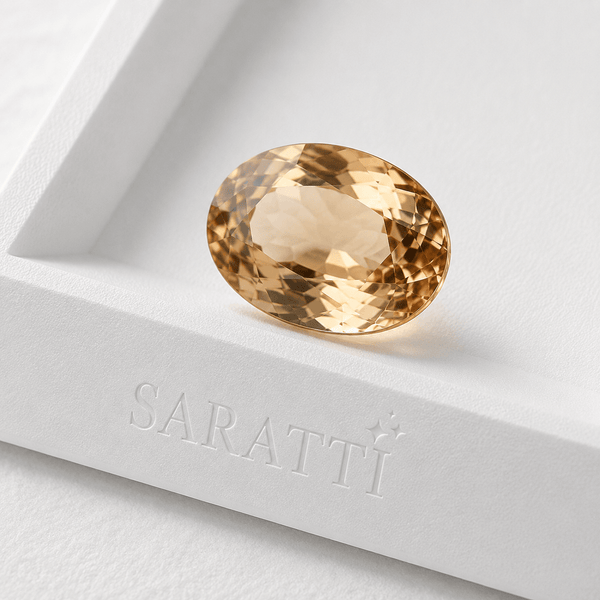
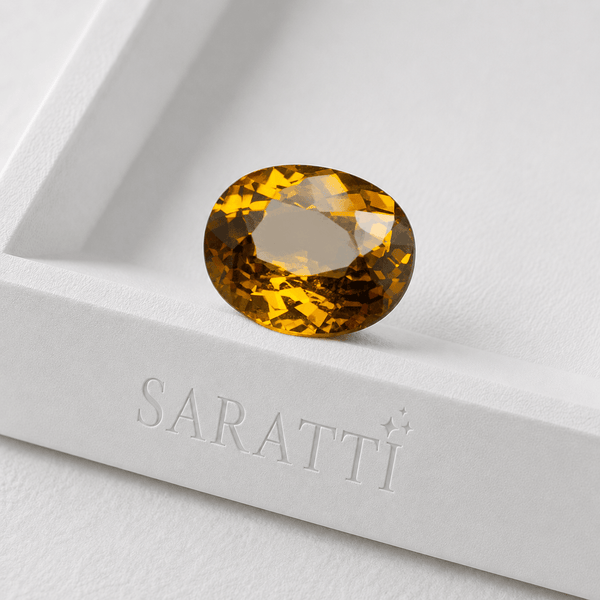
Precious topaz or sherry topaz describes the yellow to golden-brown natural material, an attractive and more affordable alternative to imperial.
Colourless topaz is abundant and is the feedstock for the blue treatment. It has occasionally been used as a diamond simulant, though it lacks diamond's dispersion and brilliance.
Why Red Is the Rarest Colour
Red is the colour the species almost never makes, and the reason is chemical.
The pink and red end of topaz depends on a trace of chromium sitting in the crystal where aluminium would normally be. That substitution is uncommon in the geological settings where topaz grows, and where it does occur it is usually accompanied by the yellow and orange components that give imperial topaz its sherry tone rather than a clean red. Fully red topaz, with no orange modifier, is one of the rarest natural colours in the whole of gemmology, and stones above a carat are collector material.
Much of what is offered as red or pink topaz is Ouro Preto material that has been heated to drive off the yellow component, leaving the chromium pink behind. That is a permanent and long-established treatment, and it is not a problem provided it is stated — but the premium on natural colour is large enough that the distinction has to be made on paper.
There is a related trap at the inexpensive end. The sherry-brown topaz from Topaz Mountain in Utah is coloured by a natural radiation-induced colour centre that is not stable, and crystals fade toward colourless after sustained exposure to sunlight. Handsome as specimens, and worth knowing about before one is set into something that lives on a hand.
Treatment, and Being Told Which Is Which
The disclosure picture for topaz is unusual, because the treatment is near-universal in one part of the market and near-absent in the other.
Irradiation and heat produce essentially all blue topaz. Permanent, stable, standard.
Heat is used on some brown and yellow material to produce pink. Permanent, and it must be disclosed because natural pink commands a premium.
Surface coating produces the iridescent "mystic" and "azotic" topaz seen in fashion jewellery. This is a thin film on the surface, it can be scratched or worn away, and it is not a permanent colour in the way the others are.
Diffusion has been used to produce some blues and greens.
Where a treatment is known we state it on the listing, and for topaz the important distinction is simply whether the colour is natural or produced. Our full standard is set out in how SARATTI grades gemstones.
Clarity
Topaz is a Type I gemstone. It is expected to be eye-clean, and in blue topaz there is no reason at all to accept less — clean material is abundant.
Imperial and natural pink topaz are held to a slightly more forgiving standard given their rarity, but even there, visible inclusions reduce value rather than adding character. Long parallel growth tubes occur and can occasionally produce a cat's eye when cut as a cabochon.
Cut, and the Cleavage Problem
Topaz crystallises in long prisms, which lends itself naturally to elongated shapes — emerald cuts, ovals, pears — and cutters follow the rough.
The cleavage governs the rest. A cutter must orient the stone so no facet lies parallel to the basal cleavage plane, because polishing on that plane risks splitting the crystal. It is why topaz is cut by people who know what they are doing and why badly cut topaz sometimes shows a flat spot that should not be there.
Because the rough is often large and clean, topaz is one of the great materials for statement stones. Fifty-carat blue topaz is ordinary; hundred-carat stones exist. If scale is what you want, few species deliver it so easily.
Topaz, Citrine and the Confusion of Names
For centuries the word topaz was applied to almost any yellow stone, and the residue of that is still causing trouble.
The commonest confusion is with citrine, the yellow to orange variety of quartz. Citrine has been sold as "topaz quartz", "gold topaz", "Madeira topaz" and "Spanish topaz", none of which are legitimate gemmological names. It is quartz — softer at 7, far more abundant, and priced very differently from real topaz. A gemmologist separates the two immediately by refractive index and specific gravity, but they are genuinely difficult to tell apart by eye.
The practical rule: if a yellow or golden stone is described as topaz with a qualifying word in front of it, treat the qualifier as a warning rather than a description. Real topaz needs no adjective, and where the price depends on it being topaz, ask for a report.
Topaz also grows very large. Some of the biggest faceted gemstones in the world are topaz, running into thousands of carats, which is why the species turns up so often in museum cases and so rarely in the small calibrated sizes other stones dominate.
Wearing Topaz
This is where the hardness-versus-toughness distinction becomes practical advice.
Topaz will not scratch easily — at 8 it resists almost everything in daily life. But a sharp knock along the cleavage plane can split it, and no amount of hardness protects against that.
So: a protective setting for a ring worn every day, particularly a bezel or one that shields the corners of a step cut. Take it off for anything involving impact. Clean by hand — warm water, mild soap, a soft brush. Avoid ultrasonic and steam cleaning, both of which can find the cleavage.
Two further notes. Avoid prolonged strong heat and sudden temperature change, which can cause fracturing. And keep coated topaz away from abrasives entirely, since the colour is only on the surface. Some natural yellow, brown and pink topaz can also fade with long exposure to strong sunlight, so a piece is better stored in a box than displayed on a windowsill.
Certification
For blue topaz, a report is rarely warranted — the value is modest, and the treatment is assumed rather than in question.
For imperial, pink and other naturally coloured topaz, a report is worth having, because the entire premium rests on the colour being natural and untreated. A laboratory can also separate topaz from citrine, which it strongly resembles and which is worth far less.
A report from GIA, GUILD, AIGS, CGRL, GRS or GRC will confirm the species, record measurements and weight, and note treatment where detectable. Where you would like a stone reviewed by a particular laboratory, we can arrange it and the fee is passed on at cost.
Choosing a Topaz
Topaz is a birthstone twice over. It is the November birthstone, traditionally the yellow and imperial material, and blue topaz is one of the December birthstones alongside tanzanite, zircon and turquoise. That gives it an unusually broad gifting relevance.
The choice is really between the two markets. If you want a large, clean, vivid blue stone and value scale over rarity, blue topaz is unmatched at its price and there is no reason to apologise for it. If you want something rare with natural colour, imperial and pink topaz are seriously collectable and considerably less known than they deserve to be.
Whichever, mind the cleavage when choosing a setting. It is the one thing about topaz that catches people out.
Every stone here is listed individually, with its own photography and its own details, and treatment is stated.
For more on the species, see our topaz guide and the note on identifying natural imperial topaz. If colour is your starting point, the blue gemstones collection gathers sapphire, aquamarine, Paraiba, tanzanite and topaz together, and all about birthstones covers the November and December associations.
And if what you want is not listed — a particular blue, an imperial stone, a size — only part of what we can reach is shown online. Describe it, and we will go and look.




 Engagement Rings
 Gemstone Rings
 Wedding Bands
 The SARATTI Difference
 Gemstone Type
 Shop By Color