The Thing You Should Know First
Kunzite's colour can fade.
Prolonged exposure to strong light, and to heat, will gradually pull the pink out of a kunzite. This is not a rumour, not a marketing anxiety, and not something that happens only to poor material. It is a property of the mineral. A kunzite left in a sunlit window, or worn day after day through bright afternoons over a period of years, can lose noticeable saturation and drift toward a paler lilac or toward near-colourless. Some stones are more stable than others and the rate varies, but the tendency is real and it is why the stone is sometimes called an evening stone — a stone that is at its best under lamplight, in a room, at night.
We put this at the top rather than the bottom because it is the single fact that should govern how a kunzite is bought, set, worn and stored. It costs us sales to say it plainly. It remains the right thing to say. None of which makes kunzite a bad gemstone; it makes it a particular one, with conditions attached. Handled with those conditions in mind, a kunzite will hold its colour for a very long time. Handled carelessly, it will not.
What Kunzite Actually Is
Kunzite is the pink to lilac variety of spodumene, a lithium aluminium silicate. Its colour comes from manganese — the same colouring agent responsible for the pink in morganite and in rhodochrosite. Spodumene also occurs in a yellowish-green variety called hiddenite and in colourless and yellow forms, but kunzite is by a wide margin the best known.
The stone was identified in California in 1902 and named after George Frederick Kunz, chief gemmologist at Tiffany and the most influential figure in American gemmology of his era. Kunz also named morganite, so the two most familiar pink collector's stones in the trade pass through the same hands. If you are weighing one against the other, our natural morganite collection sits alongside this one, and the two stones behave very differently in wear despite the family resemblance in colour.
Kunzite is, in gemmological terms, a young stone. It has no ancient lore and no crown-jewel history. What it has is a colour few other materials produce and a set of physical quirks that make good examples harder to obtain than the modest prices suggest.
Colour, and Why Kunzite Is Cut Large
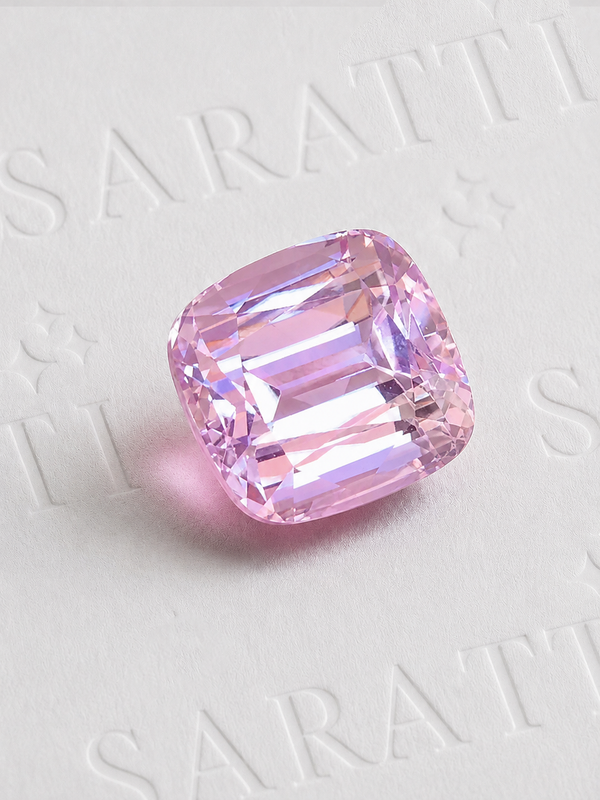
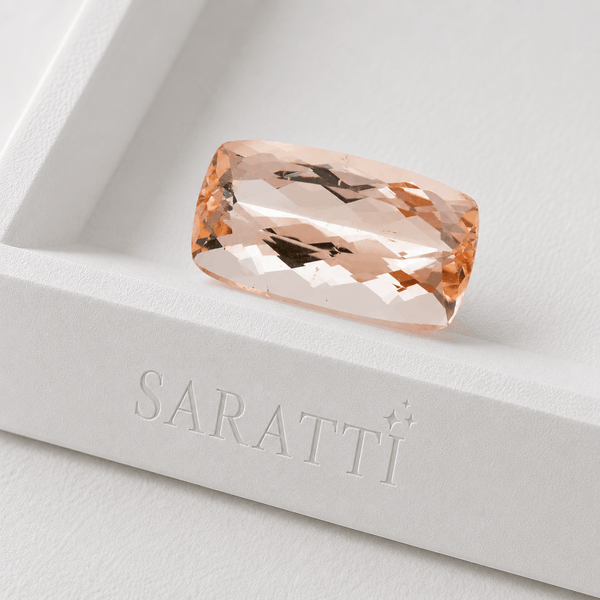
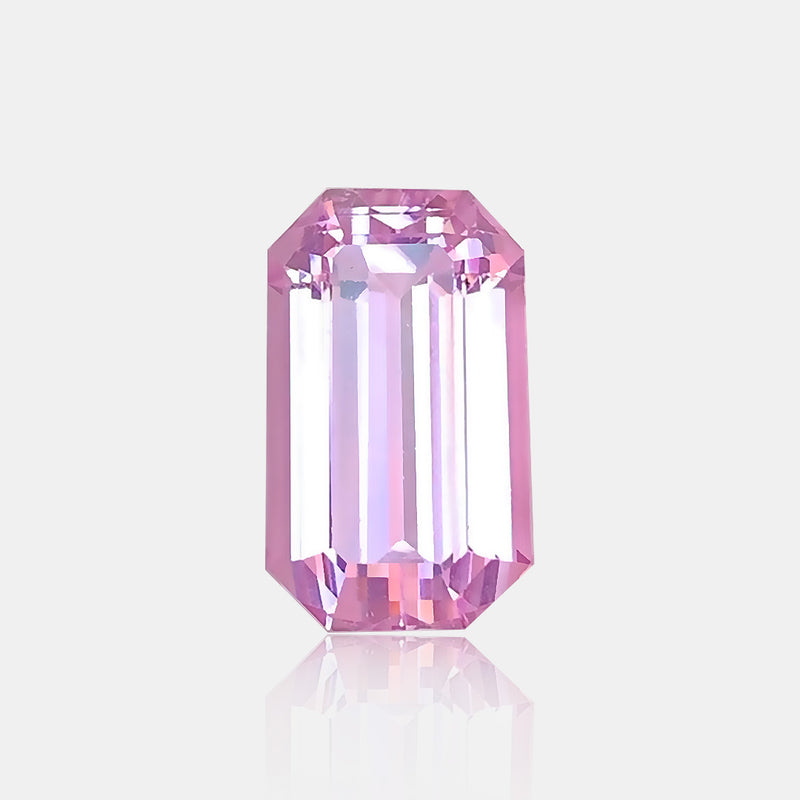
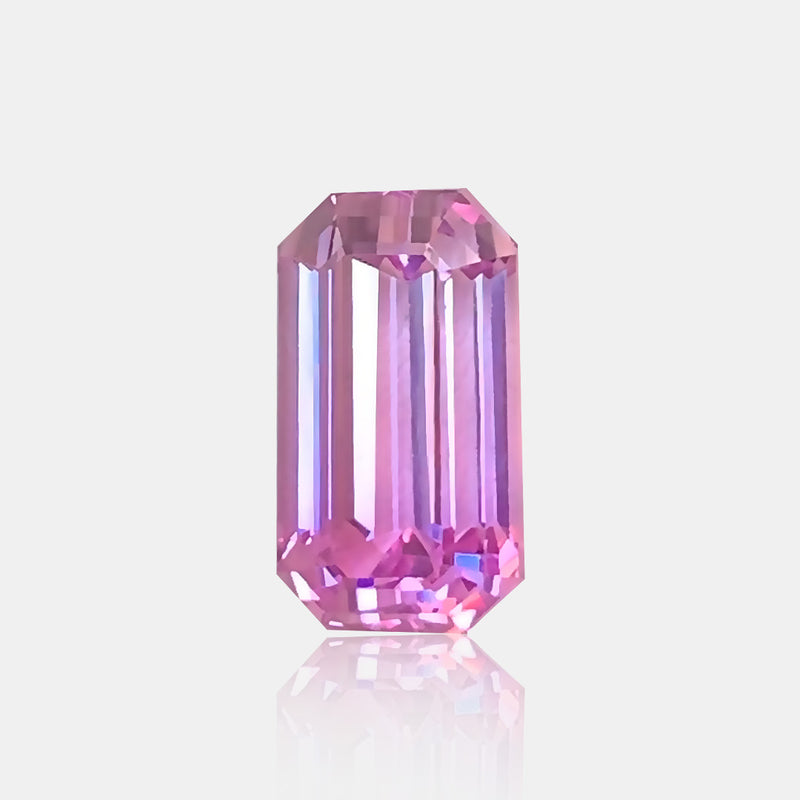
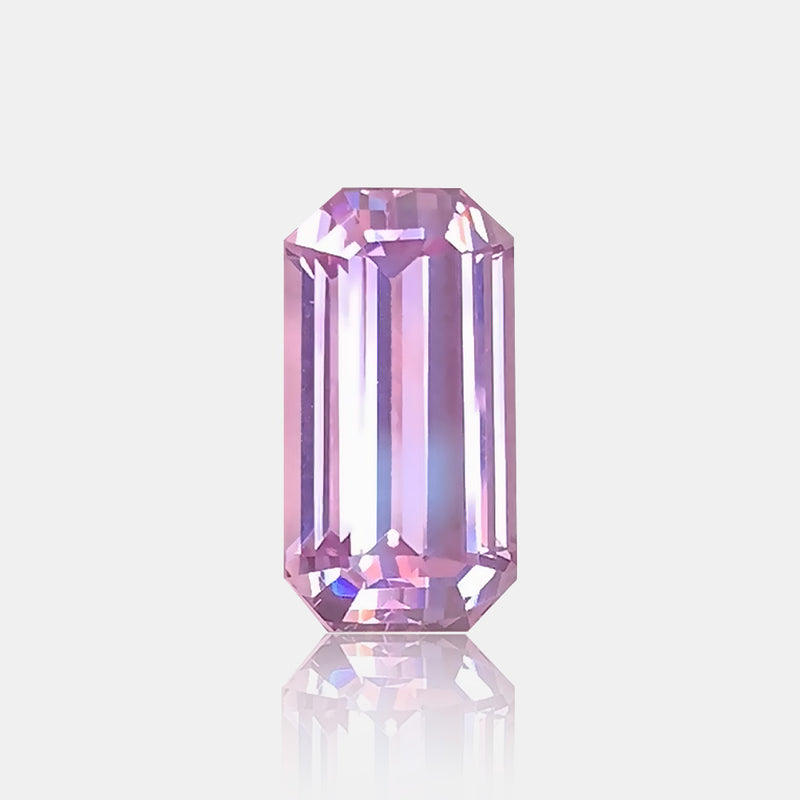
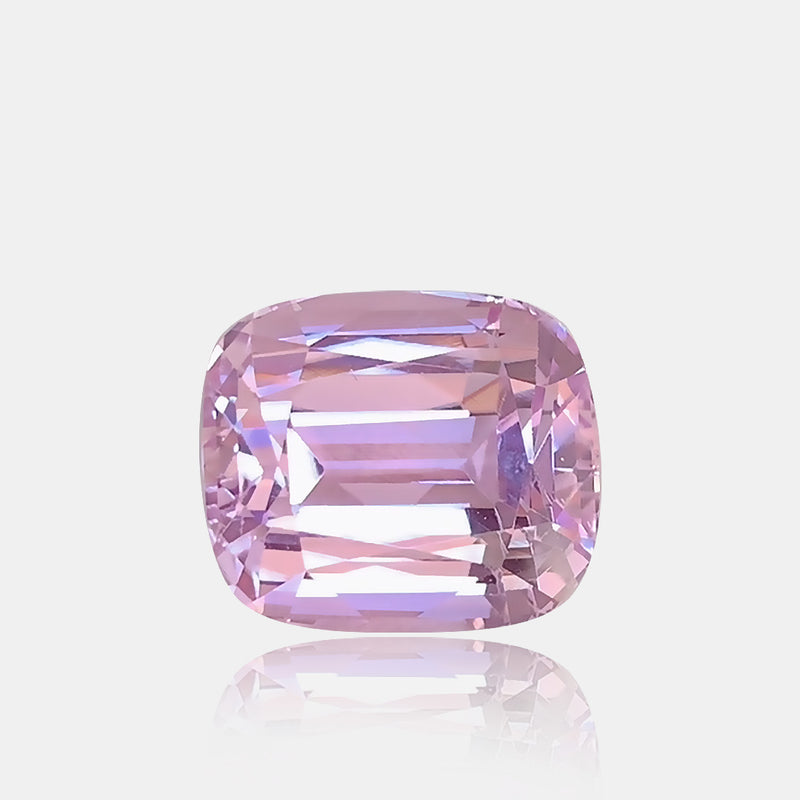
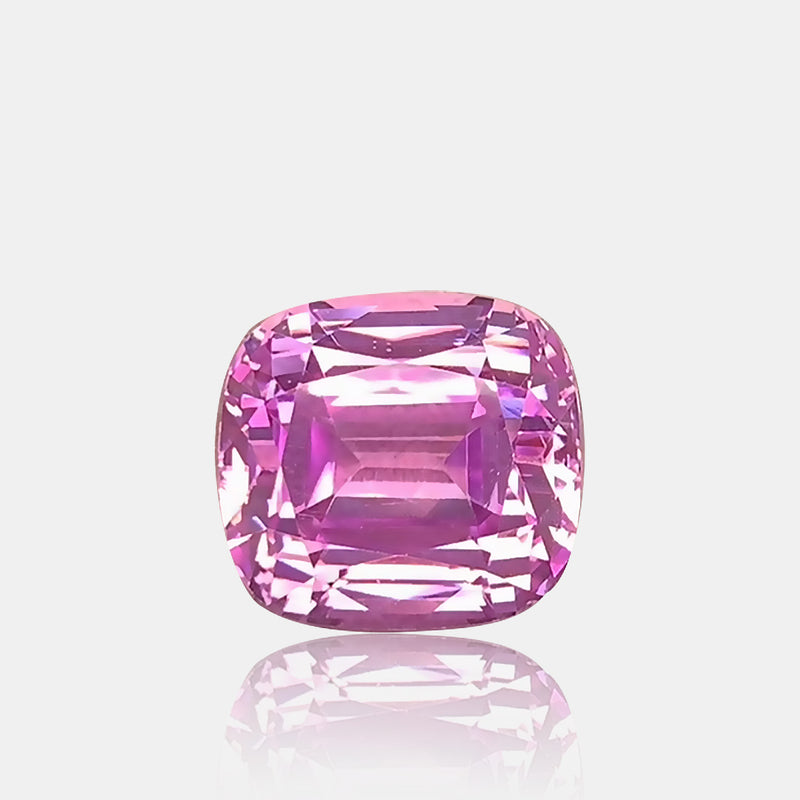
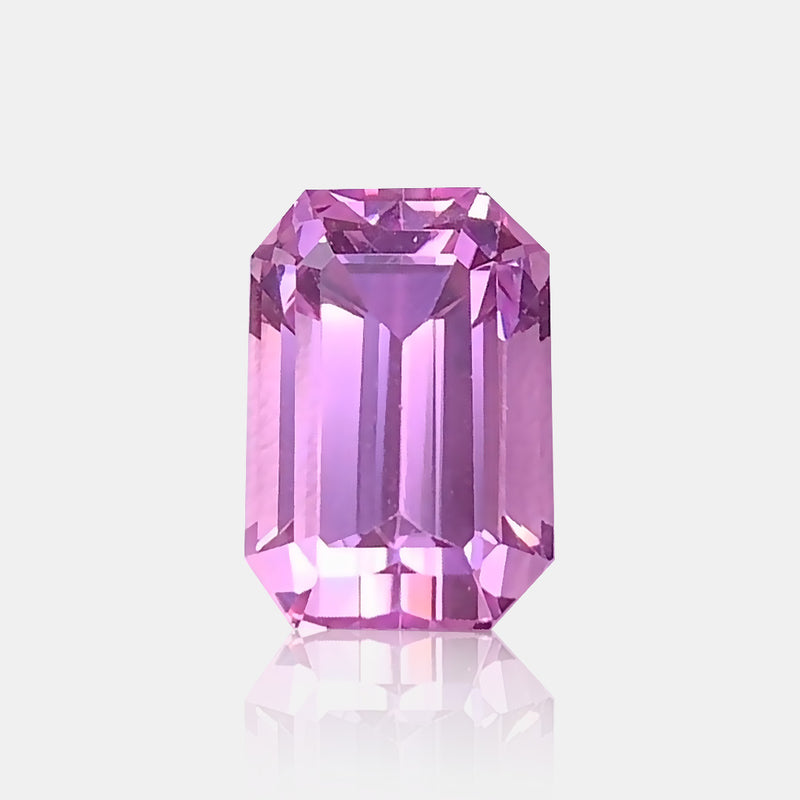
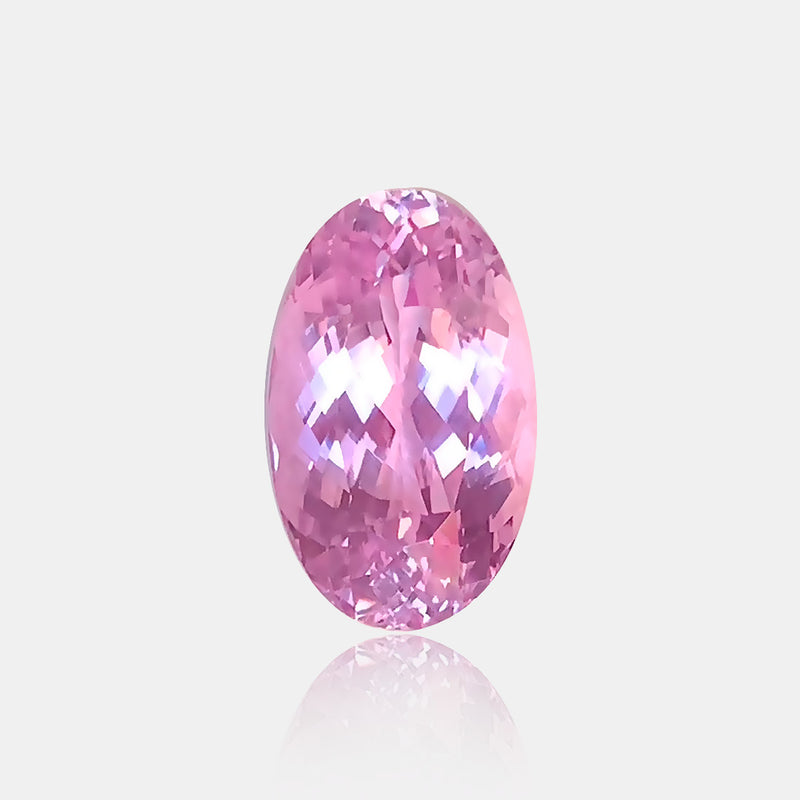
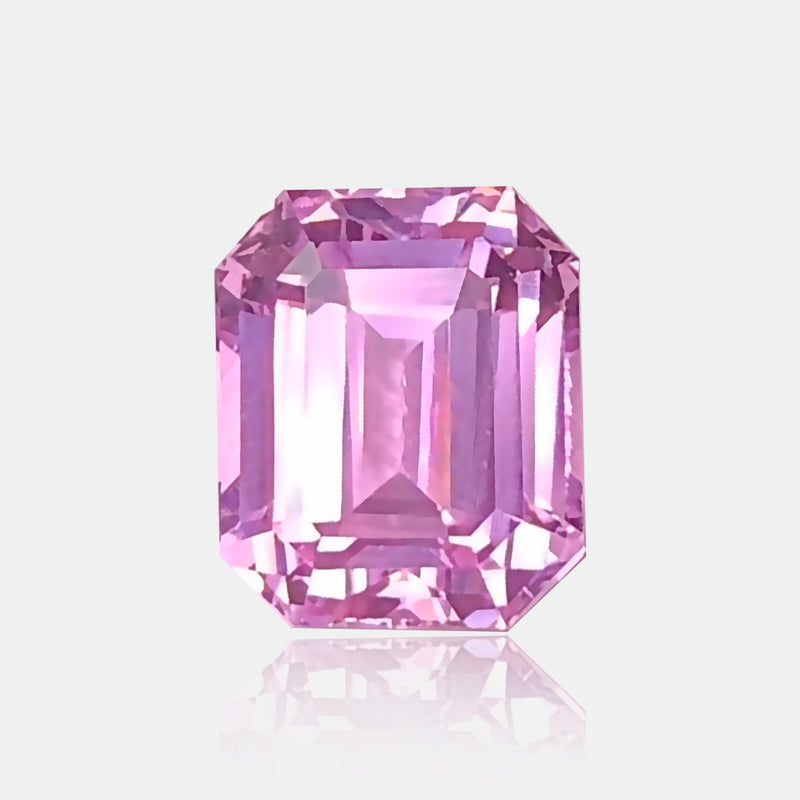
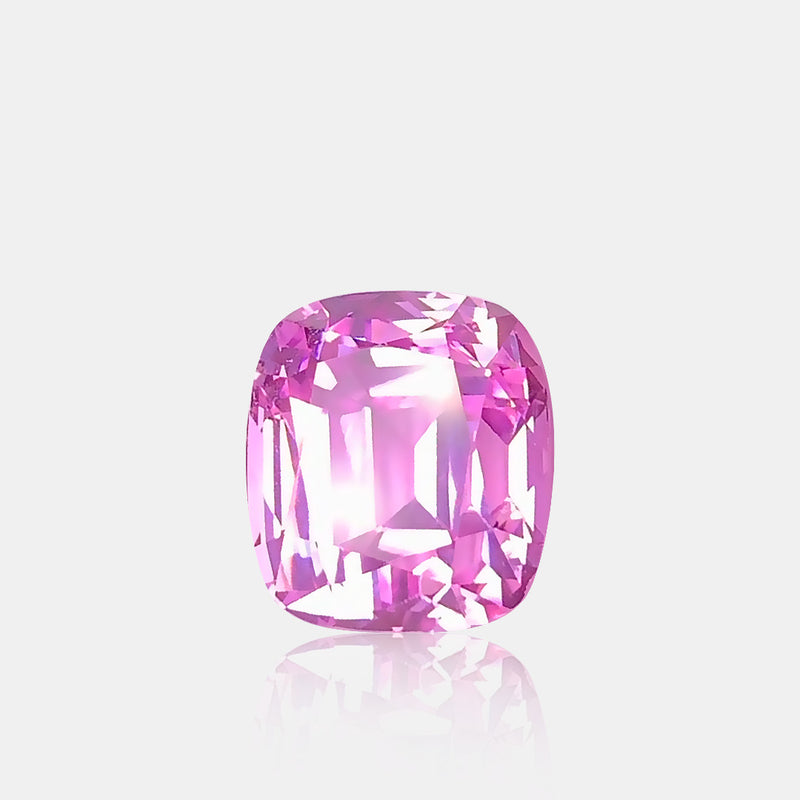
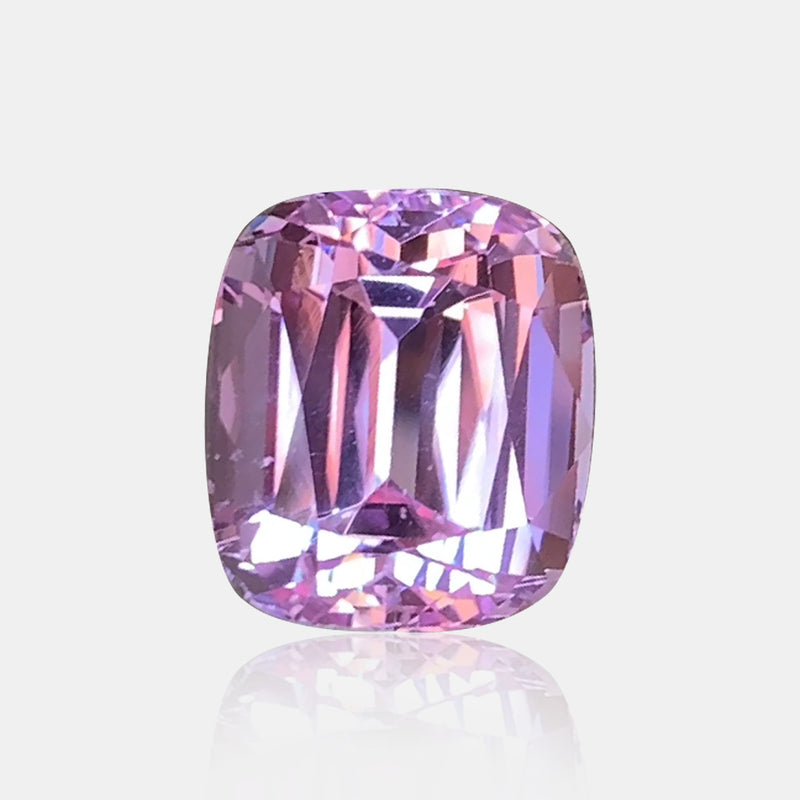
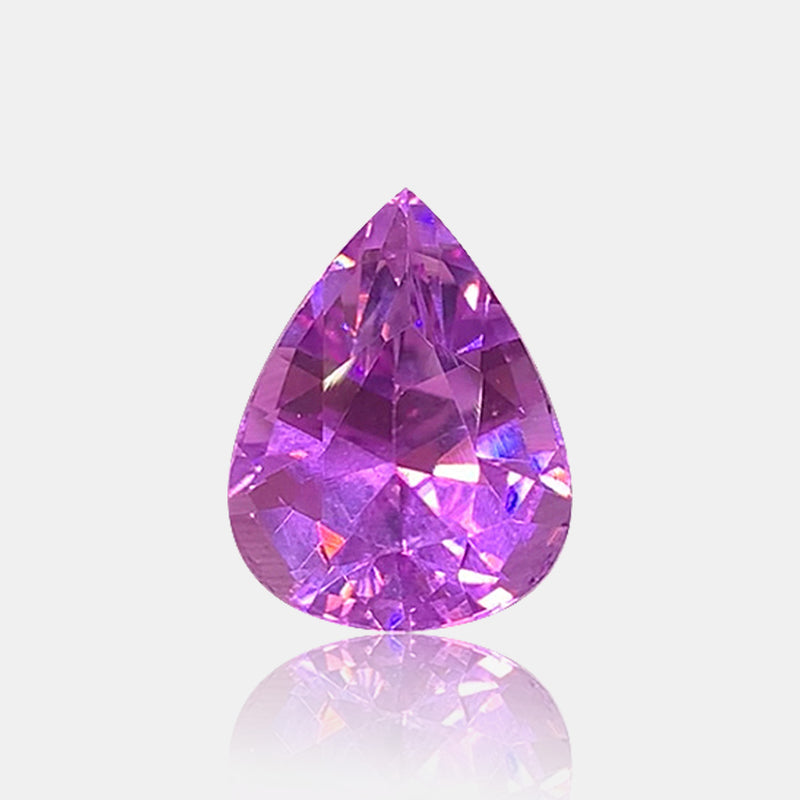
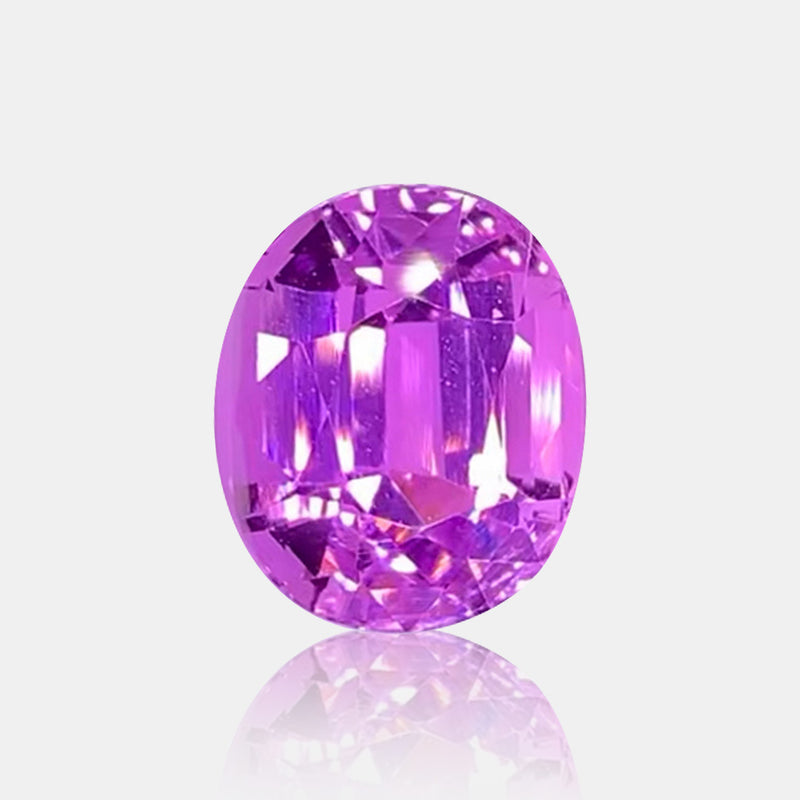
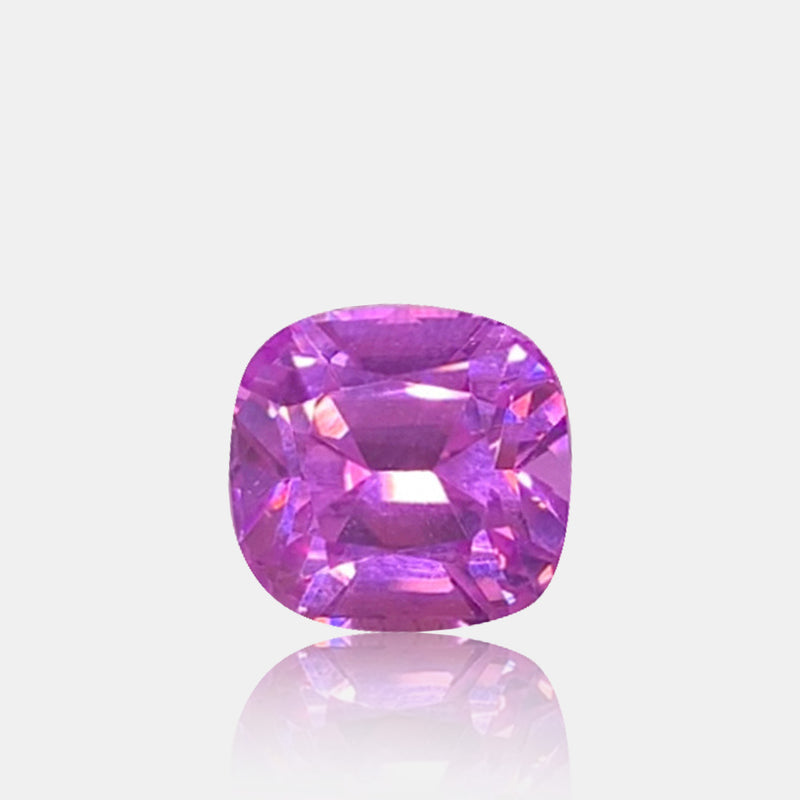
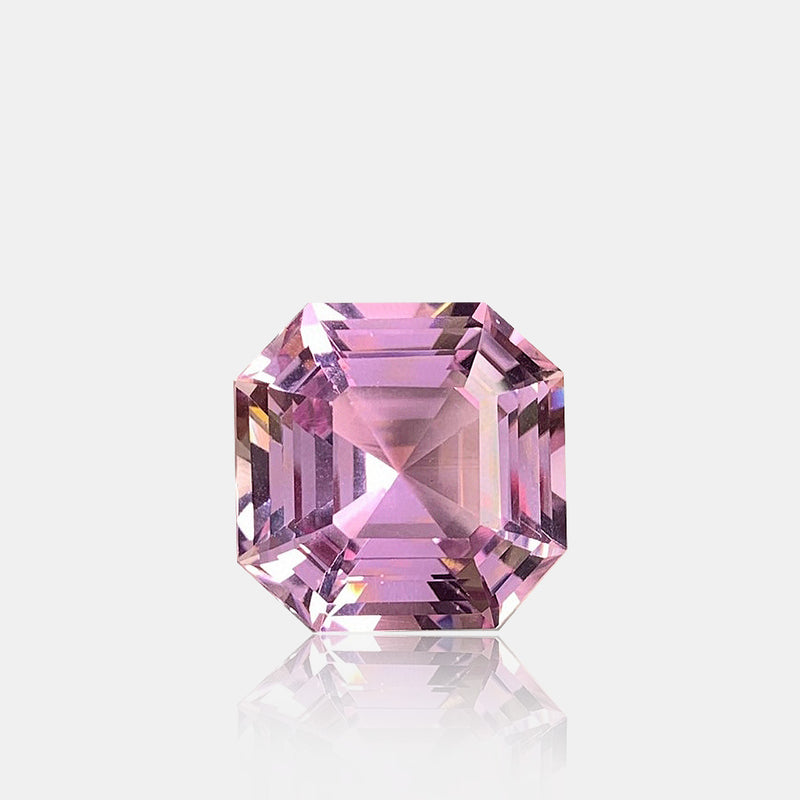
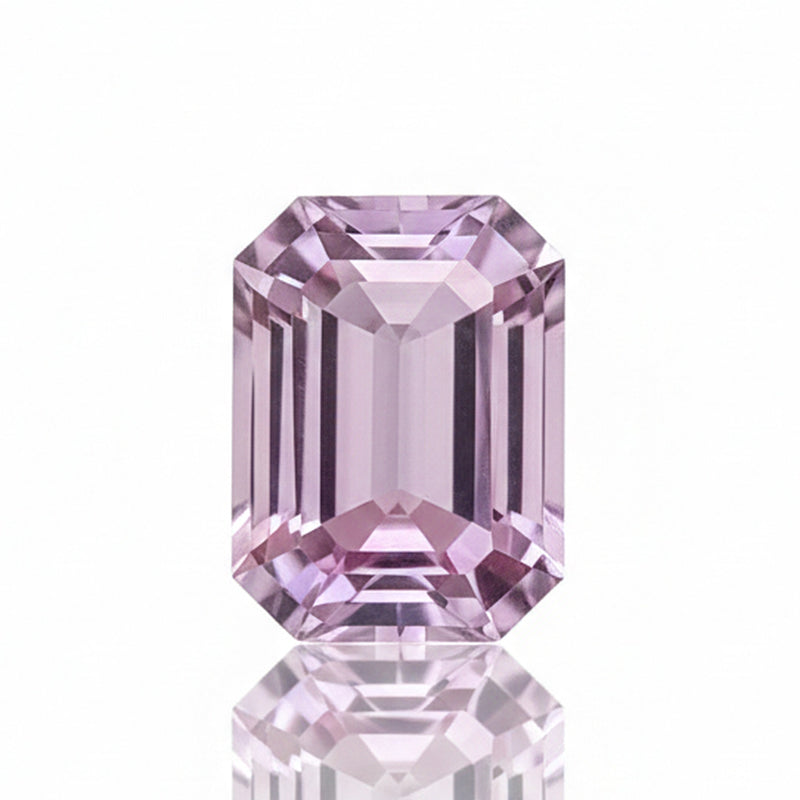
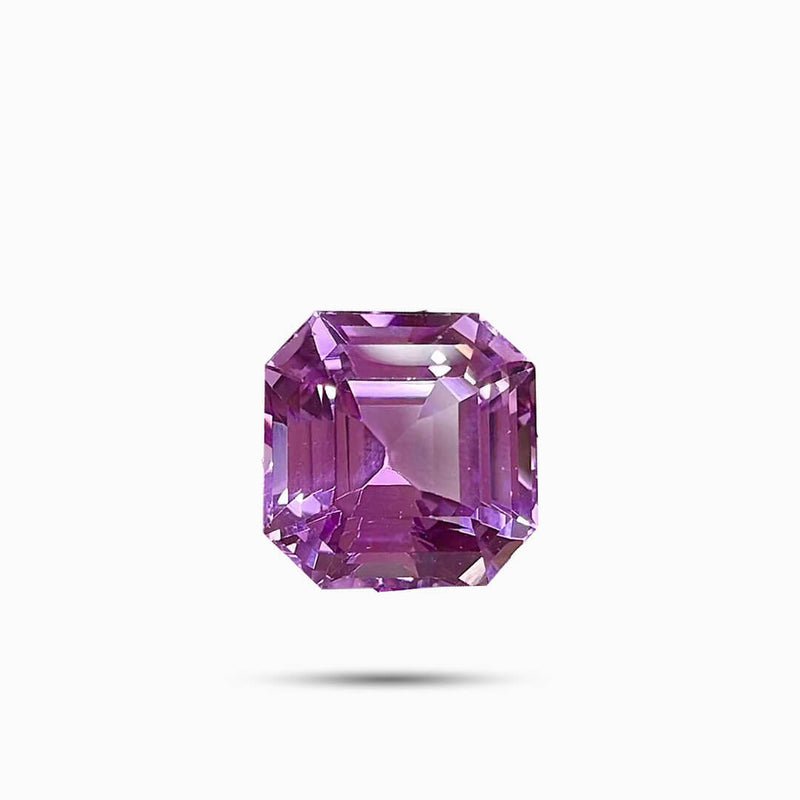
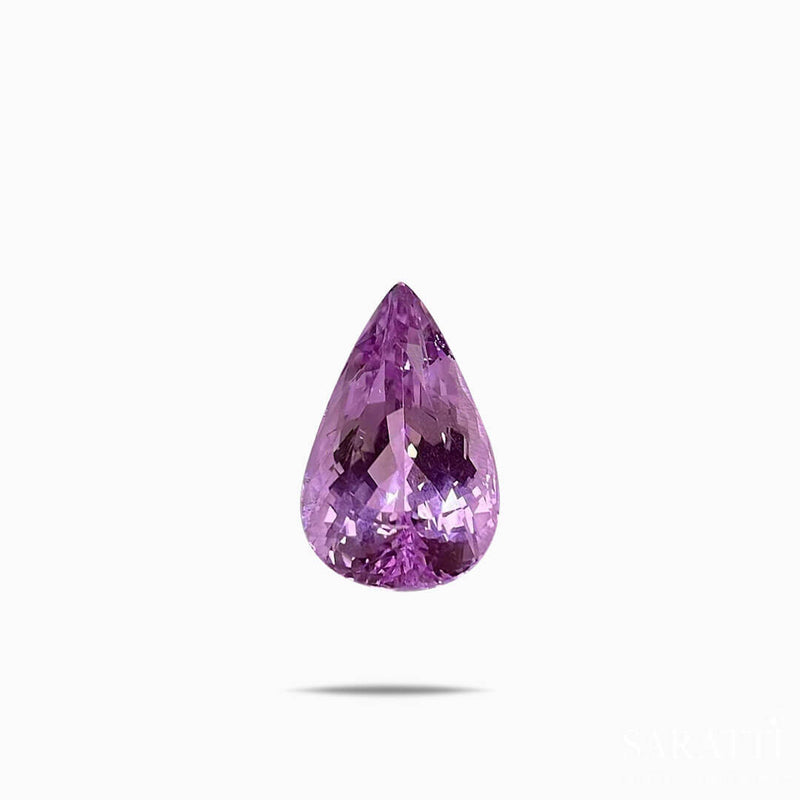
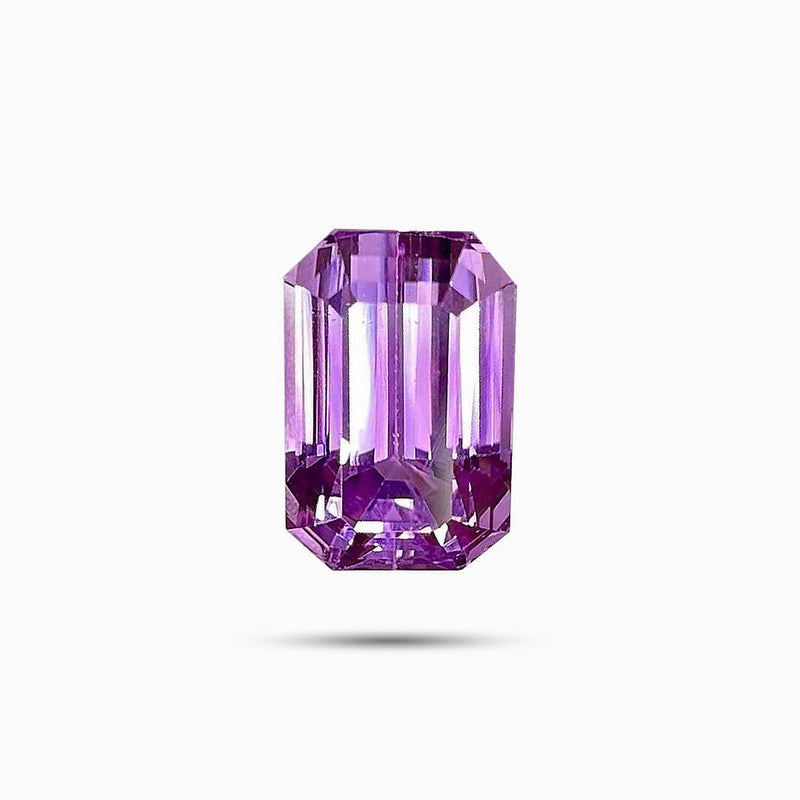
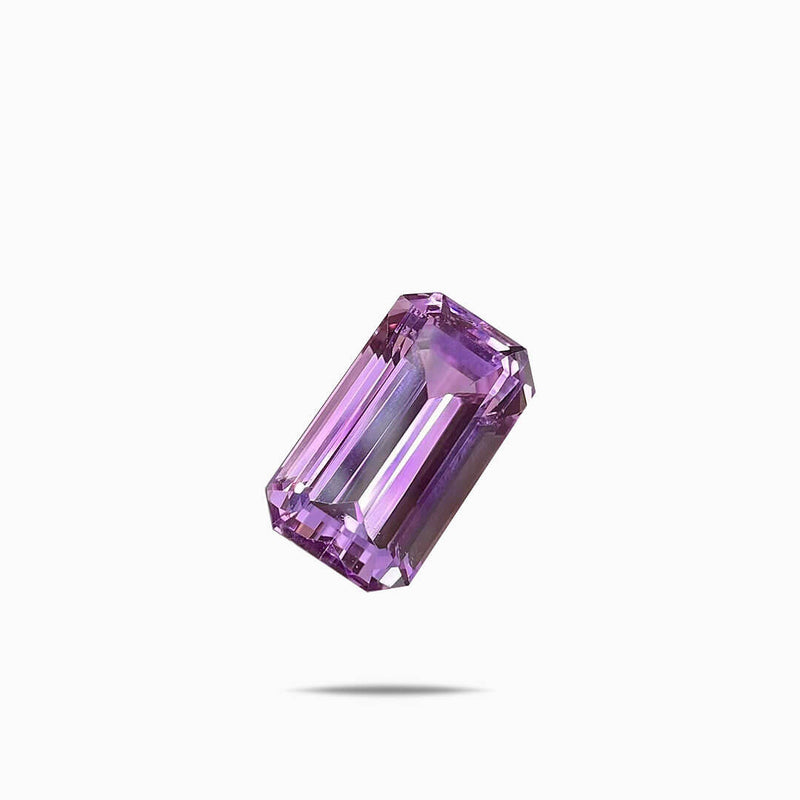
Kunzite is a pale stone. Even fine material is light in tone by the standards of ruby or sapphire, and the colour ranges from a soft blush pink through rose to a distinctly violet lilac. The most sought-after tone is a clean pink with a hint of violet, saturated enough to read as a colour rather than as a tint.
Because saturation is low, colour in kunzite is built by path length — the distance light travels through the stone before it returns to the eye. That single principle explains almost everything about how kunzite is cut and sold.
It is cut large, and it is cut deep. Pavilions are generous, sometimes conspicuously so, because a shallow kunzite of the same weight would face up washed out. It is one of the few gemstones where a deep pavilion is a virtue rather than a fault.
It follows that small kunzite rarely shows colour. A three-millimetre round kunzite is, for practical purposes, near-colourless, and anyone shopping for kunzite melee should expect that. The stone earns its place at ten carats and upward far more convincingly than at one. Ten, twenty and thirty carat kunzites are readily obtainable and are not expensive by the standards of that size in any other pink gemstone — which is a large part of the appeal, and the reason kunzite appears so often as a statement centre stone.
Pleochroism and the Cutter's Problem
Kunzite is strongly pleochroic. Looked at along different crystal directions it shows pink, colourless and violet — three distinctly different appearances in one crystal.
This is not a subtlety. It is a dominant working constraint. The cutter must orient the rough so that the strongest pink sits face-up through the table, and the colourless direction is buried where it will not be seen. Get the orientation wrong and an otherwise good crystal yields a pale, lifeless stone. Get it right and the same rough produces something with real presence.
Orientation for colour competes directly with orientation for weight retention, and in kunzite colour must win. This is one reason well-cut kunzite is less common than the material's availability would suggest: the rough is not especially rare, but the combination of correct orientation, adequate depth and a clean finish is.
When assessing a stone, look at it face-up under a single light source and then rotate it. A well-oriented kunzite holds its colour as it turns. A poorly oriented one flashes pale from certain angles.
Cleavage: the Other Hard Truth
Kunzite is 6.5 to 7 on the Mohs scale, which sounds adequate. Hardness is not the problem.
The problem is that spodumene has perfect cleavage in two directions. Cleavage is the tendency of a crystal to split cleanly along planes of weaker atomic bonding, and it is a wholly separate property from scratch hardness. A stone can be hard and still split. Kunzite is a textbook case.
Two consequences follow, and both matter.
The first is that kunzite is genuinely difficult to cut. Heat generated during sawing and polishing, or pressure applied along the wrong axis, will part the crystal. Losses on the wheel are a real cost and are built into the price of finished stones.
The second is that a finished kunzite is vulnerable to a knock. Not to abrasion in the ordinary sense — 7 on Mohs resists most household scratching — but to a sharp impact against a hard edge, which can cleave the stone. A kunzite that catches a door frame or a granite worktop can split in a way a spinel of the same size would not.
The practical conclusion is straightforward. Kunzite belongs in pendants and earrings, where it is protected and rarely struck. It is not a sensible choice for a ring worn every day, and least of all for an engagement ring worn for decades. Set in a ring at all, it wants protective shoulders or a bezel, and it wants taking off before the gym, the garden and the washing-up.
Treatment, Irradiation and Disclosure
Kunzite is treated less often than most coloured stones, but treatment does exist and it interacts with the fading problem in a way buyers should understand.
Irradiation deepens kunzite's colour, and it works — irradiated material can be markedly more saturated than it began. The difficulty is that irradiated colour is generally less stable than natural colour. A stone whose pink has been intensified by irradiation will typically fade faster under light than an untreated stone of similar appearance. So the deepest, most immediately impressive kunzite on a tray is often the one least likely to look that way in ten years.
Some material is heated, and heat is also used on spodumene to modify colour. As with any treatment, the question is not whether it is acceptable but whether it is stated.
Where a treatment is known, we state it on the listing. Where a report exists it is shown; where none exists, we say so. Our full standard is set out in how SARATTI grades gemstones.
Clarity
Kunzite is a Type I gemstone. That is the cleanest of the three GIA clarity types, and it means the material is typically found with few or no inclusions visible to the unaided eye. The correct expectation for kunzite is eye-clean, and a visibly included kunzite should be priced accordingly rather than excused as characteristic.
Because kunzite is cut large and deep, any inclusion present tends to be conspicuous. Fractures deserve particular attention given the cleavage: one that reaches the surface and lies along a cleavage plane is a structural concern in a way the same fracture in a corundum would not be.
Where Kunzite Comes From
The principal commercial sources are Afghanistan and Pakistan, which between them supply much of the fine large material reaching the market, along with Brazil, Madagascar and California, where the stone was first identified.
Origin does very little in kunzite. There is no premium comparable to Kashmir in sapphire or Mogok in spinel, and no laboratory determination that a buyer needs. What matters is tone, saturation, orientation and cut — the things you can actually see in the stone. Origin is a modifier on value, not a substitute for quality, and in kunzite it is a very weak modifier indeed. Buy the stone in front of you.
Care, Cleaning and Storage
No ultrasonic. No steam. Both are capable of parting a cleavage plane, and neither is worth the risk on a stone of this size and this structure.
Clean kunzite in warm water with a little mild soap and a soft brush, dry it with a soft cloth, and keep it away from sudden temperature changes.
Store it in a closed box, away from light. This is the same instruction twice over: a box protects the stone from being knocked against harder gems, and it protects the colour from the light exposure that causes fading. Kunzite is one of the few gemstones where leaving the jewellery box shut is a form of maintenance.
Worn in the evening, stored in the dark, kept away from heat, a kunzite has every prospect of looking in twenty years much as it looks today.
Certification and Where Kunzite Sits
For most kunzite, a laboratory report is not necessary. The material is distinctive, inexpensive relative to the major species, and rarely faked. Where a stone is significant, or where irradiation is a question, a report from GIA, GUILD, AIGS, CGRL, GRS or GRC will confirm species and note treatment where it is detectable. Where a client would like a stone reviewed by a particular laboratory, we can arrange it and the fee is passed on at cost.
Kunzite is not an official birthstone, though it is often bought for the same occasions pink stones generally serve; the recognised list is set out in our note on birthstones. For the species in more depth, see our guide to kunzite, and if you are choosing by colour rather than by species, the pink gemstone collection and the complete guide to pink gemstones set kunzite against morganite, pink sapphire, pink spinel and rubellite so the trade-offs are visible side by side.
Kunzite's case is a simple one. It offers a large, clean, softly coloured stone at a price no other pink gemstone approaches at that size, in exchange for care in wear and discipline in storage. Buyers who accept those terms are very well served by it. Buyers who will not should be steered elsewhere, and we would rather steer them than sell them a stone that disappoints in five years.
Every kunzite here is listed individually, with its own photography and its own details.
And if what you want is not shown — a particular tone, a particular size, a cushion rather than an oval — only part of what we can reach is listed online. Describe it, and we will go and look.