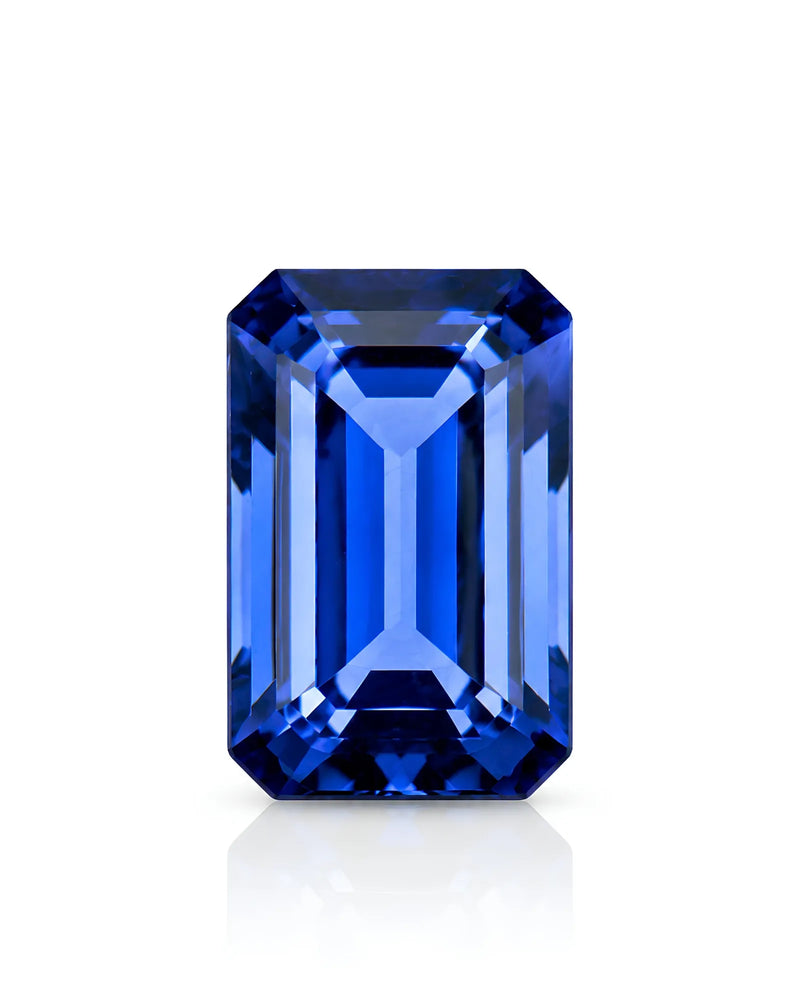
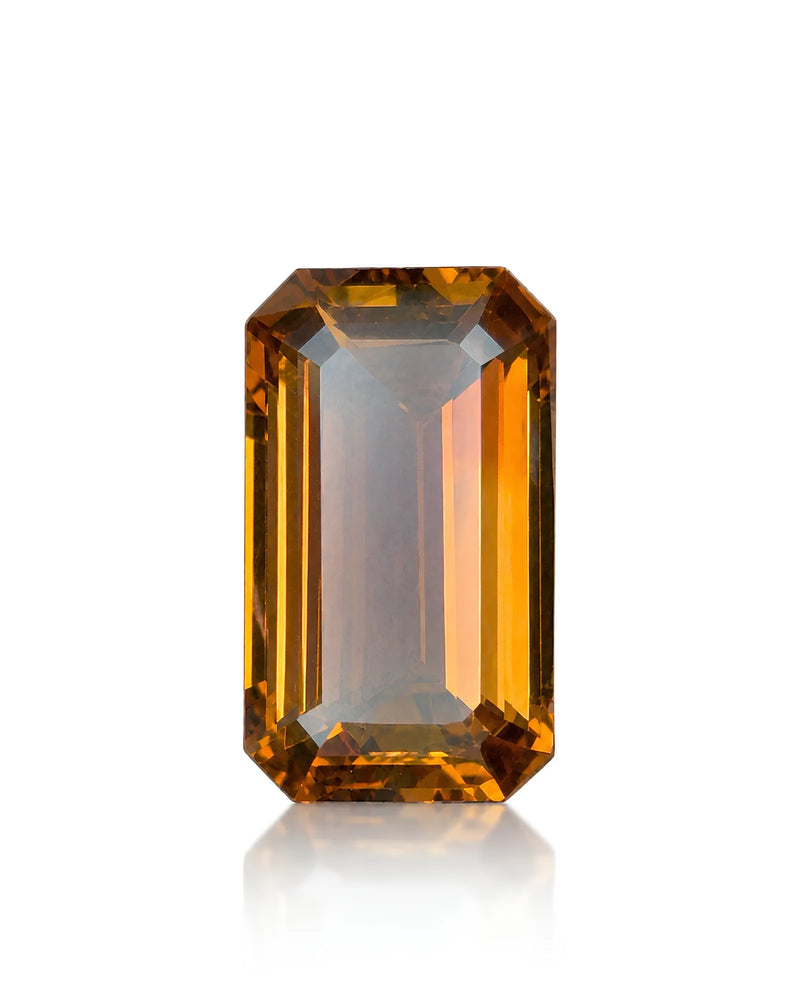
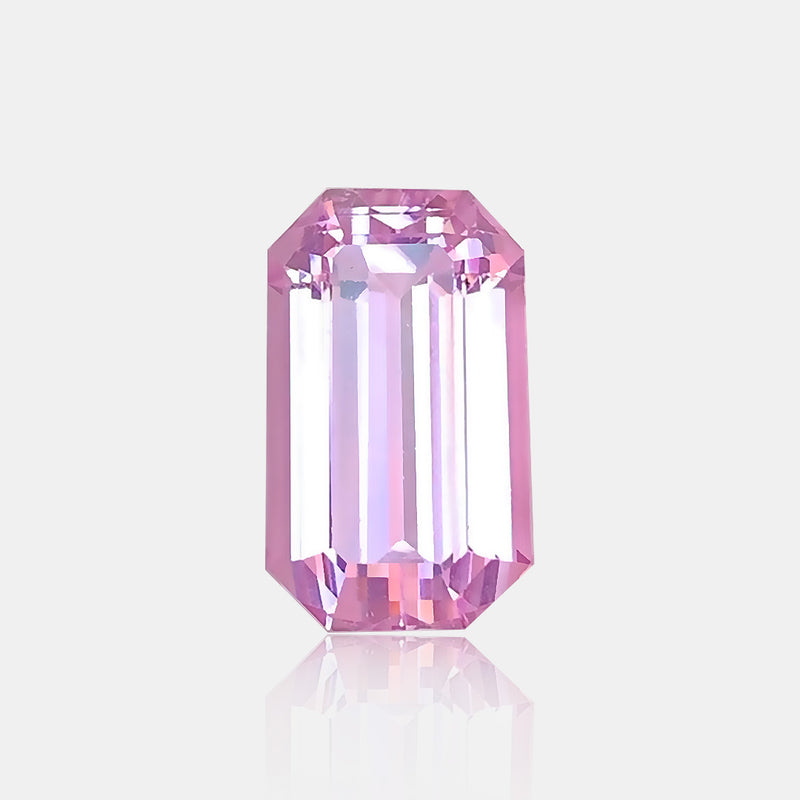
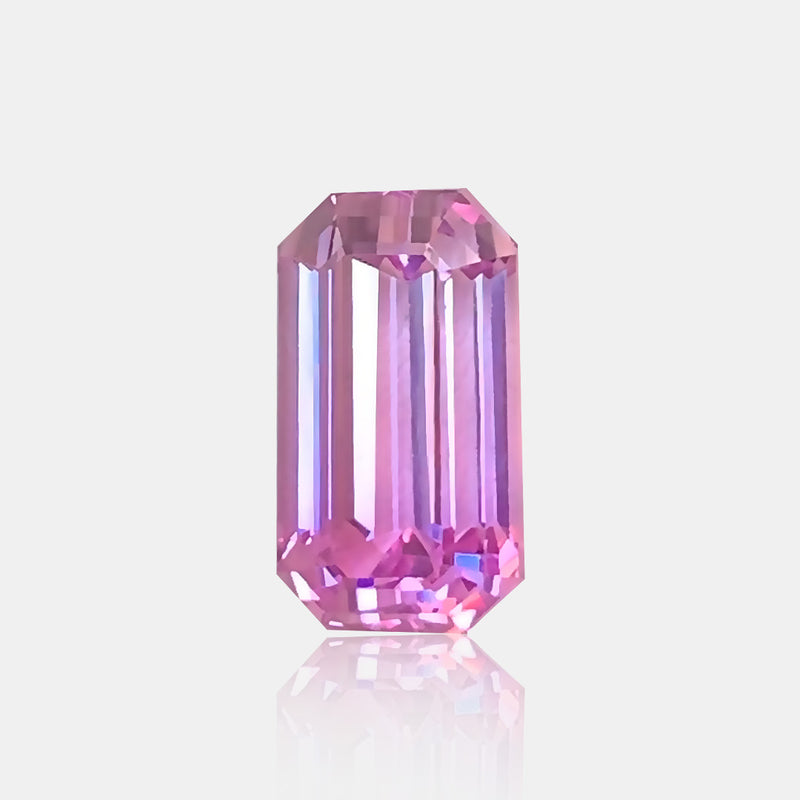
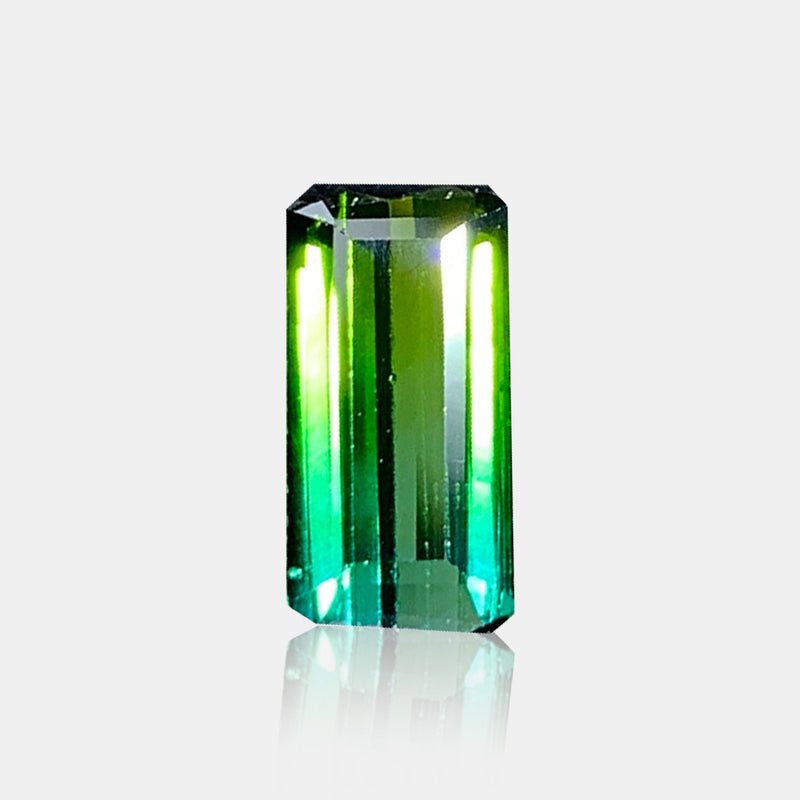
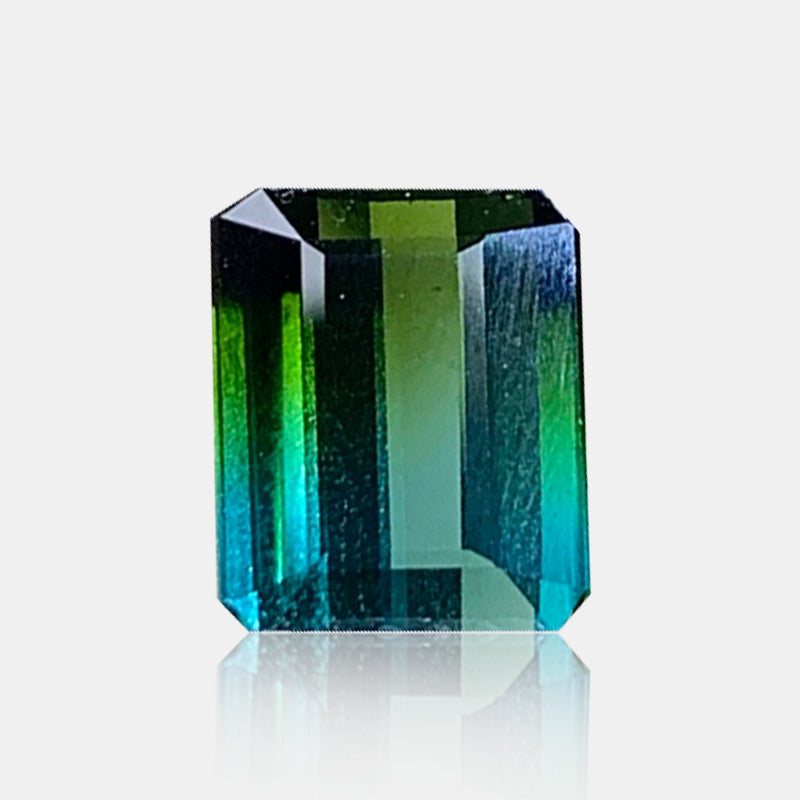
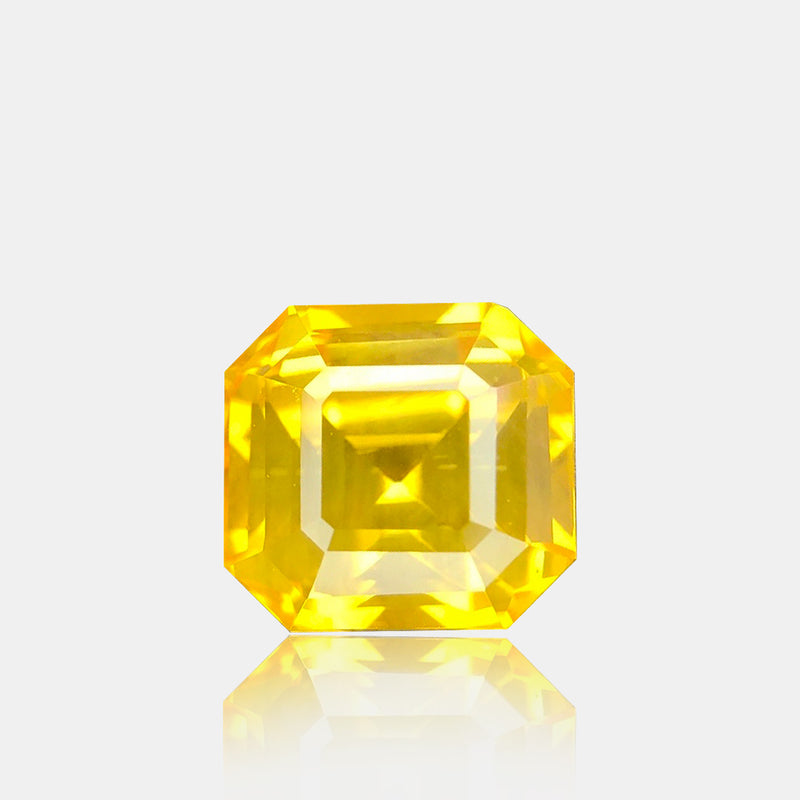
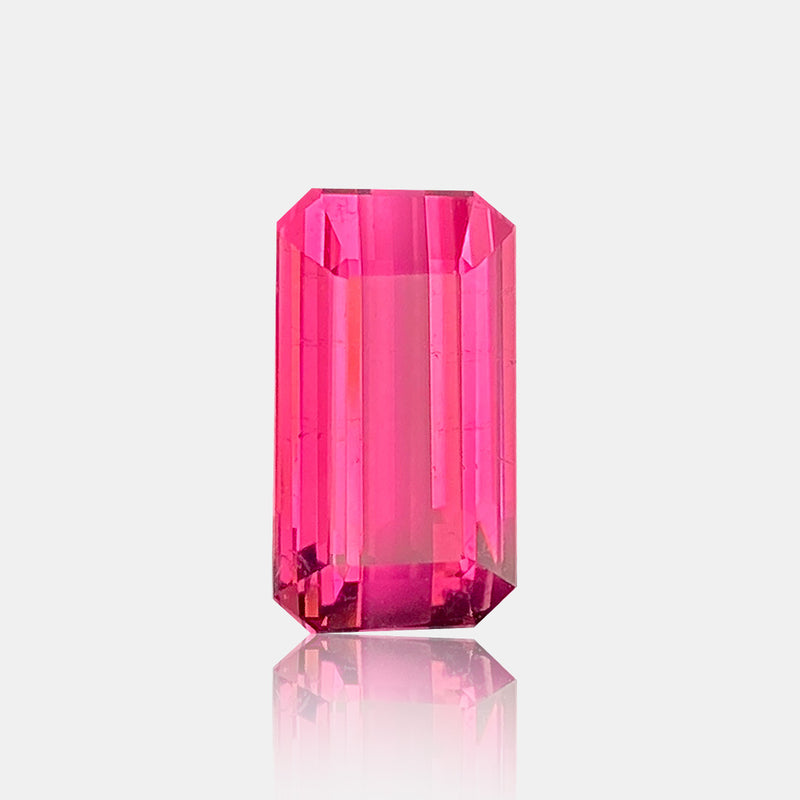
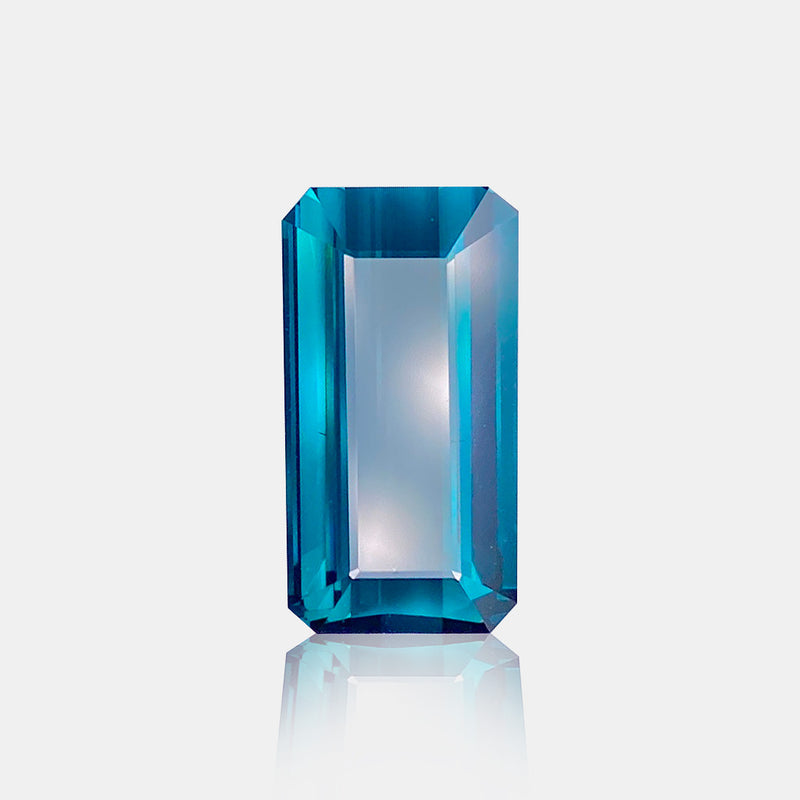
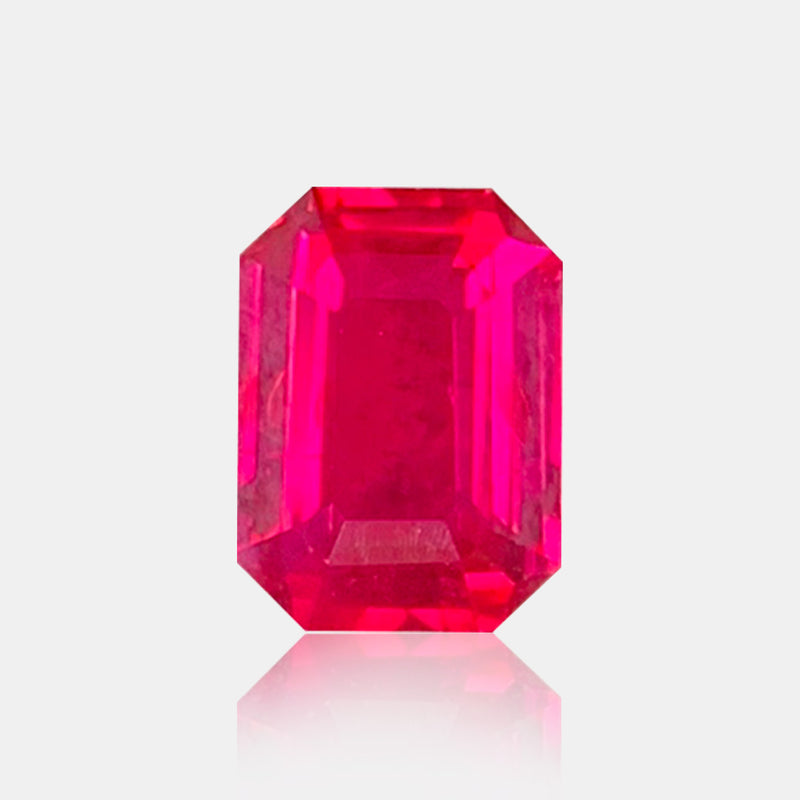
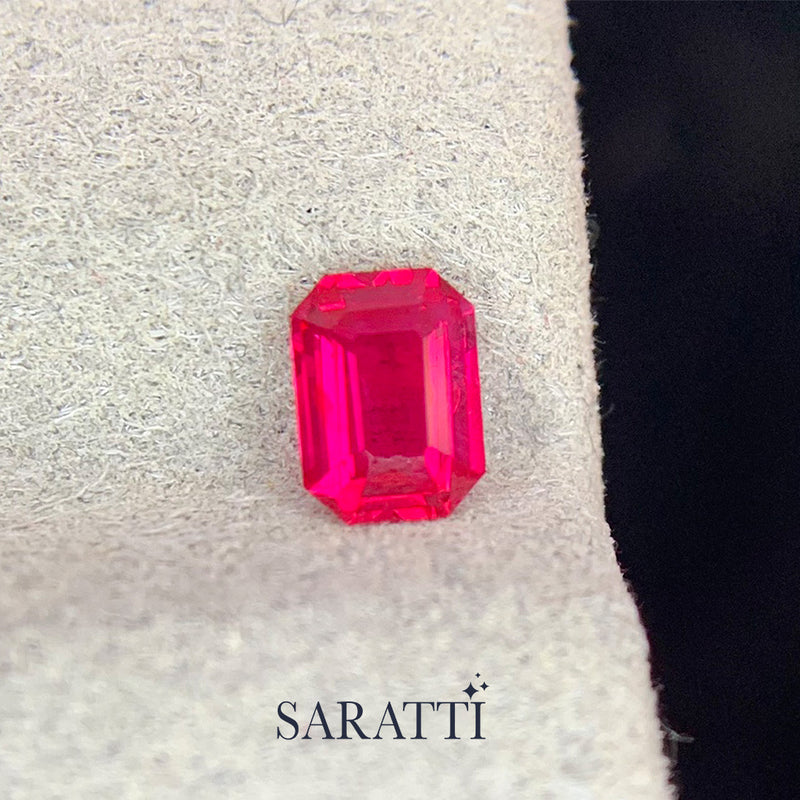
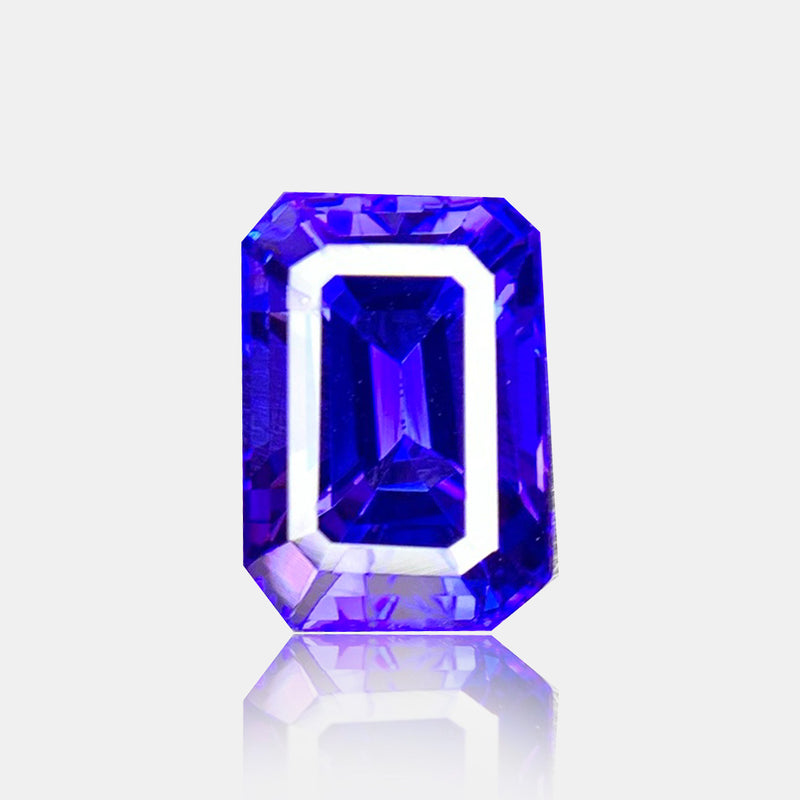
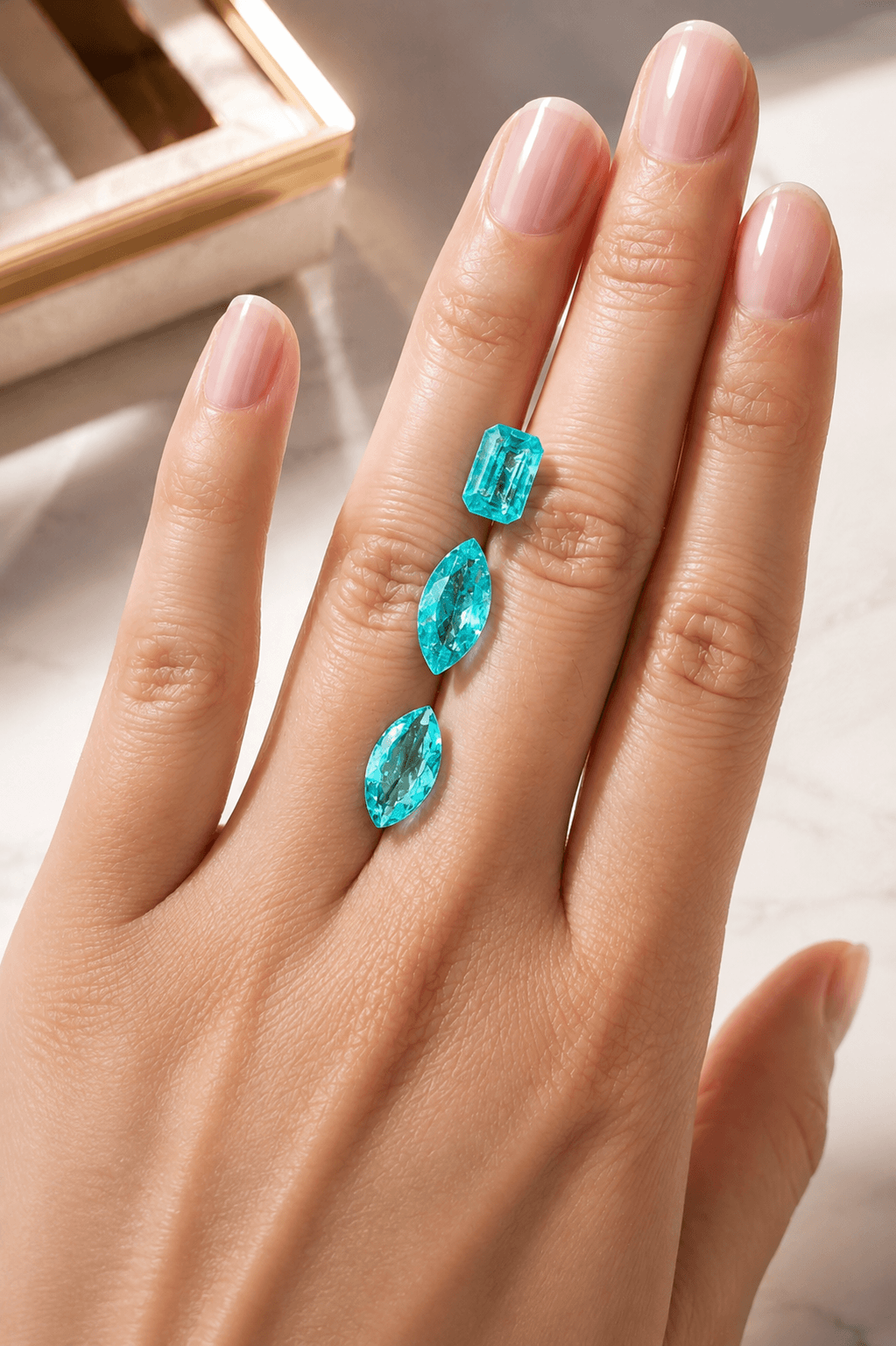
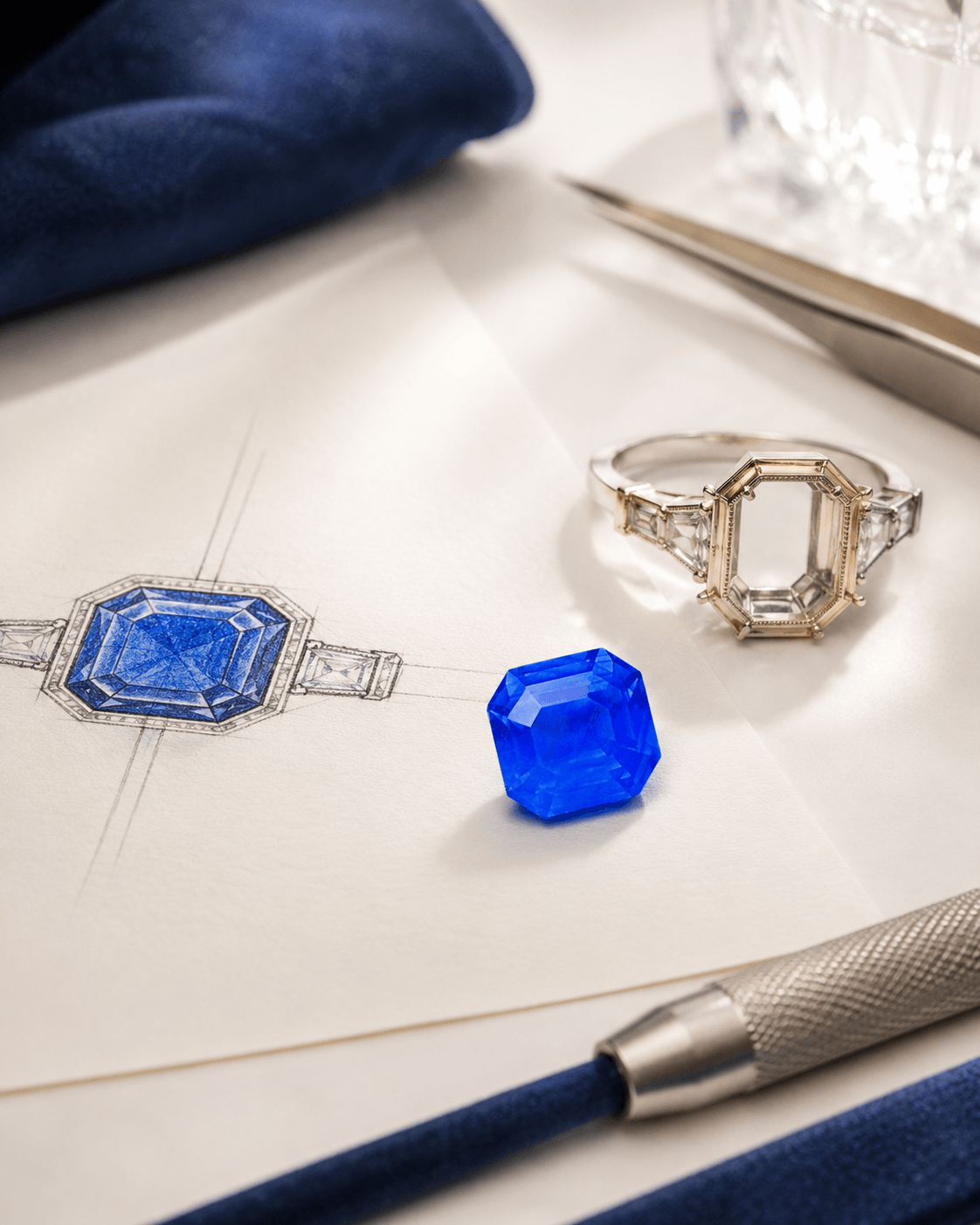
What an Emerald Cut Is
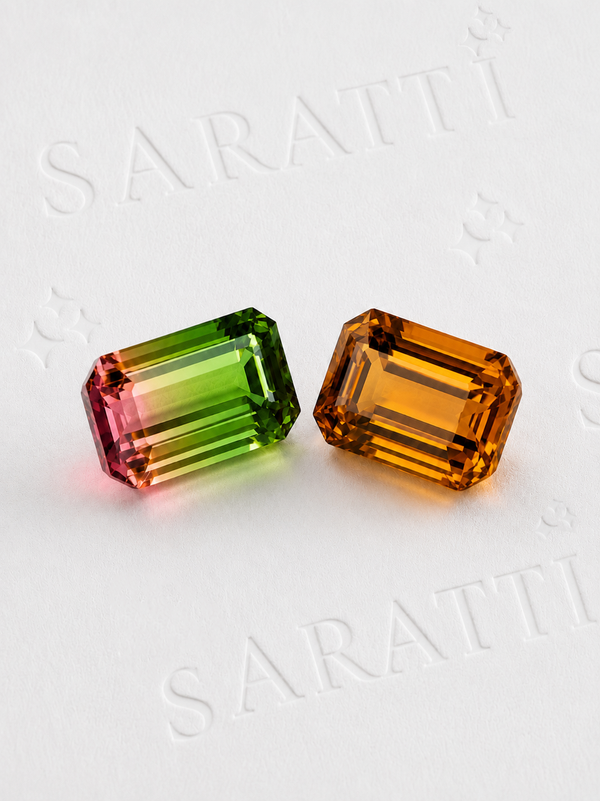
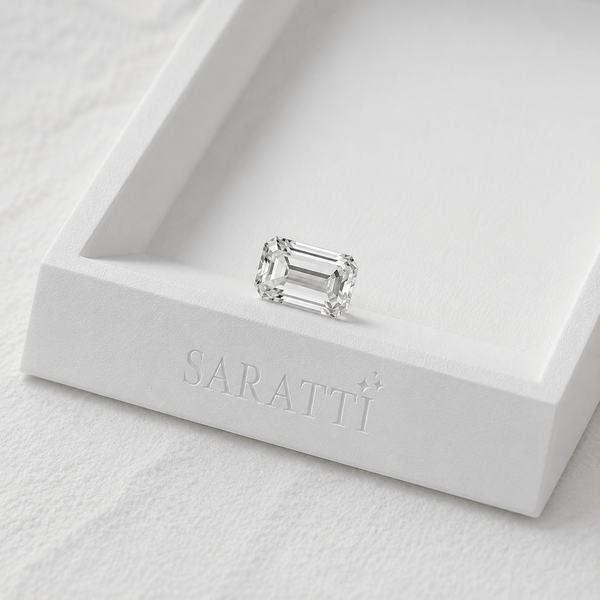
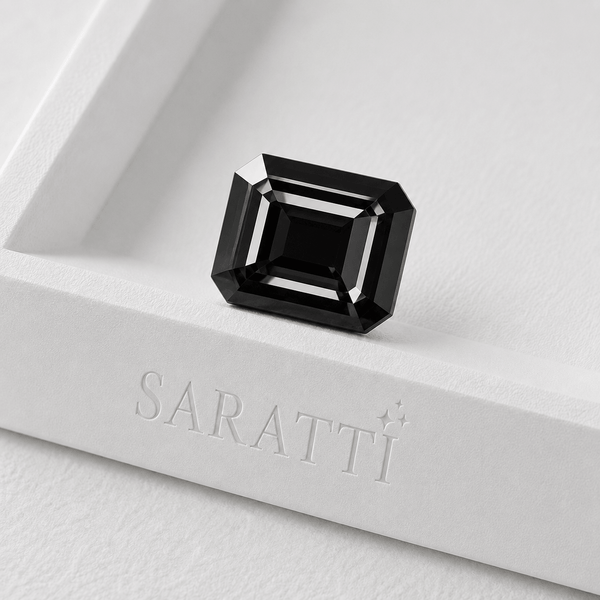
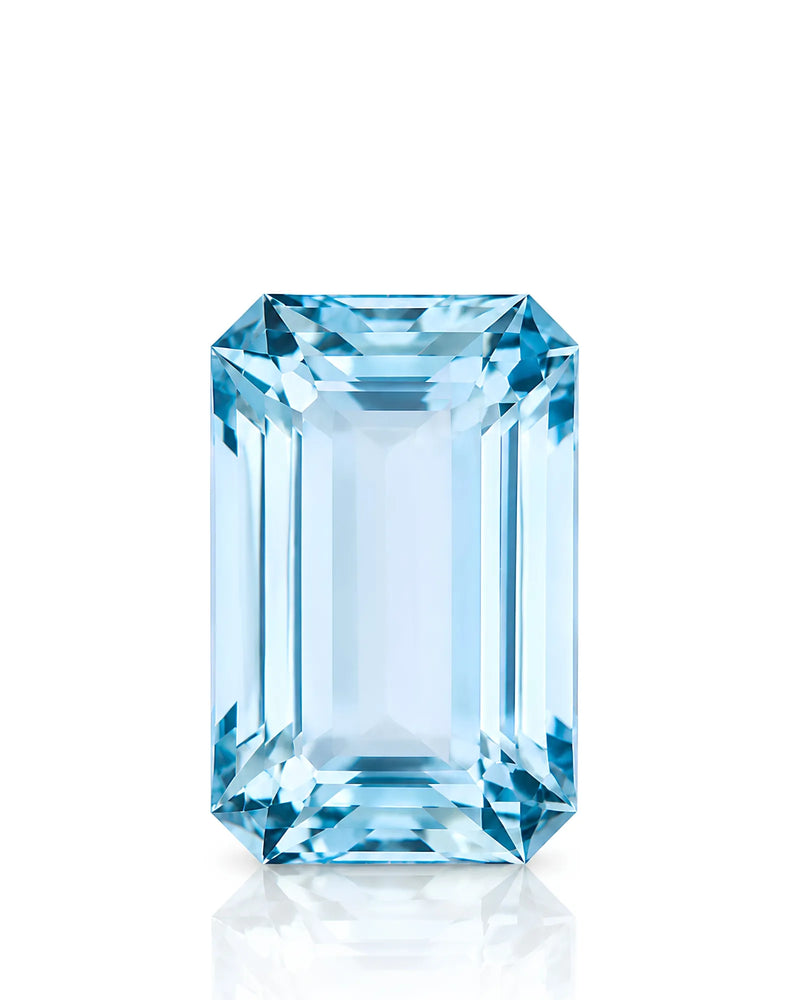
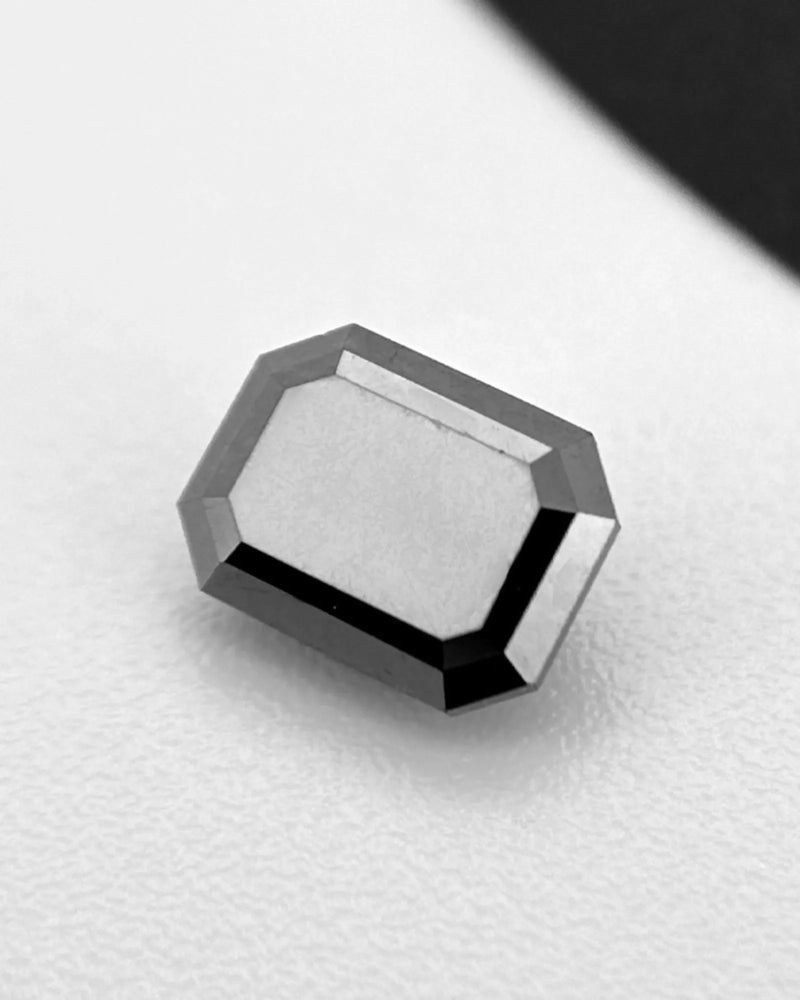
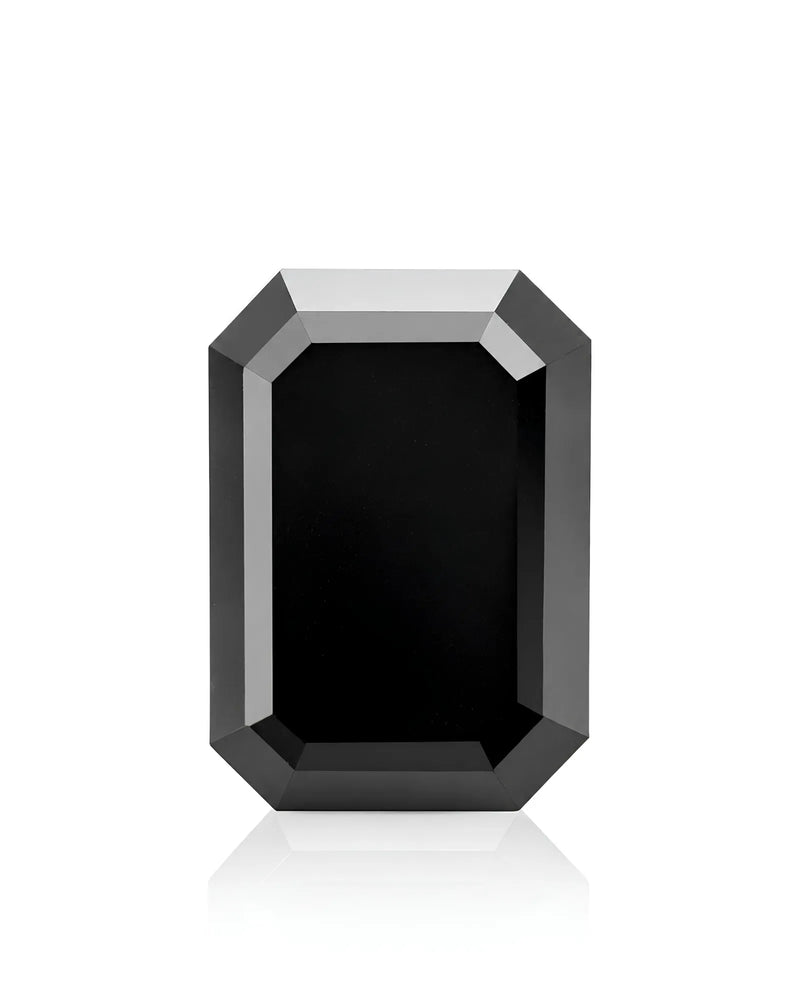
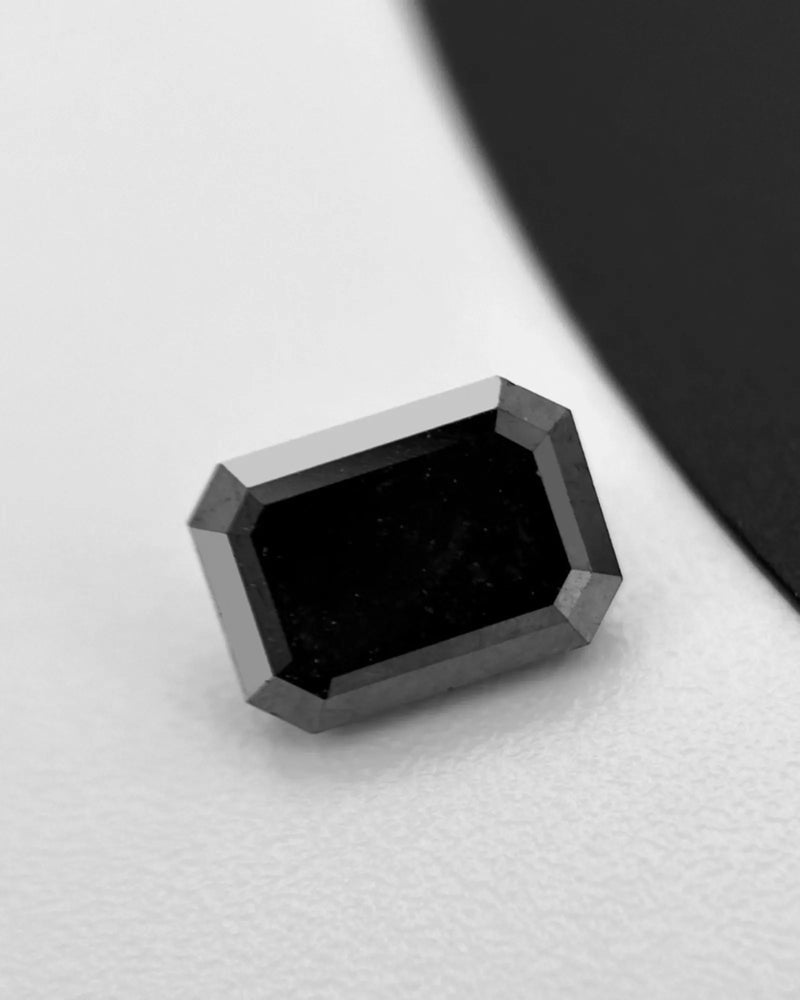
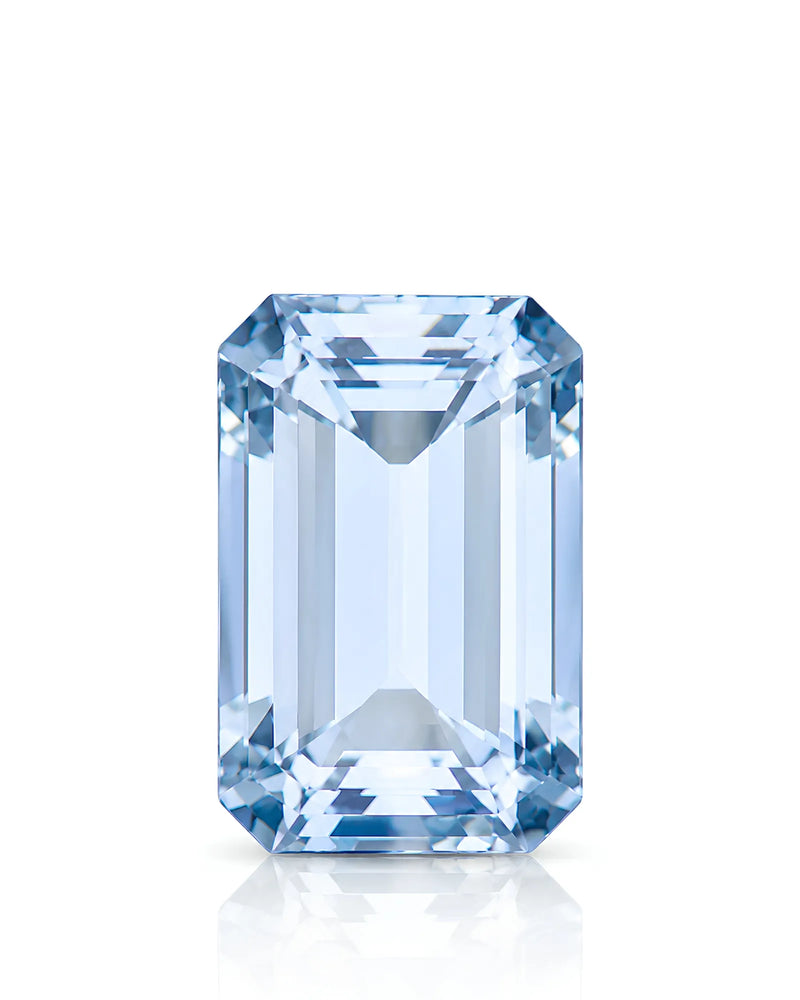
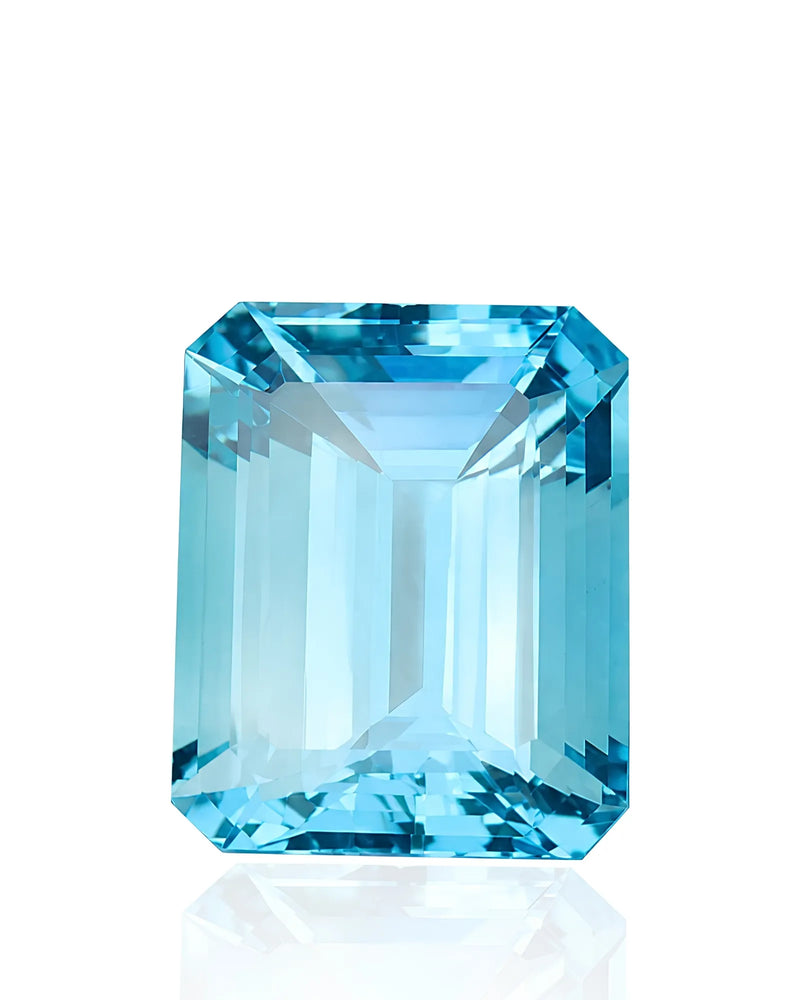
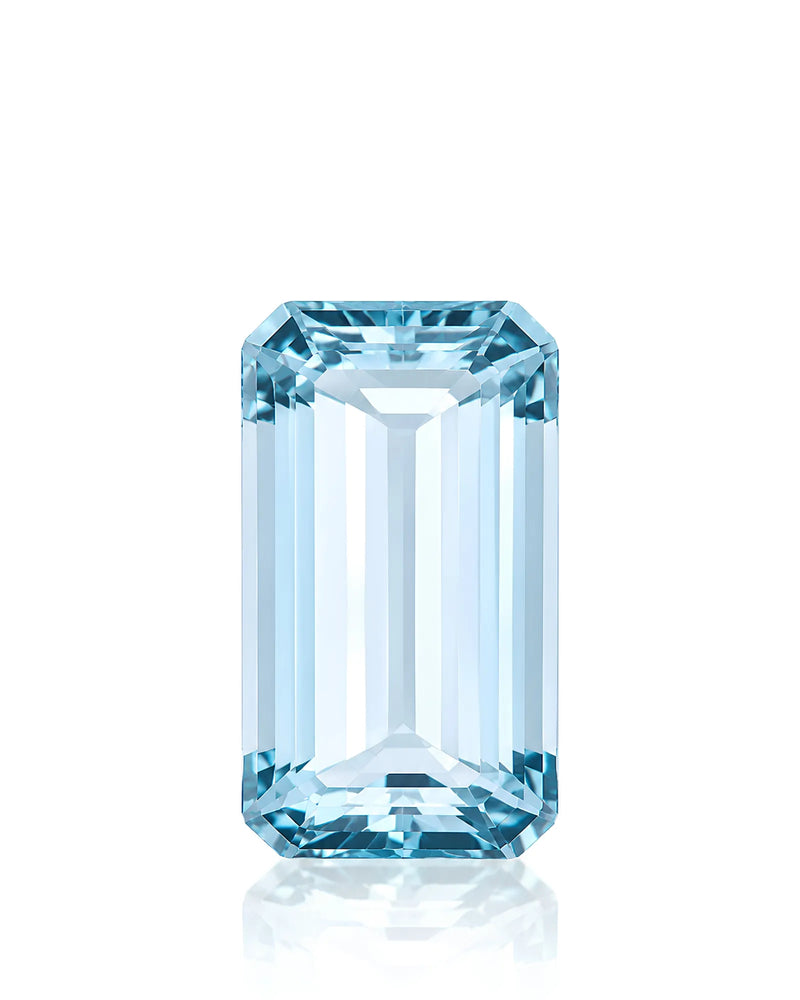
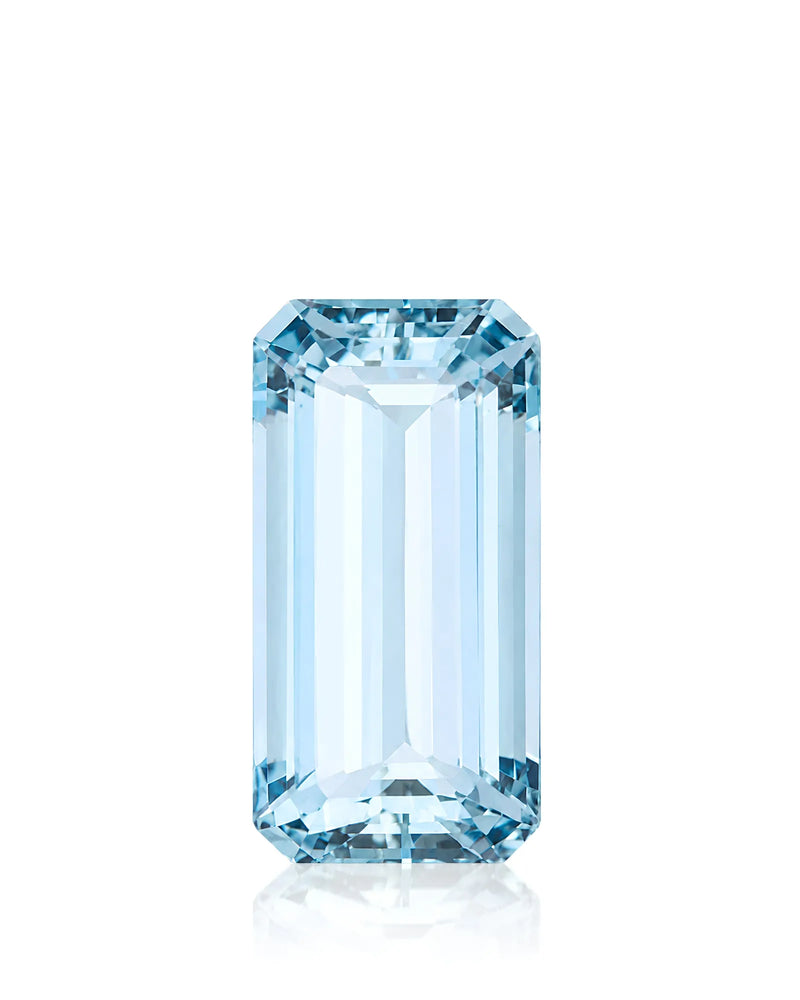
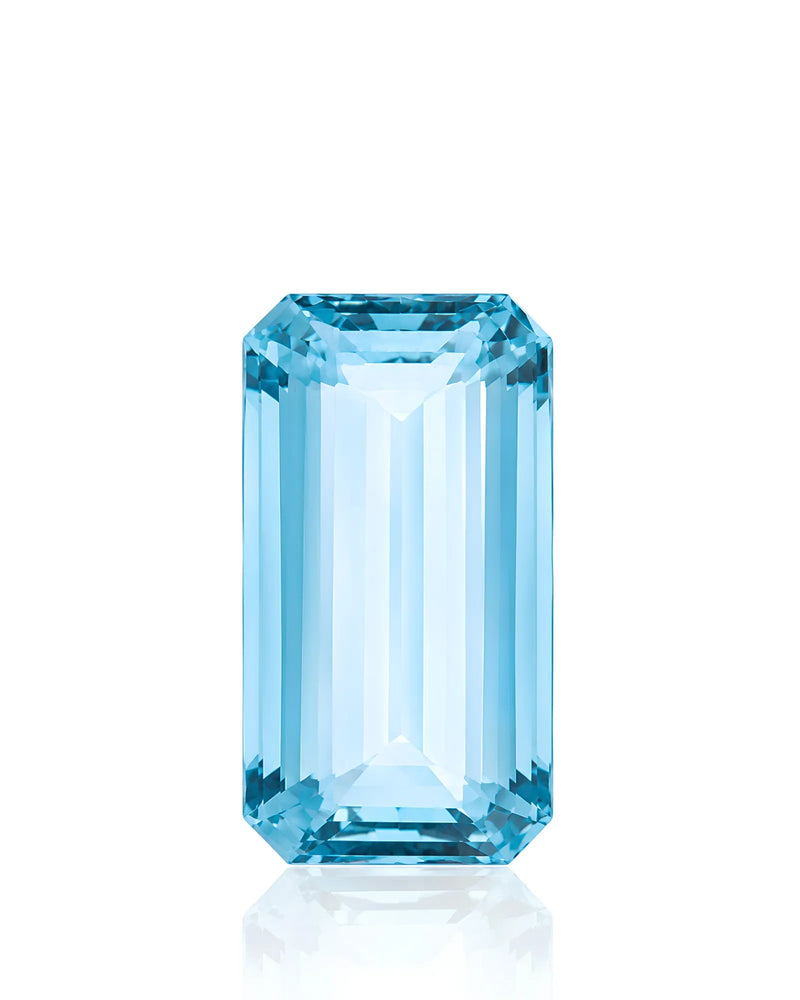
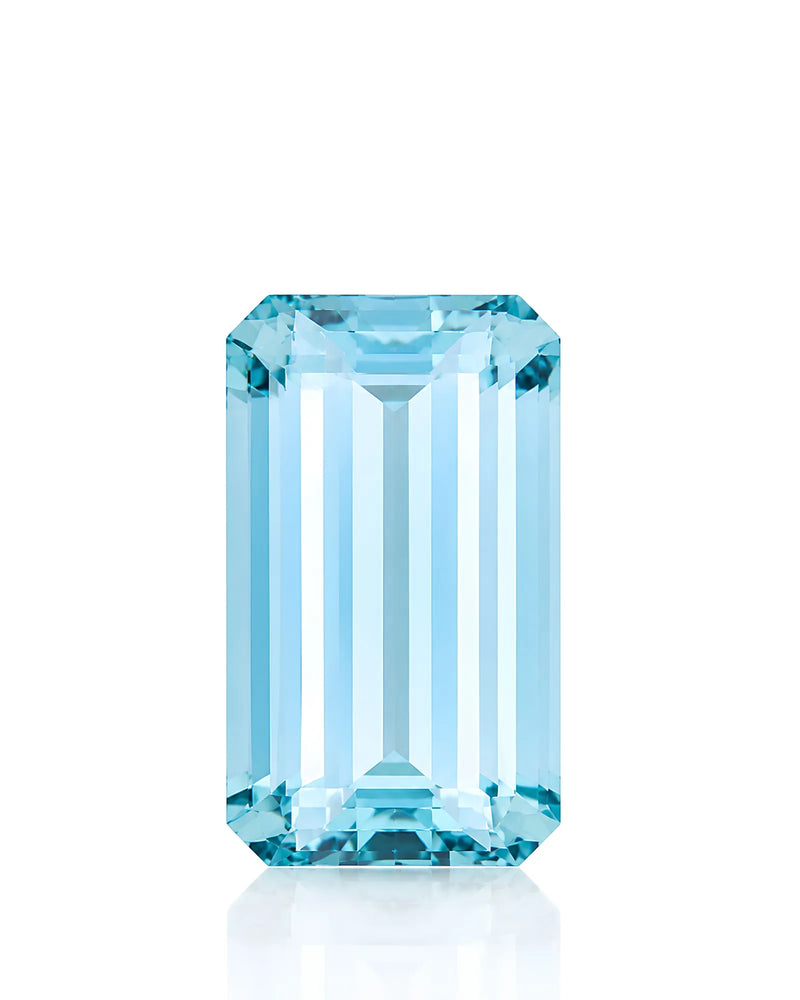
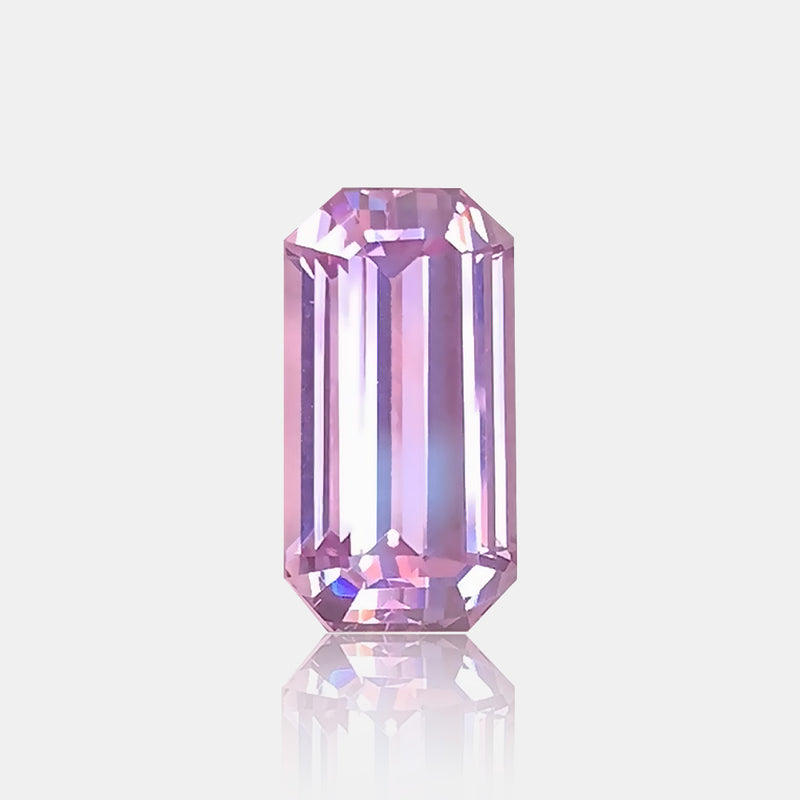
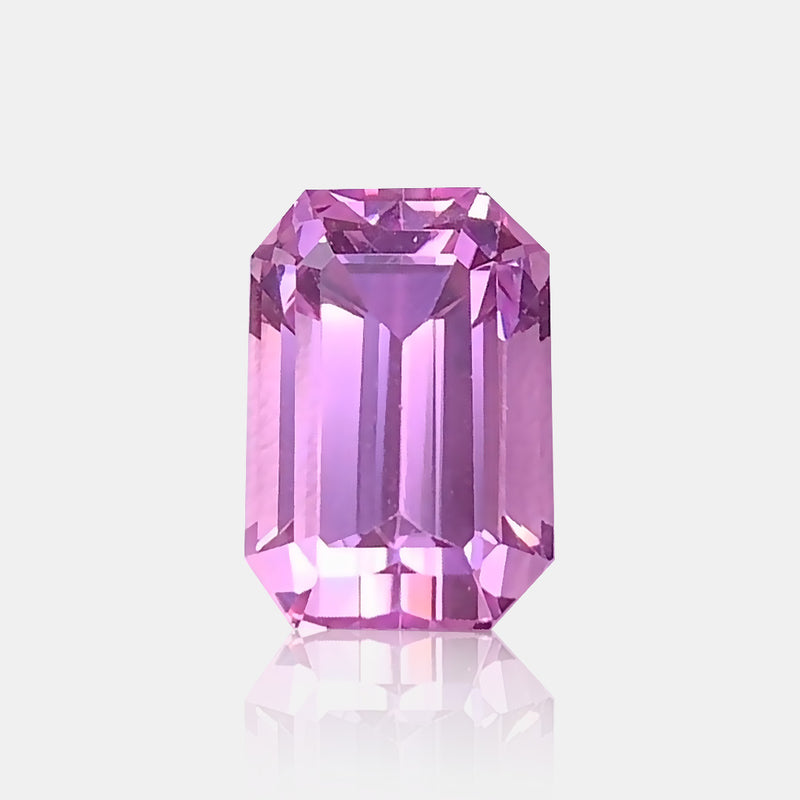
An emerald cut is a rectangle with its four corners cropped, faceted as a step cut. That last phrase is the part that matters, and it is rarely explained.
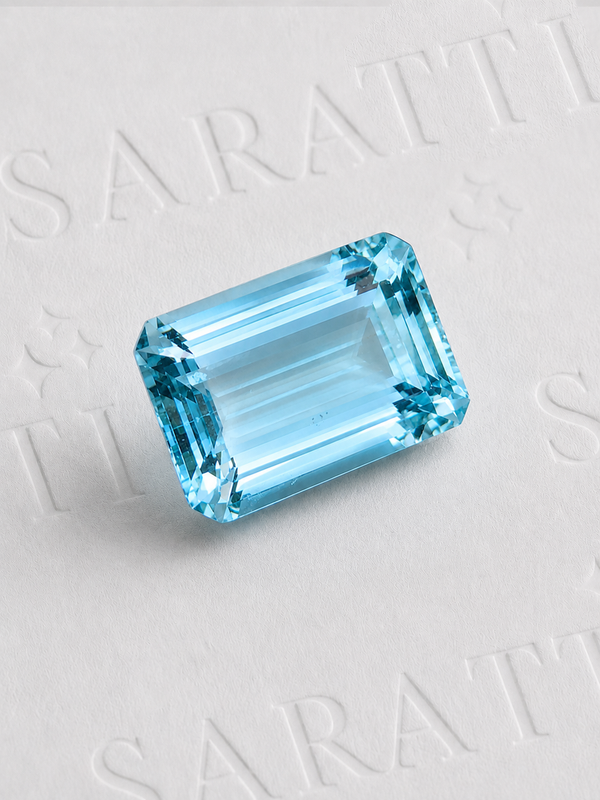
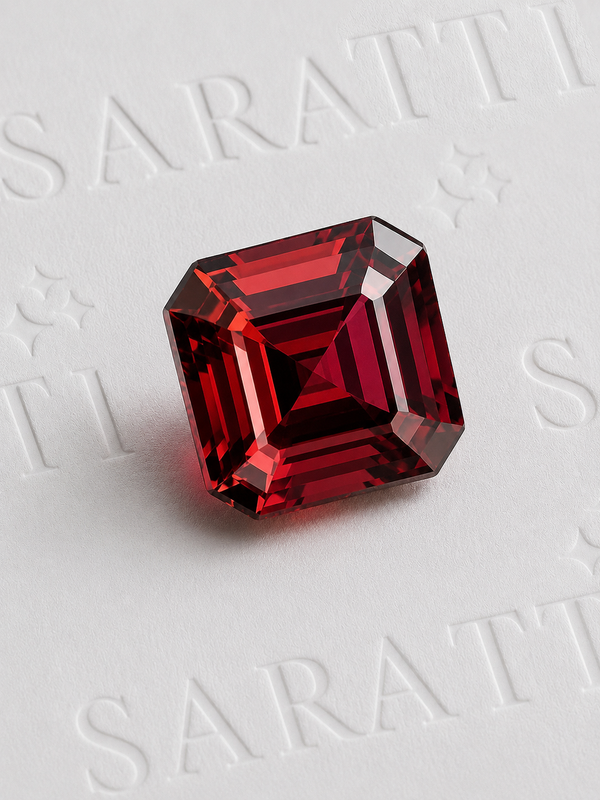
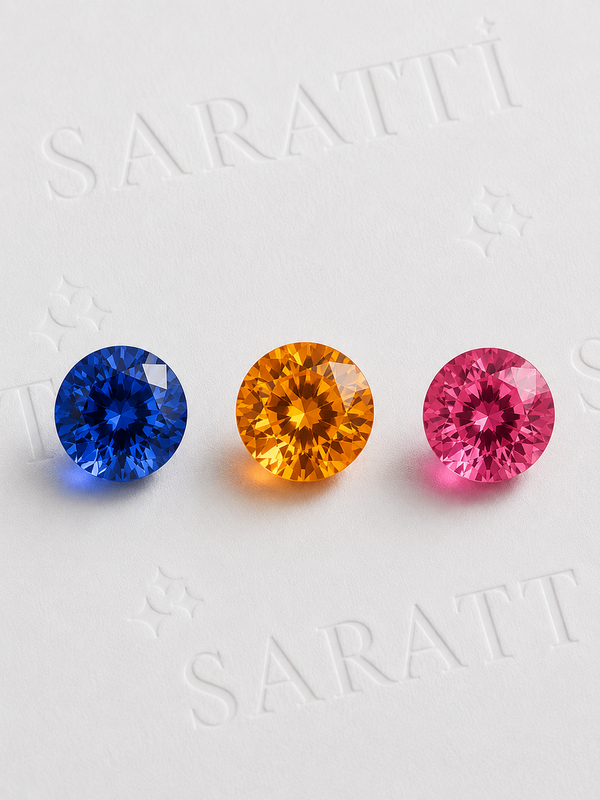
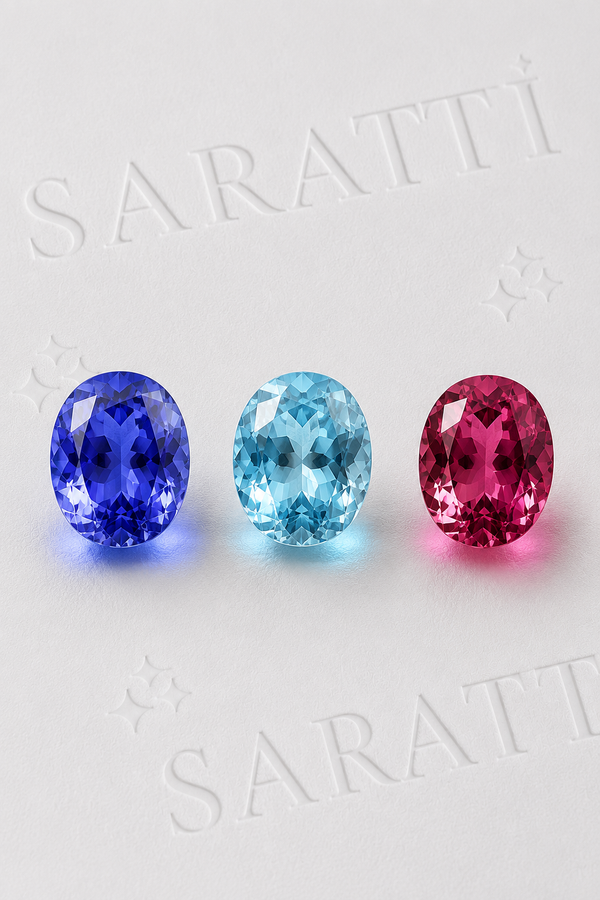
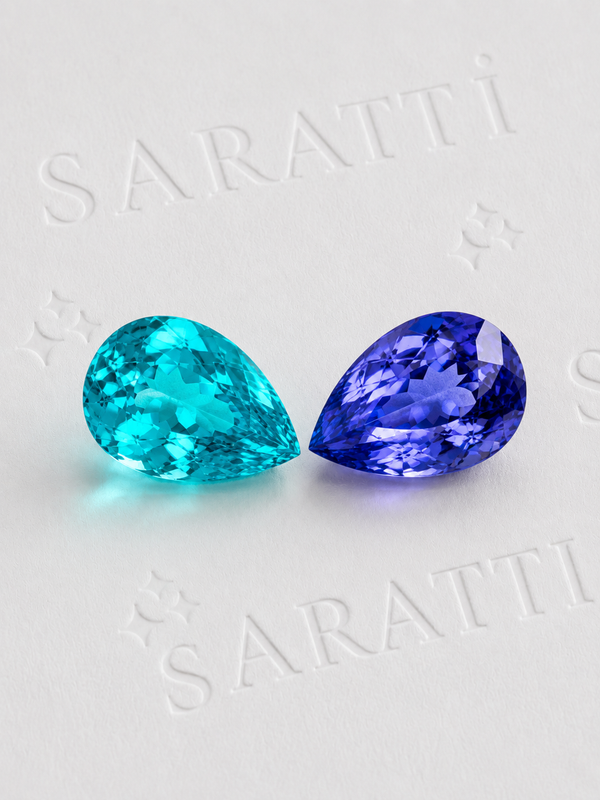
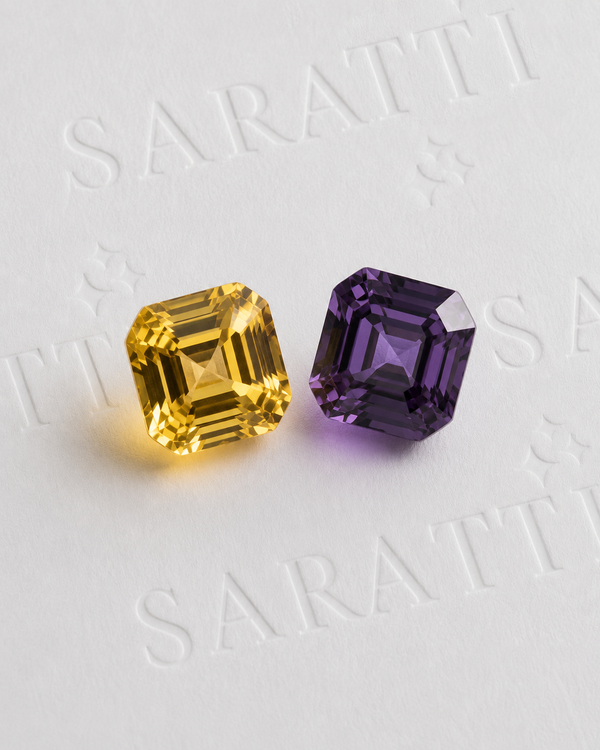
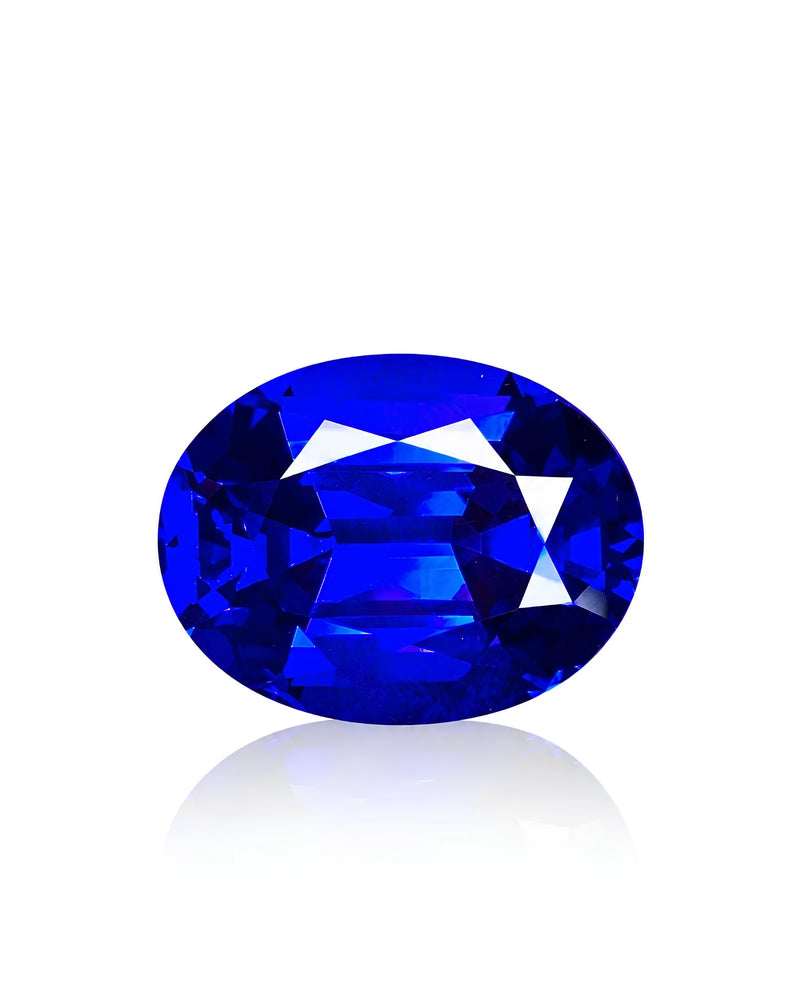
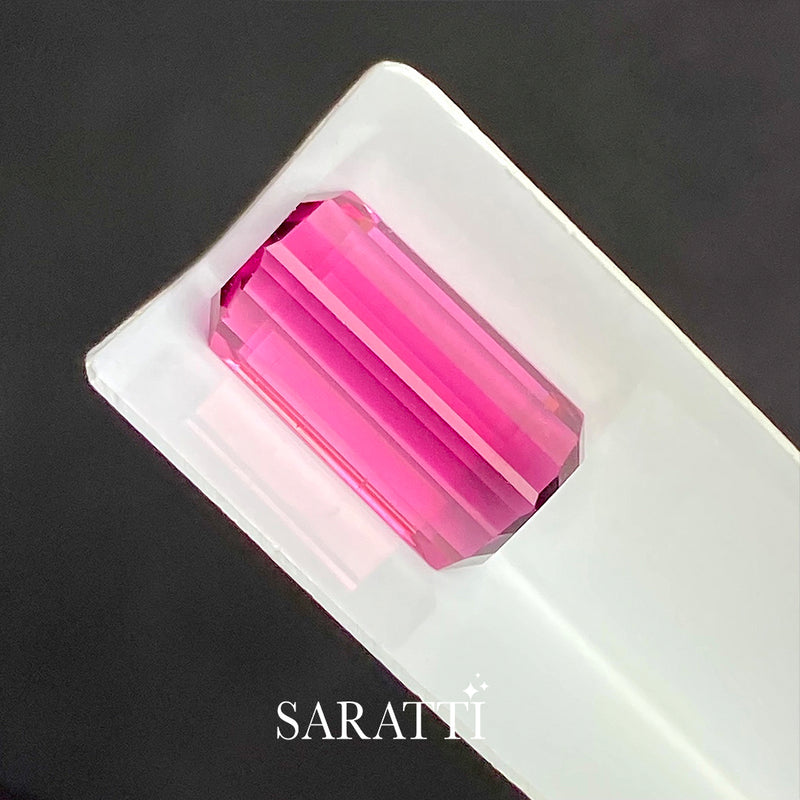
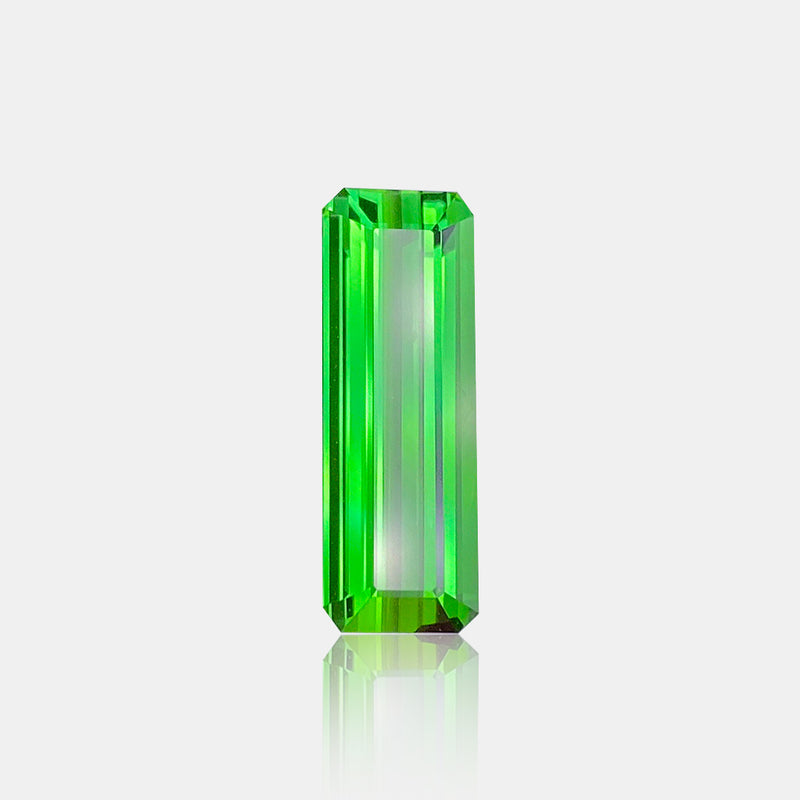
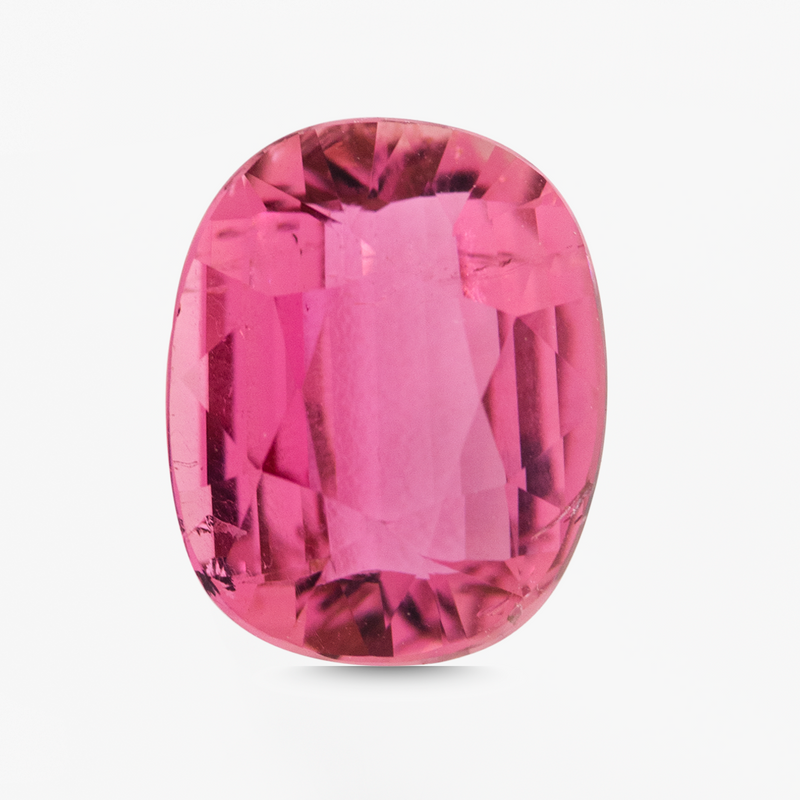
There are two families of faceting, and nearly every gemstone belongs to one. In a brilliant cut — the round, the oval, the pear, the cushion — the facets are triangles and kites arranged radially like the spokes of a wheel, small and numerous, their purpose being to break light into many separate returns. In a step cut the facets are long parallel bands running around the stone in tiers, each set at a slightly steeper angle than the one above it, descending from the girdle to the culet like the steps of an amphitheatre. There are no triangles and no kites: a large flat table on top, a few broad rows on the crown, and a few more on the pavilion below. That distinction governs everything else. The emerald cut is the best known step cut; the baguette and the carré are its smaller relatives.
Why It Was Invented
The name is not decorative: the cut was developed for emerald, to solve a specific problem in that stone. Emerald is brittle. It is reasonably hard, but its interior is a landscape of inclusions and fissures, and those planes of weakness make it prone to chipping under a knock a sapphire would shrug off. On a rectangular stone the point of maximum vulnerability is predictable: the corner, where two facets meet at ninety degrees in a thin projecting wedge with nothing supporting it. Set that corner in a claw and tighten it, and you have put pressure on the weakest millimetre of the stone.
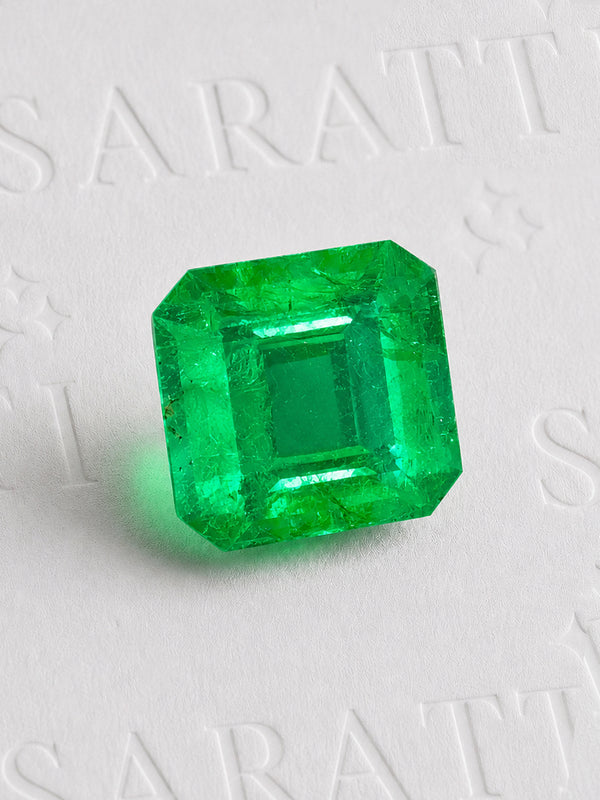
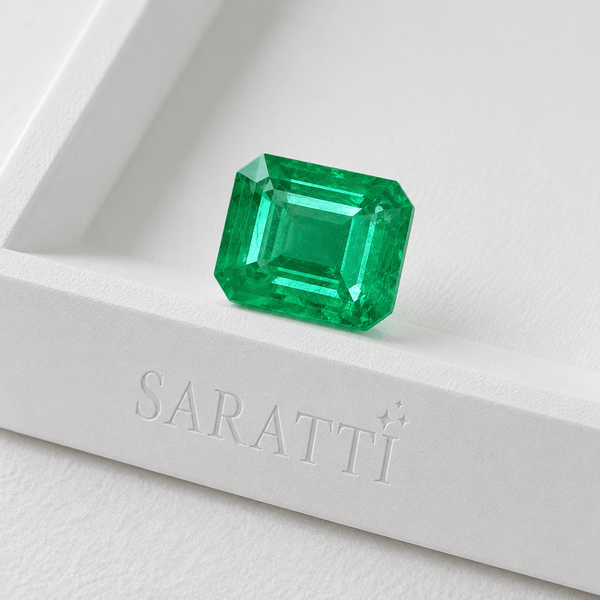
Cropping the corner removes the problem twice over. It takes away the fragile point and replaces it with a small angled facet a setter can hold securely. The cut is engineering rather than style, and its reputation for beauty came afterwards: the broad flat facets that made the stone safe to set also displayed its colour better than anything else available. The emerald collection still shows the cut in its original application.
The Hall of Mirrors
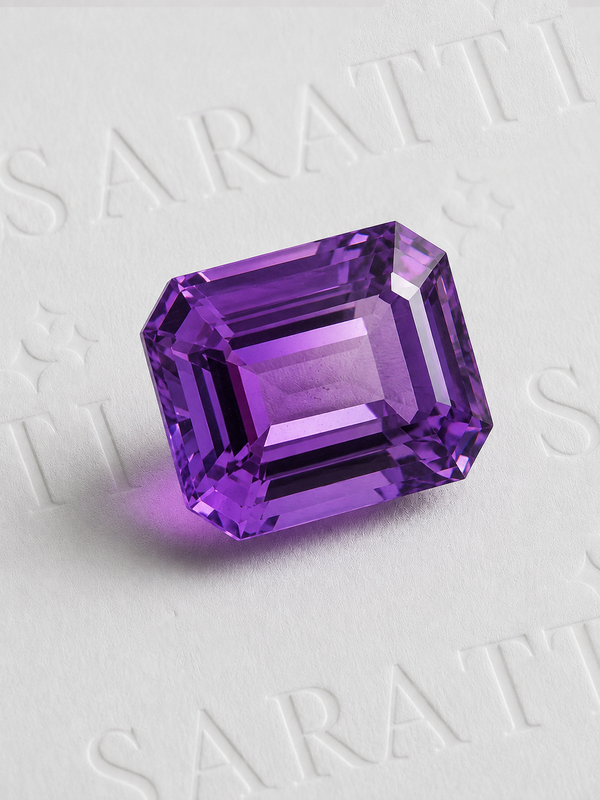
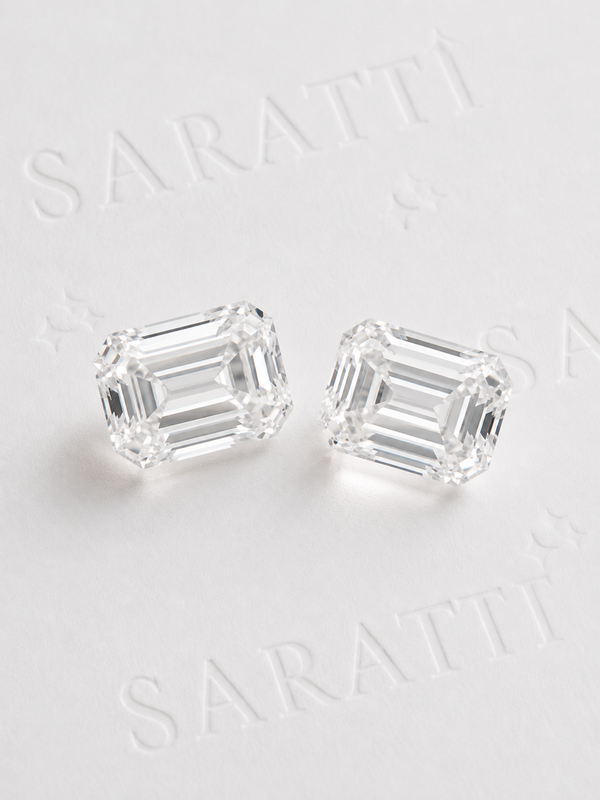
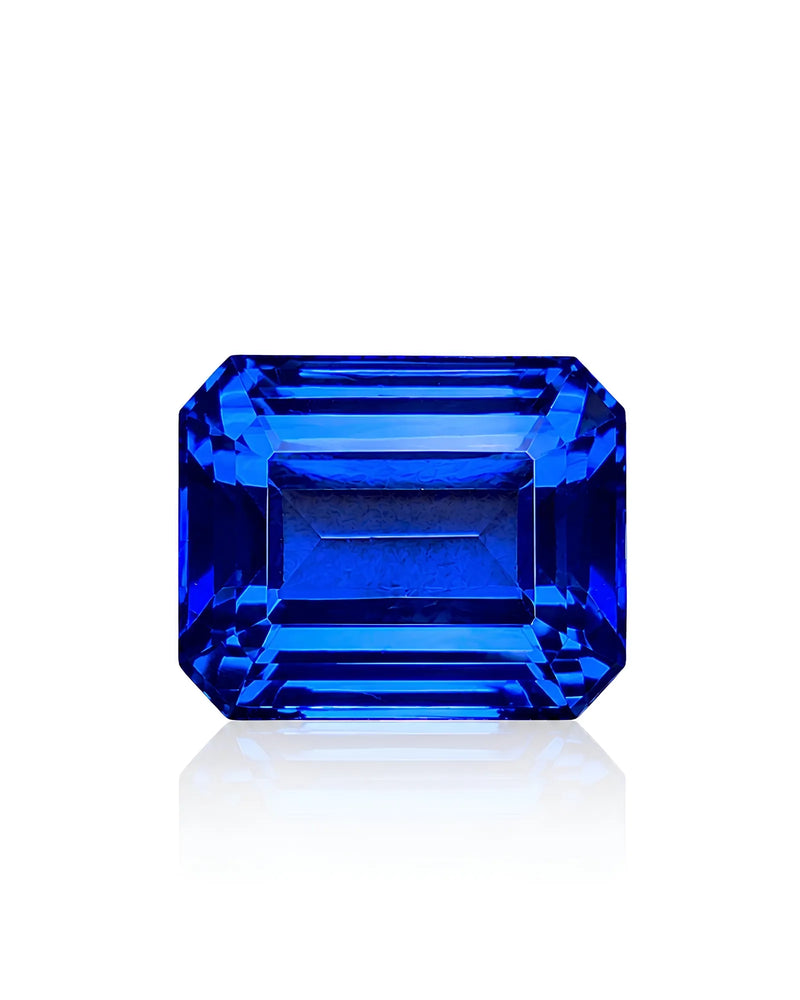
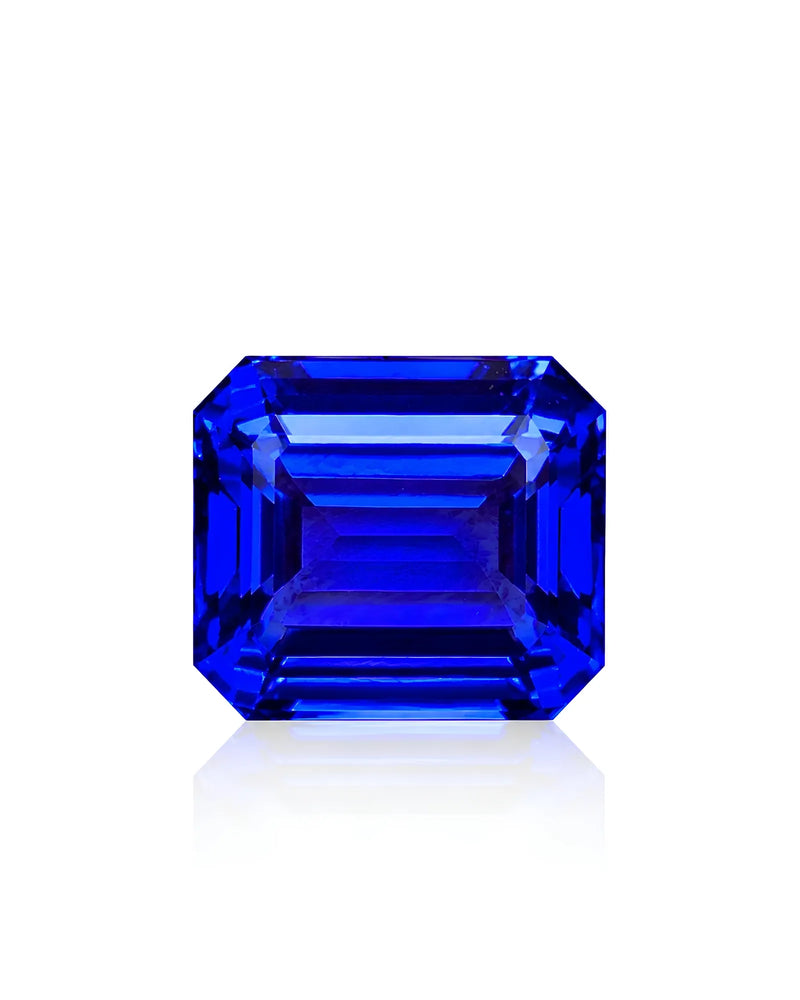
Because step-cut facets are long and flat, each behaves as a broad mirror rather than a small prism. Light entering the table strikes one, reflects across to another, and returns as a single wide flash. The facets sit in parallel tiers, so those flashes appear as a series of receding rectangles, each reflecting the next, running back into the stone like a corridor of doorways. That is the effect the trade calls a hall of mirrors, and no other cut produces it.
The consequence has to be stated honestly. An emerald cut returns less light than a well-cut brilliant of the same material. Its facets are too few and too large to produce the fine, fast scintillation of a round brilliant. An emerald cut does not twinkle. It flashes slowly, and between flashes it sits still and shows its colour.
This is not the cut you choose for sparkle. It is the cut you choose when you want to see the stone rather than a light show — when the colour is worth looking at directly, when you want the calm architectural line of a rectangle on the hand, and when you would rather have depth than glitter. It is the difference between a window and a chandelier.
Nowhere to Hide
This follows from the optics, and it is the single most important thing a buyer needs to understand. A brilliant cut is, among other things, a camouflage system: dozens of small facets throwing light in every direction swallow internal disturbance, and a needle, a feather, a cloud or a faint colour band disappears in the visual noise. A step cut does none of that. The table is broad, the crown facets are few, and you are looking straight down into the body of the stone through a sheet of glass. Everything inside is on display.
The results are three. Inclusions invisible in a cushion or an oval are plainly visible here, so material that passes in those shapes will not pass in this one. Colour zoning — an uneven band of stronger or weaker colour through the crystal — is exposed rather than blended, which is why zoned sapphire is rarely cut this way. And the same clarity grade costs more in an emerald cut, because the material must be better to begin with and a cutter will not commit good rough to this shape unless it can survive the exposure.
The corollary is the reason to buy one. Fine material looks better in an emerald cut than in any other shape, because nothing stands between the eye and the stone. A flawless aquamarine or an unzoned Ceylon sapphire cut this way is as close as gemmology comes to showing you the crystal itself.
Length-to-Width Ratio
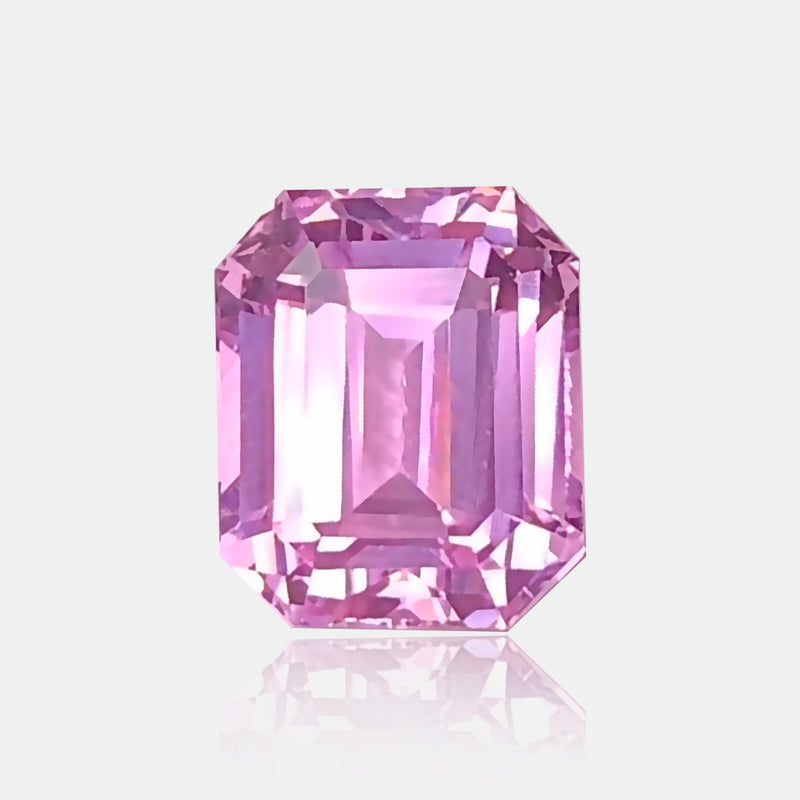
The length-to-width ratio is the long measurement divided by the short one, and it does more work here than on any other shape, because the outline is unbroken by curves and the eye reads it as pure geometry. The classic range runs from roughly 1.30 to 1.50. At 1.30 the stone is a broad rectangle that sits square on the finger and shows the most colour for its weight; at 1.50 it is distinctly elongated, slims the hand, and has the drawn architectural line most people picture. Between 1.35 and 1.45 is where most fine stones sit. Beyond 1.60 it reads as a baguette, which is a legitimate choice but a different one.
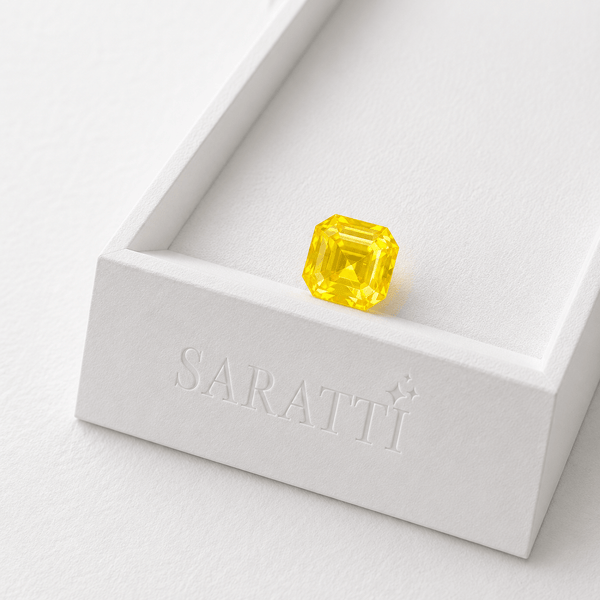
At close to 1.00 the shape becomes square, and a square emerald cut with cropped corners and a high crown is an Asscher. It concentrates the hall-of-mirrors effect into a symmetrical spiral running to the centre of the stone, and because it is deeper and more steeply crowned it usually shows more life. It also has less face-up spread — the visible surface a stone presents when set — than an elongated cut of the same weight, because more of that weight sits below the girdle.
Windowing and the Depth Question
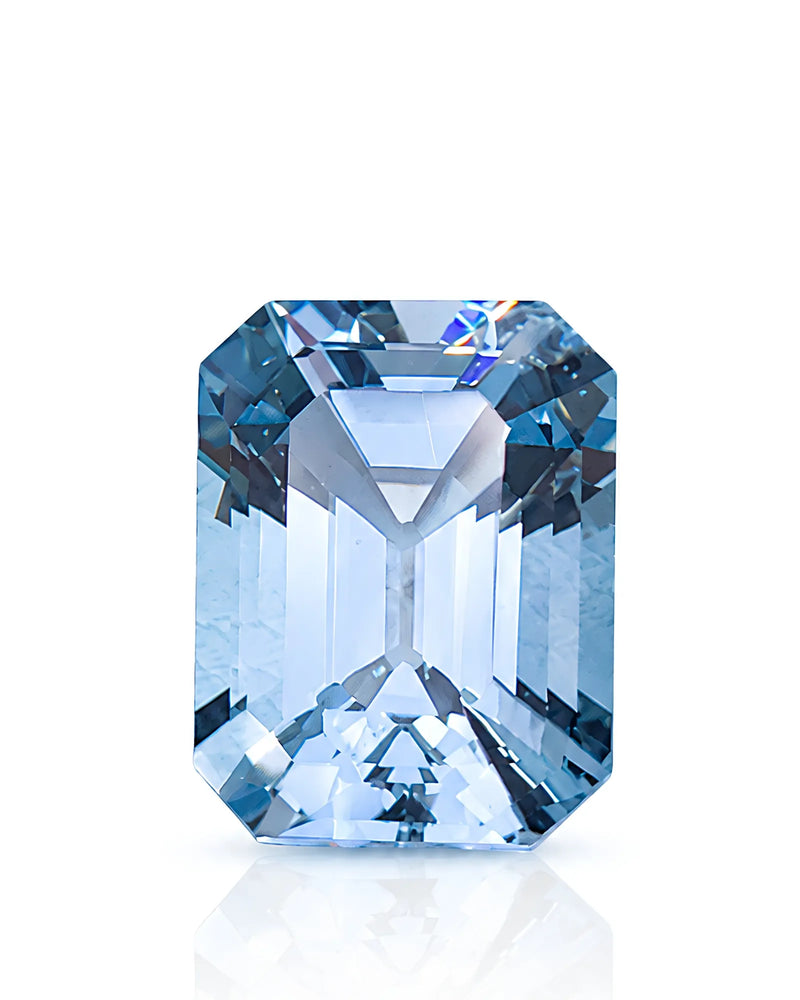
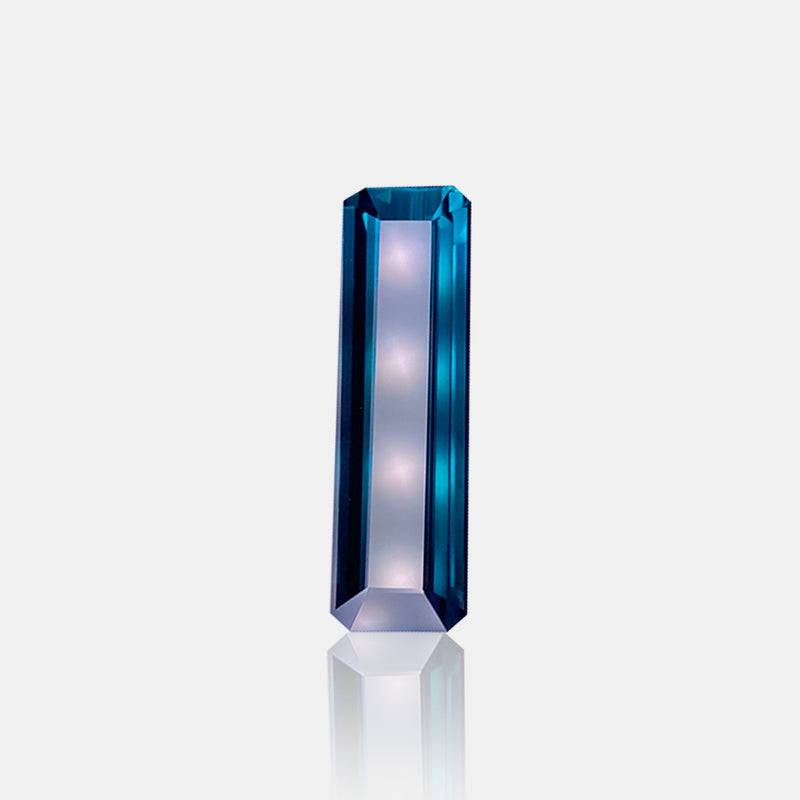
Windowing is what happens when a stone is cut too shallow. Light entering the table passes through the pavilion and out of the back instead of reflecting internally, leaving a pale transparent patch in the centre through which you can see the setting or your own finger. The opposite fault is a pavilion cut too deep, which sends light out through the sides, leaves the centre dark, and buries weight beneath the girdle where nobody can see it.
Every faceted stone can suffer both faults, but the emerald cut suffers most visibly, having no brilliant facetting to disguise either. A windowed cushion still throws enough scattered light to distract from the hole in the middle; a windowed emerald cut is simply a window. That makes it the least forgiving shape in the trade for poor proportions, which is why cutters charge more for it and why a badly proportioned example is a poor buy at any price.
Which Gemstones Suit an Emerald Cut
The cut suits four kinds of material, and is a mistake in a fifth.
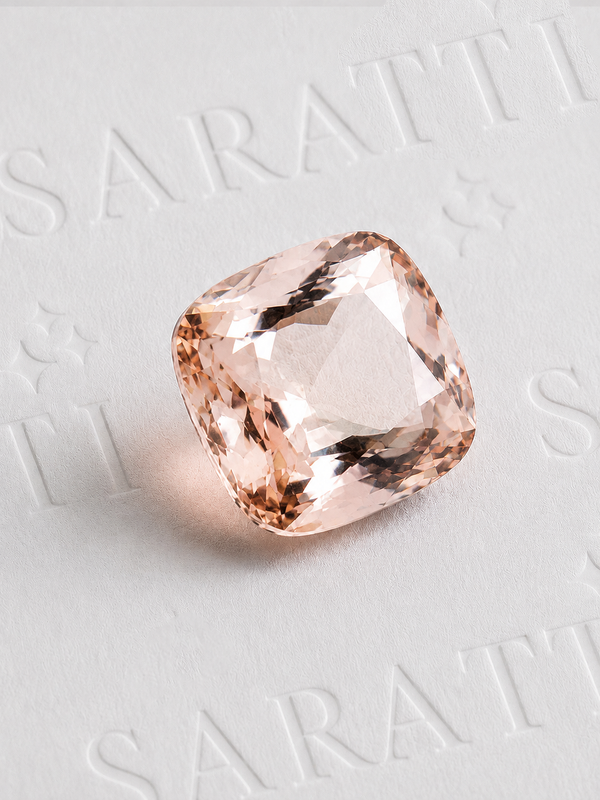
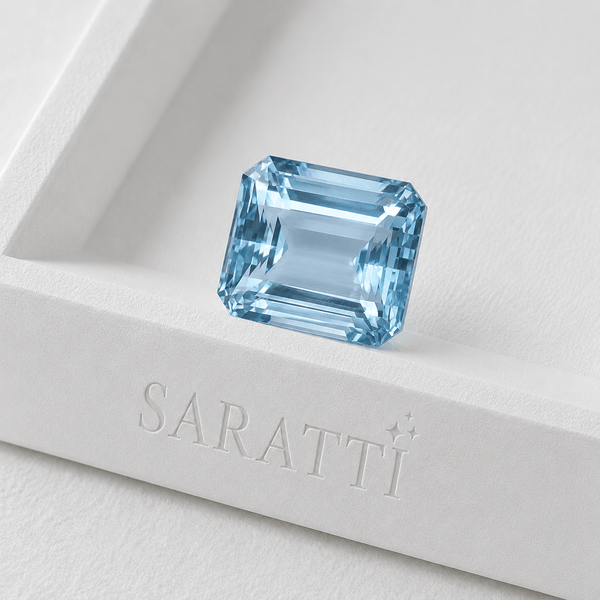
Clean beryls come first. Aquamarine and morganite are Type I gemstones, routinely free of eye-visible inclusions, and the step cut is the shape that gives them credit for it. Glassy material with nothing to hide gains more from an open cut than from a brilliant.
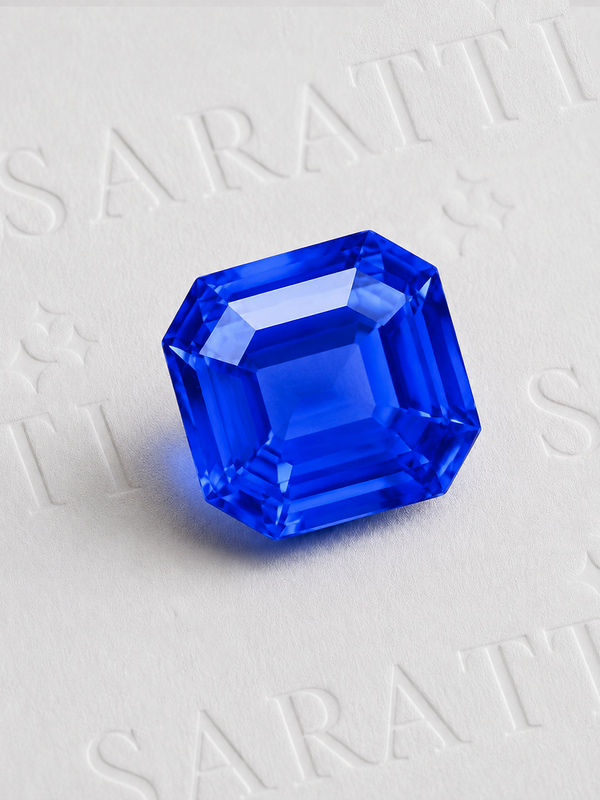
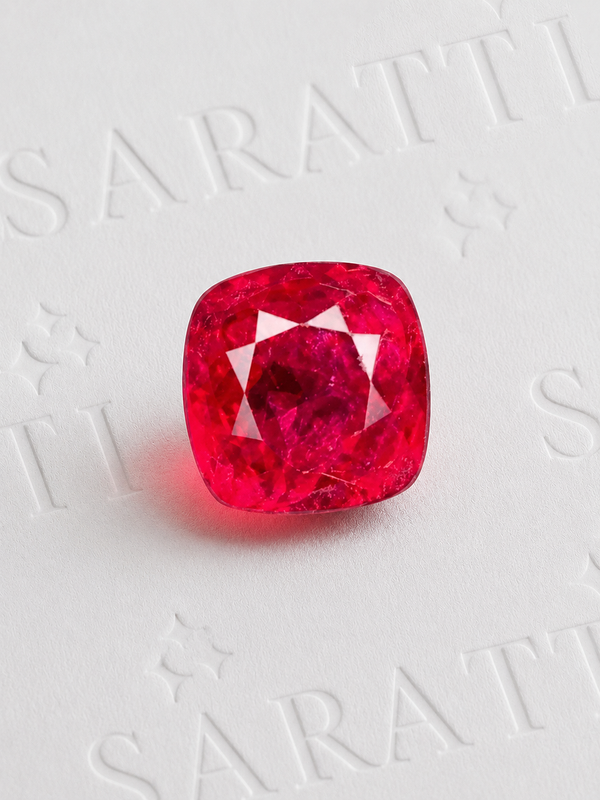
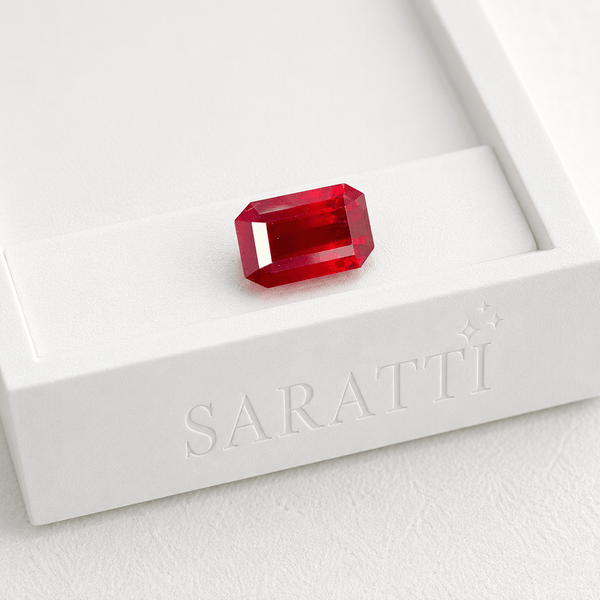
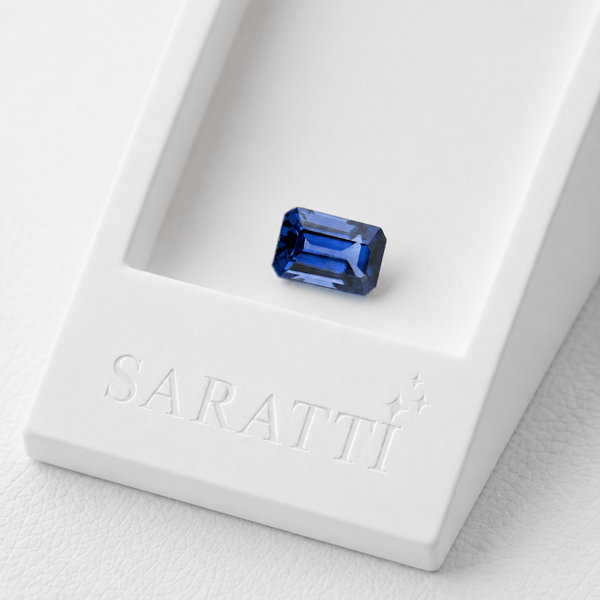
Saturated corundum comes second. On a fine sapphire or ruby the long parallel facets carry colour across the stone in unbroken sheets, a more convincing display of saturation than the same colour chopped into fragments. The material must be unzoned.
Third, pale stones benefit from the depth, because colour intensity depends on the distance light travels through a crystal and a step cut's long path lengths build colour a shallow brilliant would wash out.
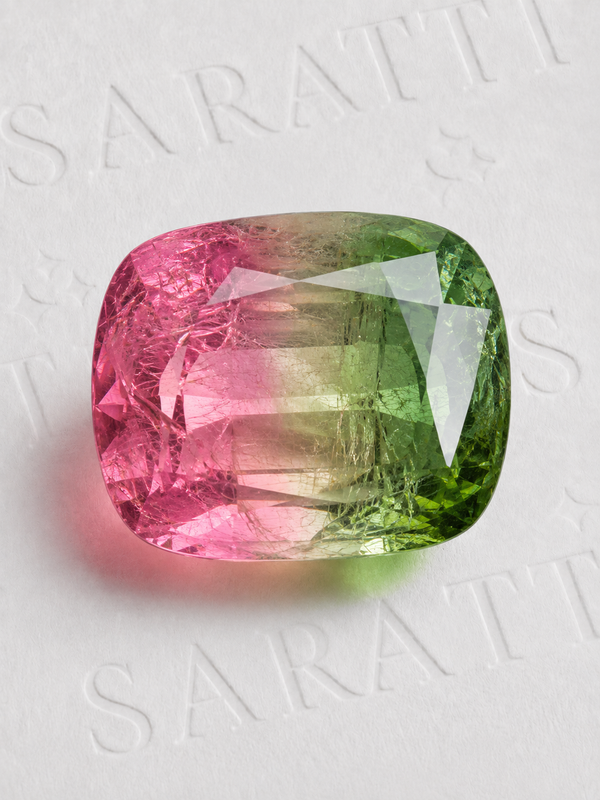
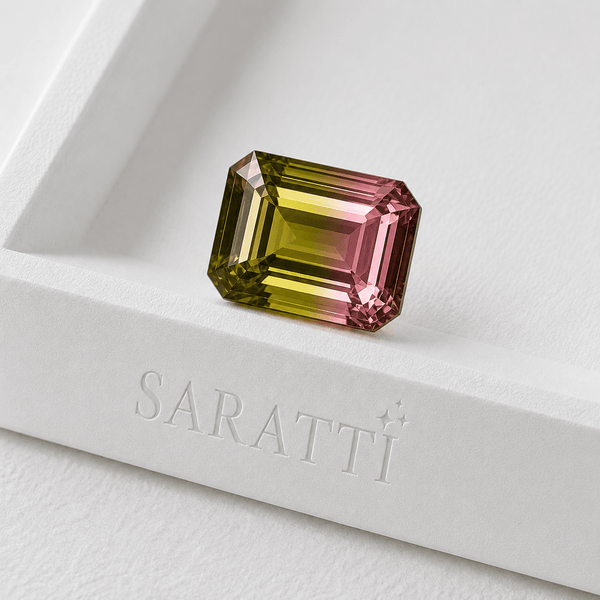
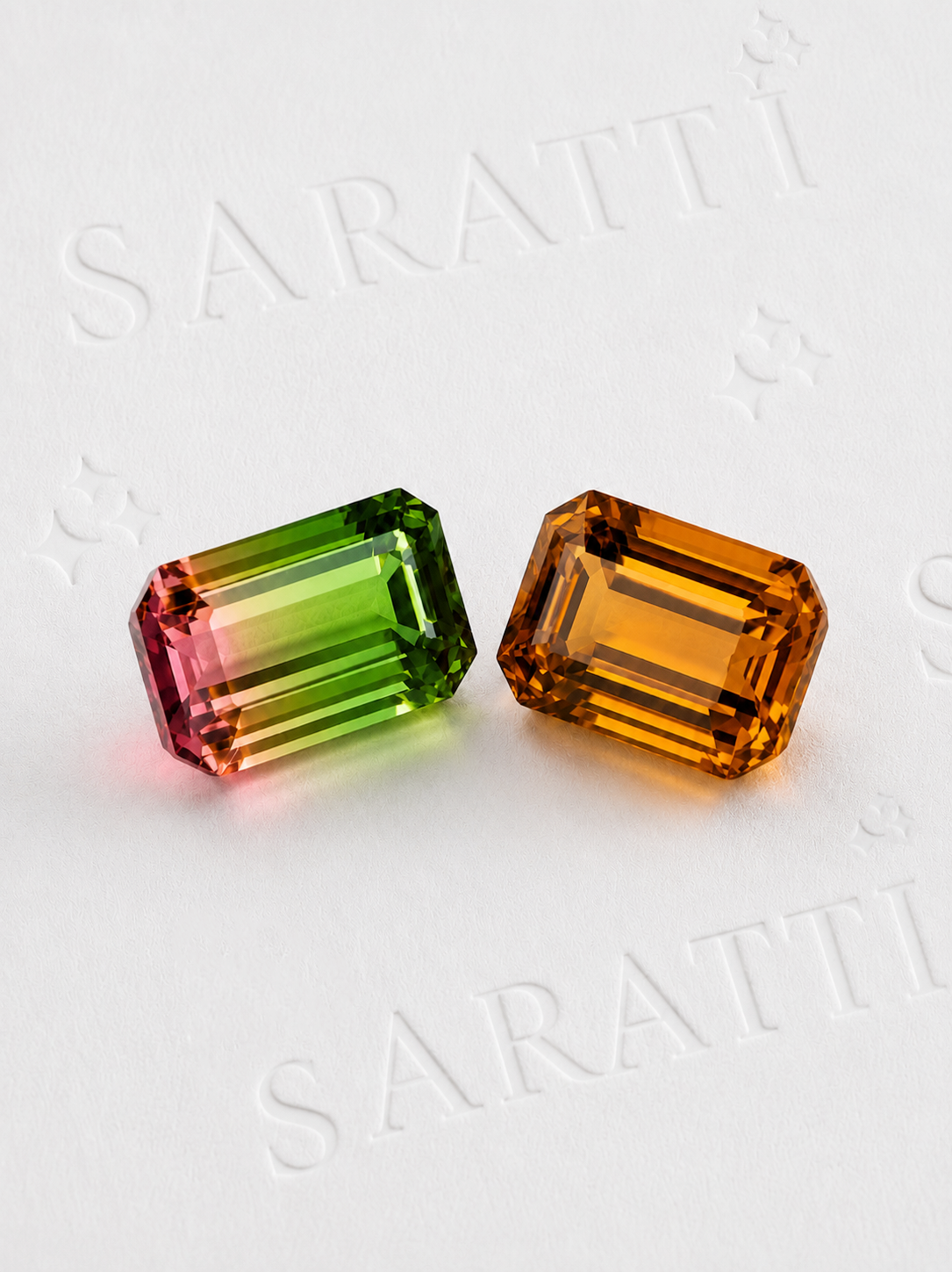
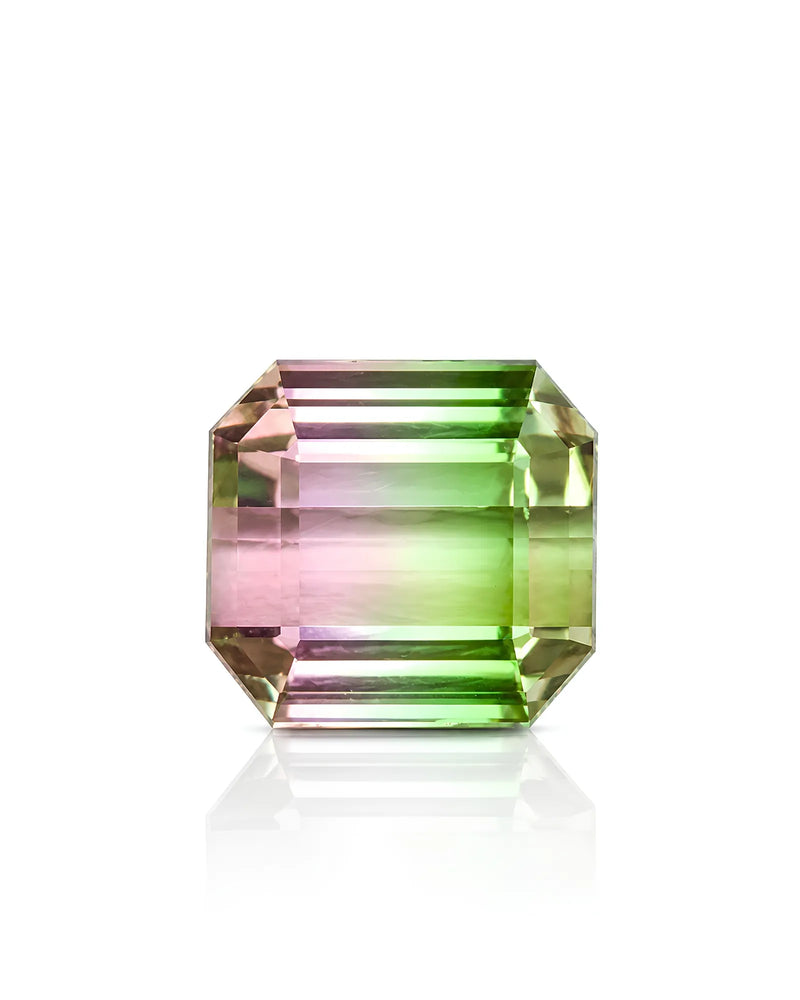
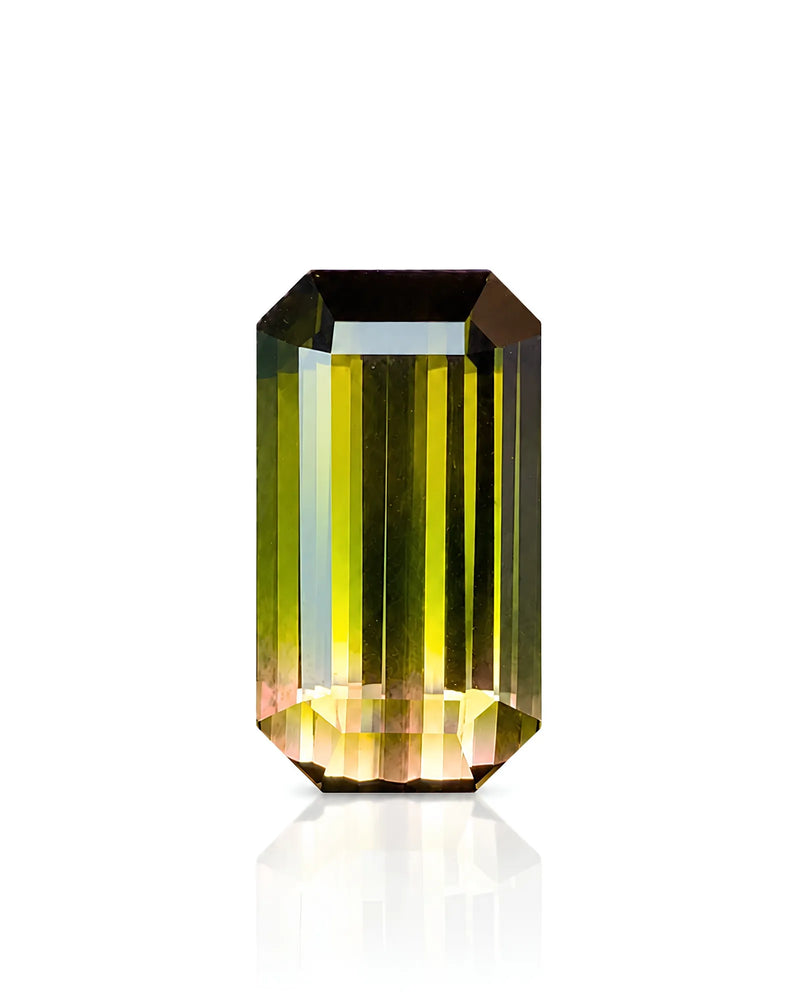
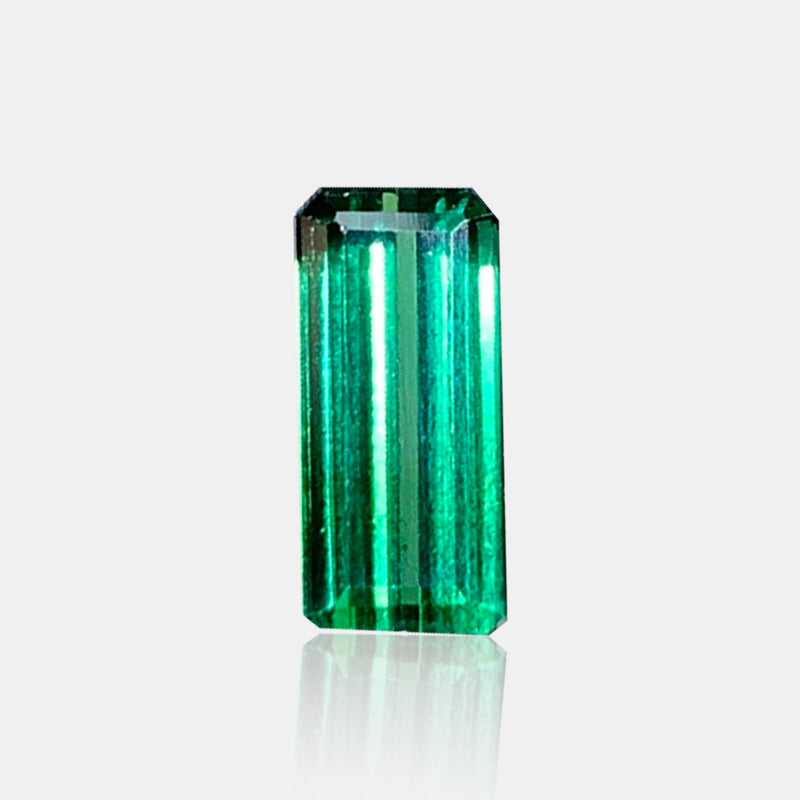
Fourth, strongly pleochroic material — stones showing different colours along different crystal directions — suits the elongated outline, because the cutter can orient the long axis along the crystal and hold the best colour face-up across the table. Much tourmaline is cut this way.
The mistake is included material. Despite the name, a heavily included emerald is the wrong candidate for its own cut; heavy jardin belongs in a cabochon or a cushion, where the facetting will absorb it.
The Art Deco Inheritance
The step cut existed for centuries before it became fashionable, and what made it fashionable was architecture. In the 1920s and 1930s design turned to straight lines, stepped setbacks and geometric repetition, and a rectangular stone with stacked parallel facets was the ideal jewel for that vocabulary: it could be set flush in a line, paired with baguettes, and repeated without clutter. The association stuck, and an emerald cut still reads as period even in a modern setting, which is why it appeals to people who want a ring that does not look as though it was designed this year.
Setting an Emerald Cut
The cropped corners are where the claws go. That is what they are for, and a well-made setting holds the stone at those four angled facets and nowhere else, distributing pressure across a flat surface rather than concentrating it on a point. Bezels suit the shape particularly well, because a continuous metal rim echoes the rectangle and protects the girdle along its whole length; half-bezels and corner claws achieve much the same with less coverage.
There is a practical advantage too. A step cut is comparatively shallow and sits flat and low on the hand, so it catches less on clothing than a high-crowned brilliant and puts less of the stone in the path of a knock. For a stone worn every day, that geometry is worth having.
Judging an Emerald Cut Before You Buy
Look at the table first, straight down, in daylight. A pale washed patch in the centre means the stone is windowed, and no setting will fix it. Tilt it slowly and watch whether the flashes are broad and even or whether one end goes dark, which indicates an asymmetrical pavilion.
Then check the corners. They should be even in size, cut at matched angles, and neither so small that they leave a fragile point nor so large that the stone reads as an octagon. Check that the rows of facets are parallel and that the lines meeting at the corners actually meet; a step cut shows misalignment more clearly than any other shape, and sloppy junctions are the mark of a hurried cutter.
Look for inclusions face-up, because face-up is how the stone will be worn, and for zoning by rocking it under a single light source. Take the measurements and calculate the ratio yourself rather than trusting the description, and compare face-up spread against carat weight — a heavy stone with a small footprint carries weight where you cannot see it. Our guide on identifying a high-quality emerald cut works through the same checks, and the standard we apply is set out in how SARATTI grades gemstones.
Choosing an Emerald Cut
Decide first whether you want sparkle or clarity, because this cut gives the second at the cost of the first. If you want sparkle, buy a brilliant. If you want to look into a stone rather than at a light show, this is the shape, and it rewards good material more than any other shape does. Spend the budget on clarity before size: an eye-clean stone of moderate weight will outperform a larger one with visible inclusions, because the whole point of the shape is that you can see everything. Choose the ratio last, on the hand rather than on a screen.
Every stone here is listed individually, with its measurements, its ratio and its treatment stated, and the full range of loose gemstones can be filtered by shape. Only part of what we can reach is listed online. Describe it, and we will go and look.