Garnet Is a Group, Not a Species
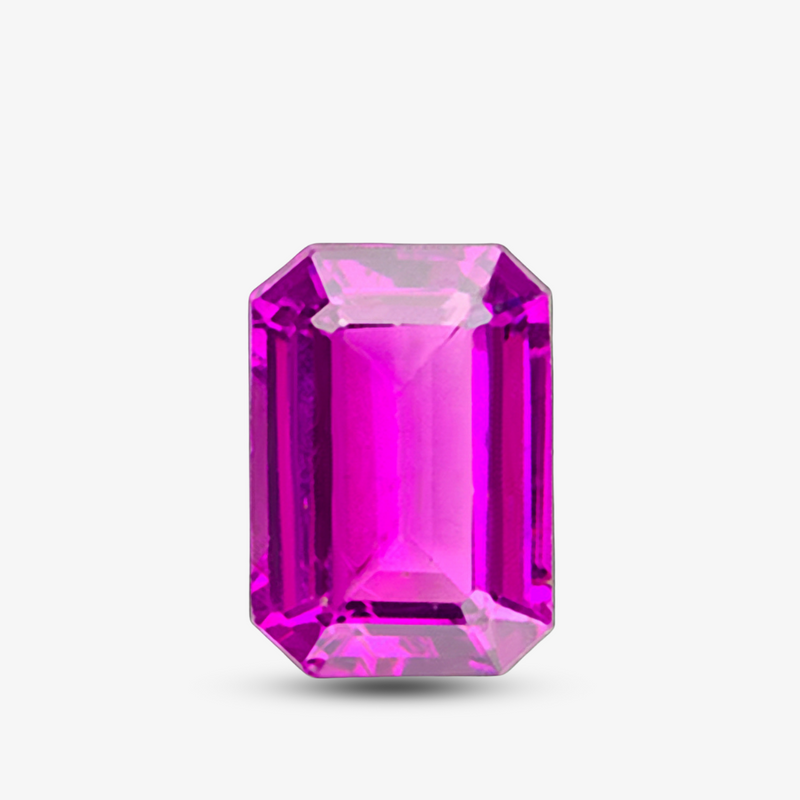
The single most useful thing to know about garnet is that it is not one stone. Garnet is a group of related silicate minerals sharing one cubic crystal structure but differing in what sits inside it, and that difference produces colours across almost the entire spectrum.
Two sites in the structure accept different metals. Magnesium, iron or manganese in the first with aluminium in the second gives the red and orange garnets; calcium in the first with aluminium, iron or chromium in the second gives green, cinnamon, yellow and colourless ones. Nothing else changes: the lattice is identical in a worthless Indian almandine and a five-figure Russian demantoid.
Those sites also refuse to stay pure. Garnets form solid solutions — continuous blends between the theoretical end members — so most stones in the trade are a mixture rather than a single species, which is why a good report on a red garnet often names a series, pyrope-almandine or pyrope-spessartine.
The consequence for a buyer is blunt. The word "garnet" tells you nothing about price: a clean ten-carat almandine costs less than lunch, and a clean two-carat tsavorite more than a good sapphire the same size. The variety sets the price.
Pyralspite and Ugrandite
Gemmology splits the group into two families, and the division is chemical rather than decorative: members within a family blend freely, members across them largely do not.
Pyralspite contracts pyrope, almandine and spessartine — the aluminium garnets, differing only in whether the first site holds magnesium, iron or manganese. Because those metals substitute for one another easily, the pyralspites grade continuously into each other, and most red, pink and orange garnets sold are intermediate compositions rather than end members. Rhodolite and malaya are simply named points on that continuum.
Ugrandite contracts uvarovite, grossular and andradite — the calcium garnets, differing in the second site: chromium, aluminium, iron. These blend too, which is why chromium entering either grossular or andradite produces the group's two great greens.
Across the divide, blending is limited, because the calcium ion is too large to trade places with magnesium or iron. Refractive index and density therefore separate the families reliably enough to place an unknown garnet with instruments alone.
Almandine
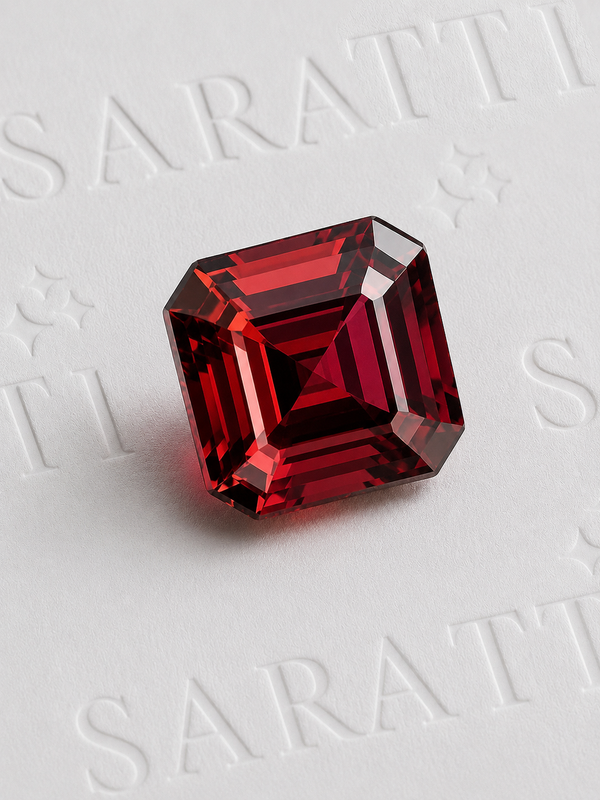
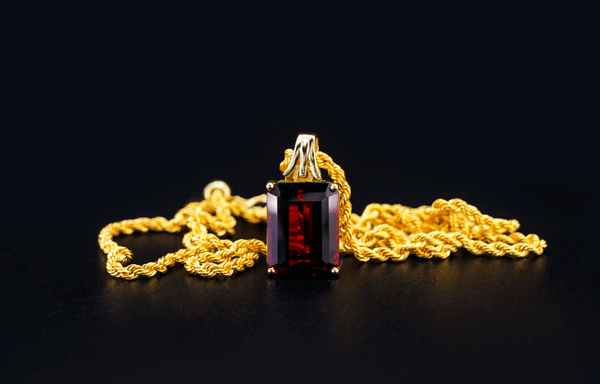
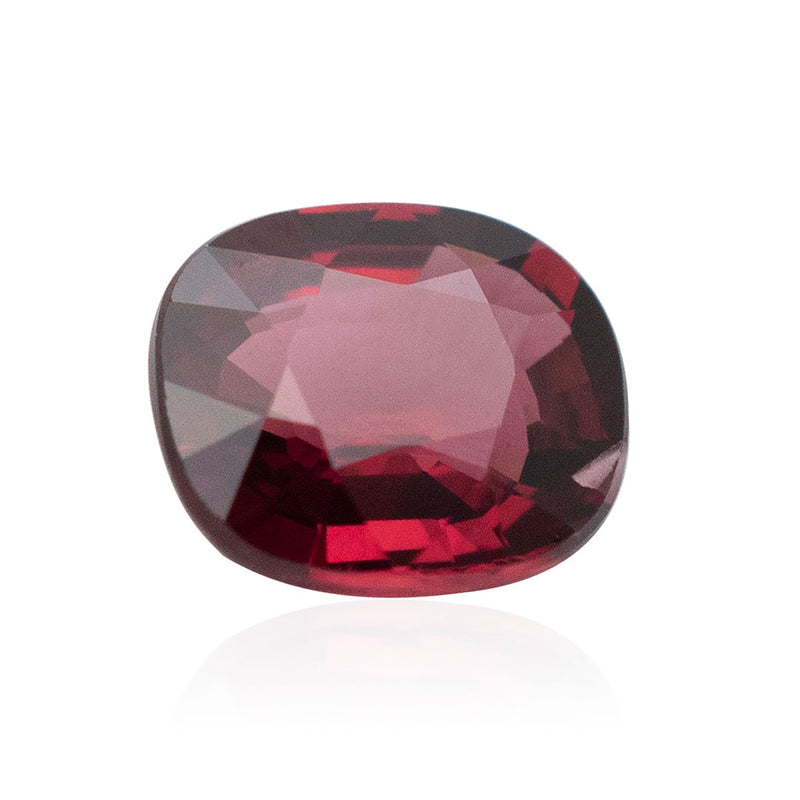
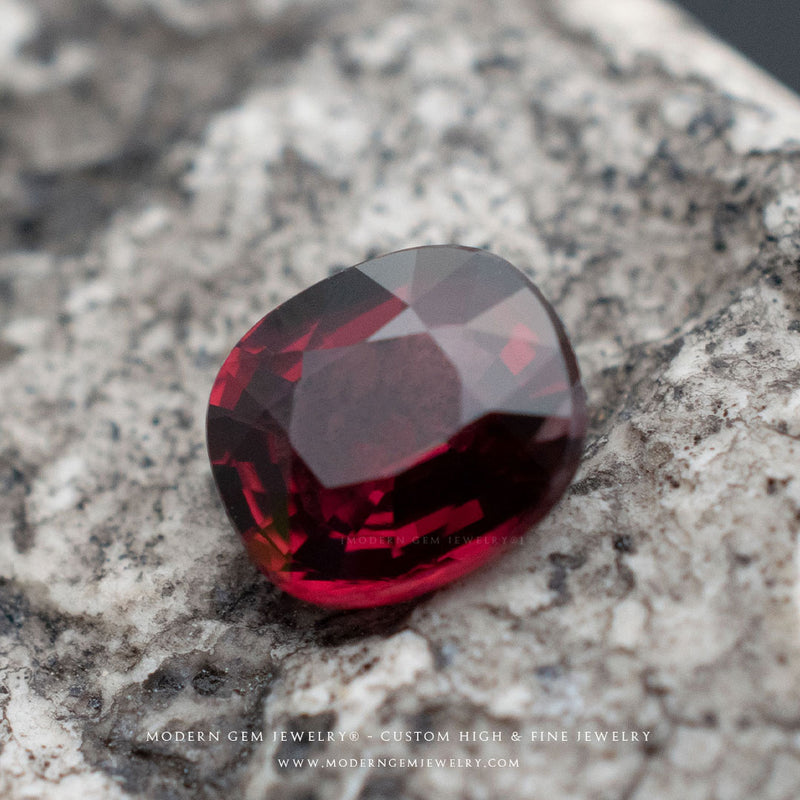
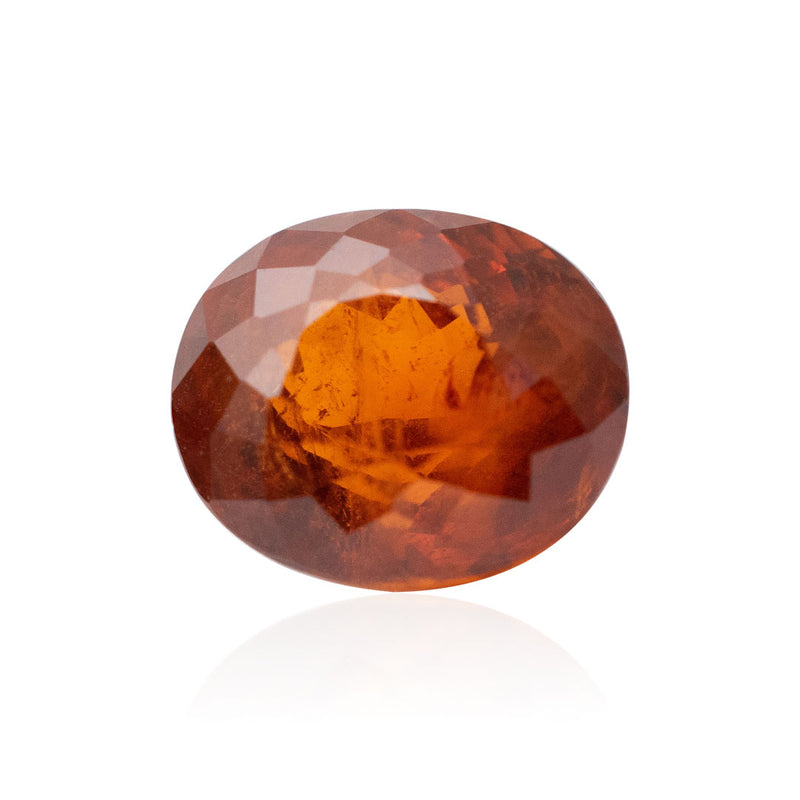
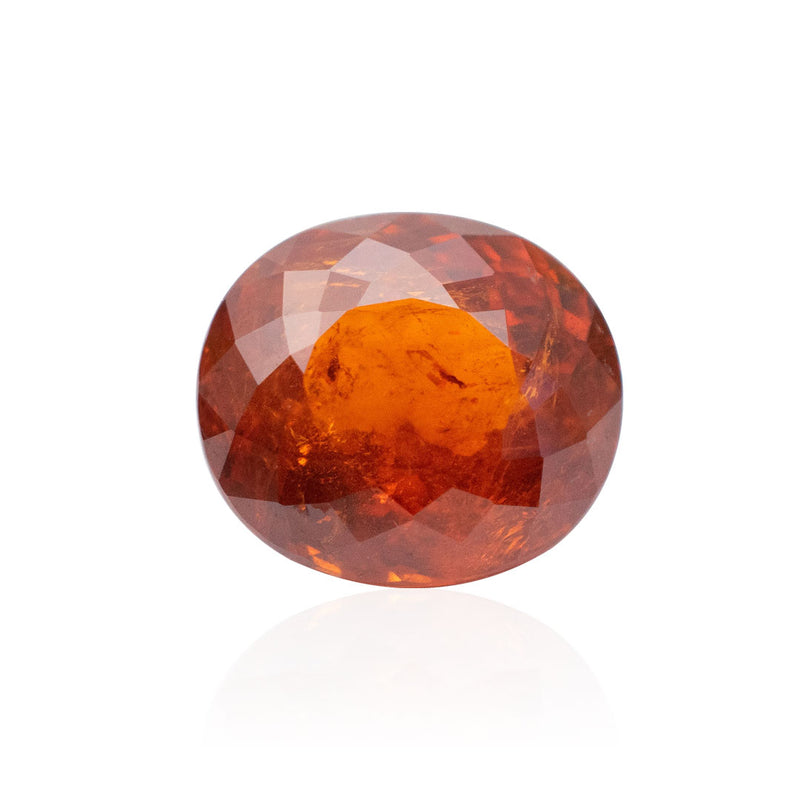
Almandine is the iron aluminium garnet, and it gave the whole group its reputation; the name descends from Alabanda, the town in Asia Minor where such stones were cut and traded in antiquity. Iron is the colouring agent and it is present in quantity, which is why almandine runs from deep red through brownish red to a distinctly purplish red, and why it goes dark. That same iron leaves a signature anyone can read: through a handheld spectroscope almandine shows strong absorption bands at roughly 505, 527 and 576 nanometres, the most quickly recognised spectrum in the group. Its refractive index of about 1.79 gives a bright return, and its density, near 4.0 to 4.2, is the highest of the red garnets. Sources are everywhere, with India, Sri Lanka, Brazil, Madagascar, Mozambique and Tanzania all producing it in quantity.
Size is not a constraint — clean faceted almandine is available at twenty carats and beyond — and that is where the buyer's problem starts, because iron absorbs so strongly that a large stone cut to standard proportions can read almost black indoors. The ones worth having are cut shallow, or from lighter rough, so they keep their life on the hand; ask for millimetre dimensions rather than trusting carat weight. Clarity should be good: eye-clean is the expectation, and visible inclusions are a fault. The exception is star garnet, an almandine holding oriented rutile needles that shows a four-rayed star when cut as a cabochon, classically from Idaho; a good star is sharp, centred, and travels as the stone moves. Prices sit at the bottom of the group even in large sizes, which is a real opportunity for anyone wanting scale.
Pyrope
Pyrope is the magnesium aluminium garnet, from the Greek pyropos, fiery-eyed, which fairly describes good material: a purer, less brownish red than almandine. Pure pyrope is in theory colourless, and all the colour you will see comes from iron substituting into the structure, and from chromium where it is present. Chromium is what separates ordinary pyrope from the material worth seeking. Chrome pyrope, found in the diamond-bearing kimberlites of Arizona, South Africa and Siberia, is coloured as ruby and emerald are, and produces a red of a saturation iron alone cannot manage; the same association makes chromium-rich pyrope an indicator mineral that diamond prospectors follow back to the pipe. Nineteenth-century dealers sold the Arizona material as Arizona ruby. Refractive index is around 1.74 and density near 3.7, both lower than almandine's, which is how the two are separated where colour is ambiguous.
Size is the limitation. Chrome pyrope occurs as small grains, so a clean stone over two carats is uncommon and over five a collector's piece, and the historic Bohemian material of the Victorian period was worked the only way such rough allows, as clusters of tiny rose-cut stones massed together to build colour. Ordinary iron-bearing pyrope from Africa and Brazil reaches larger sizes but tends darker. Clarity expectation is high, and eye-clean should be insisted on. Prices are modest for ordinary material and rise sharply for well-saturated chrome pyrope in a usable size, so the name on the ticket matters. What to check: whether the red stays red under both tungsten and daylight rather than turning brownish, and whether the stone closes up in shadow.
Rhodolite
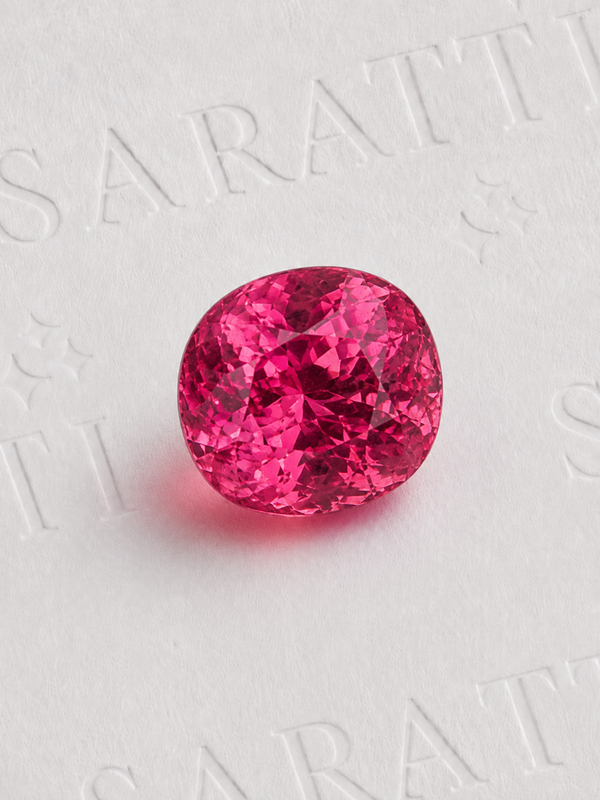
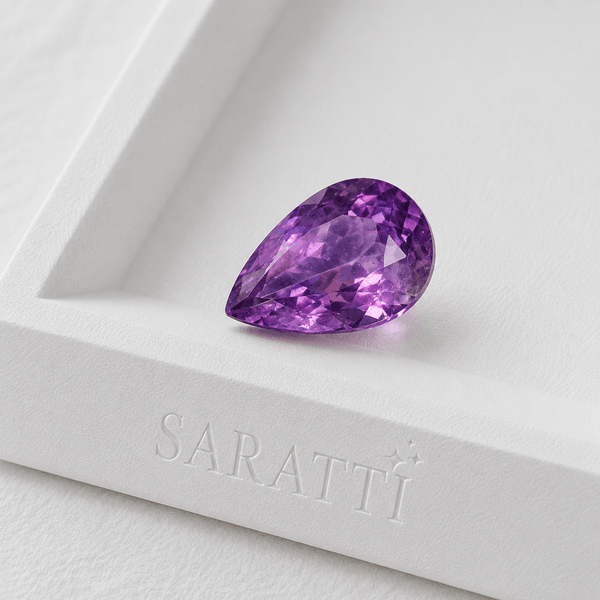
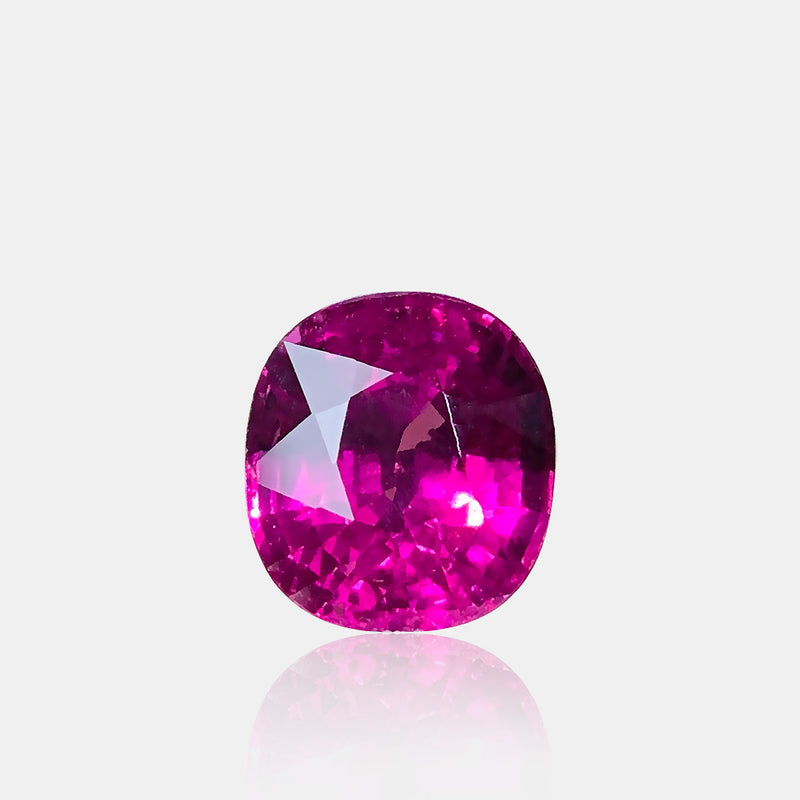
Rhodolite is not an end member. It is a pyrope-almandine blend, roughly two parts pyrope to one part almandine, and the clearest case in the group of a mixture bettering both parents. The name, from the Greek rhodon, rose, was coined in 1898 for material found in the Cowee Valley of North Carolina, and it stuck because the blend does something neither parent manages alone. Mixing moderates the iron: enough of it for strong colour, not so much that the stone goes dark. Rhodolite therefore occupies a raspberry to purplish red, brighter and more transparent than almandine at the same tone, with a refractive index between its parents, around 1.75 to 1.76. Tanzania is the principal source today, with production also from Mozambique, Madagascar, Sri Lanka and India.
Supply is commercial rather than scarce, and the material reaches size: clean five-carat rhodolite is routine and ten-carat stones obtainable, and it is cut in calibrated sizes often enough that matching a pair or a suite is straightforward. Clarity should be excellent, since rhodolite is a Type I stone in practice. Price sits above almandine and pyrope and far below spessartine or tsavorite, which makes rhodolite the most consistently good value in the group. What to check: tone above all. The best rhodolite is medium in tone with an obvious purplish or raspberry cast and stays lively under low light. Material sold as rhodolite that is dark and brownish is almandine wearing a better name, and should be priced as almandine.
Spessartine
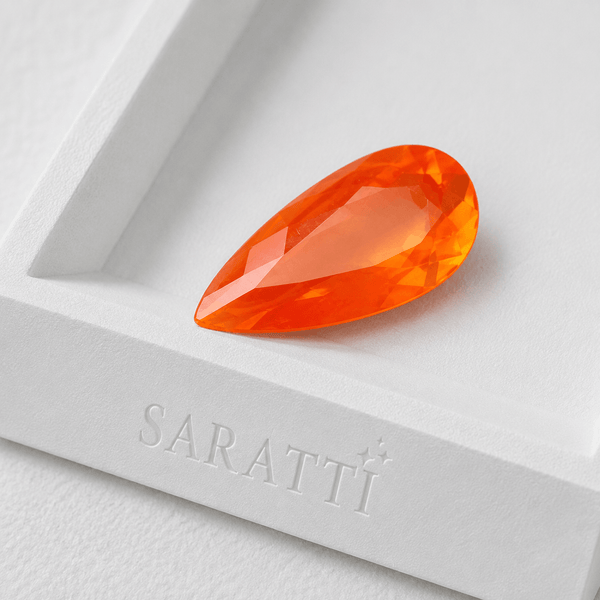
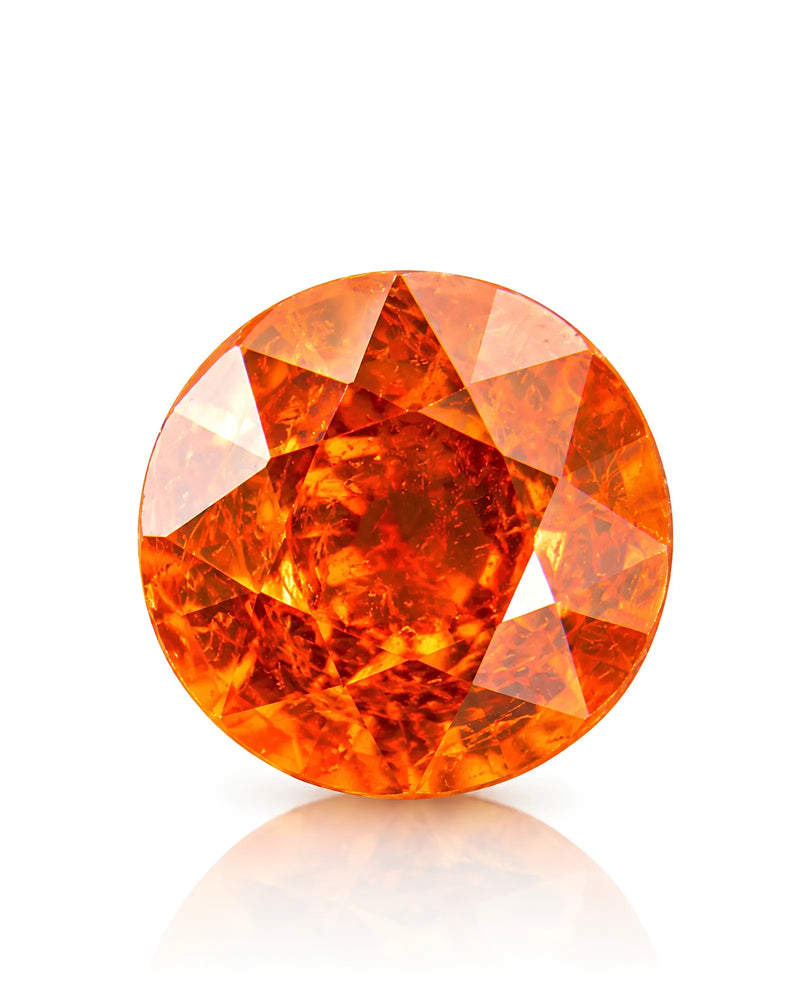
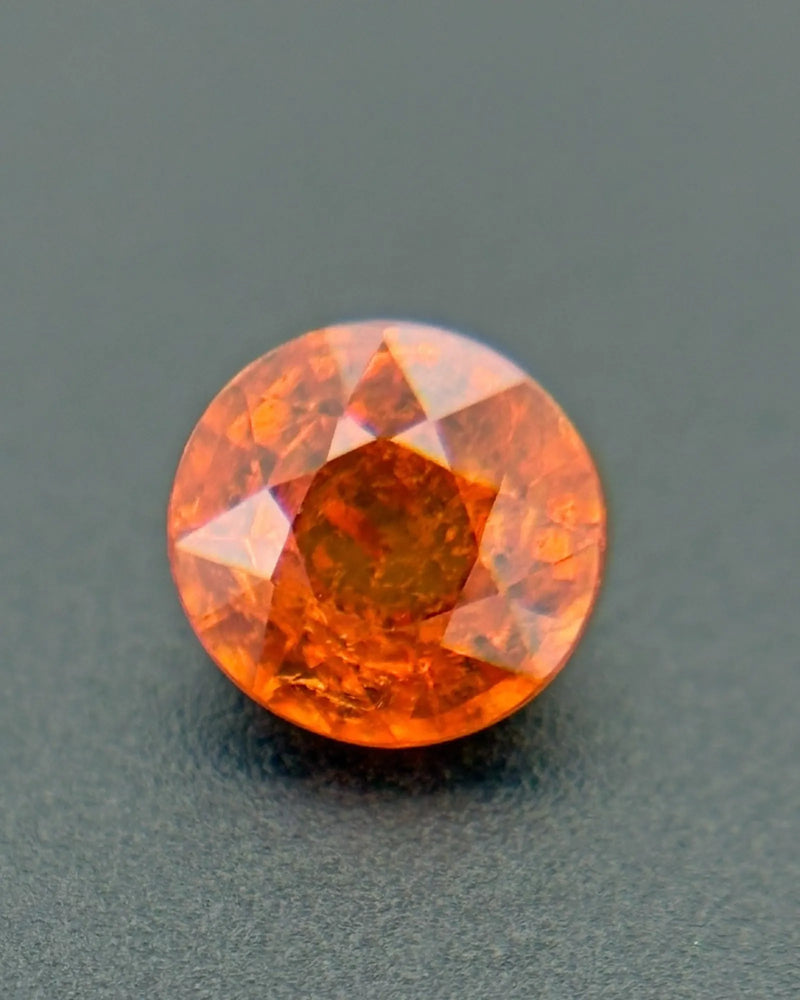
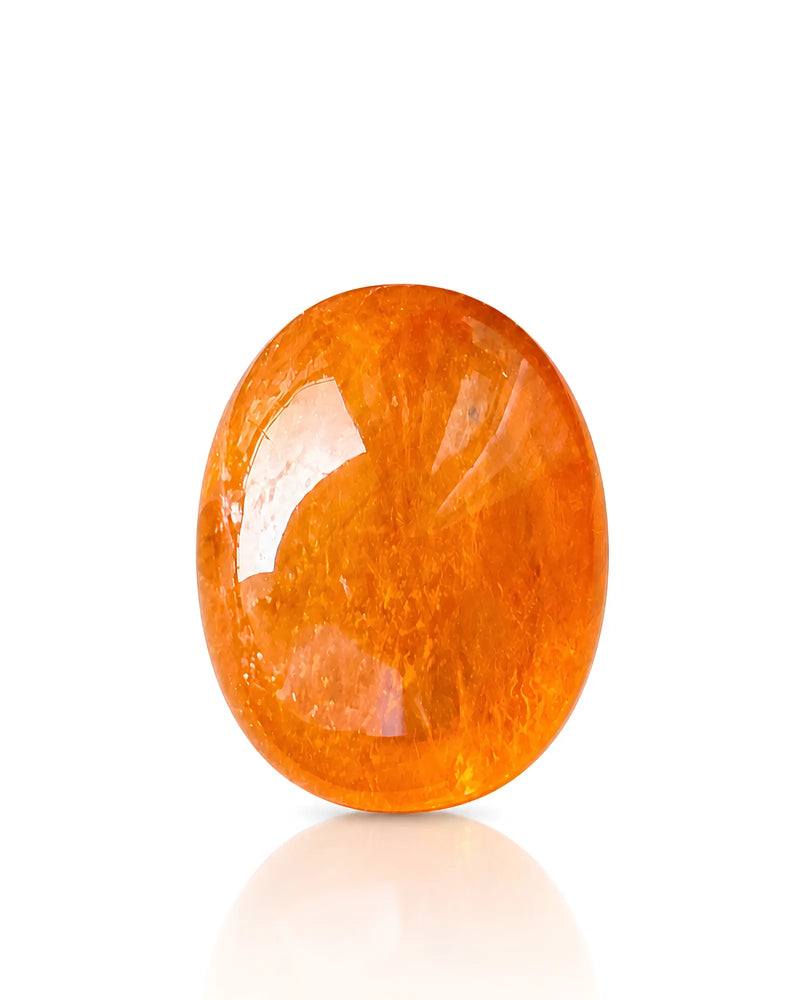
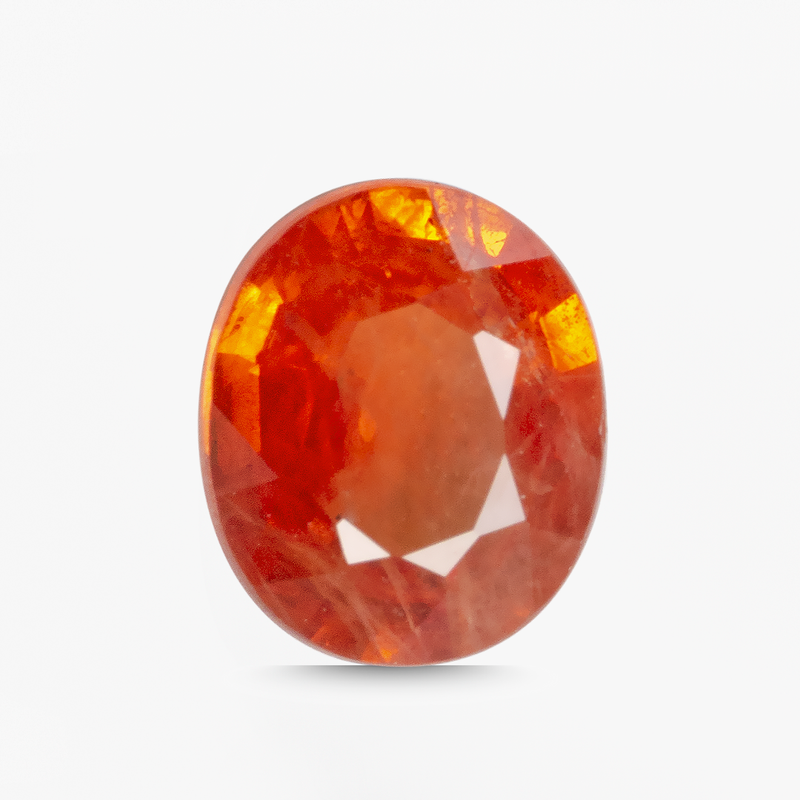
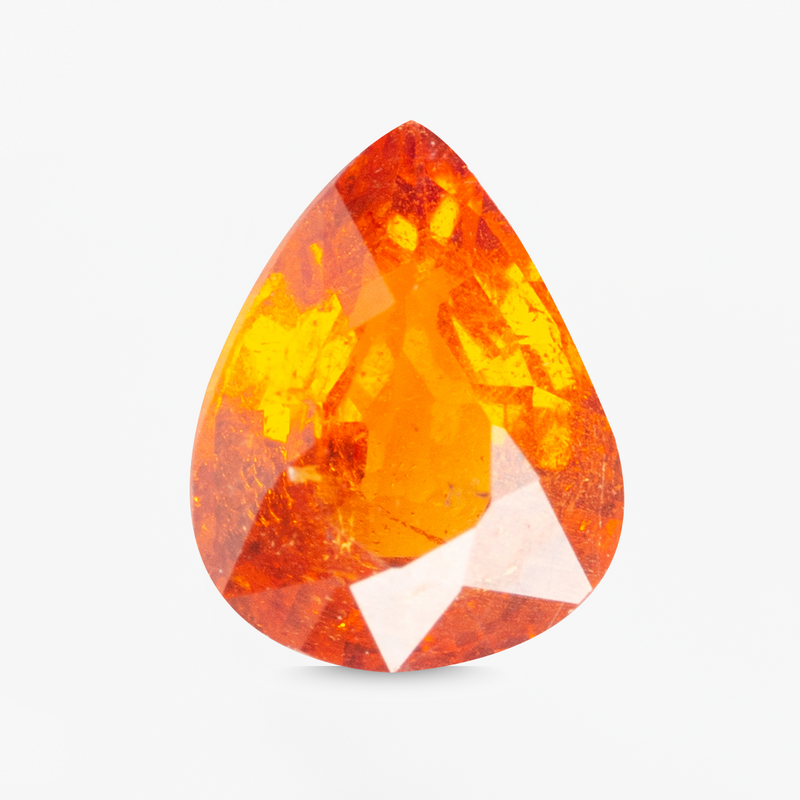
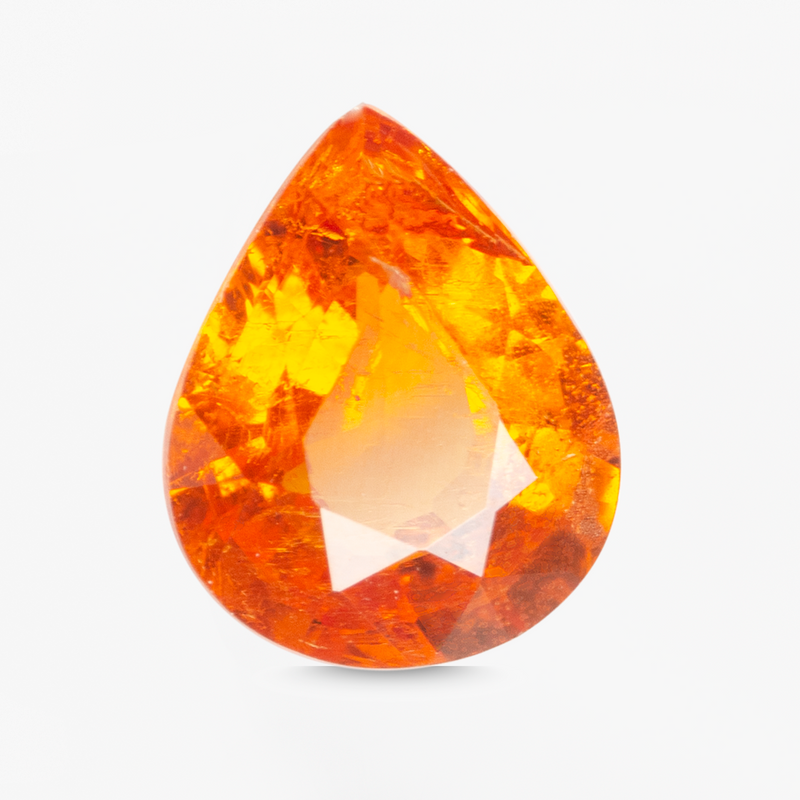
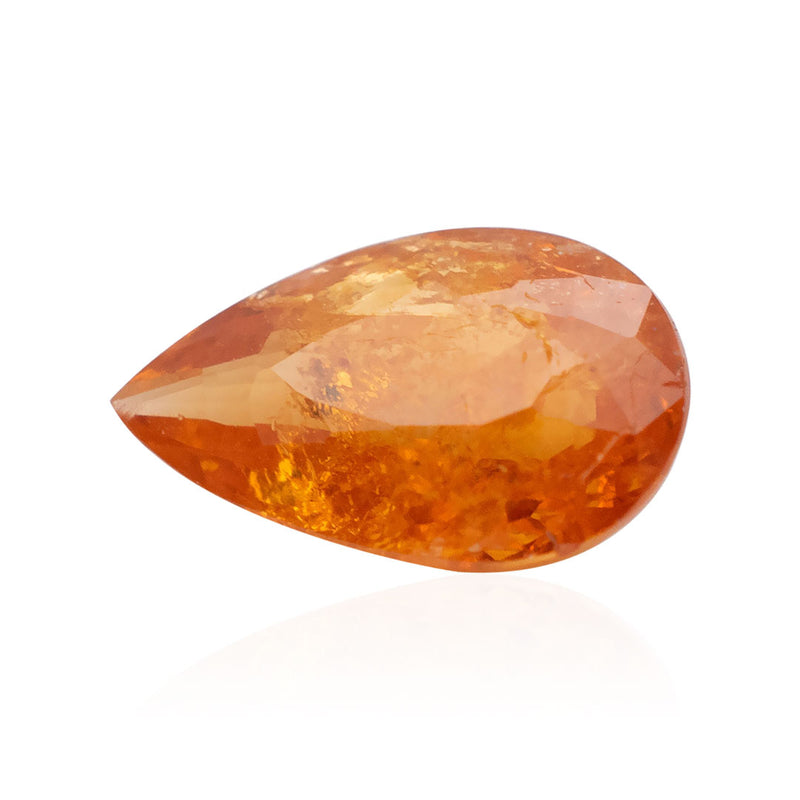
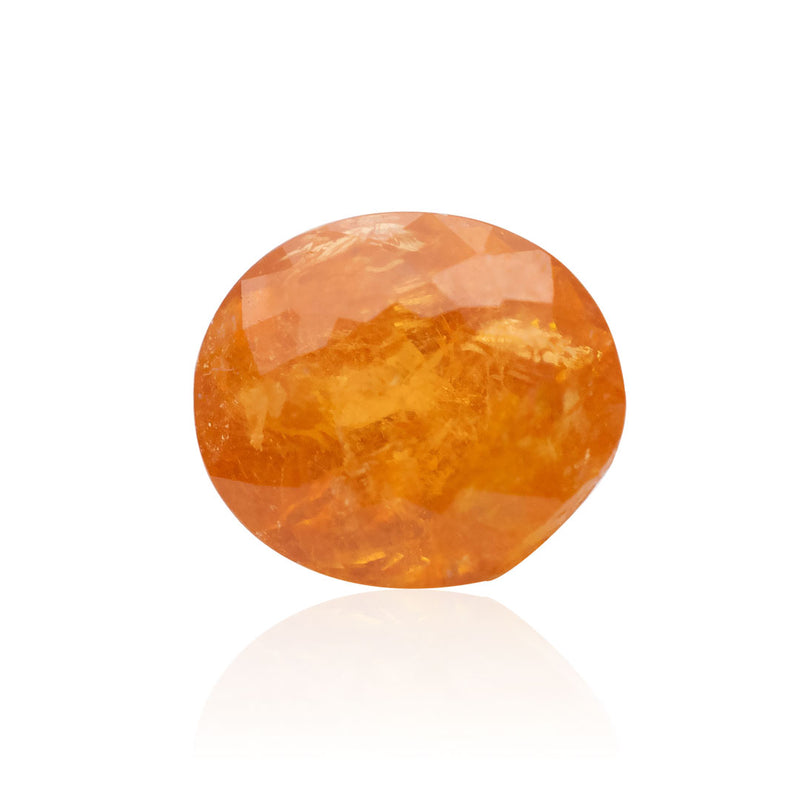
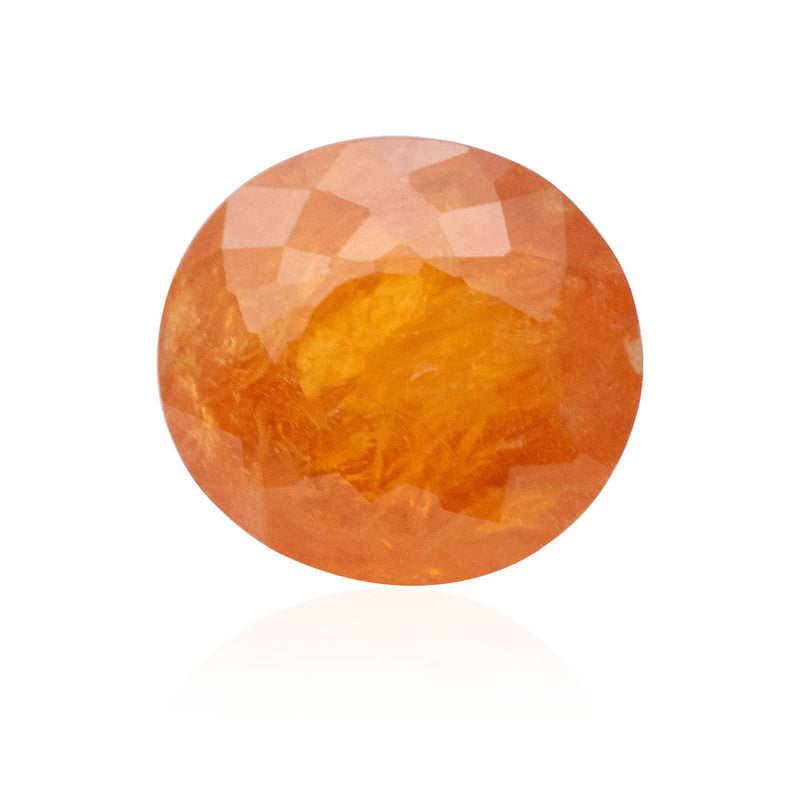
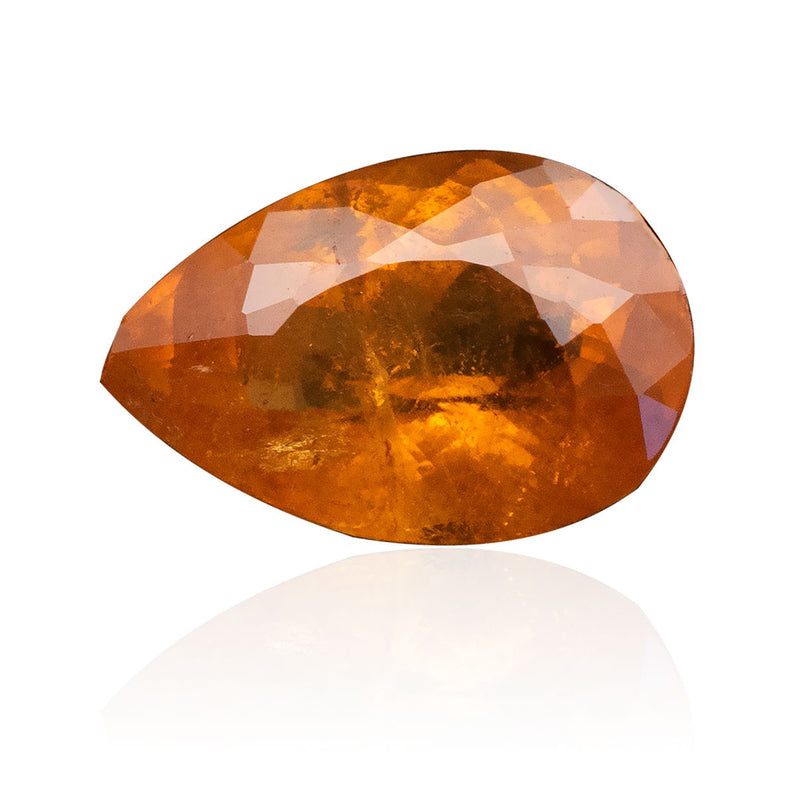
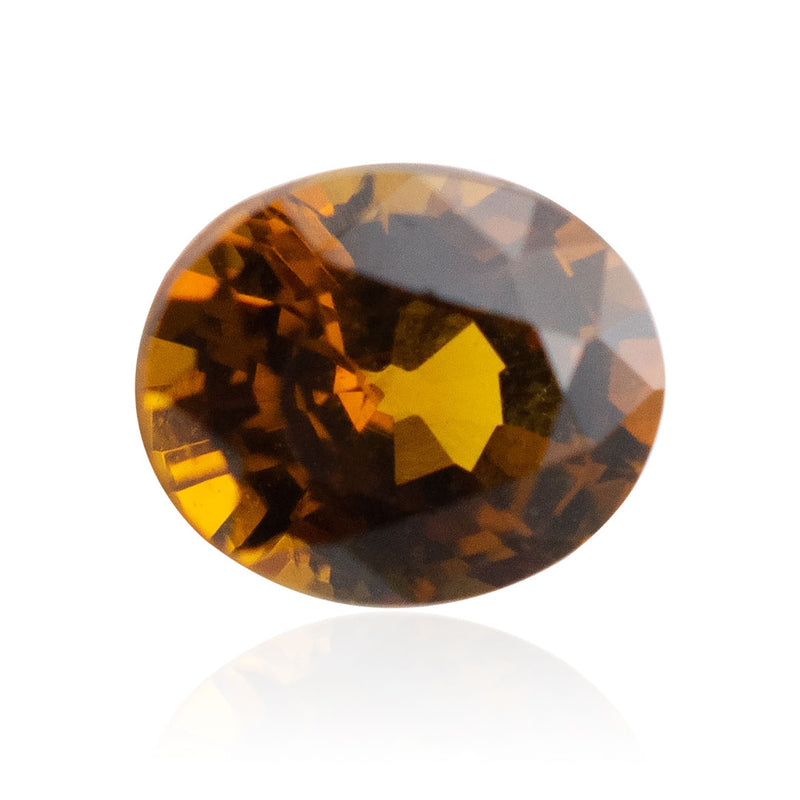
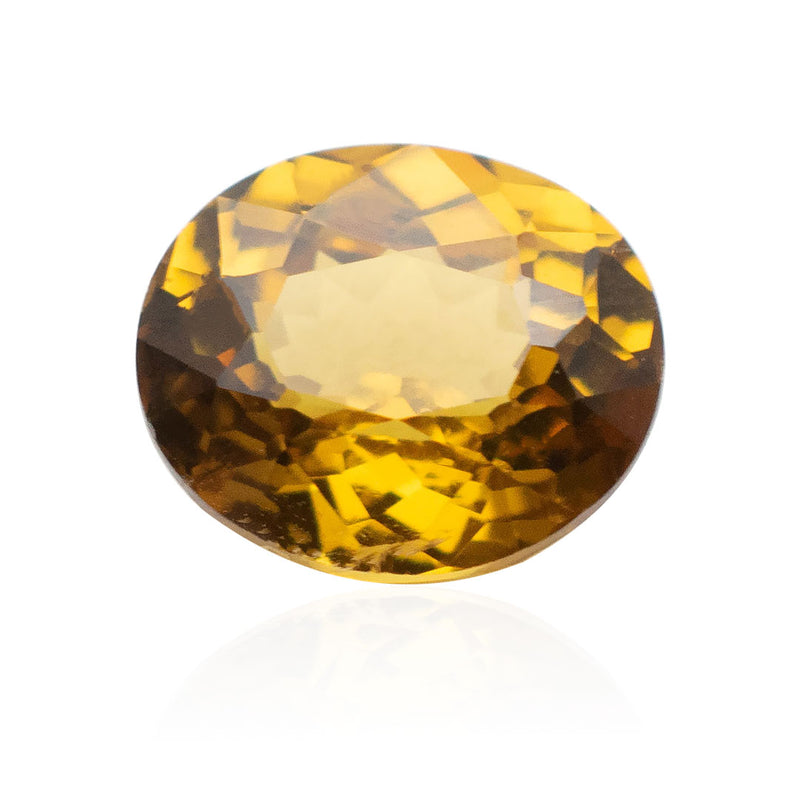
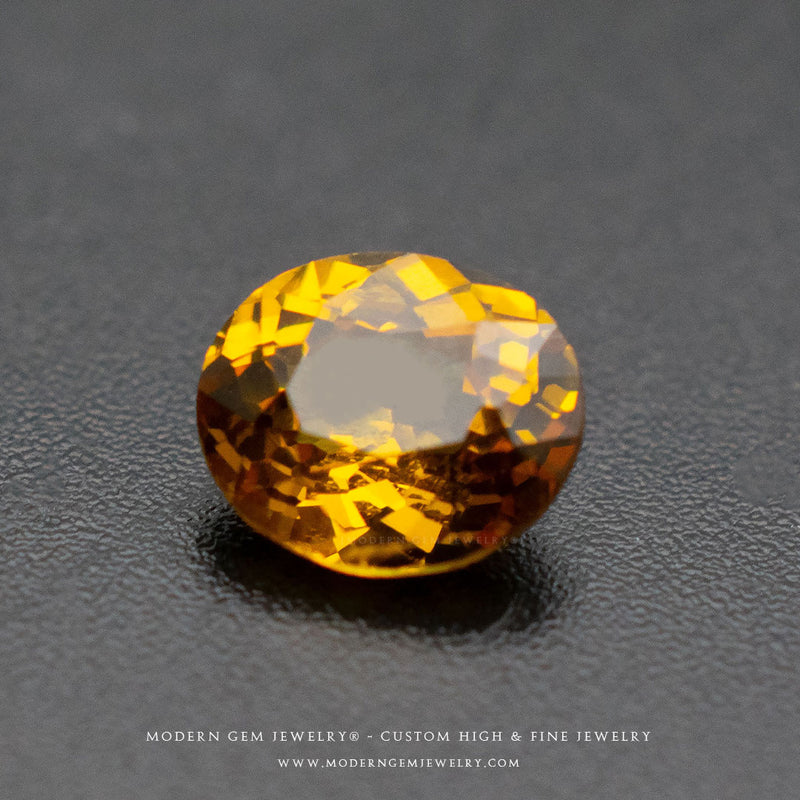
Spessartine — spessartite in older trade usage — is the manganese aluminium garnet, named for the Spessart district of Bavaria. Manganese produces orange, running from yellowish through vivid to reddish orange, with iron substitution pushing the colour toward red and brown as it increases, so the finest material is the material lowest in iron. The stone that changed the market is mandarin garnet, the intensely saturated pure orange spessartine found in Namibia in the early 1990s and shortly afterward in far greater quantity in Nigeria; later production has come from Tanzania, where the Loliondo find added fine crystals, and from Mozambique, Madagascar and Brazil. Refractive index is high, about 1.79 to 1.81 — the top of the group — which gives spessartine an unusually bright return and helps the colour carry even in smaller stones.
Clarity is where spessartine differs from its siblings. It grows in granite pegmatites and comes out frequently included, the characteristic feature being wavy feathers and fluid inclusions gemmologists call shredded or heat-wave inclusions. Eye-clean fine mandarin material is therefore scarce, and this is worth accepting rather than fighting: a slightly included stone with the right colour beats a clean one that has gone brownish. Sizes above five carats in top colour are uncommon and priced accordingly, and the gap between vivid mandarin and ordinary brownish orange is wide enough that saturation, not size, carries the decision. Check the stone in daylight, and check whether the orange holds or picks up a brown undertone once it is away from the display light.
Grossular and Tsavorite
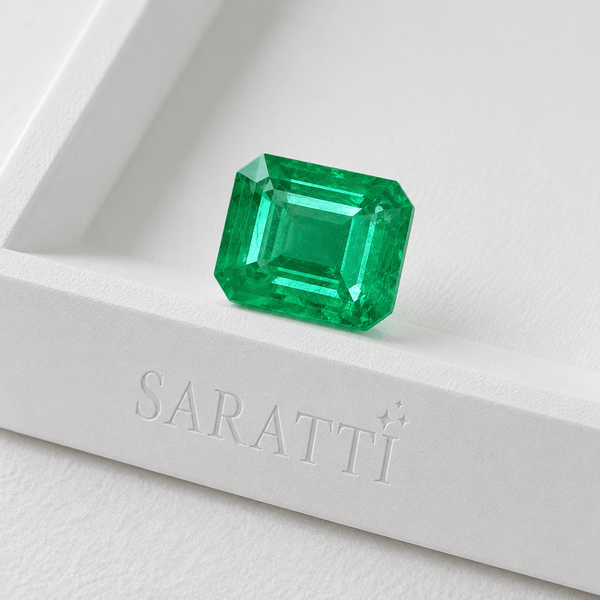
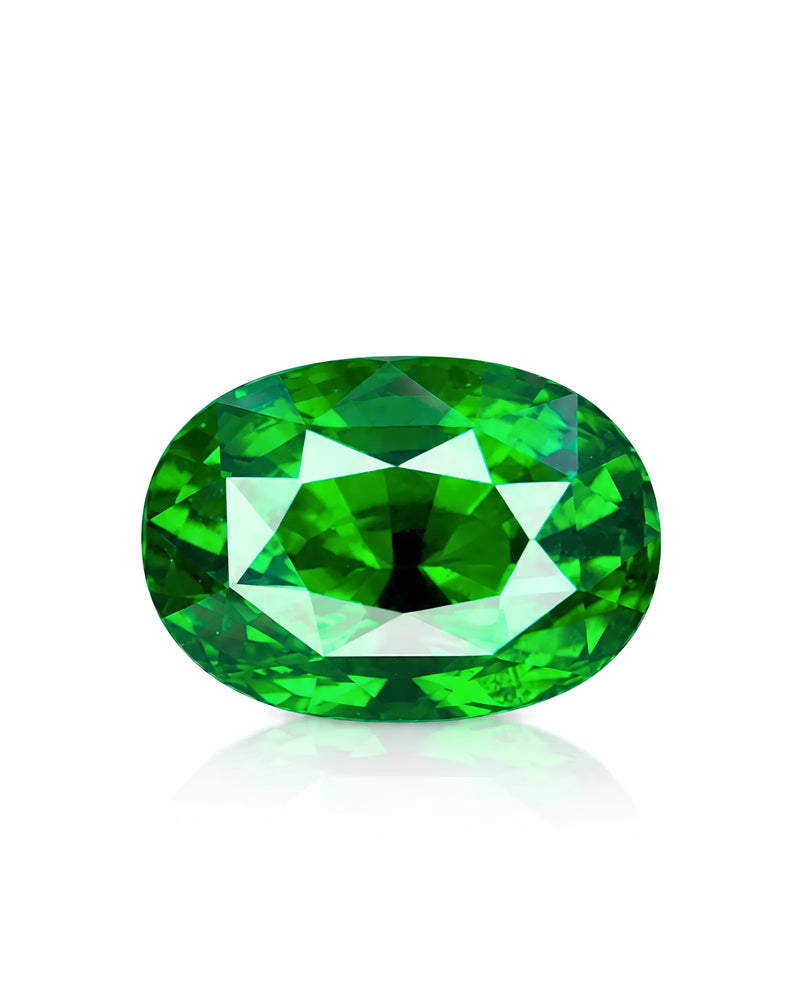
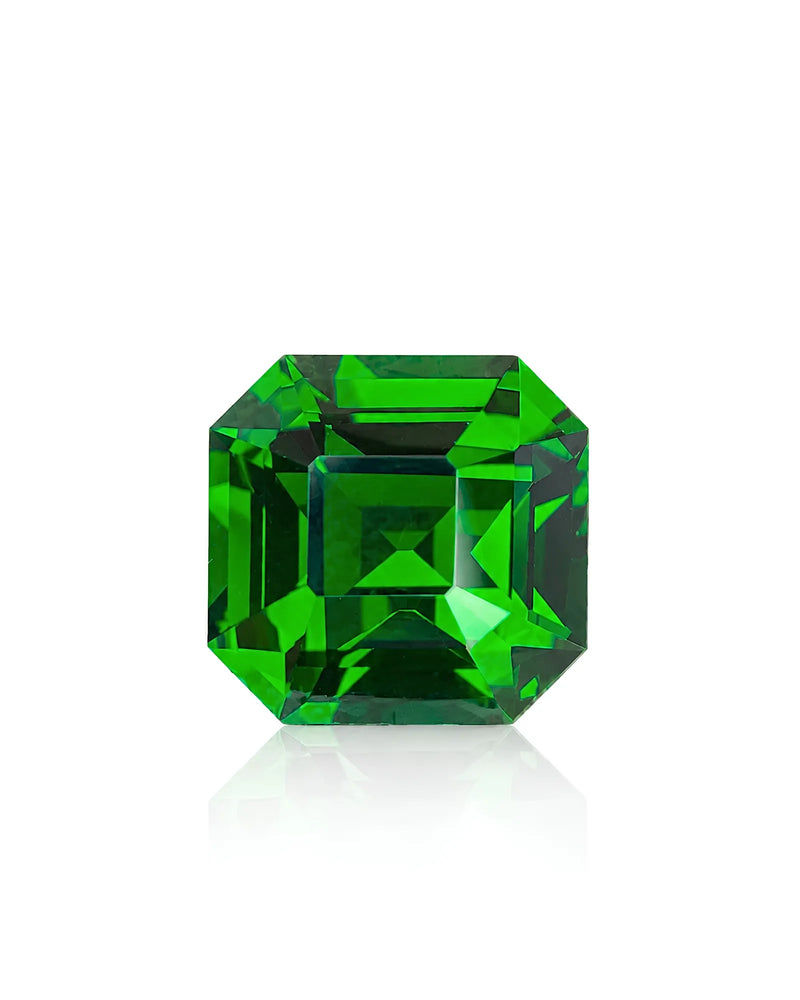
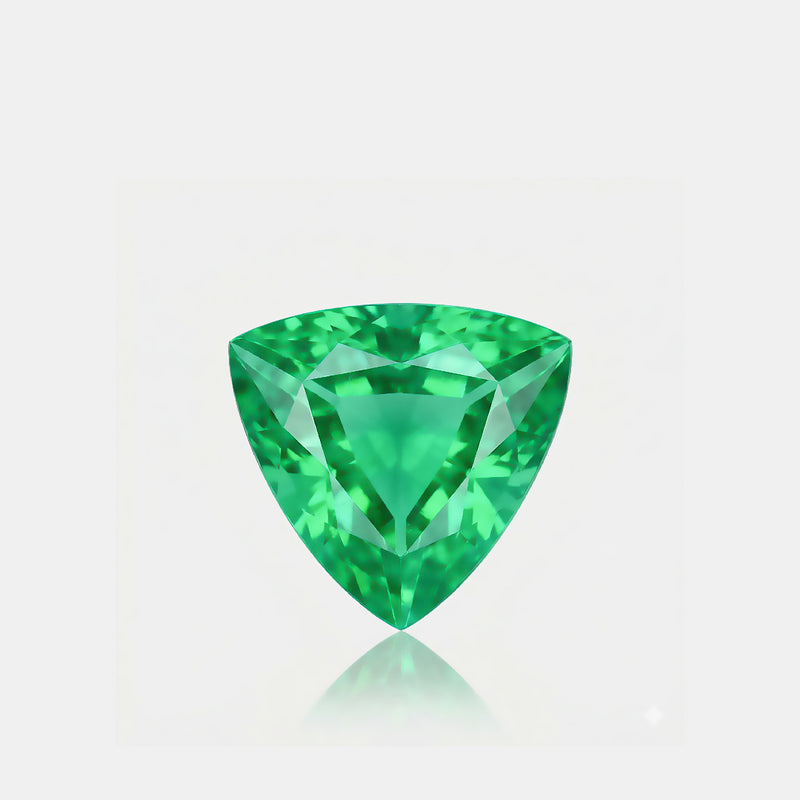
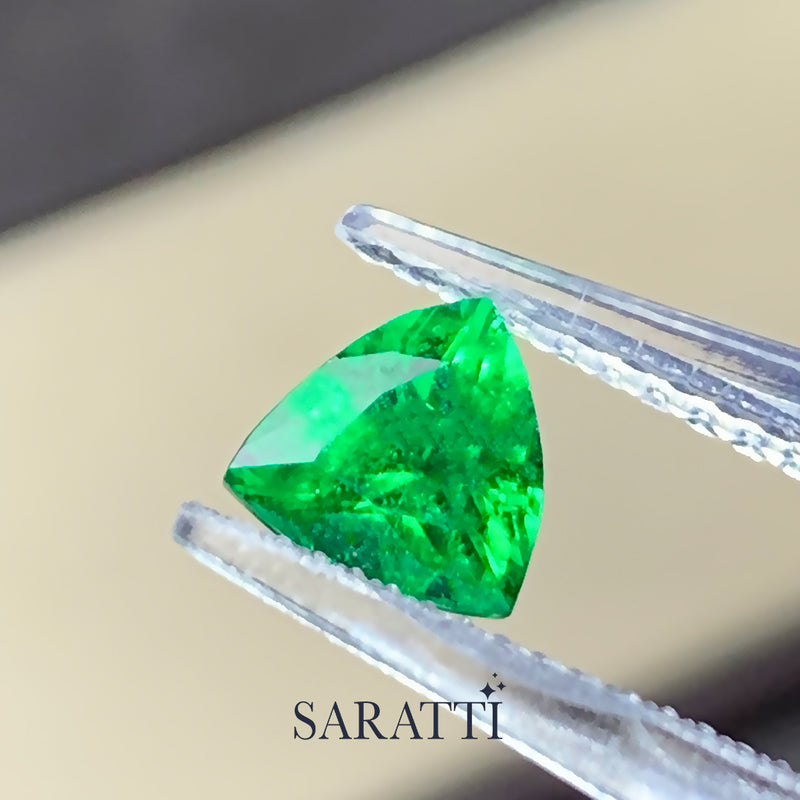
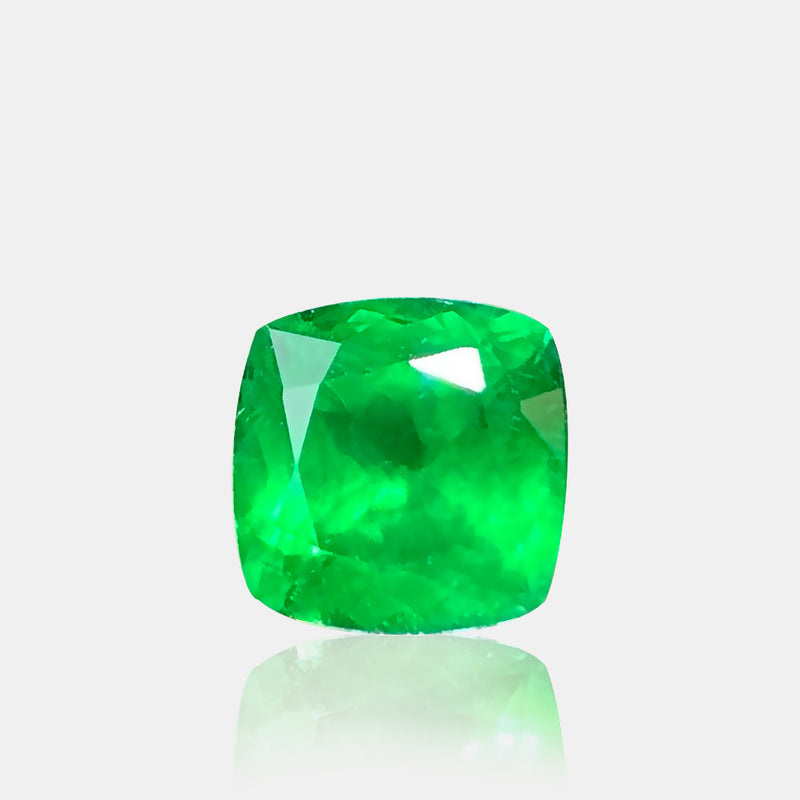
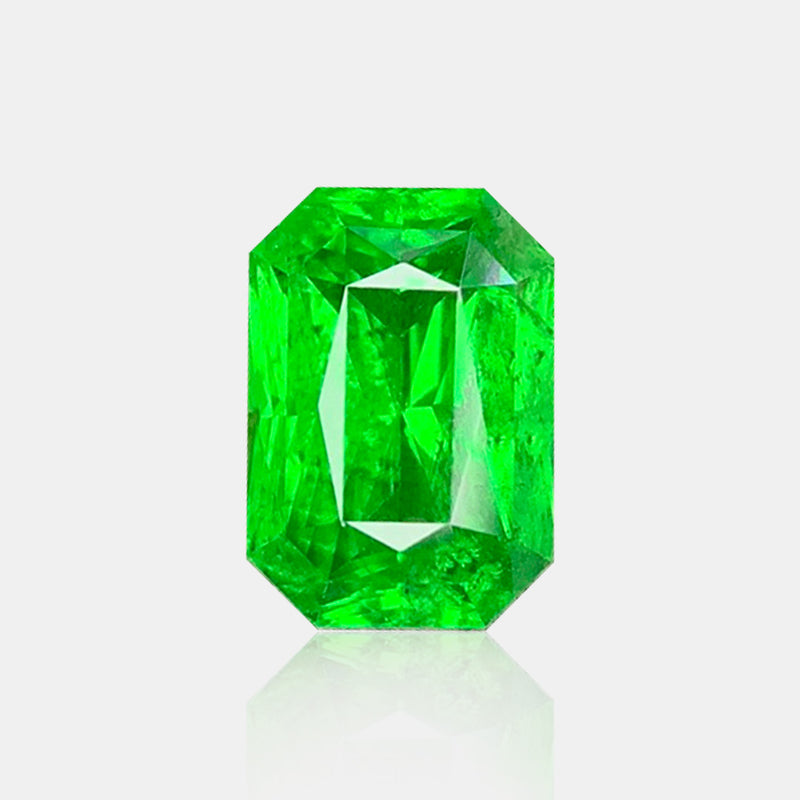
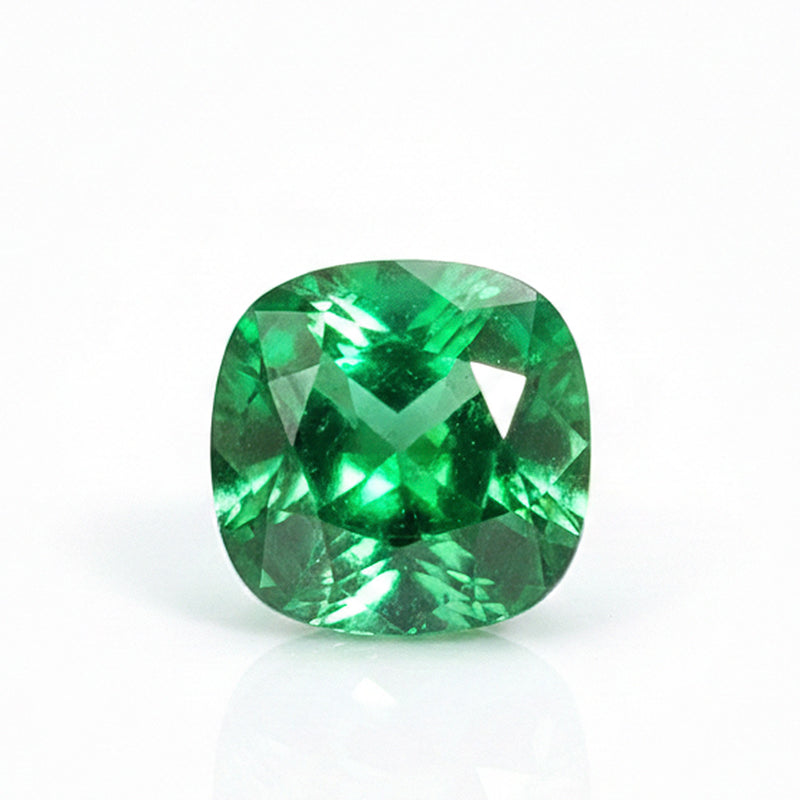
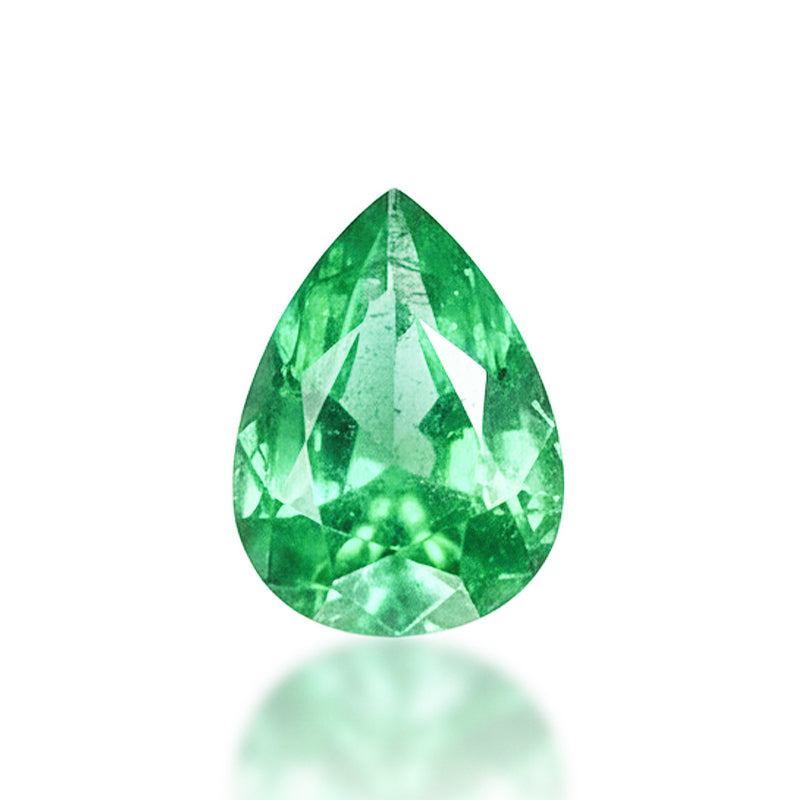
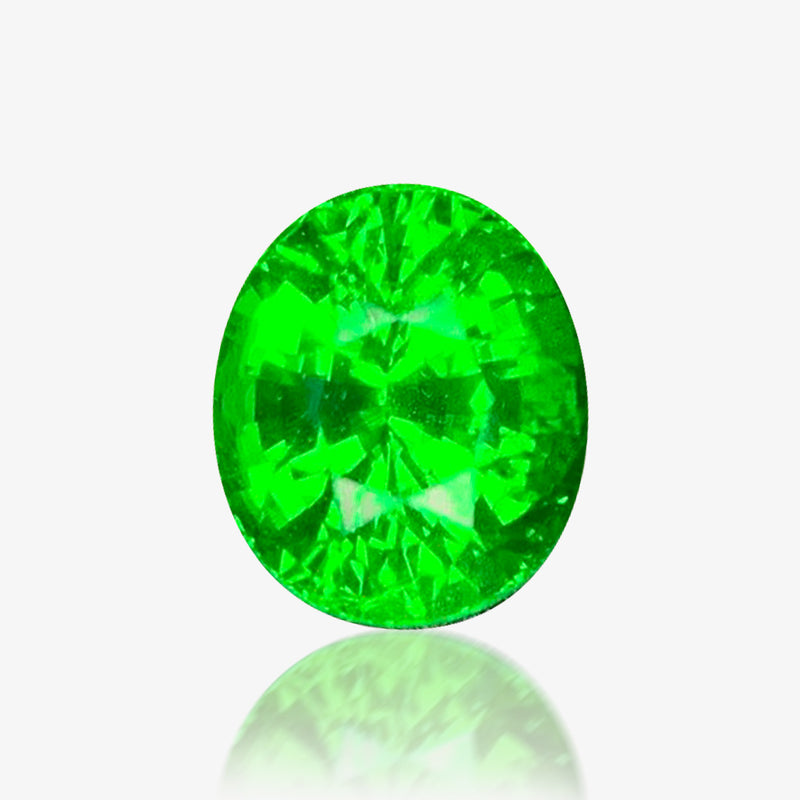
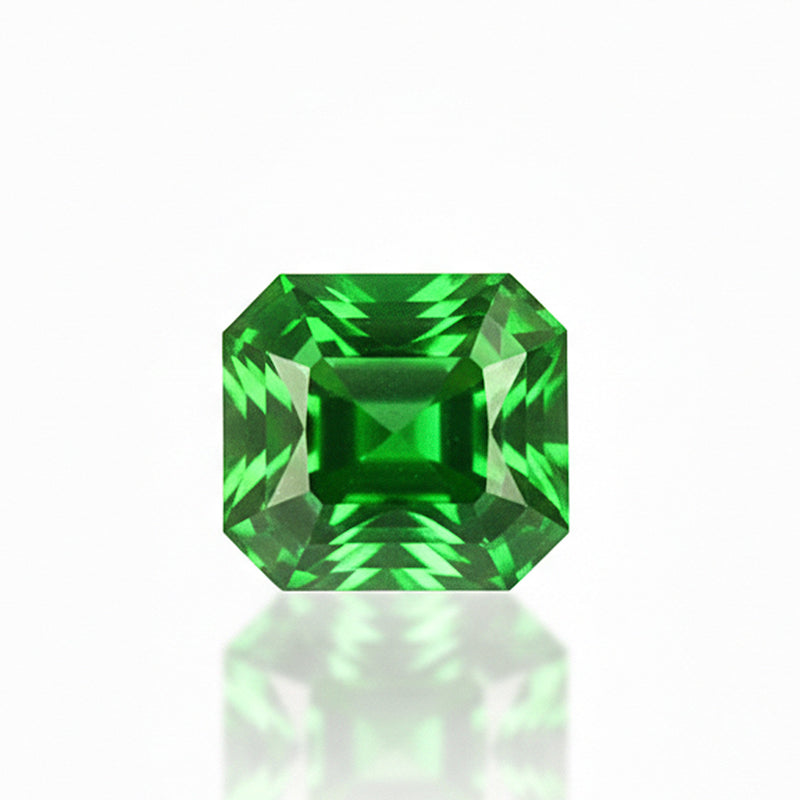
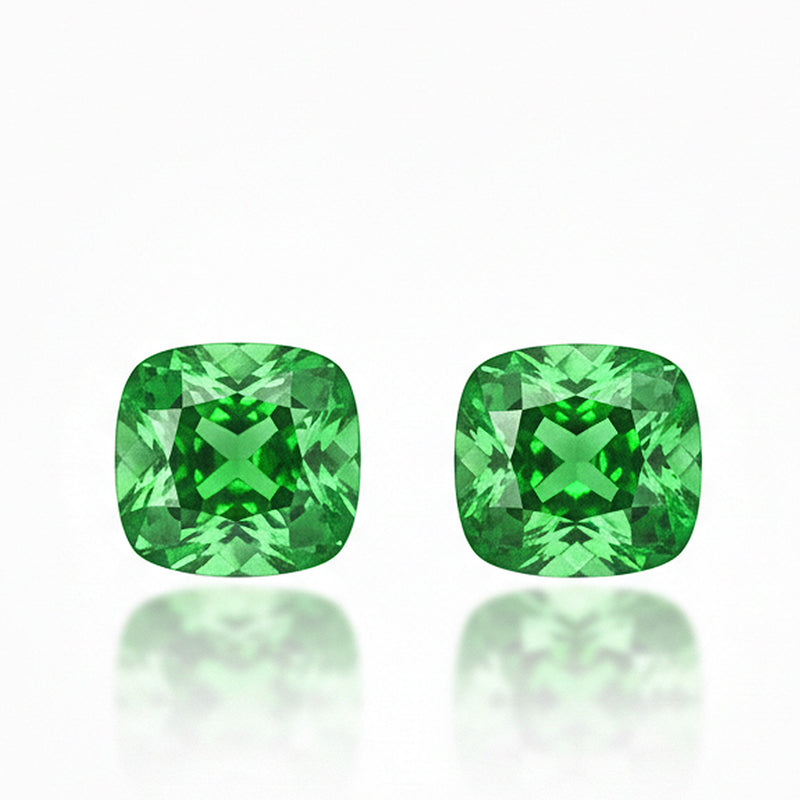
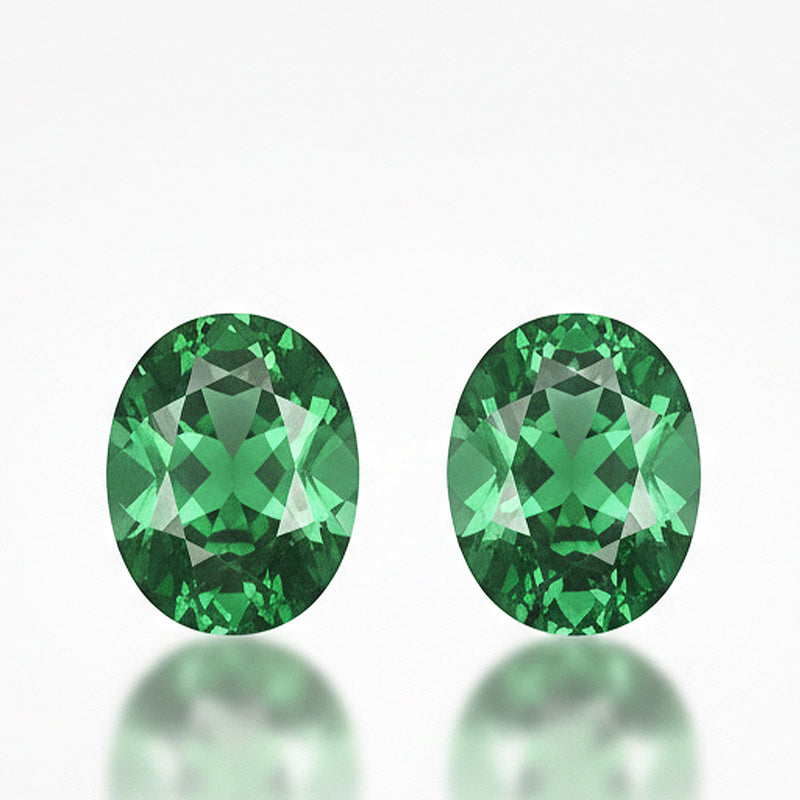
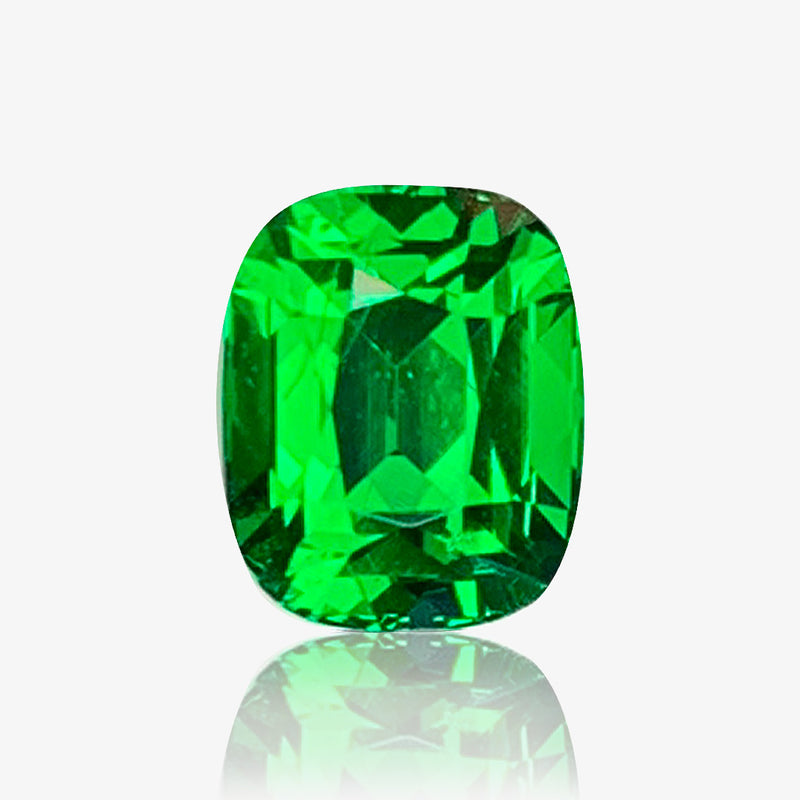
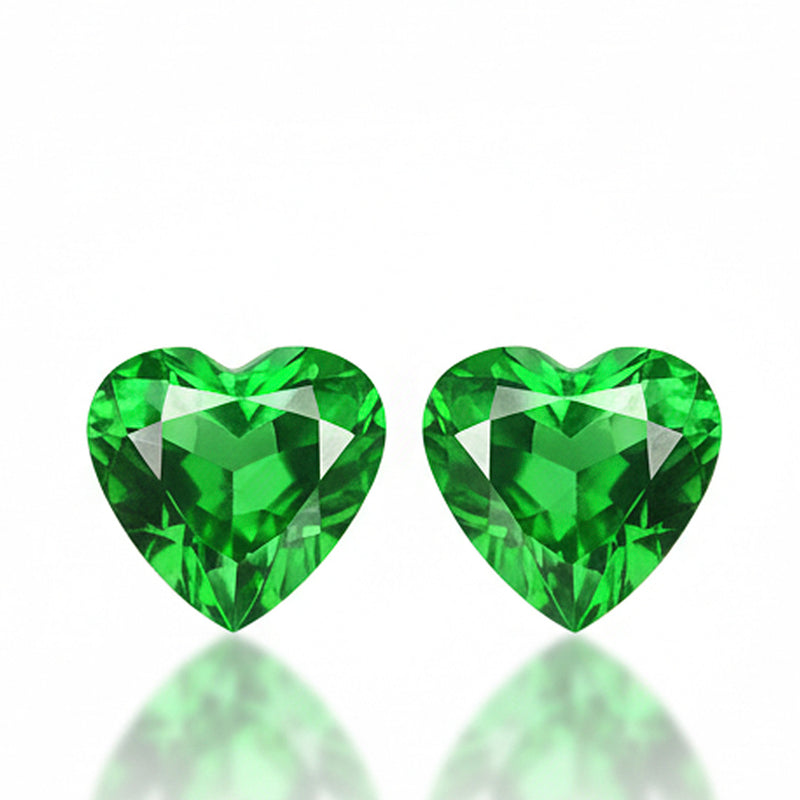
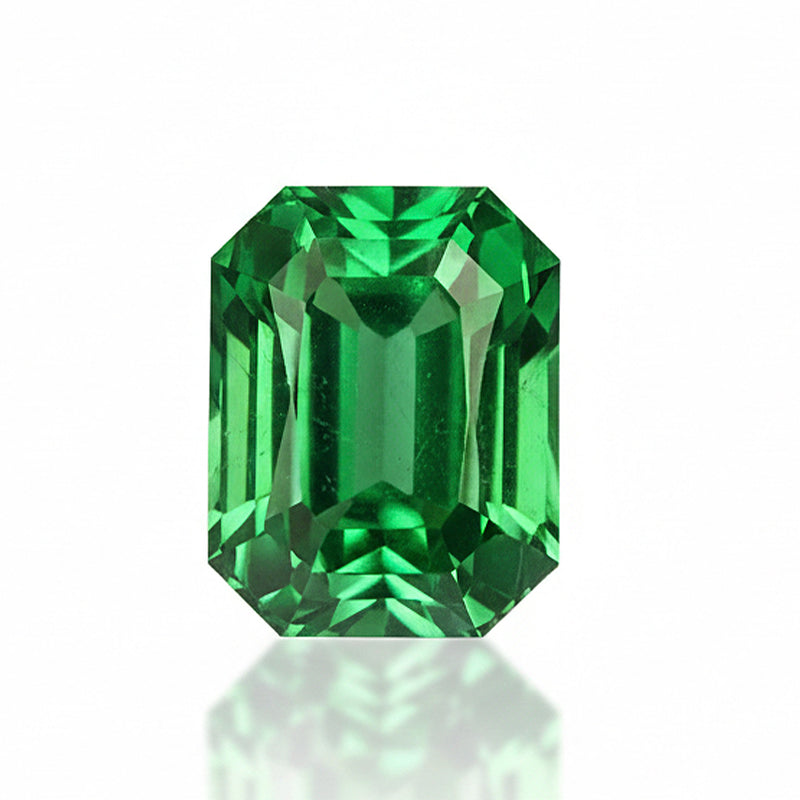
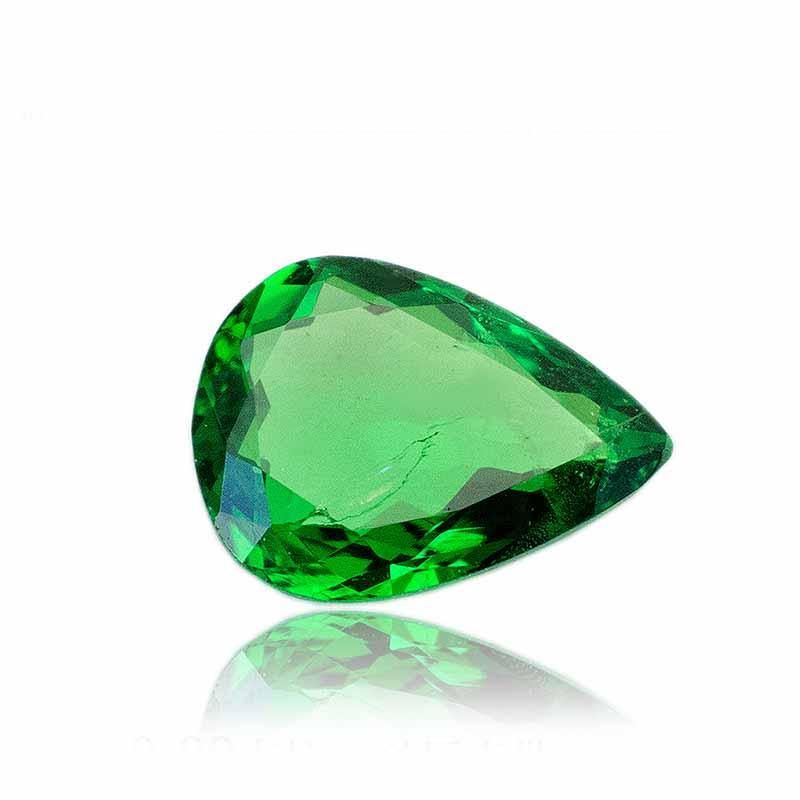
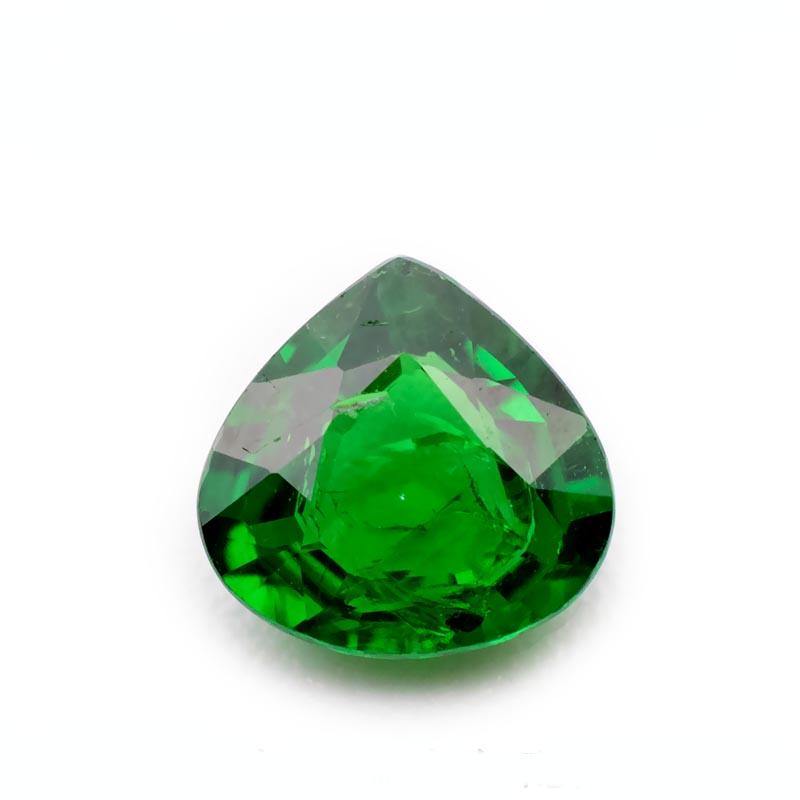
Grossular is the calcium aluminium garnet and the most chemically variable member of the group. Pure grossular is colourless; trace elements produce yellow, green, orange, brown and pink, and massive material is sold as hydrogrossular, the compact green form long marketed as Transvaal jade. The name comes from the botanical Latin grossularia, gooseberry. The variety that matters is tsavorite, the chromium- and vanadium-coloured green grossular found in 1967 in the Taita Hills of Kenya, named after Tsavo National Park and brought to market under that name in the mid-1970s. It is a pure vivid green, often compared with emerald and in two respects better: cleaner, because grossular does not fracture as beryl does, and more brilliant, because its refractive index of about 1.74 is well above emerald's.
Tsavorite formed only where a narrow set of geological conditions coincided, in a metamorphic belt running through southern Kenya and northern Tanzania — the same belt that yields tanzanite at Merelani, which also produces the paler mint grossular sometimes offered as a cheaper alternative. The crystals are small: fine stones above two carats are uncommon and above five notable, and prices have risen steadily for two decades. Tsavorite should be eye-clean, and the colour target is a pure vivid green, medium to medium-dark, with no brown or yellow modifier. What to check: that the green is not so dark it closes up, that the stone was cut for brilliance rather than weight retention, and that it is tsavorite and not chrome tourmaline, which looks similar and costs a fraction as much. It is worth seeing beside the alternatives in our green gemstones collection.
Hessonite
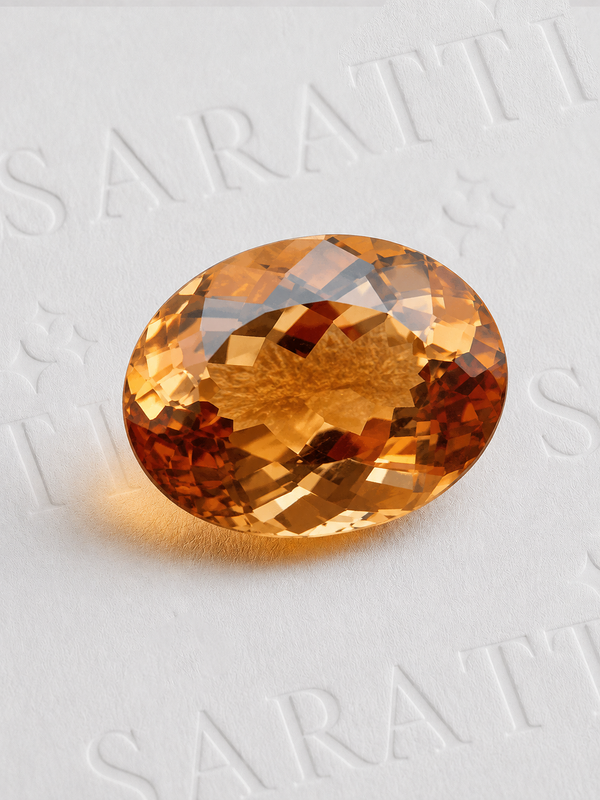
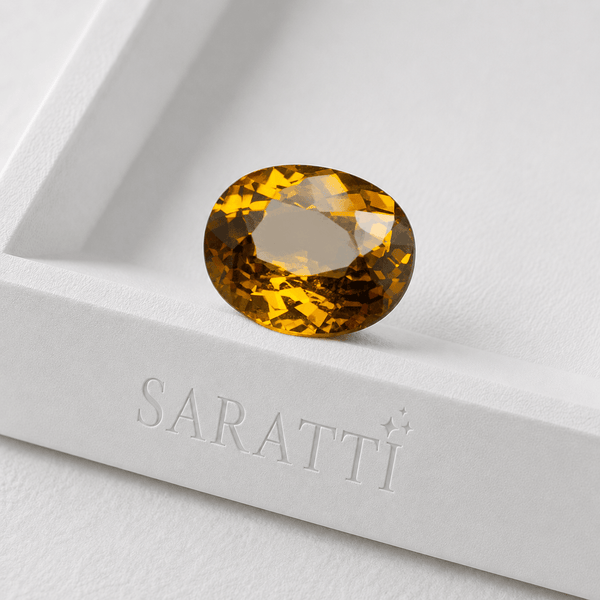
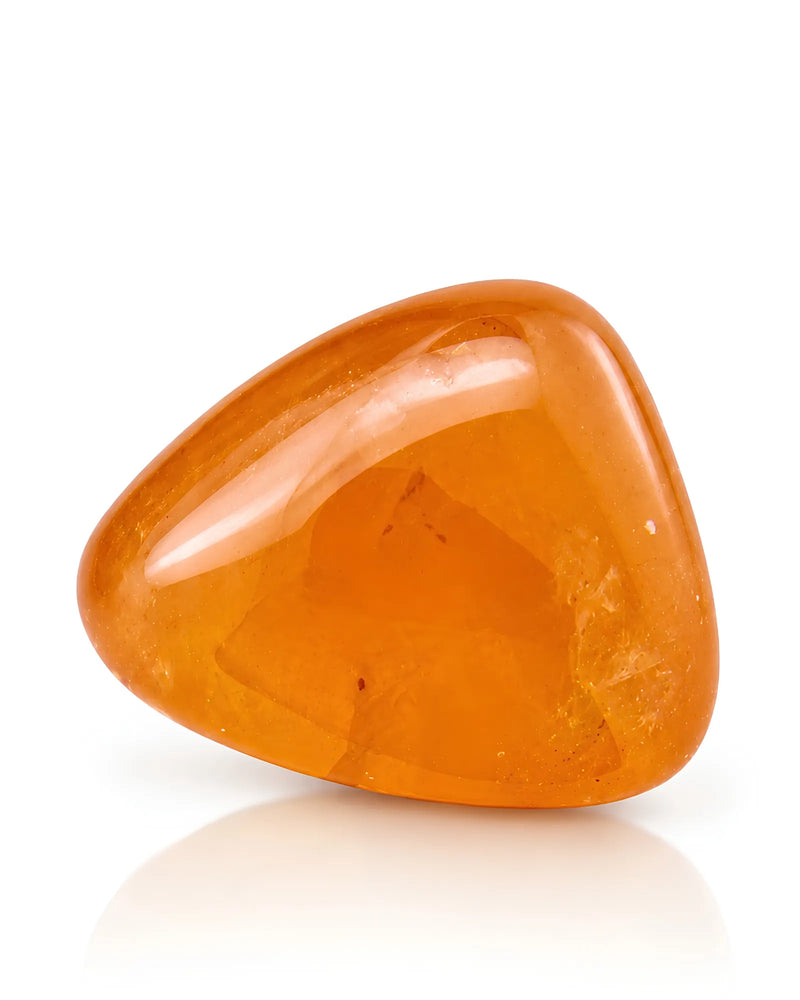
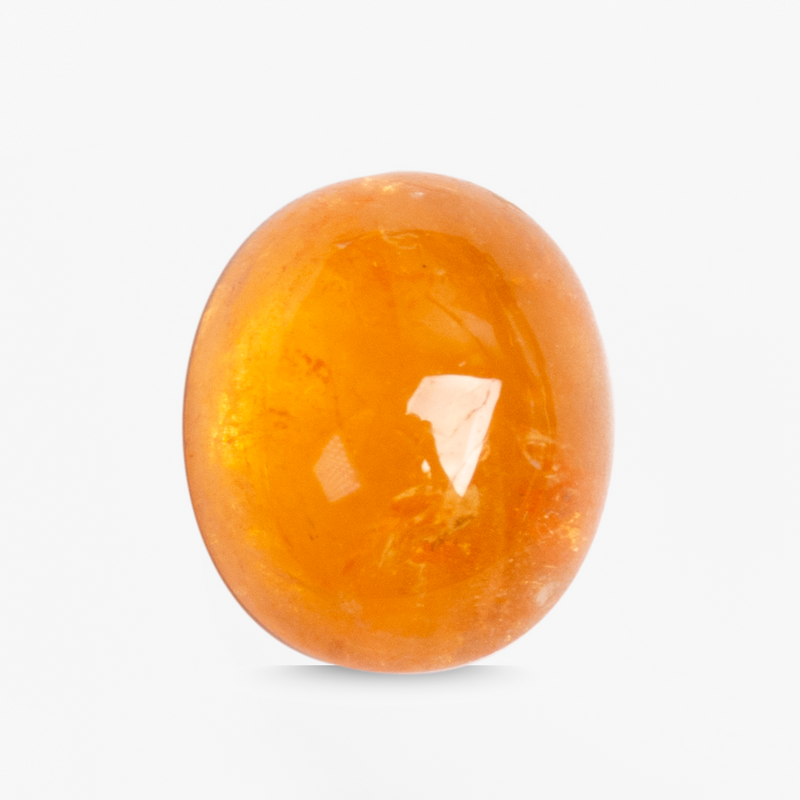
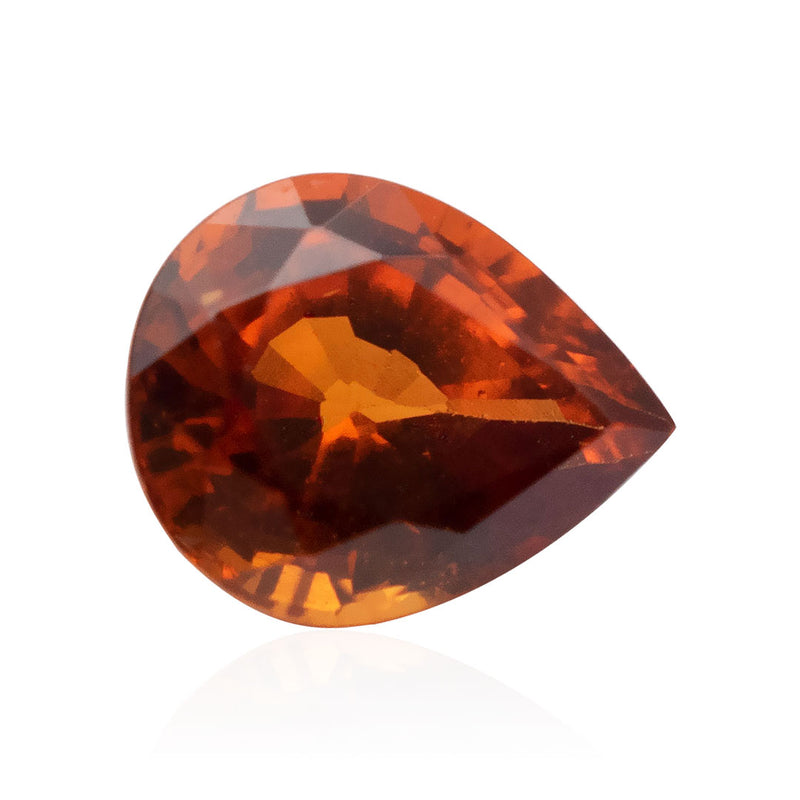
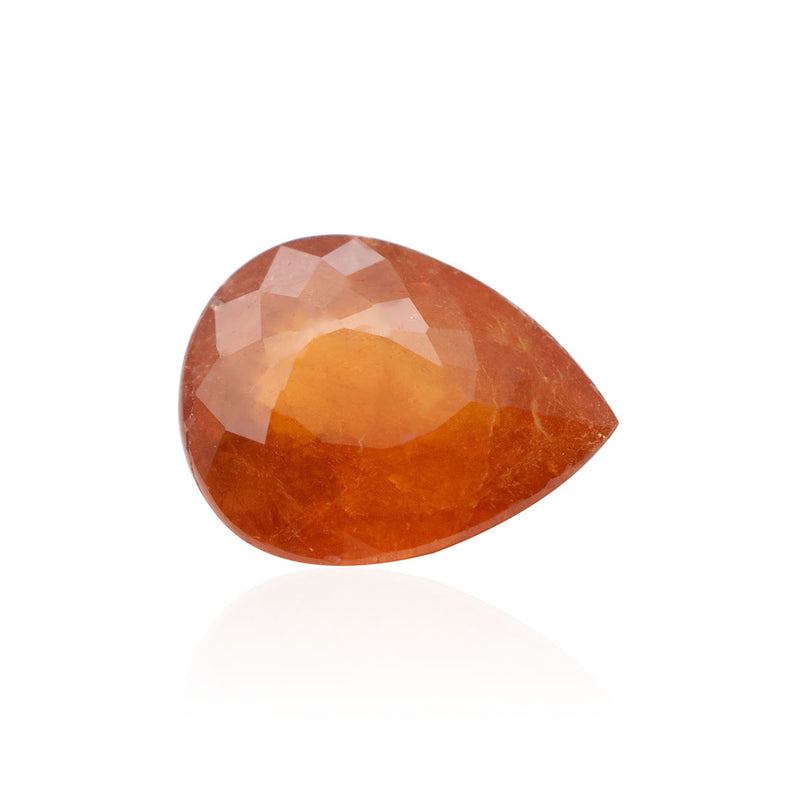
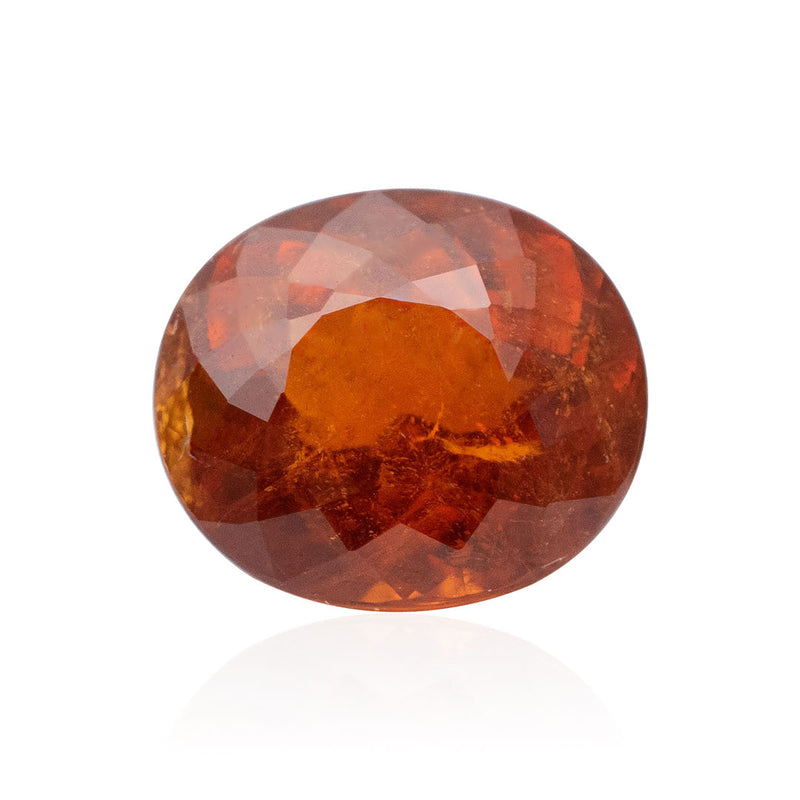
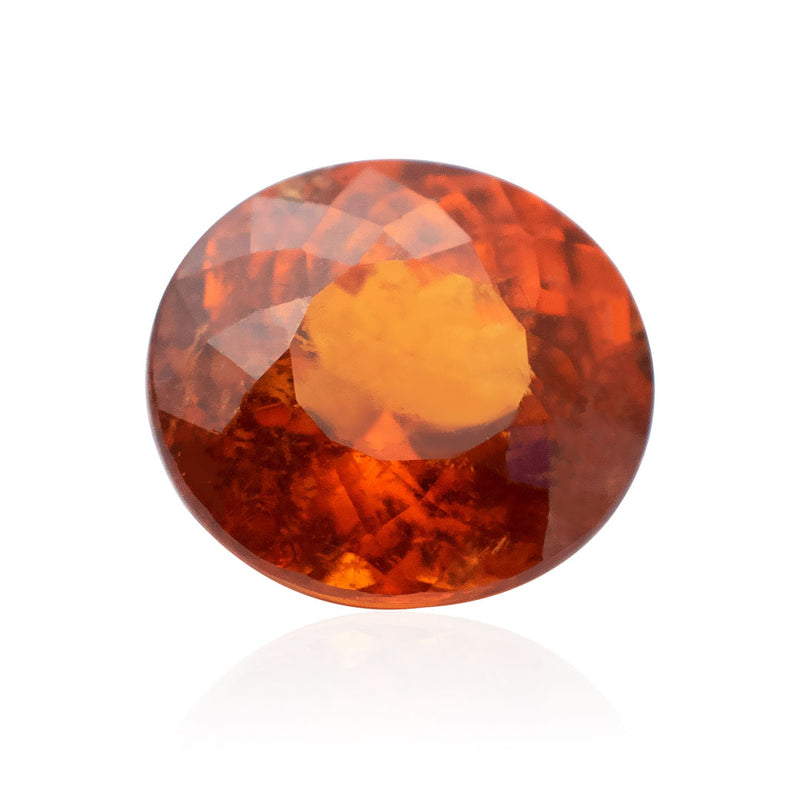
Hessonite is the warm brownish-orange to cinnamon variety of grossular, coloured by iron and manganese, and it has been in use longer than almost anything else in the group. Roman intaglios were cut in it, and it is one of the nine stones of the Indian navaratna, as gomed. The name comes from the Greek hesson, inferior, applied because it is slightly softer and less dense than the red garnets it was compared with; density is nearer 3.6 than almandine's 4.2, and the refractive index of around 1.74 sits in the same neighbourhood as tsavorite, as it should, since they are one species. Sri Lanka is the classic and still the most important source, with material from India, Madagascar and Brazil.
Under magnification hessonite is unmistakable, the interior showing a swirled, granular, treacly texture caused by scattered crystals of diopside and apatite together with fluid, which the trade calls a heated syrup or whisky effect. It is therefore not a stone bought for clarity: the turbid interior is normal and universal, and expecting an eye-clean hessonite is expecting a different stone. Judge transparency and colour instead, since the best material is a bright, warm cinnamon or honey with good light return rather than a dull brown. Sizes are generous and prices among the lowest in the group, which makes hessonite the most affordable way to own a large, characterful natural gemstone — though bright, well-saturated gomed for the Indian astrological market is bid up well beyond what the Western trade would expect to pay.
Andradite and Demantoid
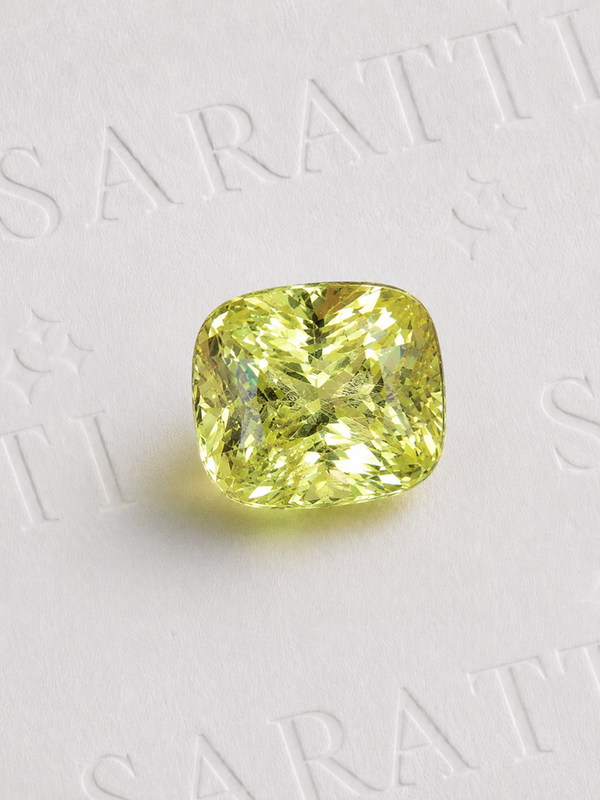
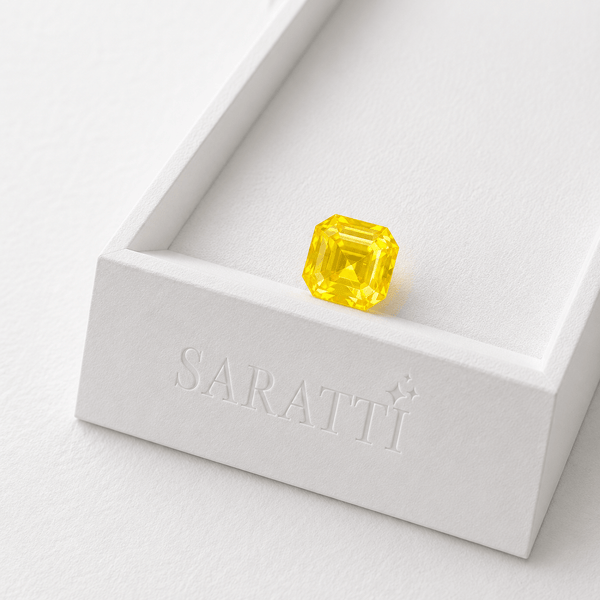
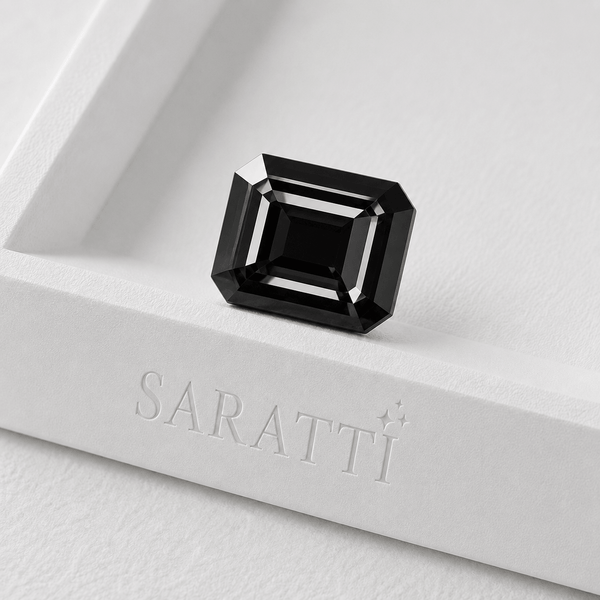
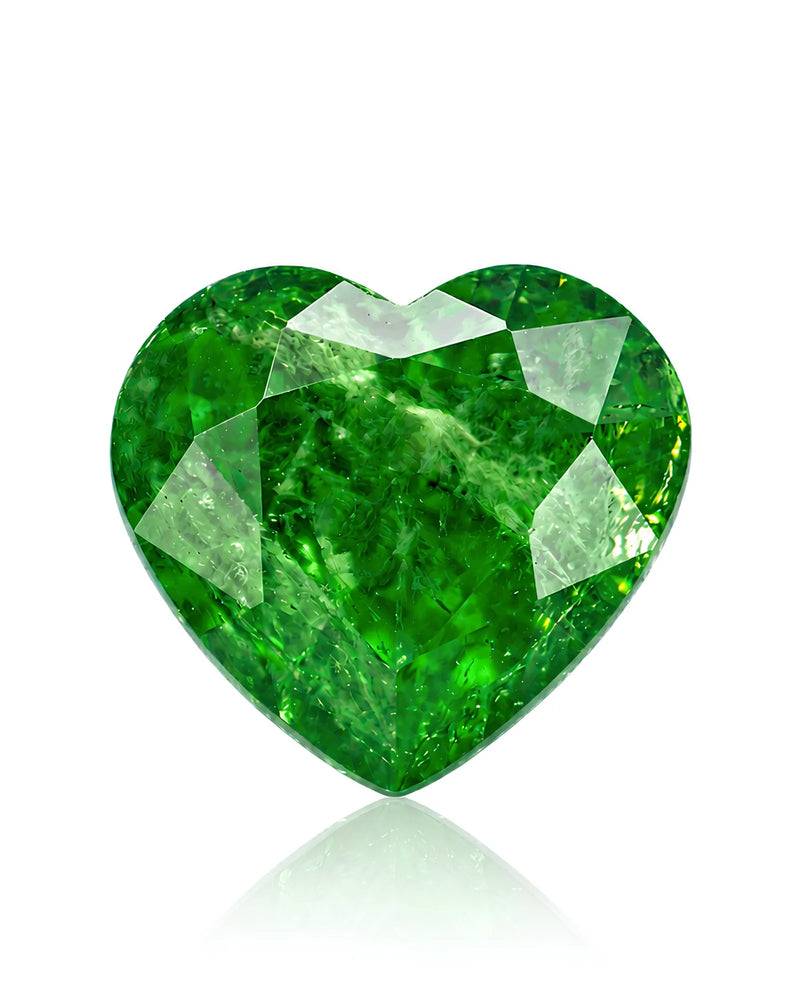
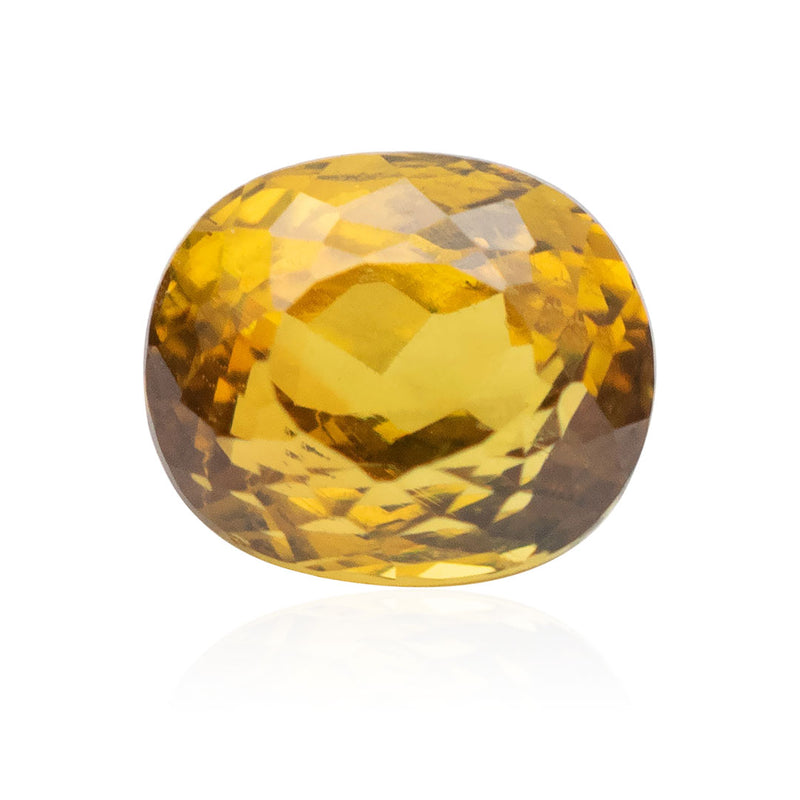
Andradite is the calcium iron garnet, named for the Brazilian mineralogist José Bonifácio de Andrada e Silva. It occurs in yellow, brown, black and green, and three varieties carry names: topazolite, the transparent yellow found in fine crystals in the Italian Alps; melanite, the opaque black of Victorian mourning jewellery; and demantoid, the green, which is the reason anyone cares about the species. Demantoid takes its name from diamant, diamond-like, because its dispersion — the splitting of white light into spectral colours — is 0.057, higher than diamond's 0.044, so a well-cut lighter-toned stone shows flashes of orange and red inside the green. Its refractive index of about 1.89 is also the highest in the group, and colour comes from chromium in the finest material, iron in the yellower.
The Urals deposit found in 1868 remains the benchmark, and Russian demantoid frequently contains fine radiating fibres of chrysotile known as horsetail inclusions — one of very few cases in gemmology where an inclusion raises value, being taken as evidence of Russian origin. Namibia produces cleaner material without them, and Madagascar has contributed since the Antetezambato find of 2009. Sizes are small: demantoid above two carats is rare and above five exceptional, and prices stand with fine tsavorite at the top of the group, which is why a Russian attribution should be carried by a report. What to check: that the green is truly green rather than yellowish, that the cut is open enough to show dispersion — very dark stones swallow it entirely — and, since at about 6.5 on the Mohs scale demantoid is the softest garnet in use, that the setting protects it.
Malaya (Malaia)
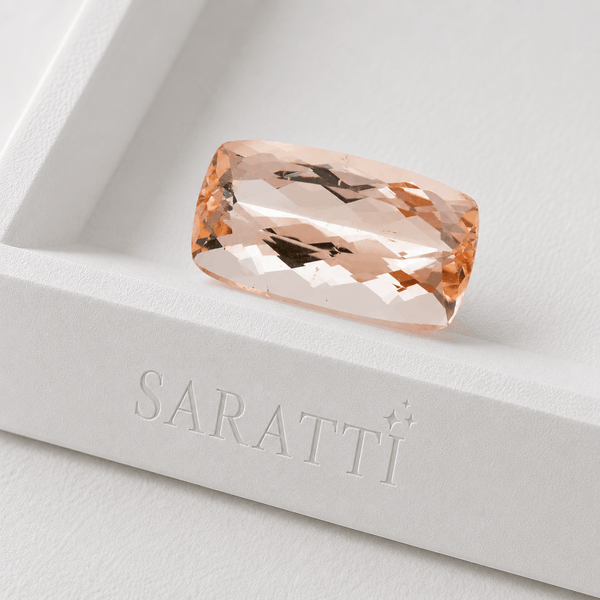
Malaya garnet, also spelled malaia, is a pyrope-spessartine blend, and a demonstration of how arbitrary the trade's categories can be. It comes chiefly from the Umba valley on the Tanzania and Kenya border, with later material from Bekily in Madagascar. When the Umba deposits were worked in the 1960s and 1970s, dealers buying rhodolite for the American market sorted parcels by colour and set aside stones neither red enough for rhodolite nor orange enough for spessartine; the Swahili word malaya, meaning outcast, attached itself to those parcels, which are now collected in their own right. The colour runs from pinkish orange through peach and cinnamon to a light brownish red, and the best of it has a warm luminosity neither parent produces alone — what dealers call glow, and what moderate saturation and high transparency together produce. Refractive index falls between pyrope and spessartine, around 1.75 to 1.78, and some material holds enough vanadium to shift between daylight and lamplight.
Clarity should be good, since malaya is usually clean, and sizes are moderate, two to five carats being normal. Price sits above rhodolite and below fine spessartine, in a market thin enough that it is set by whoever is holding stones, which makes comparison across several sellers worth the trouble. The name is also used loosely: the pinkest and most luminous Bekily material is sometimes promoted as imperial garnet at a premium the composition does not justify, and any parcel offered as malaya should be judged on what is in front of you rather than on the label. What to check: transparency and glow rather than depth of colour, and whether the stone holds its character under warm indoor light instead of collapsing into brown.
Colour-Change Garnet
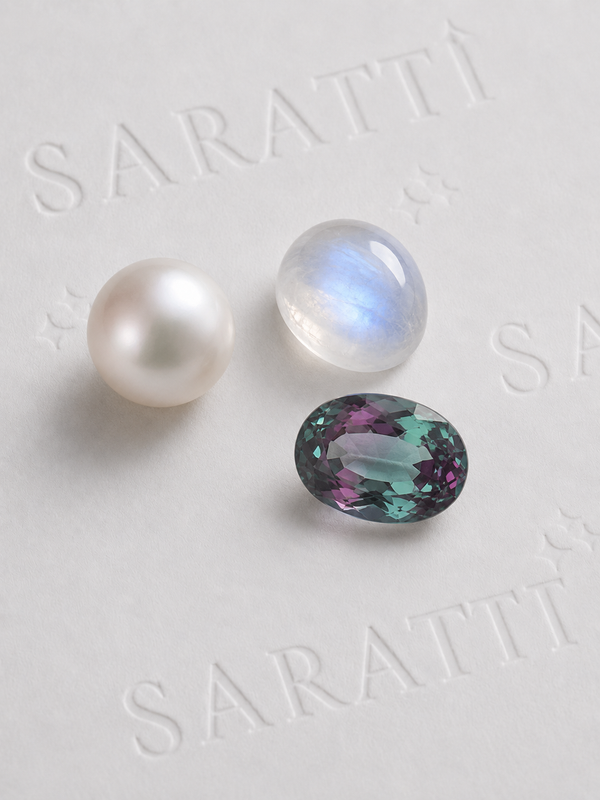
Colour-change garnet is the group's quiet marvel and the best value in phenomenal gemstones. It is usually a pyrope-spessartine blend carrying vanadium and chromium, and the mechanism is the one that operates in alexandrite: the stone transmits light in two windows of the spectrum, one blue-green and one red, and which dominates depends on whether the light is rich in blue, as daylight is, or in red, as lamplight is. The material reads bluish-green, grey or khaki in daylight and shifts to purplish red or raspberry under incandescent light, and the finest change as completely as good alexandrite. A few stones from Bekily in Madagascar shift from a genuine blue — the closest thing garnet has to that colour. Principal sources are Bekily, the Umba valley and Tunduru in Tanzania; the refractive index, about 1.76 to 1.79, is high enough that these stones face up brighter than alexandrite of the same tone.
Sizes are small: most fine material is under three carats, and a five-carat stone with a strong change is a collector's piece. Clarity is generally good, and should be, given the premium, since price here is set almost entirely by the completeness and contrast of the change rather than by weight. What to check: view the stone under real daylight and a genuine incandescent bulb rather than an LED marked warm white, since LED spectra are uneven and can exaggerate or flatten the effect — this is precisely why laboratories describe the change under standardised daylight and incandescent illuminants instead of ordinary room lighting. Be wary of photographs, the easiest place in gemmology to overstate a colour shift, and ask to see both states side by side before agreeing a price.
Uvarovite
Uvarovite is the calcium chromium garnet, named in 1832 for Count Sergei Uvarov, and it is the rarest species in the group. Chromium here is not a trace element but a defining constituent, occupying the site aluminium fills in grossular, and it produces a green of an intensity nothing else in the family reaches — uniform, because it is the chemistry itself rather than a modifier, and invariable, since uvarovite is never any other colour. The problem is size. It forms in chromium-rich rocks, chiefly chromite deposits, growing as crusts of crystals one to three millimetres across rather than discrete gems. Faceted uvarovite exists, almost entirely from small Russian and Finnish crystals, and stones above a quarter of a carat are exceptional. The principal locality is Saranovskii in the Urals, with material from Outokumpu in Finland, and the refractive index of about 1.86 is close to demantoid's.
What is actually traded is therefore the specimen: a plate of chromite covered in a druse of sparkling green crystals, sometimes set into jewellery with the crust intact. These are sold on the quality of the crust — colour, crystal size, coverage — rather than by weight, and good plates are not expensive. Where a druse is set into a ring or pendant, check that the crystals are firmly attached to the matrix and that the mount shields the edges of the plate, since individual crystals can be knocked loose and cannot be replaced. For a buyer the wider point is to know what is possible: a faceted stone of any real size offered as uvarovite is almost certainly a chrome-bearing grossular or a tsavorite, and should be tested before it is priced as the rarer species.
The Thing Almost No Other Gemstone Can Say
Garnet is essentially never treated. No heat, no oil, no irradiation, no diffusion, no fracture filling, no dye. There is no commercial treatment practised on gem garnet, because none of them works well enough on this structure to be worth doing.
It is one of a very small handful of gemstone groups — spinel is the other notable one — that reaches the market exactly as it came out of the ground. For a buyer who has waded through the treatment disclosures attached to ruby, sapphire, emerald and topaz, this is worth pausing on. The colour in a garnet is the colour the earth made.
One caveat, stated because we would rather state it than have it discovered: composite and imitation material exists, garnet-topped doublets and glass among it, so what garnet requires is identification rather than treatment disclosure.
Where anything unusual is detected we state it, as we do for every stone, and our full standard is in how SARATTI grades gemstones. With garnet the disclosure section is simply short.
Clarity and Type Classification
Gemstones are sorted into three clarity types according to how included the species is expected to be in nature, and garnet is awkward because the group spans two of them.
Type I covers species normally free of eye-visible inclusions, and most of the group sits here: almandine, pyrope, rhodolite, tsavorite, malaya and colour-change material are all expected to be eye-clean, and a visible inclusion in any of them is a fault that should be priced as one.
Type II covers species usually included to some degree. Spessartine belongs here on account of its shredded fluid inclusions, as does much andradite. Demantoid reverses the rule, since horsetails add value, and hessonite is always turbid, judged on transparency rather than clarity.
Garnet therefore, unlike ruby or emerald, does not ask you to accept inclusions as the nature of the species. Clean stones are available at reasonable prices in most varieties, so there is little reason to buy an included one unless it is priced accordingly — or the inclusion is a horsetail.
Cut, and the Absence of Pleochroism
Garnet is singly refractive. Its structure is cubic, so light passes through at one speed in every direction, and the consequences run in the buyer's favour.
There is no pleochroism — no second colour appearing when the stone is turned, as there is in tourmaline, tanzanite or iolite. A cutter need not orient the rough to find the best face-up colour, and there is no risk of a stone that looks handsome in the case and dull from the side. Nor is there doubling of facet junctions under magnification, one of the quickest ways to separate garnet from the doubly refractive stones it resembles.
What the cutter must manage instead is tone. Dark material is cut shallower to let light through and pale material deeper to build saturation, so millimetre dimensions are more informative than carat weight. Windowing — a flat patch under the table where the pavilion is too shallow to return light — is the commonest fault in cheap garnet, and it shows if you hold the stone over printed text.
Where Garnet Comes From
No single country dominates the group, which is unusual, and each variety has its own map.
East Africa is the centre of gravity for fine material: Kenya and Tanzania between them supply tsavorite, rhodolite, malaya, colour-change garnet and much spessartine, and Madagascar, Mozambique and Nigeria add colour-change material, demantoid, rhodolite and spessartine in commercial quantity.
Russia holds the historic ground — demantoid from the Urals since 1868, uvarovite from Saranovskii — while Namibia produced the first mandarin spessartine. Sri Lanka is the classic source for hessonite, India and Brazil produce almandine and pyrope on an industrial scale, and the United States contributes Arizona chrome pyrope and Idaho star garnet.
Origin affects value far less here than in ruby or sapphire, with one exception: Russian demantoid commands a premium over Namibian or Madagascan material of the same appearance, and where that premium is charged it should be supported by a report.
Durability and Wear
The group runs from about 6.5 to 7.5 on the Mohs scale, and the variation matters. Almandine and spessartine sit at the harder end near 7.5, pyrope, rhodolite, grossular and tsavorite around 7 to 7.5, and demantoid at roughly 6.5, the softest in common use.
More important than hardness is that garnet has no cleavage. There is no plane along which a knock can split the stone; it breaks conchoidally instead. This is why the group is mined by the ton as an abrasive — each broken grain presents a fresh cutting edge rather than crumbling — and why garnet survives daily wear better than its Mohs figure alone suggests.
For a ring worn every day a bezel or protective setting is sensible across the group, and near-essential for demantoid, both the softest member and the most expensive. The rest are comfortable in normal wear.
Clean with warm soapy water and a soft brush. Most garnets tolerate an ultrasonic cleaner, but avoid it on demantoid, on hessonite, and on any stone with a fracture reaching the surface. Steam is best avoided across the group, and stones should be stored separately, since quartz and anything above it will scratch them.
Certification
For the affordable varieties a report is rarely necessary. Garnet is not commonly synthesised — laboratory-grown YAG and GGG are not garnet compositions at all — and it is not treated, so the two questions a report usually answers do not arise.
Four situations earn the fee. Demantoid, where a Russian origin is being priced in and the horsetails should be recorded. Colour-change material, where a laboratory documents the colours under standardised daylight and incandescent illuminants rather than leaving the change to a photograph. Tsavorite, to separate it from chrome tourmaline and emerald. And any stone where an unusual variety is claimed, because in this group the name on the label is the whole of the price.
A report from GIA, GUILD, AIGS, CGRL, GRS or GRC will confirm species and variety, name the solid-solution series where the stone is intermediate, and record measurements and weight. Where you would like a stone reviewed by a particular laboratory, we can arrange it and the fee is passed on at cost.
Choosing a Garnet
Garnet is the January birthstone and the traditional gift for a second anniversary, both older than the modern birthstone lists — garnet was set into Egyptian, Roman and Anglo-Saxon jewellery and has never been out of use since. The useful point is that a January stone need not be red. The birthstone is the group, not the colour, so the month can equally be answered with a green tsavorite, an orange spessartine or a colour-change stone that is two colours in one day. That is worth knowing if you are buying for someone who says they do not like garnets, because what they have seen is dark almandine. The tradition is covered in the January birthstone spotlight, and all about birthstones sets it in context.
Beyond that, the advice divides by what you are after. For the most stone for the money, hessonite and almandine give size and character for very little, and rhodolite the same size with better colour for a modest step up. For a colour nothing else offers, spessartine is the answer, and it is worth accepting some inclusion to get the saturation right. For a serious gemstone, tsavorite is one of the finest greens in existence and still costs less than emerald of comparable quality. For a collection, demantoid with clear horsetails and a complete colour-change stone are the most interesting things here.
Every garnet here is listed individually, with its own photography and its own details, and the variety is stated. Where a report exists it is shown; where none exists, we say so.
For more on the group, see our garnet guide, and the individual notes on rhodolite and tsavorite.
And if what you want is not on these pages — a particular variety, a size, a colour-change stone — only part of what we can reach is listed online. Describe it, and we will go and look.