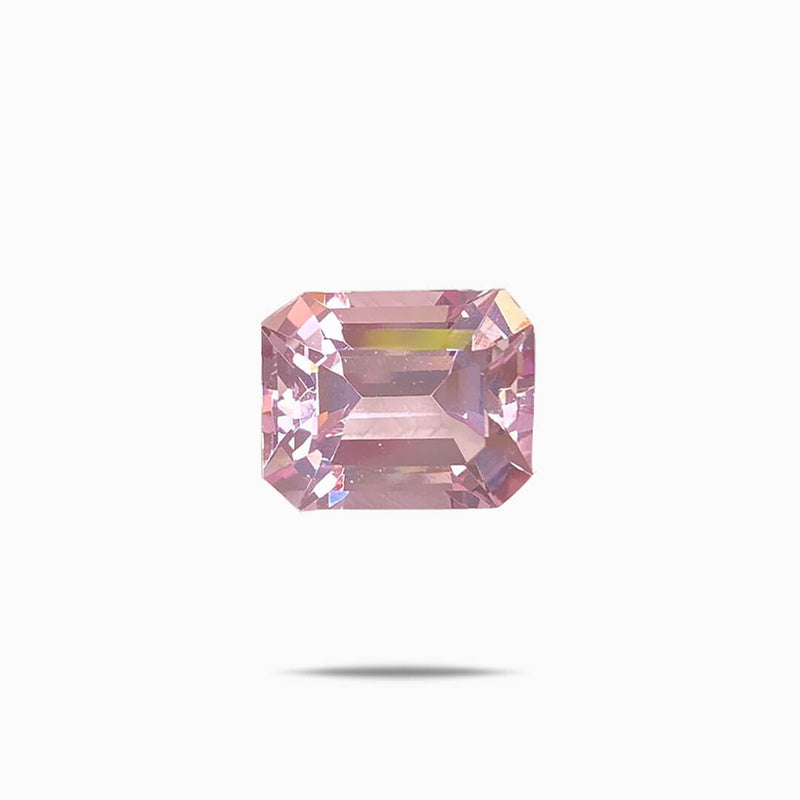
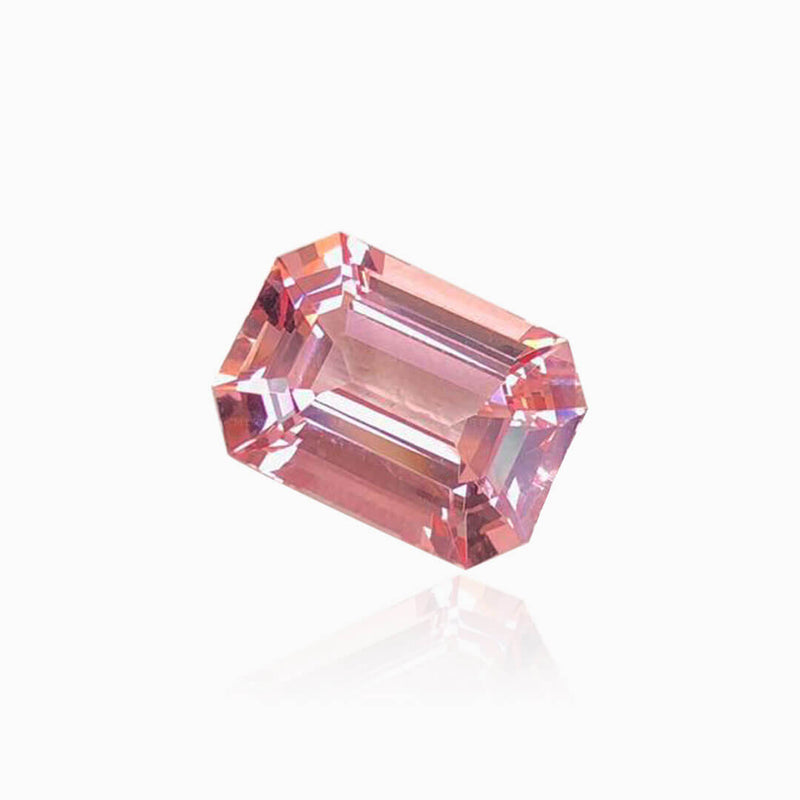
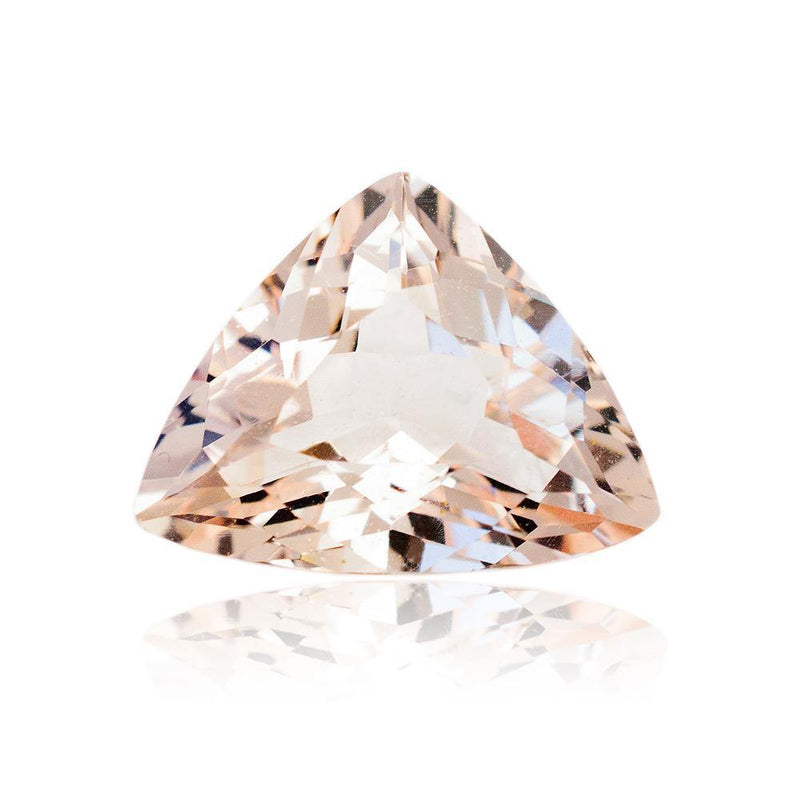
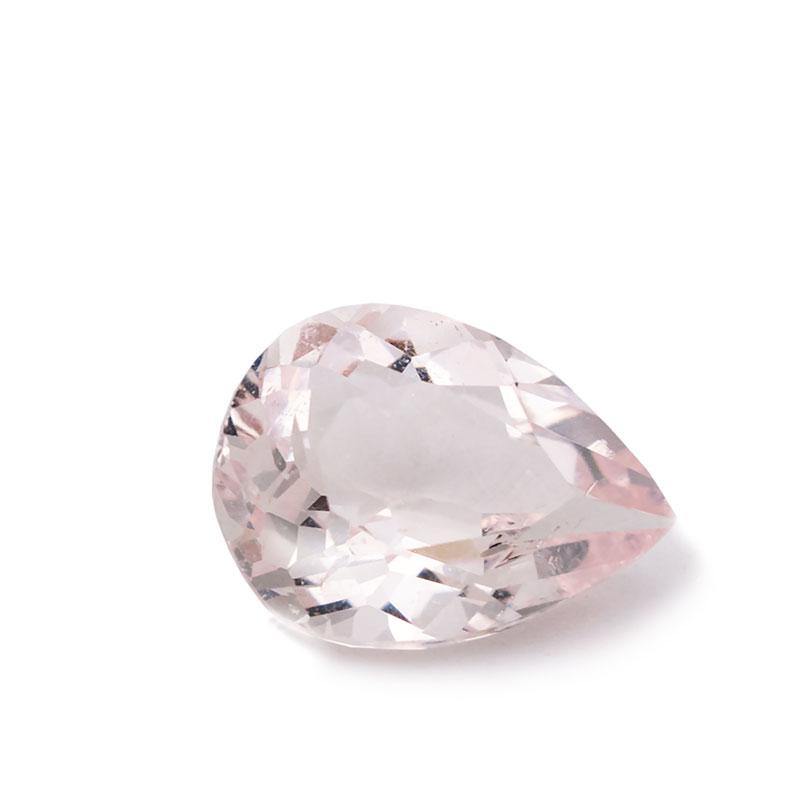
What Morganite Is
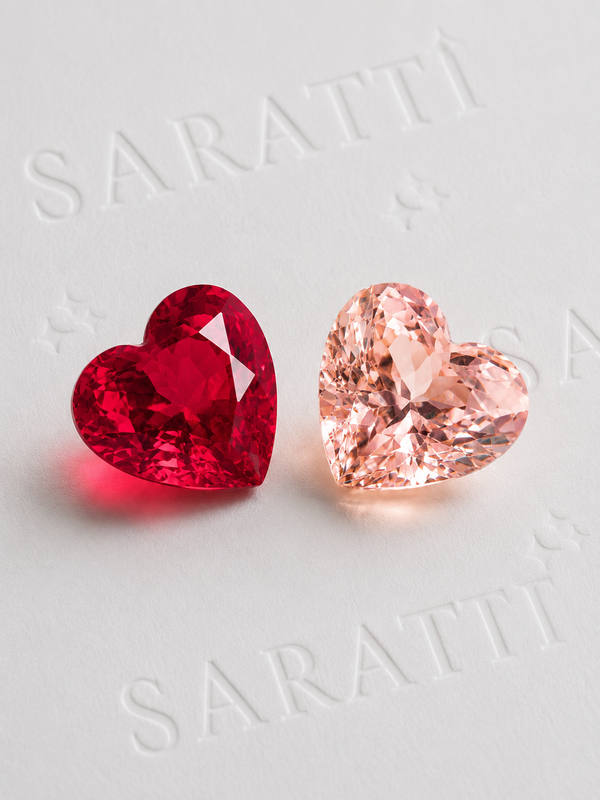
Morganite is the pink to peach variety of beryl, coloured by manganese. That places it in one of the most distinguished mineral families in gemmology: emerald is beryl coloured by chromium, aquamarine is beryl coloured by iron, and morganite is the same crystal wearing pink.
It is the newest of the three by name. The material had been found in Madagascar and California before anyone thought to distinguish it, and in 1911 George Frederick Kunz — the gemmologist at Tiffany who had already named kunzite — proposed calling it after the banker and gem collector J.P. Morgan, whose collections had gone to the American Museum of Natural History. The name stuck, and for most of the century afterwards morganite remained a collector's stone that the wider market ignored.
That changed in the last fifteen years. Morganite became one of the most requested engagement ring stones in the world, largely because of how it looks in rose gold, and it now sits in an unusual position: a beryl with genuine gemmological credentials that is also affordable at sizes nothing else can match.
At 7.5 to 8 on the Mohs scale with no problematic cleavage, it is practical for daily wear.
The Colour
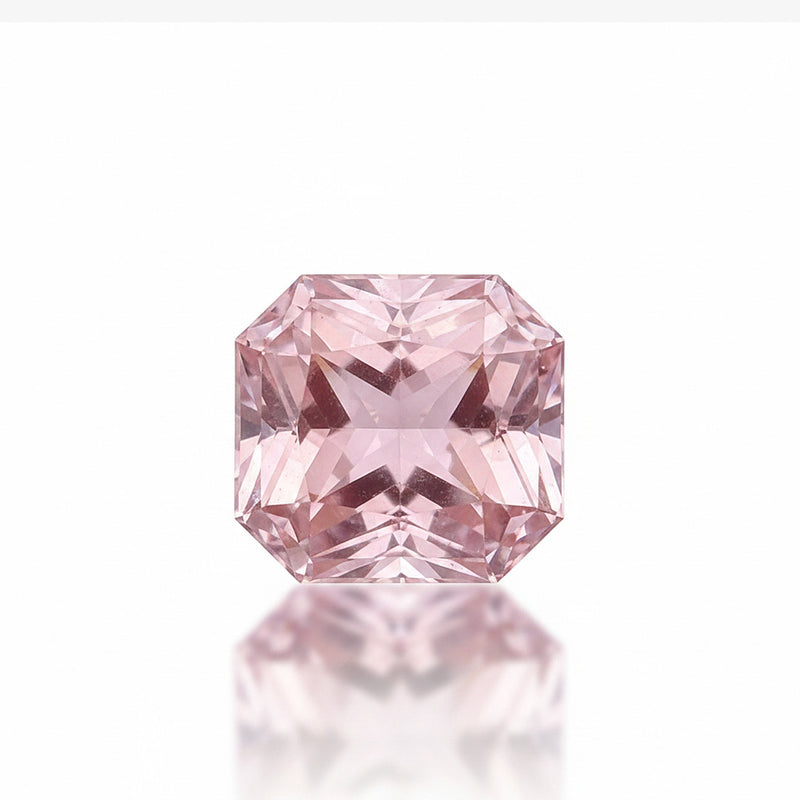
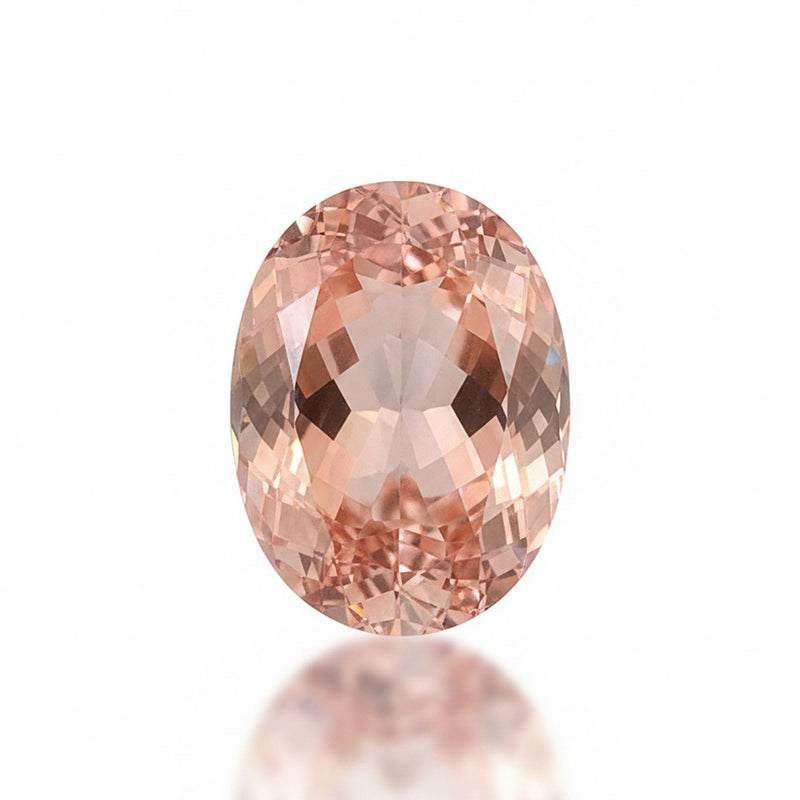
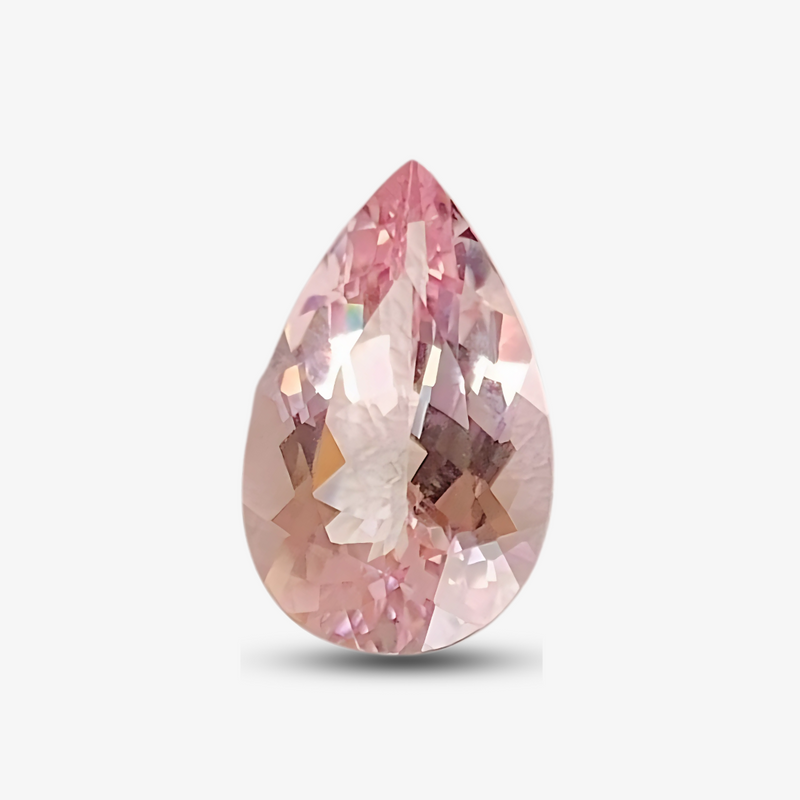
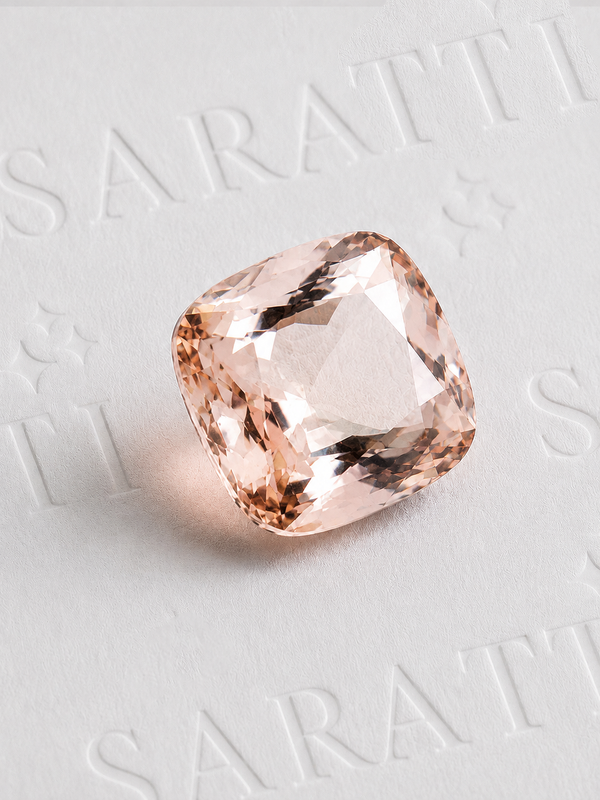
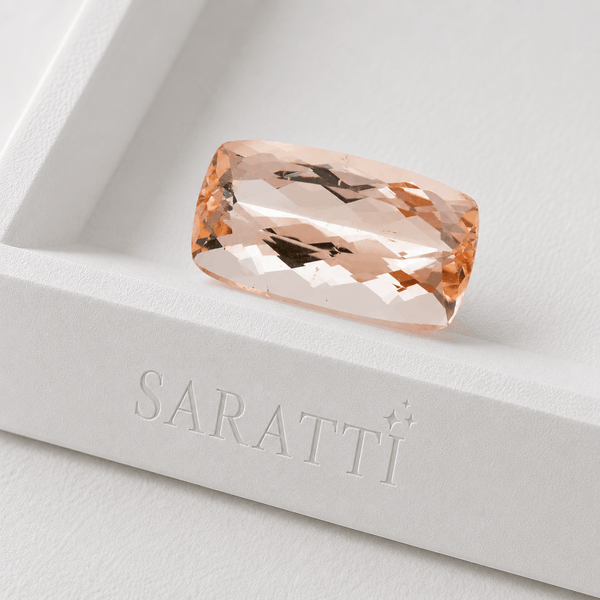
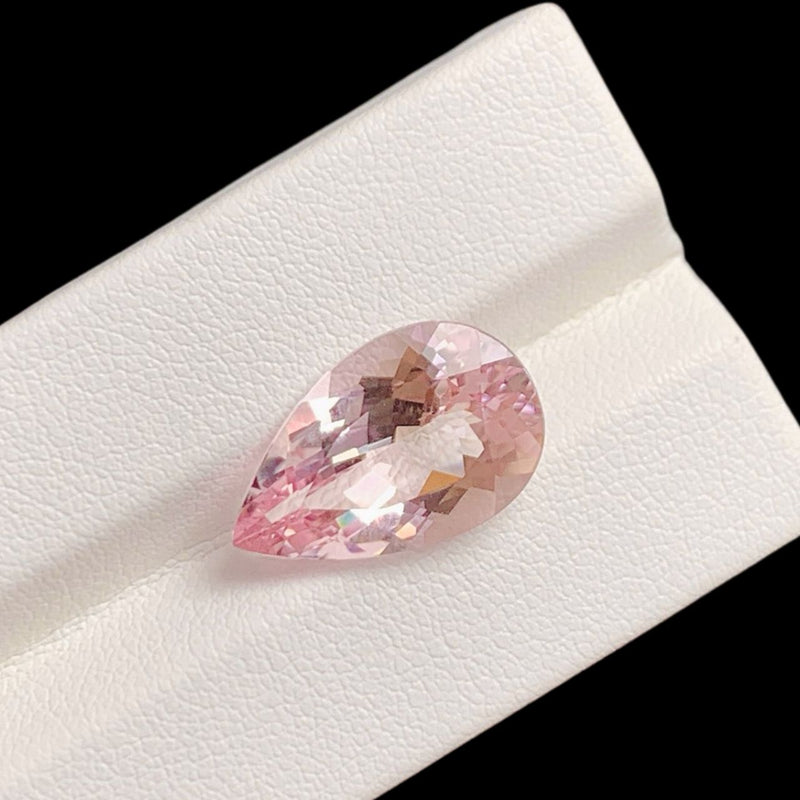
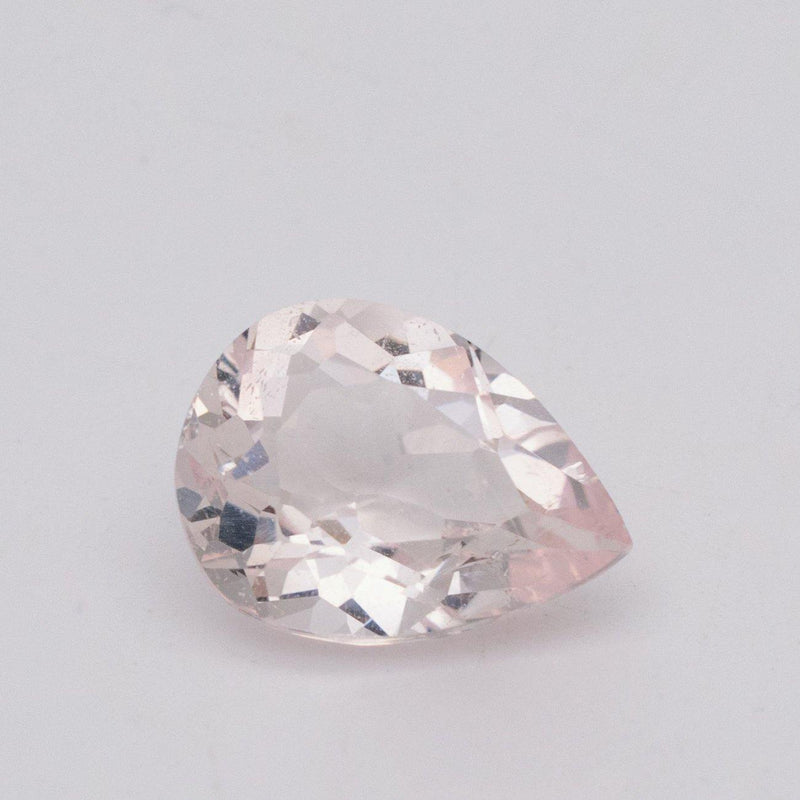
Morganite runs from a pale, almost colourless blush through soft pink, salmon and peach to a deeper rose. The most valuable material shows a strong, clear pink with good saturation, and it is genuinely scarce — most morganite is pale.
This is the central fact about the species and it governs everything else. Because the colour is light, size does the work that saturation cannot. A one-carat morganite often reads as nearly colourless; the same material at eight or ten carats shows a definite pink, because there is more stone for the light to travel through. Cutters know this, and morganite is routinely cut deep with large tables to build as much colour as possible.
It also means morganite is one of the few fine gemstones where buying larger is not indulgence but the correct technical decision. A five-carat stone is not simply a bigger version of a one-carat stone. It is a better-looking one.
Morganite is pleochroic, showing pale pink along one axis and a stronger pink or violet along another, so orientation matters to the cutter. And like most pale stones it photographs stronger than it appears in the hand, particularly under bright light against white. We film stones again under different conditions before a client decides.
Peach, Pink, and What Heat Does
Here is the part that is rarely explained honestly.
Much rough morganite comes out of the ground peach or salmon, carrying a yellow or orange component alongside the pink. Gentle heating — a few hundred degrees — removes that component and leaves a purer pink. The change is permanent, stable and undetectable, and the great majority of the pink morganite on the market has been treated this way.
None of that is a problem, and it should not be presented as one. But two things follow from it that a buyer deserves to know. First, untreated peach morganite is its own colour with its own following, and some people prefer it — the warmth of it suits certain skin tones better than pink does. Second, because the treatment is undetectable, nobody can promise you an untreated pink stone on inspection alone; that claim requires provenance rather than gemmology.
Where a treatment is known, we state it on the listing. Our full standard is in how SARATTI grades gemstones.
The colour is stable in normal wear. Morganite does not fade in daylight the way kunzite can, though prolonged strong heat is worth avoiding, as with all beryl.
Clarity
Morganite is a Type I gemstone, which in trade classification means it is expected to be eye-clean. This is the same standard as aquamarine and the opposite of emerald, and it changes what you should demand.
Beryl grows in large, clean hexagonal crystals, and morganite of good quality should be transparent and free of inclusions visible to the unaided eye. Under magnification you may find fine parallel growth tubes, a beryl characteristic, and where these are dense enough they can produce a cat's eye when cut as a cabochon.
So the rule is straightforward: expect clean. Visible inclusions in morganite are a fault to be priced in, not a characteristic of the species to be accepted. Given how much clean material is available, there is rarely a good reason to compromise.
Why Rose Gold Works
The pairing that made this stone popular is not only a matter of taste. There is an optical reason for it.
In a mounted stone, a good deal of the light that returns to the eye has first bounced off the metal underneath and around it. In a pale stone, which morganite almost always is, that metal is a real contributor rather than a background. White gold and platinum return neutral light, which does nothing to reinforce a delicate pink and tends to make it read greyer than it is. Rose gold returns warm pink light into the pavilion, and it comes back through the stone reinforcing the body colour.
A second effect works alongside it. Colour is judged relative to its surroundings, so a faint pink against a bright white metal is read by the eye as almost colourless, while the same stone against a warm metal is read as pink — and rose gold absorbs the slight orange component that survives in much morganite, where a white metal makes it look beige.
The practical consequence is a buying trap. A morganite photographed in rose gold and then set in platinum will disappoint. Judge a stone loose against a neutral grey background to know what it actually is, and against the metal you intend to use to know how the finished piece will look. The two answers differ.
The Three Beryls, Compared
Morganite is met as the affordable member of a famous family, and the differences between the three beryls are more instructive than the likeness.
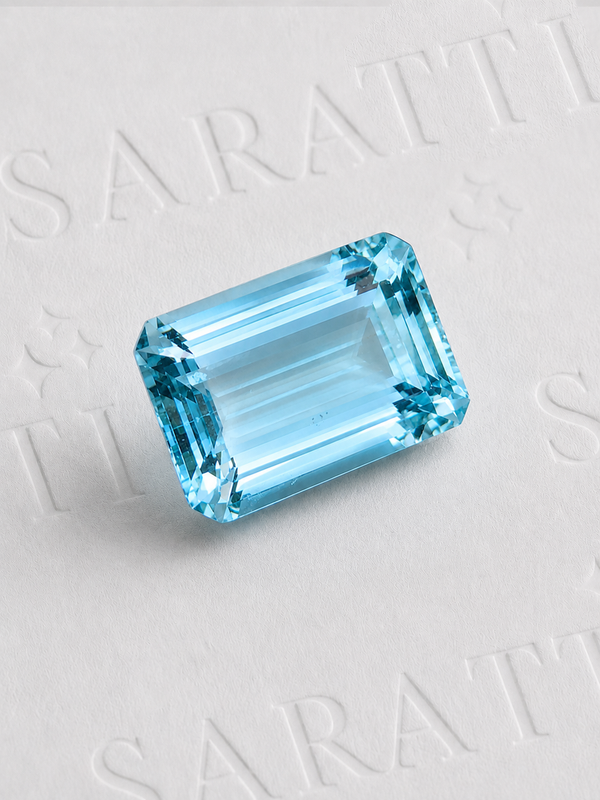
They grow in different places. Emerald forms where beryllium meets chromium or vanadium, in hydrothermal veins cutting through schist, and the crystal is strained and fractured as it grows. Aquamarine and morganite form in granite pegmatites, in open cavities with room and clean fluids, which is why they come out large and transparent. That single difference explains why emerald is a Type III stone expected to be included while its two siblings are Type I stones expected to be clean.
They behave differently in the hand. All three share the same hardness of 7.5 to 8 and the same lack of troublesome cleavage; emerald's fragility comes from its inclusions and its filling, not from the mineral. A clean morganite is, in practice, a tougher stone than an emerald.
And they price on opposite principles. Emerald is bought on colour, and size multiplies an already high per-carat figure. Morganite is bought on size, because the colour only appears at scale, and the per-carat price rises gently. Aquamarine sits between them on both counts.
Where It Comes From
Brazil — Minas Gerais — is the principal source, producing much of the world's fine material.
Madagascar was the original source and continues to yield good stones, sometimes with a stronger natural pink than Brazilian material. Afghanistan and Pakistan produce excellent morganite from the same pegmatites that yield fine tourmaline and aquamarine. Mozambique, Namibia, Nigeria and the United States all contribute.
Origin carries very little weight in morganite pricing. Colour saturation, size and clarity are what determine value, and a buyer should be sceptical of any origin premium being asked for here.
Cut and Size
Morganite is a cutter's stone. The rough is clean and often large, and the main constraint is building colour rather than avoiding inclusions.
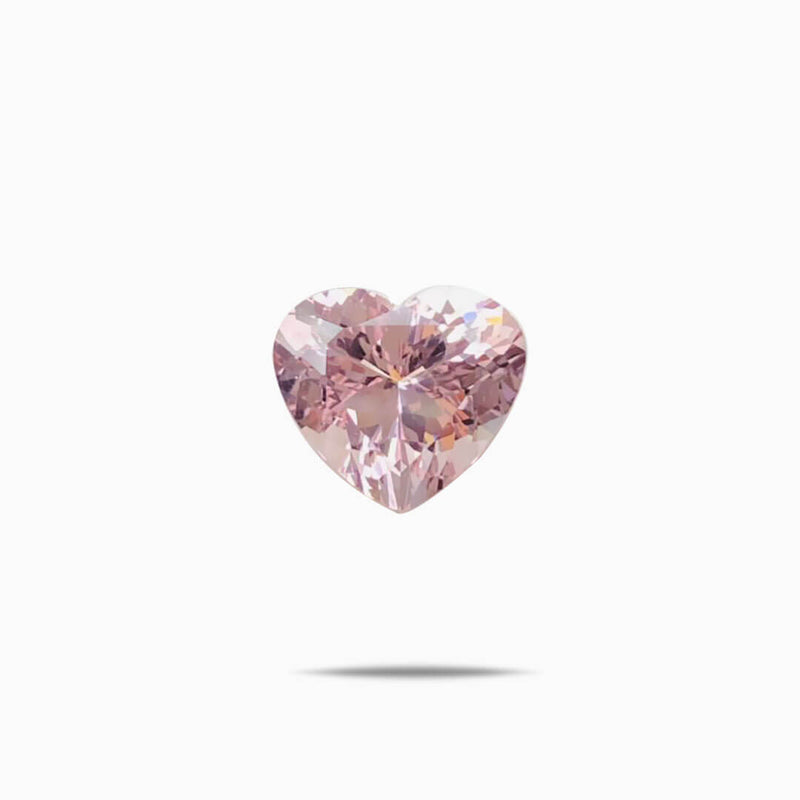
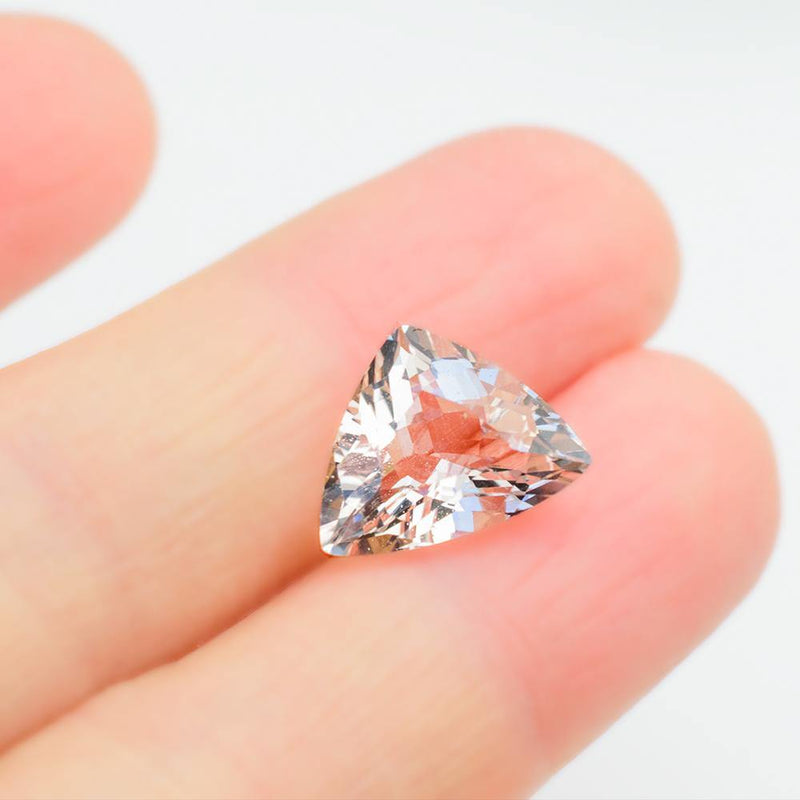
Cushions and ovals dominate, frequently with deep pavilions and generous tables. Emerald cuts suit the clean material particularly well and are popular in engagement rings. Trillions, pears and hearts all appear. Because the colour is delicate, cutters avoid shallow proportions — a shallow morganite windows badly and loses what little colour it has.
Windowing is the fault to check for: a pale patch through the centre where light passes straight through rather than returning. In a stone this light it is more visible and more damaging than it would be in a saturated one, and it is the most common flaw in commercially cut morganite.
Sizes that would be extraordinary in ruby or sapphire are routine here. Ten, fifteen and twenty carat morganites of good colour and clarity are obtainable, and they are what the species does best.
Wearing Morganite
Straightforward. At 7.5 to 8 on the Mohs scale with no cleavage, morganite handles daily wear as well as aquamarine does.
Clean with warm soapy water and a soft brush. Clean untreated stones generally tolerate an ultrasonic cleaner, though we would avoid it on anything with a reaching fracture, as with any stone. Avoid prolonged strong heat, and store separately so harder stones cannot scratch it.
For an engagement ring — which is where most morganite ends up — the practical advice is to protect the corners on a step cut, and to be aware that a very large stone sits high and will catch on things. That is a design conversation rather than a durability one.
Certification
Morganite is less dependent on certification than emerald or Paraiba. The species is not commonly synthesised for the trade, the heat treatment is uncontroversial and undetectable, and origin does not carry a premium worth defending.
A report still earns its place on a significant stone. A report from GIA, GUILD, AIGS, CGRL, GRS or GRC will confirm the stone is natural beryl rather than glass or pink treated topaz, and record measurements and weight. Where you would like a stone reviewed by a particular laboratory, we can arrange it and the fee is passed on at cost.
Choosing a Morganite
Morganite is not an official birthstone, though it is sometimes offered as an alternative for October and is associated by some with the twenty-fifth anniversary. Most people arrive at it for one of two reasons: they want a large pink stone with real presence at a sensible price, or they are choosing an engagement ring and want something other than a diamond.
For either, the advice is the same and it runs against the usual instinct. Go larger than you think. Morganite's colour depends on size, and the difference between a two-carat and a six-carat stone is not just scale — it is whether the pink registers at all. The budget is better spent on carats here than almost anywhere else in the coloured stone world.
Beyond that: expect eye-clean, check for windowing, look at the stone in daylight rather than under a lamp, and decide honestly whether you want the treated pink or the natural peach.
Every morganite here is listed individually, with its own photography and its own details. Where a stone has been heated we say so, and where a report exists it is shown.
For more on the species, see our morganite guide. Its two siblings in the beryl family are worth seeing alongside it — the aquamarine and emerald collections are the same mineral in different colours. If pink is your starting point rather than species, the pink gemstones collection gathers sapphire, spinel, tourmaline and morganite together, and the complete guide to pink gemstones compares them.
And if what you want is not listed — a deeper pink, a particular size, an untreated peach stone — only part of what we can reach is shown online. Describe it, and we will go and look.








 Engagement Rings
 Gemstone Rings
 Wedding Bands
 The SARATTI Difference
 Gemstone Type
 Shop By Color