What an Opal Actually Is
Opal is not a crystal. Almost every other gemstone is a crystalline solid with an ordered lattice; opal is hydrated silica — silica spheres and water, with no crystal structure at all. It contains between three and twenty-one per cent water by weight, and that water is not an impurity but part of the stone — which explains most of what follows: why opal is soft, why it can crack, and why it must never be soaked or baked or left in a safe for a decade.
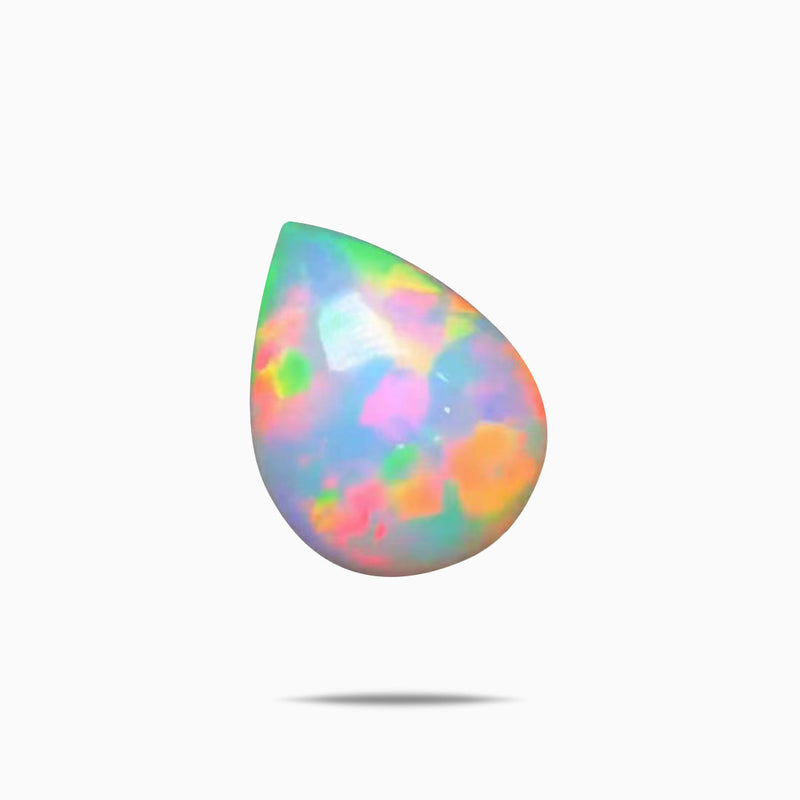
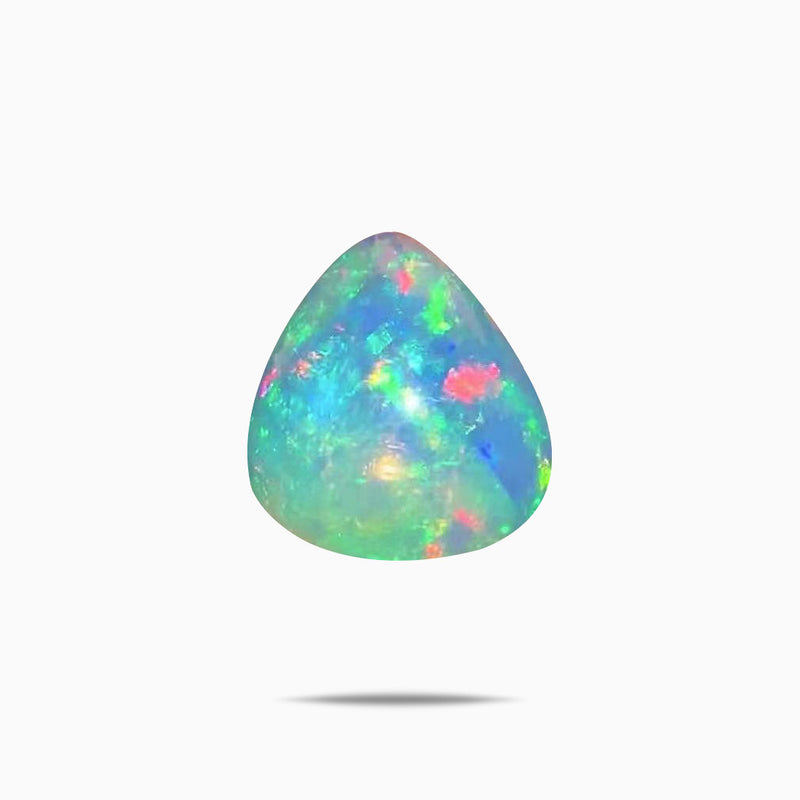
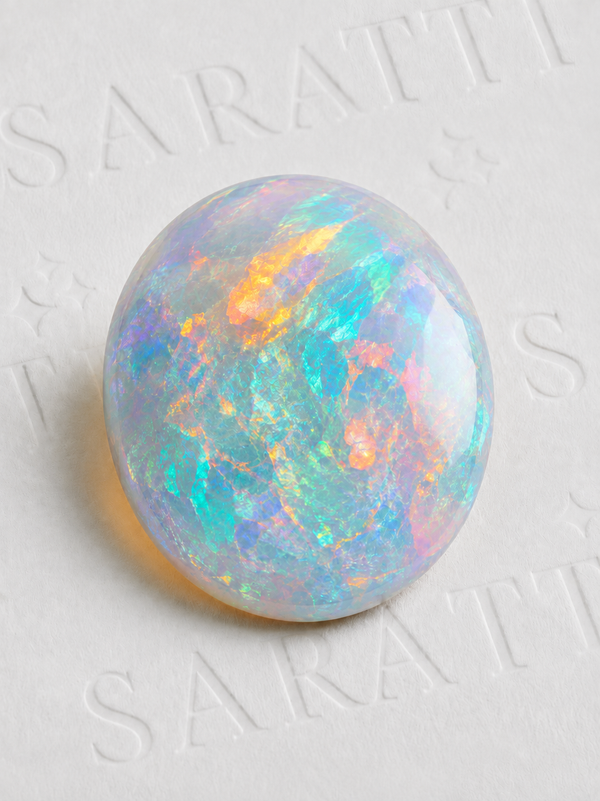
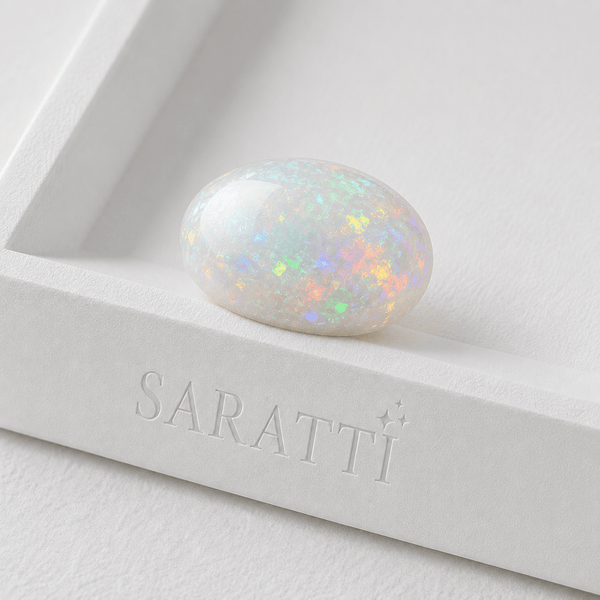
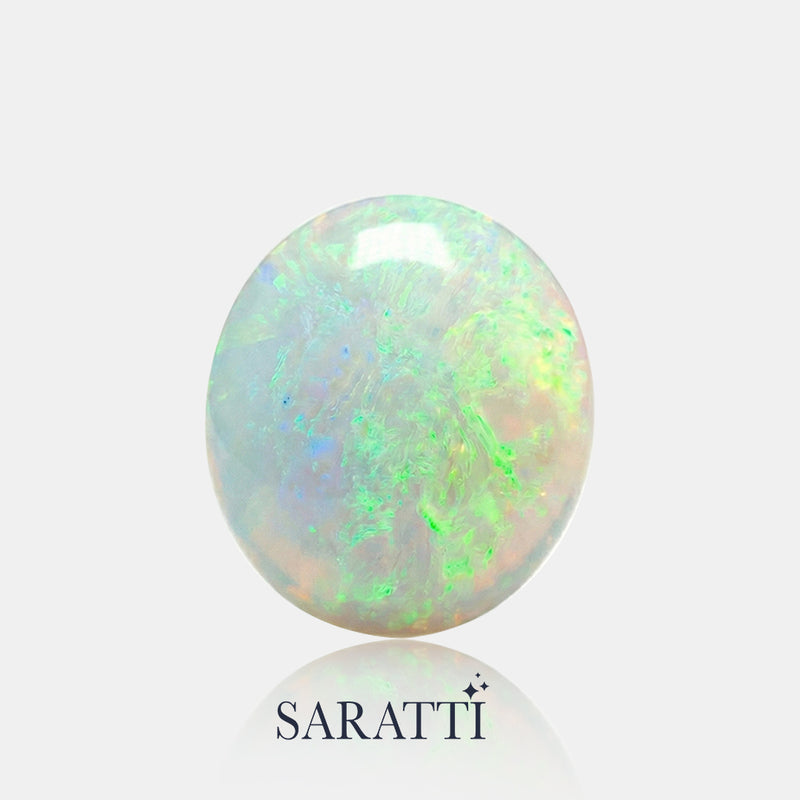
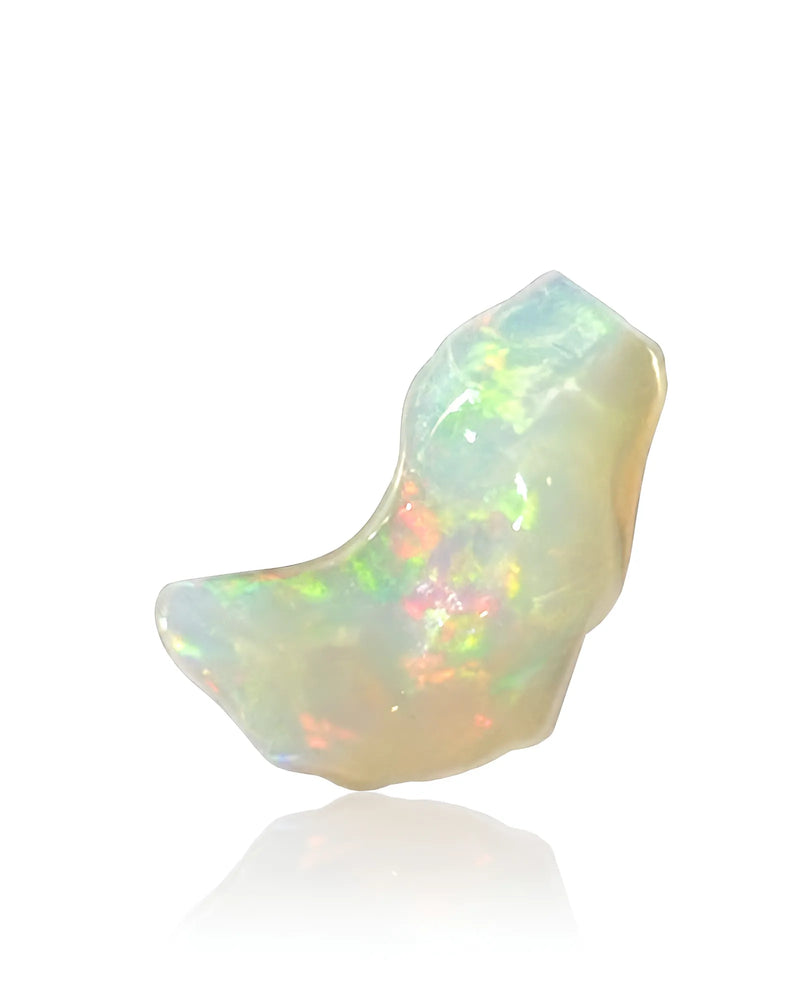
The play-of-colour is not pigment and not fluorescence. It is diffraction. Inside precious opal, microscopic silica spheres are stacked in an orderly three-dimensional array, and light entering is split into spectral colours as a diffraction grating splits it. Sphere size determines which colours appear: small spheres return blues and violets, larger ones green, larger still orange, and the largest of all red — which is why red is the rarest and most valuable play-of-colour, and why an opal that flashes red almost always flashes everything else too. A fuller species account sits in our opal guide.
The Types, and Why They Are Priced Differently
Opal is not one commodity, and a price per carat means little until you know which type is being discussed. Our note on the different types of natural opal covers the full range; the essentials are these.
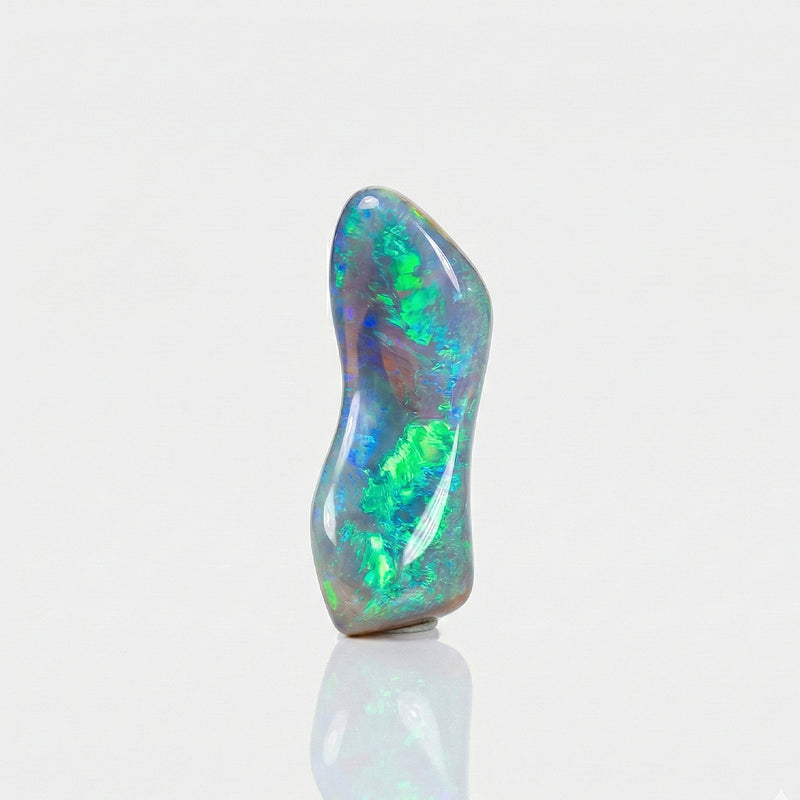
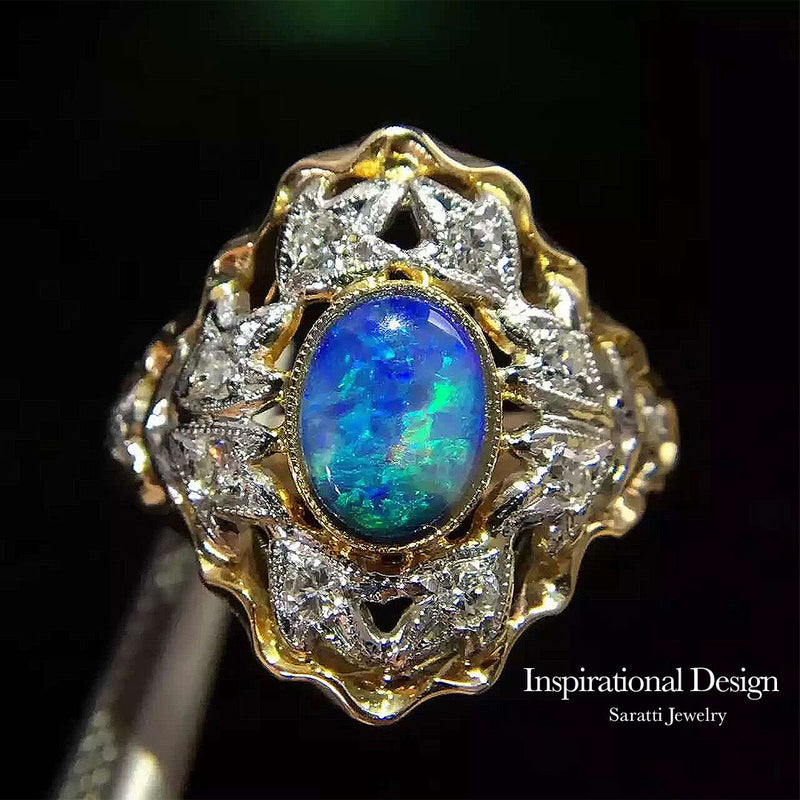
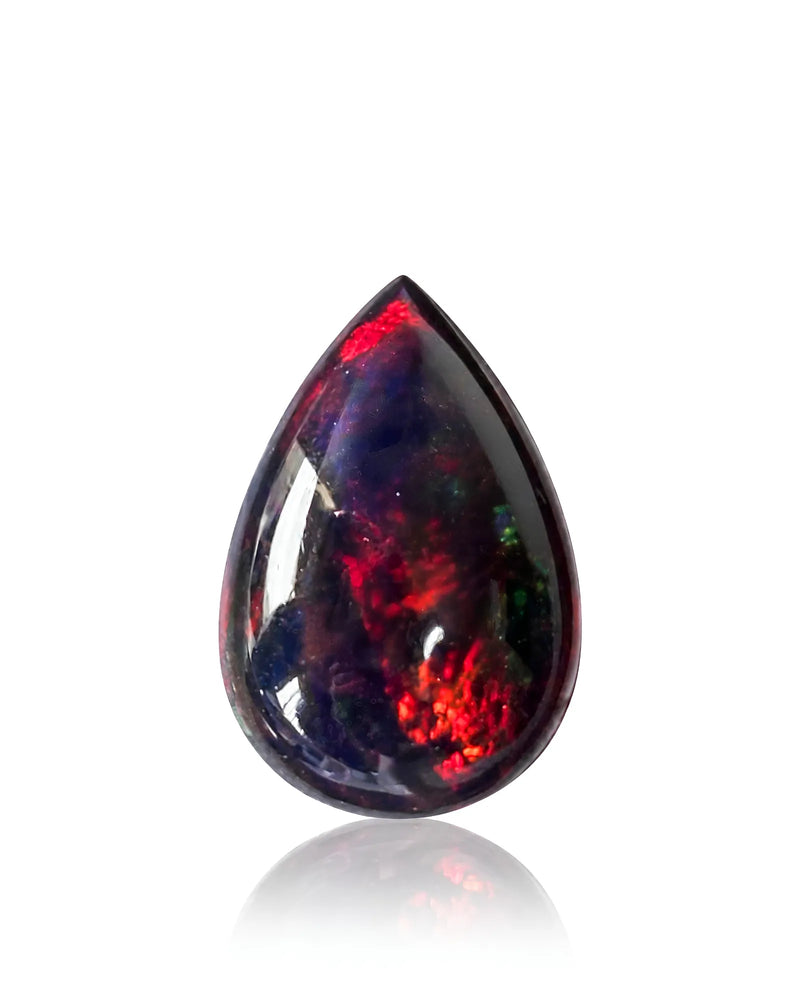
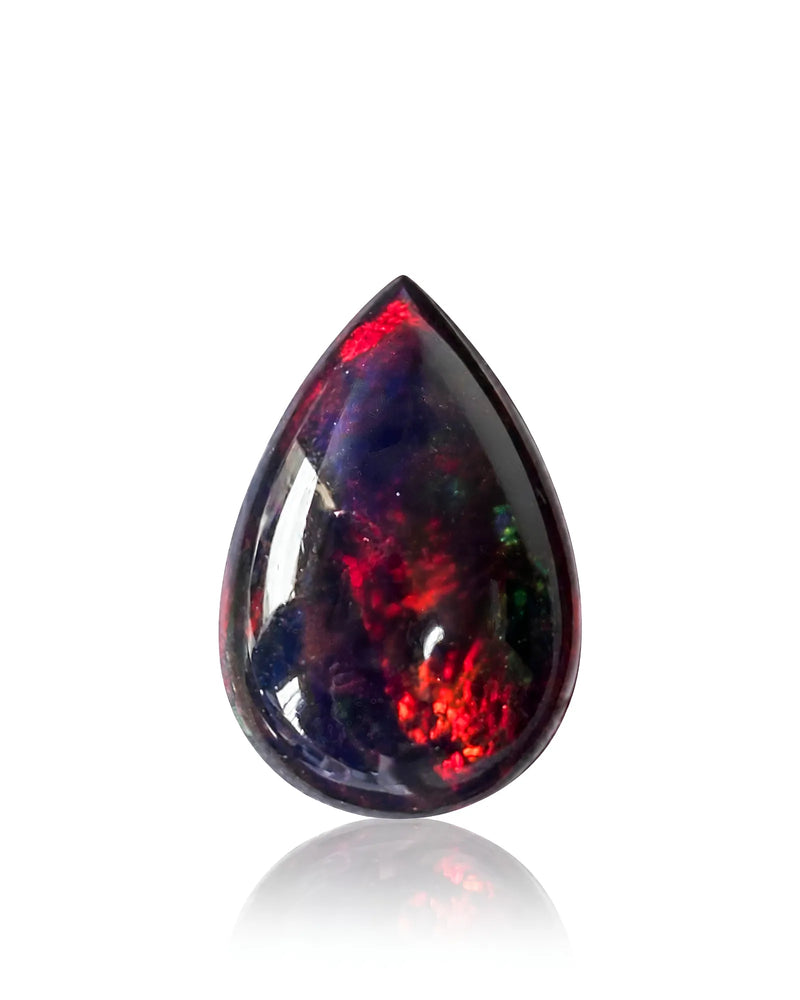
Black opal has a dark body tone — the background against which play-of-colour sits — and darkness makes the colours read far more vividly. It is the most valuable type by a wide margin, and the classic source is Lightning Ridge in New South Wales.
Boulder opal, from Queensland, is a thin seam of precious opal still attached to the ironstone it formed in, cut with the host rock left as a natural backing and usually in free-form shapes that follow the seam. This is a solid natural stone, not an assembled one, and the ironstone gives it both darkness and strength.
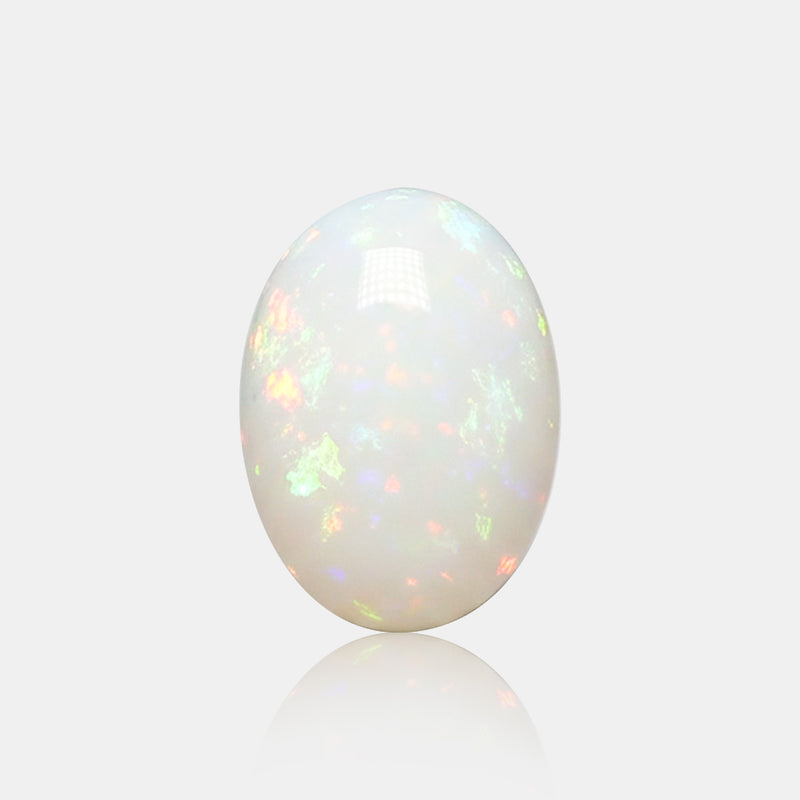
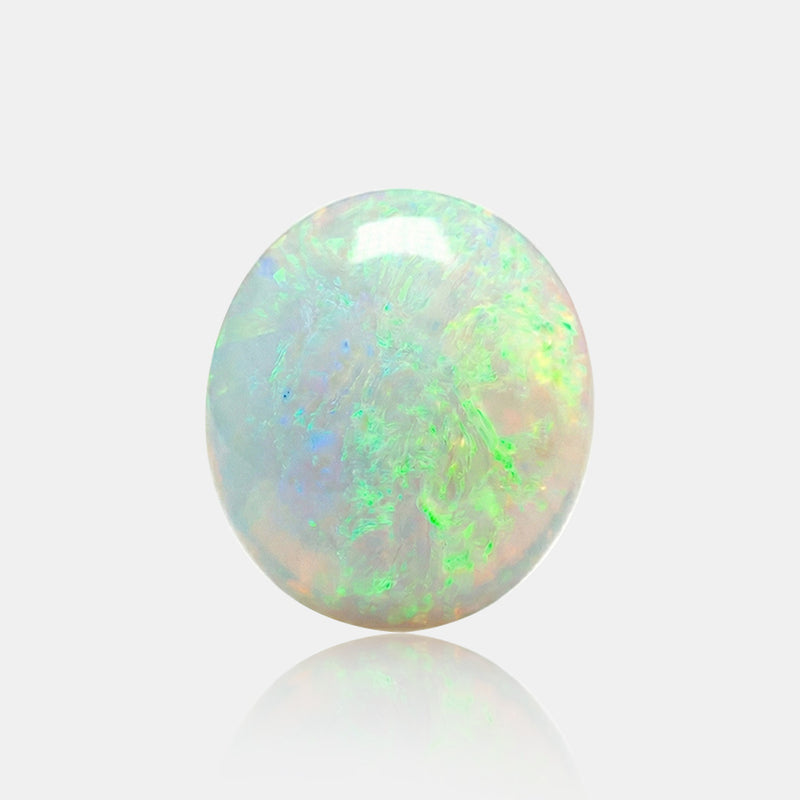
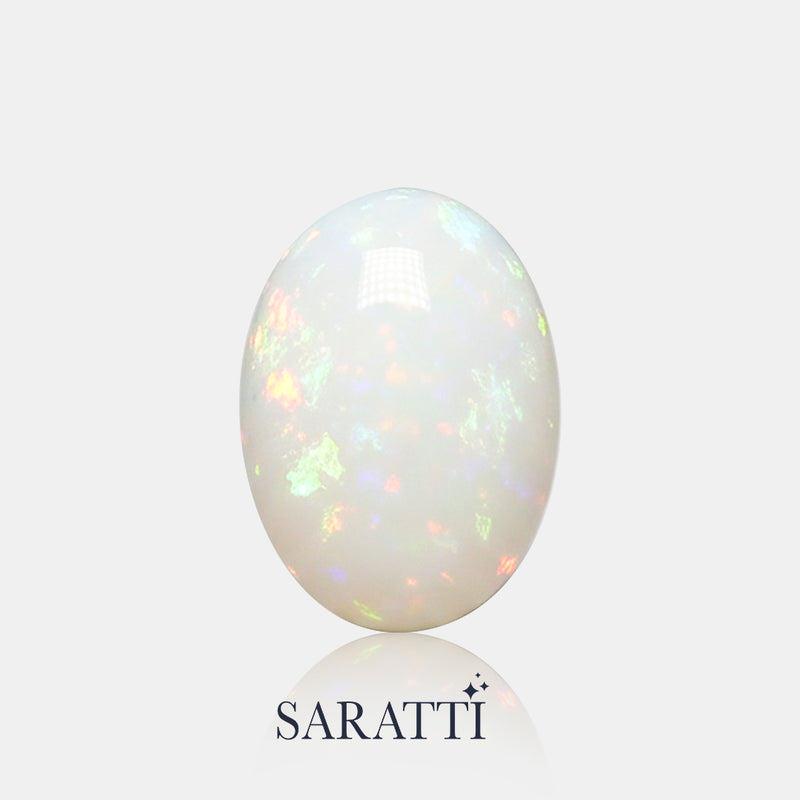
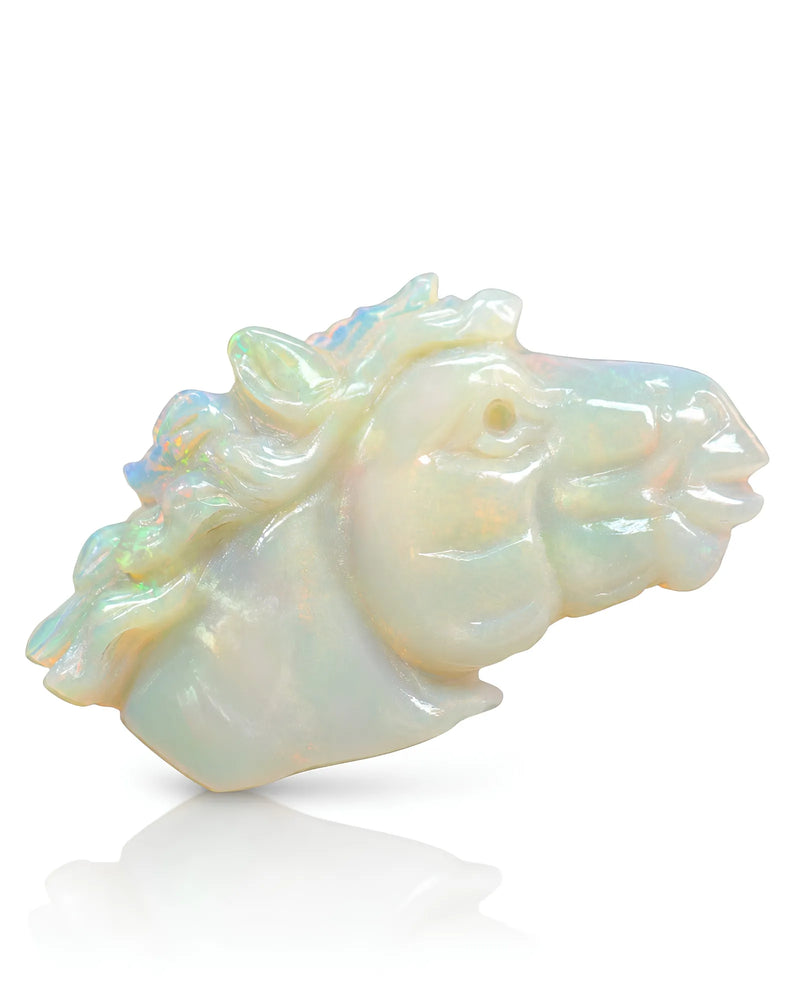
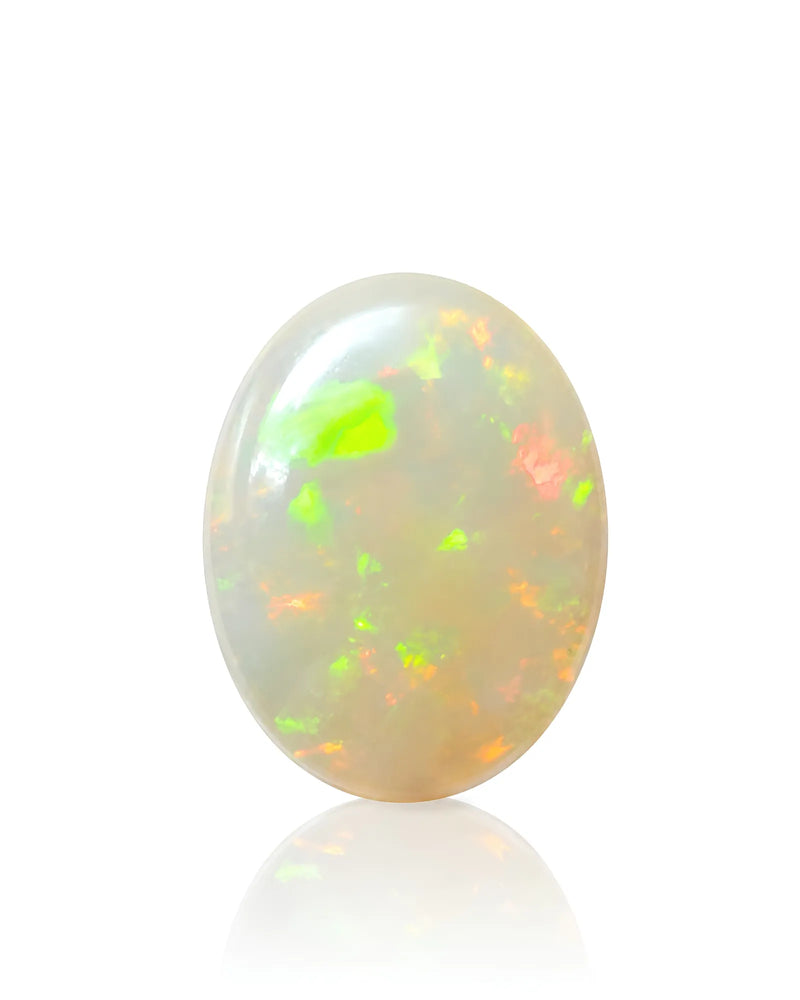
White or milky opal has a pale body tone, most famously from Coober Pedy in South Australia. The pale background mutes the play-of-colour, which is why it is the least expensive of the precious types — though a white opal with bright play will outperform a dull black one.
Crystal opal is transparent to translucent, with play-of-colour visible through the body; fine dark crystal opal is exceptional material.
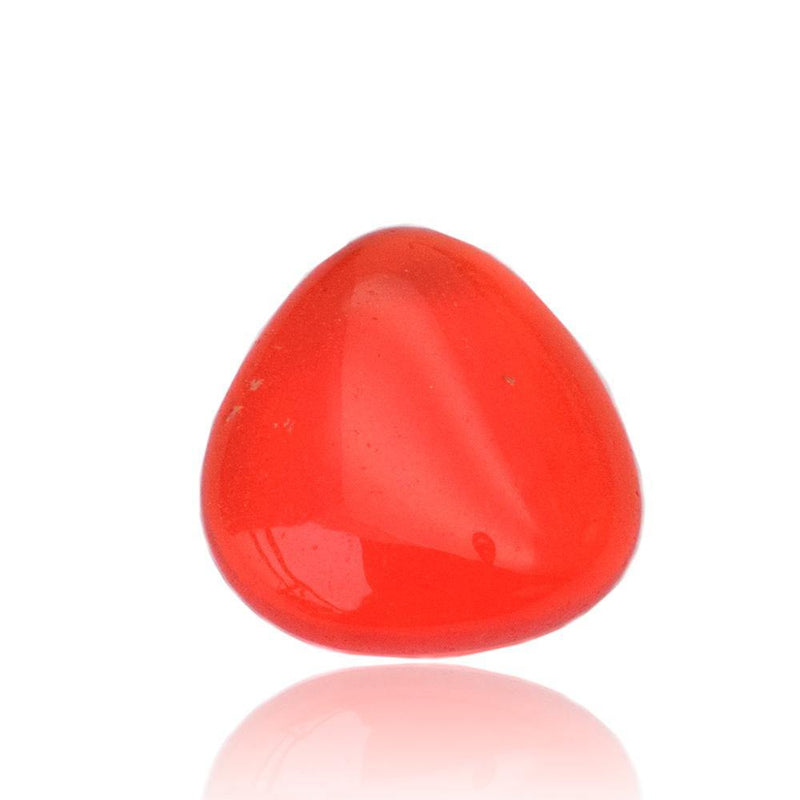
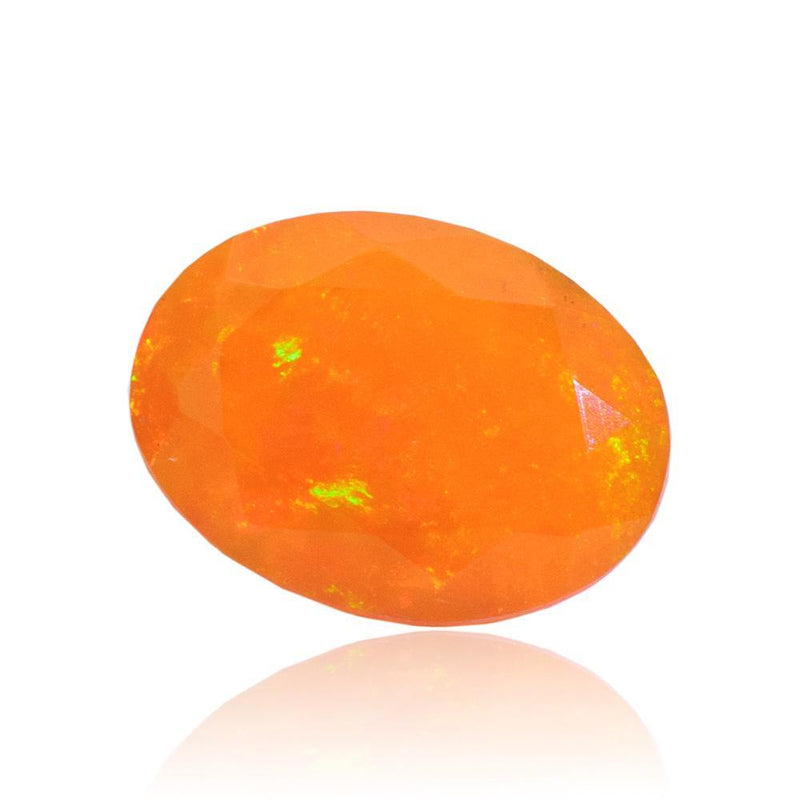
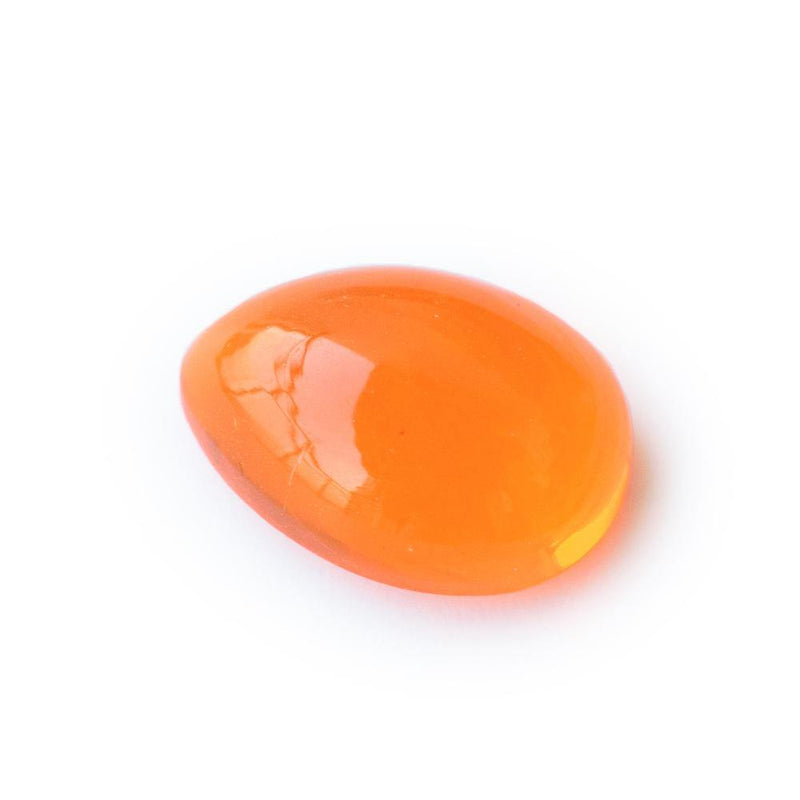
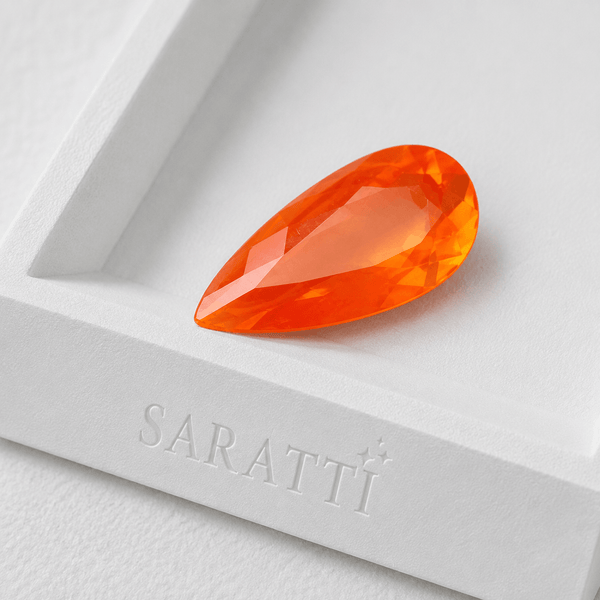
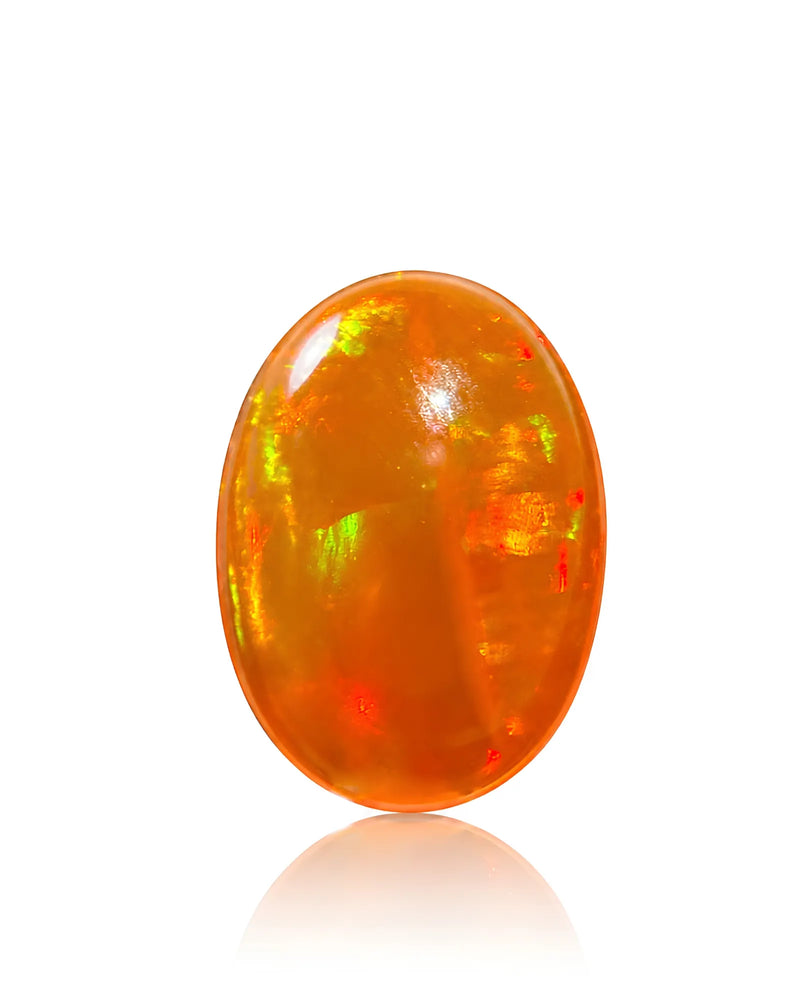
Fire opal is a different proposition: an orange to red body colour, usually Mexican, frequently with no play-of-colour at all. It is judged on the saturation of its orange. Buyers sometimes expect flashes and are disappointed; there was never anything to flash. Matrix opal has precious opal dispersed through the host rock rather than in a seam.
Body tone runs on a standard scale from N1, the darkest black, to N9, the palest white. Anyone selling black opal should be able to say where on that scale a stone sits.
Australia has been the benchmark source for a century and Ethiopia is now the largest by volume, but the temptation to treat "Australian" as a quality grade should be resisted. There is dull Australian opal and superb Ethiopian opal, and brightness, colour range and pattern are what you see. Origin is a modifier on value, not a substitute for quality — and in opal it matters more for behaviour than prestige.
Grading Play-of-Colour
Value in opal is not set by carat weight as it is elsewhere. Two stones of the same size can differ in price by two orders of magnitude. The factors, roughly in order of how much they move it:
Brightness comes first, and it is not negotiable. A dull opal with a beautiful pattern is a dull opal. Judge it in diffuse daylight, not under a spotlight, which flatters almost anything.
Colour range comes second. Red is rarest, then orange, then yellow and green, with blue the most common. A stone showing the full spectrum including red sits far above one showing only blue and green.
Pattern comes third. Harlequin — a mosaic of large, distinct, closely packed angular patches — is the rarest and most prized, and rare enough that the word is very often misapplied to any broad patterning. Other named patterns include rolling flash, broad flash, pinfire and straw.
Then body tone, then coverage — how much of the face-up surface plays colour, and whether there are dead zones — and then the absence of cracks, which is not a refinement but a threshold. A cracked opal is a damaged opal. Opal is also often directional, brilliant from one angle and dead from another, so turn any stone you are considering.
Welo Opal, Hydrophane Behaviour, and Why It Must Be Disclosed
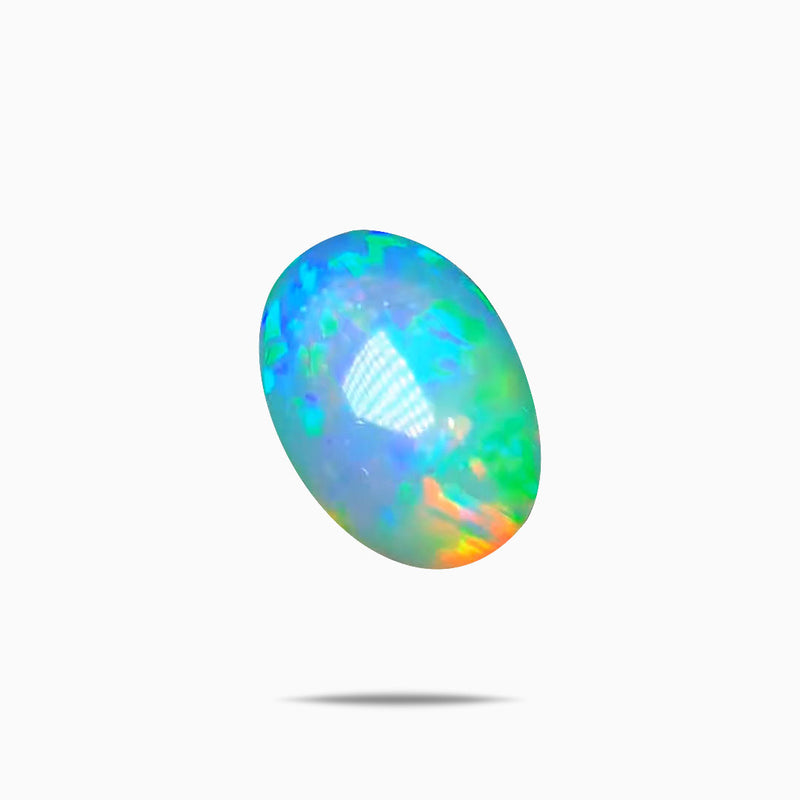
Ethiopian opal from the Welo field entered the market in quantity from around 2008 and now accounts for a large share of what is sold. Much of it is bright, available in sizes Australian material rarely reaches, and cheaper. It is also hydrophane, a material fact about the stone rather than a footnote.
Hydrophane opal absorbs water. Immerse it and it takes water into its pore structure, often going temporarily transparent and losing its play-of-colour entirely. Usually the colour returns as the stone dries, over hours or days. Sometimes it does not fully return, and the drying itself can induce crazing, the network of fine internal cracks that ruins an opal permanently.
The rules follow: a hydrophane opal must never be soaked, worn in a bath or pool, or cleaned by immersion. It should not meet oils, lotions or perfume, which it absorbs and which can discolour it. Some Welo material is also dyed, precisely because it accepts liquid so readily.
None of this makes Ethiopian opal a bad stone. It makes it one requiring different handling, and a buyer is entitled to know which they are being sold. Where a treatment is known, we state it on the listing; our full standard is set out in how SARATTI grades gemstones.
Crazing, and the Care This Stone Genuinely Requires
Crazing is the risk that defines opal ownership: cracks developing through the body of a stone, usually driven by water loss and internal stress. It cannot be repaired or polished out.
No seller can guarantee an opal will not craze, and anyone who does is overstating what is knowable. What can be done is to avoid the conditions that cause it — heat, sudden temperature change, prolonged dryness, and long-term storage somewhere that draws moisture out. That last catches people. An opal left sealed and dry in a safe-deposit box for a decade is at real risk; this is one of the few gemstones better worn than stored.
Opal is Mohs 5.5 to 6.5, softer than the quartz dust in household grit, so it scratches with time. No ultrasonic. No steam. Warm water, a soft cloth, mild soap if necessary, nothing prolonged.
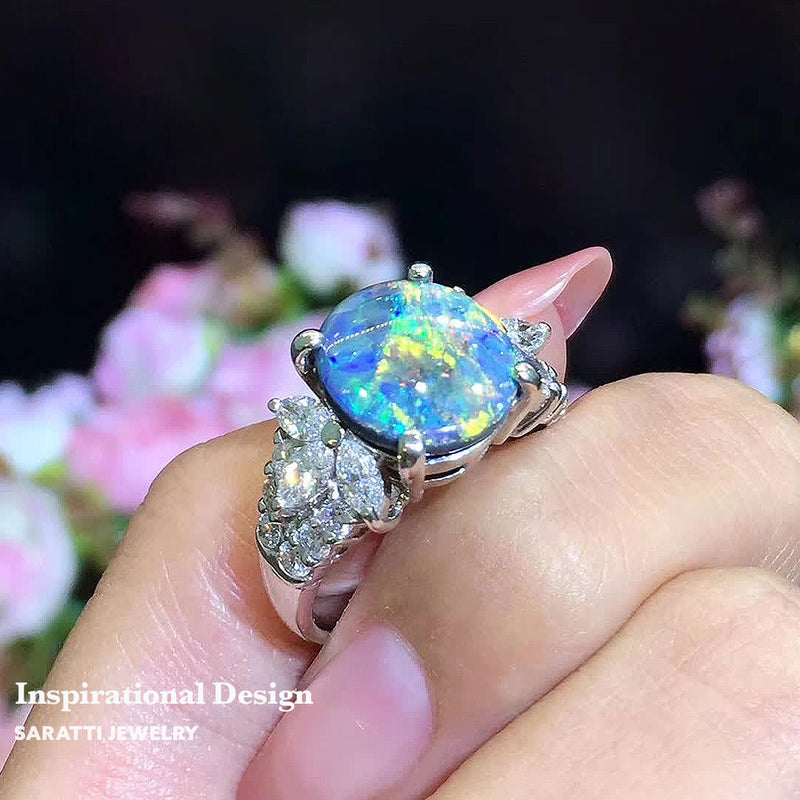
And the honest conclusion, which we would rather state than have you discover: opal is not really suitable for a ring worn every day without a protective setting. It is superb in a pendant, a brooch or earrings, where nothing strikes it. In a ring it wants a bezel that keeps the girdle protected.
Doublets, Triplets and Assembled Stones
A doublet is a thin slice of precious opal cemented to a dark backing — ironstone, common opal or black glass — for the dark body tone that makes colour read. A triplet adds a clear cap of quartz or glass, so what you look through is not opal at all.
These are legitimate products when described as what they are, and a good doublet can be very attractive. But they are worth a small fraction of solid opal of comparable appearance, and the cement layer is an added vulnerability. An assembled opal must never be immersed in water: water penetrating the join will cloud it and eventually separate the layers, a failure that is permanent and common.
In a loose stone you can check by looking at the girdle from the side, where the layers show as straight lines. Set in a closed bezel it can be hard to see, which is why it must be disclosed rather than left to the eye.
Treatments
Several treatments circulate in the opal market, and all require disclosure.
Smoke treatment darkens porous light opal — often Ethiopian — by heating it wrapped in organic material so that carbon enters the pores. Sugar and acid treatment darkens similarly, soaking the stone in sugar solution and then sulphuric acid to precipitate carbon inside the pores. Both produce stones that look like black opal and are not. Dyeing is common in hydrophane material for the reasons already given, and resin impregnation stabilises porous material and reduces crazing risk while changing what the stone is.
None of these is inherently dishonest. What would be dishonest is not saying so, and undisclosed smoke and sugar treatment is among the more common misrepresentations in the trade. A dark body tone in an inexpensive stone from a hydrophane source is a reason to ask the question.
Certification
Opal is reported on less routinely than corundum, partly because much of it trades at values that do not justify a report and partly because grading play-of-colour remains trained opinion rather than measurement. For a stone of consequence one is worth having.
A report from a recognised laboratory — GIA, GUILD, AIGS, CGRL, GRS or GRC — can confirm the stone is natural opal rather than a synthetic or imitation, establish whether it is solid or assembled, and identify impregnation, dyeing or artificial darkening where detectable. It will not tell you an opal is beautiful; that you judge in daylight, turning the stone.
Where a report exists it is shown; where none exists, we say so. Where a client would like a stone reviewed by a different laboratory, we can arrange it and the fee is passed on at cost.
Choosing an Opal
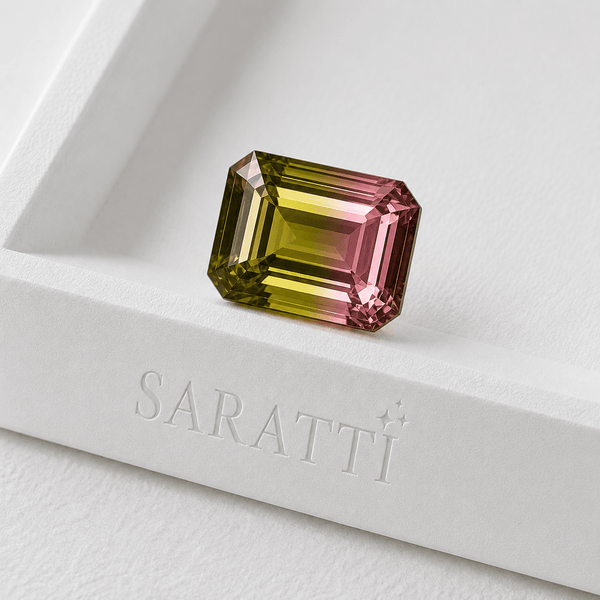
Opal is the October birthstone, sharing the month with tourmaline — and for October colour in a ring worn daily, tourmaline is frankly the more practical of the two, at Mohs 7 to 7.5 with no comparable care requirements. Our tourmaline collection is worth looking at alongside this one, and the birthstone guide sets out the full calendar. If it is the multiplicity of colour you are drawn to rather than opal itself, our multi-coloured gemstone collection covers the wider field.
If you are buying opal, buy brightness first. A stone with modest pattern and brilliant colour will please you far longer than a broad-patterned one that needs a spotlight. Judge it in daylight, turn it, look at the girdle. If it is going into a ring, budget for the setting as seriously as for the stone.
Every opal in this collection is listed individually, with its own photography and its own details. Where a stone is a doublet or triplet, we say so. Where a treatment is known, we state it on the listing. Where a report exists it is shown, and where none exists we say so.
And if what you are looking for is not on these pages — a particular pattern, a body tone, a matched pair, a size we are not currently showing — only part of what we can reach is listed online. Describe it, and we will go and look.







 Engagement Rings
 Gemstone Rings
 Wedding Bands
 The SARATTI Difference
 Gemstone Type
 Shop By Color

 SARATTI
 SARATTI
 SARATTI
 SARATTI
 SARATTI
 SARATTI
 SARATTI
 SARATTI
 SARATTI
 SARATTI