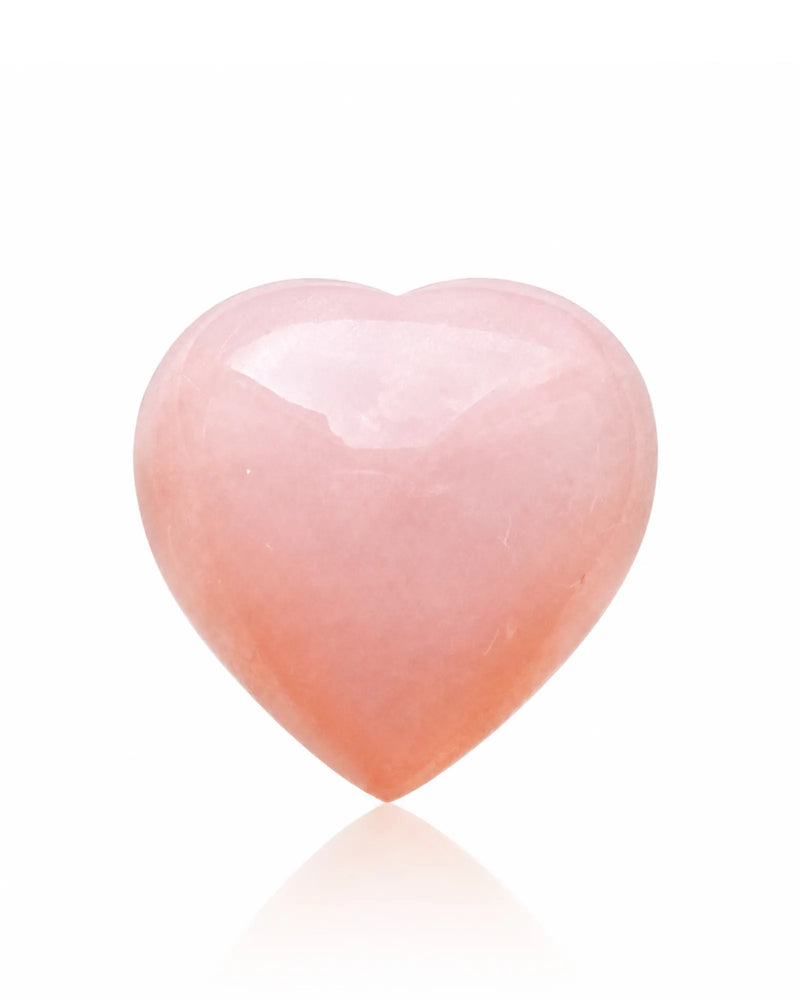
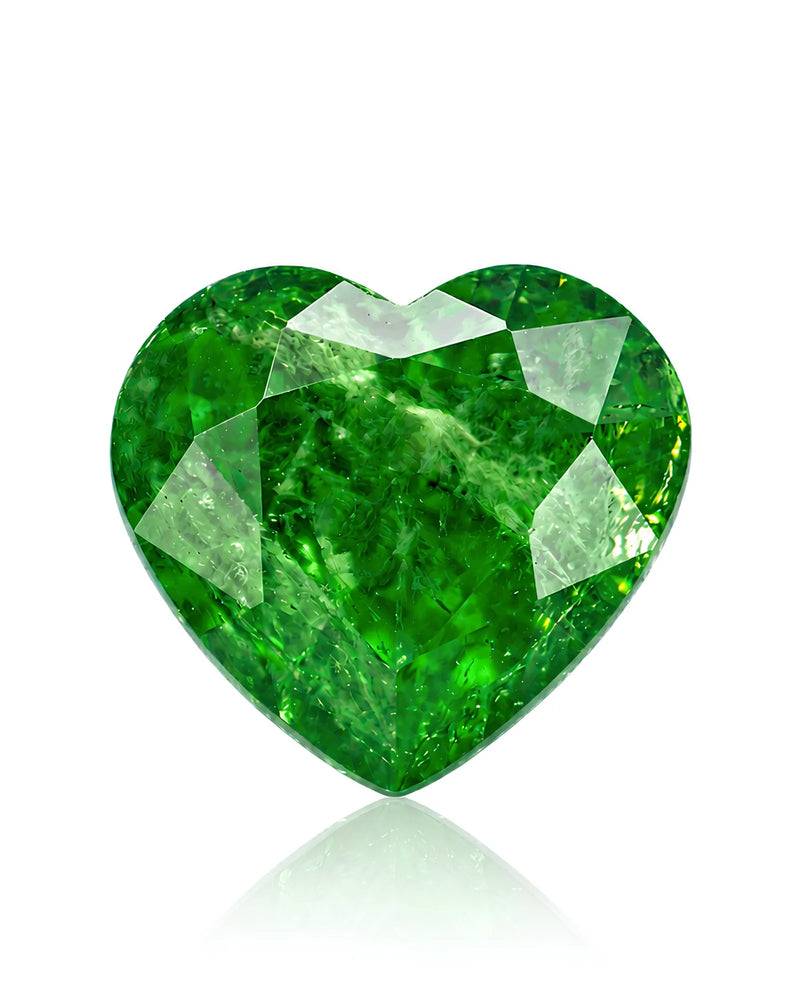
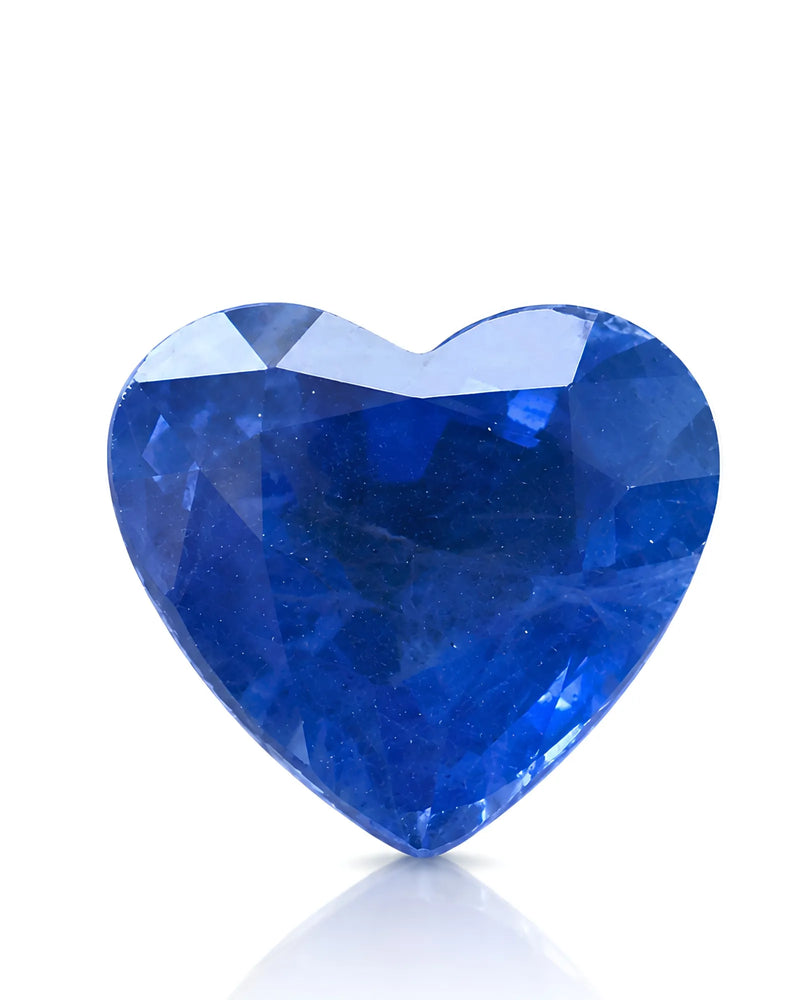
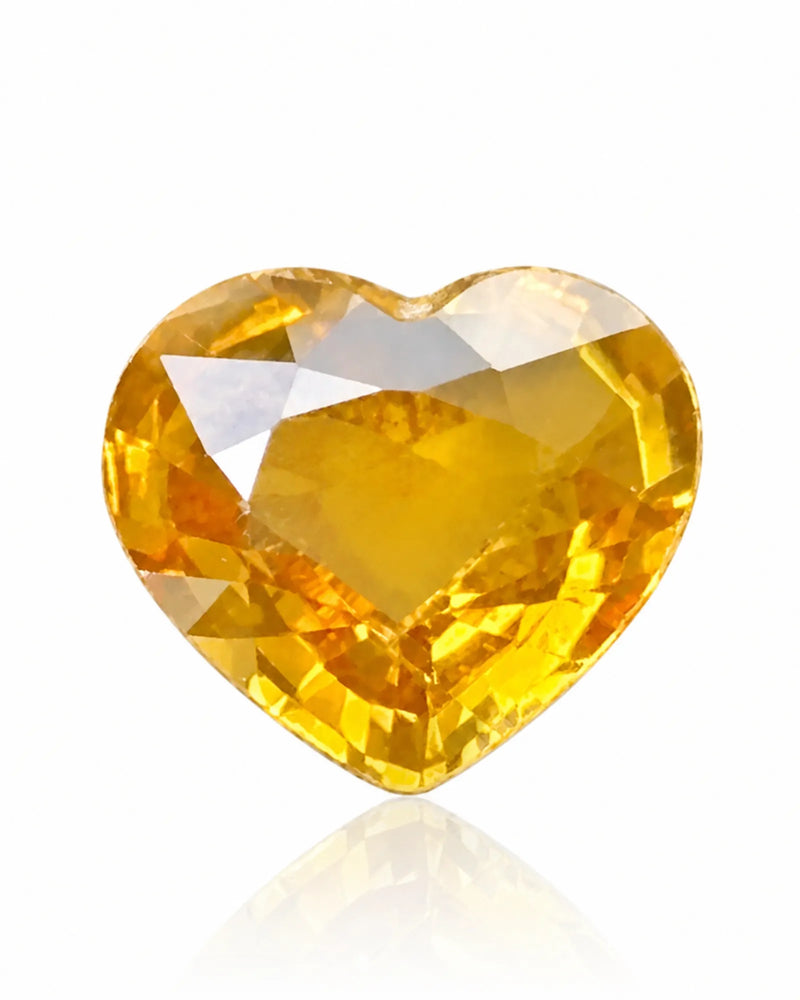
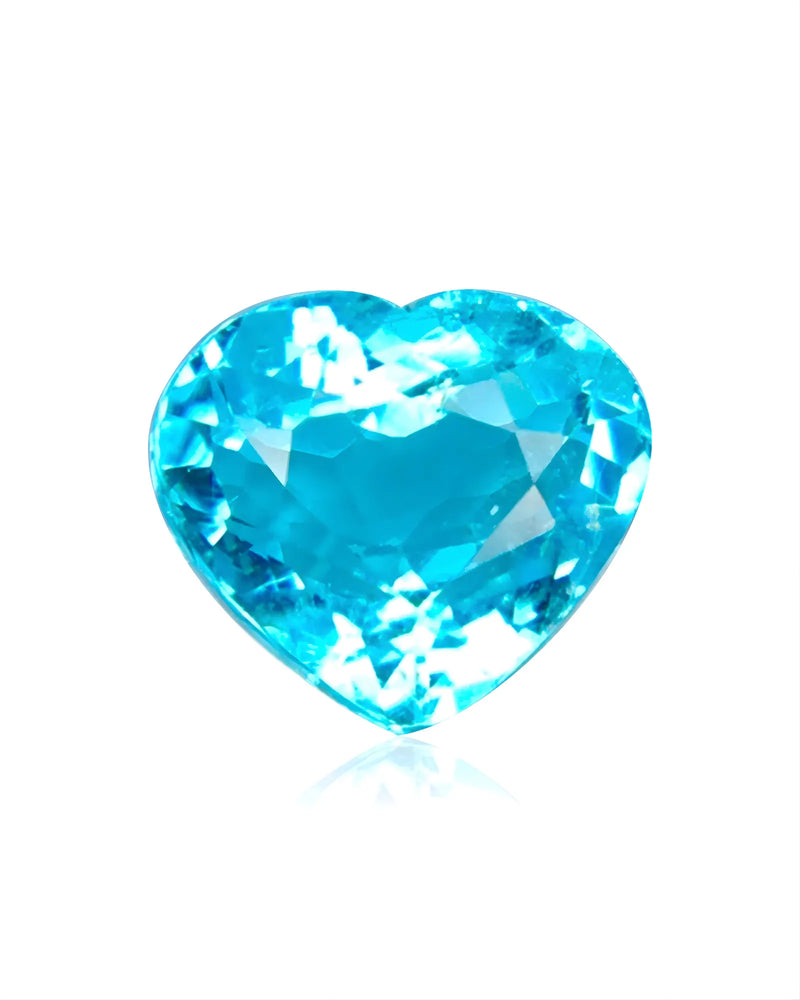
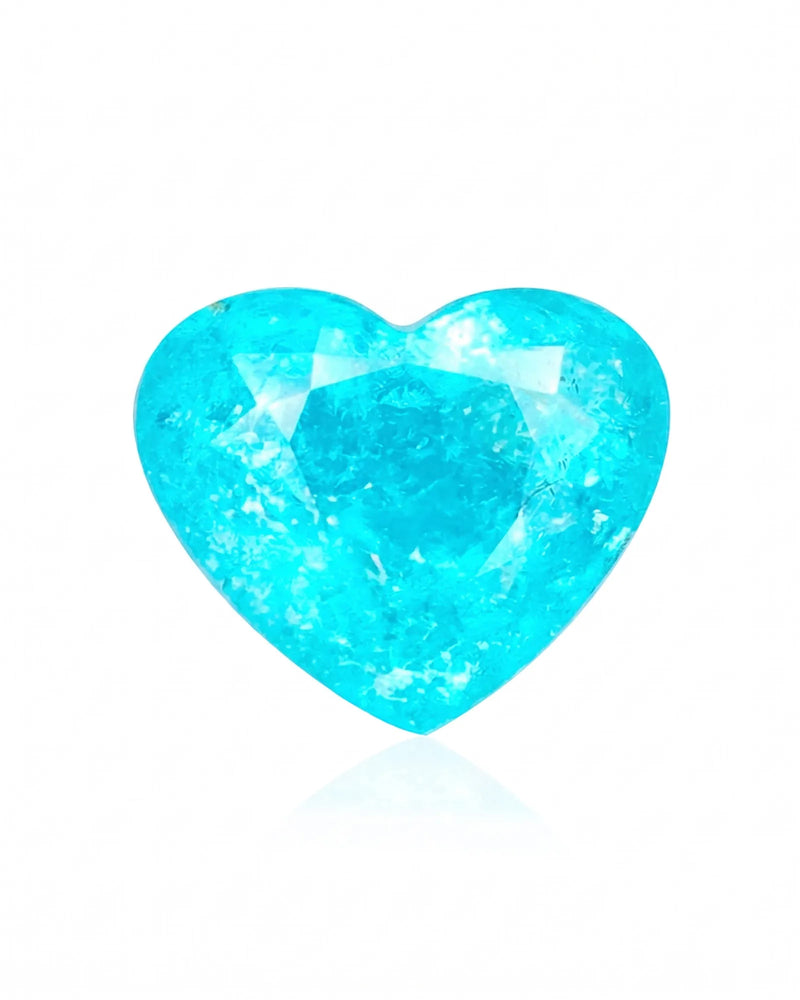
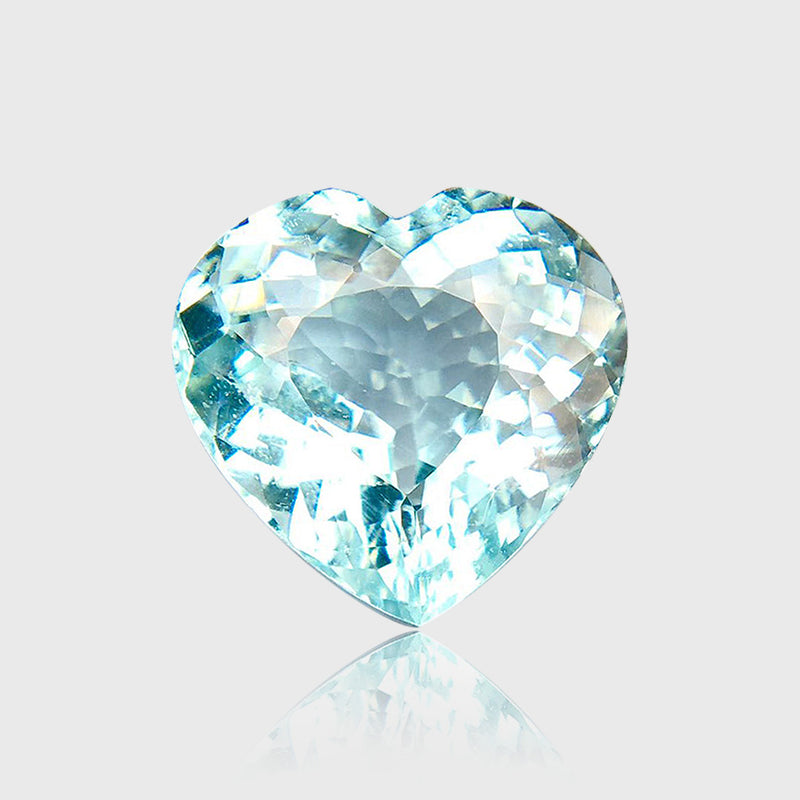
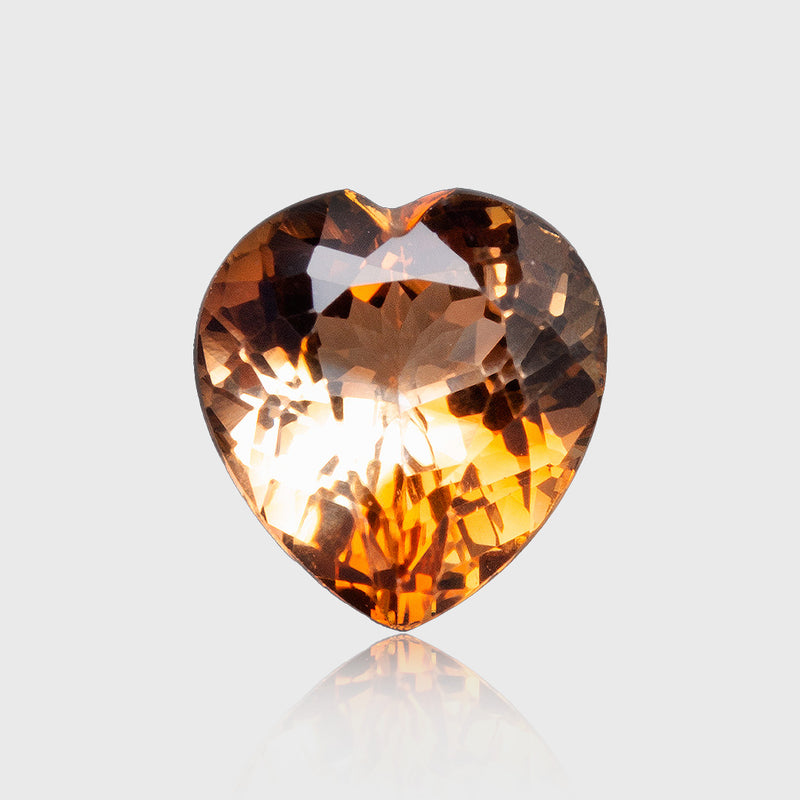
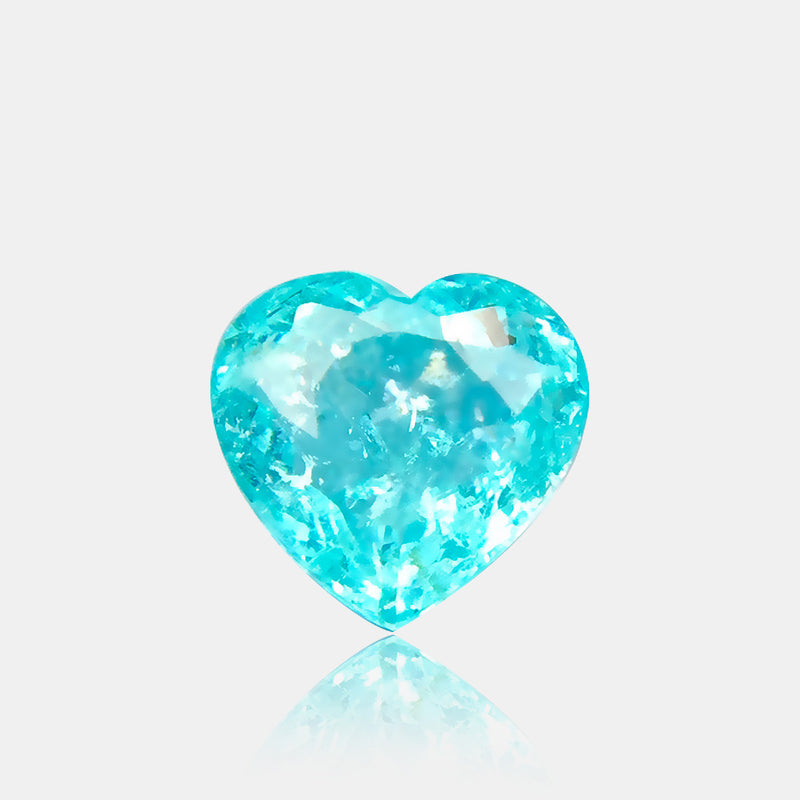
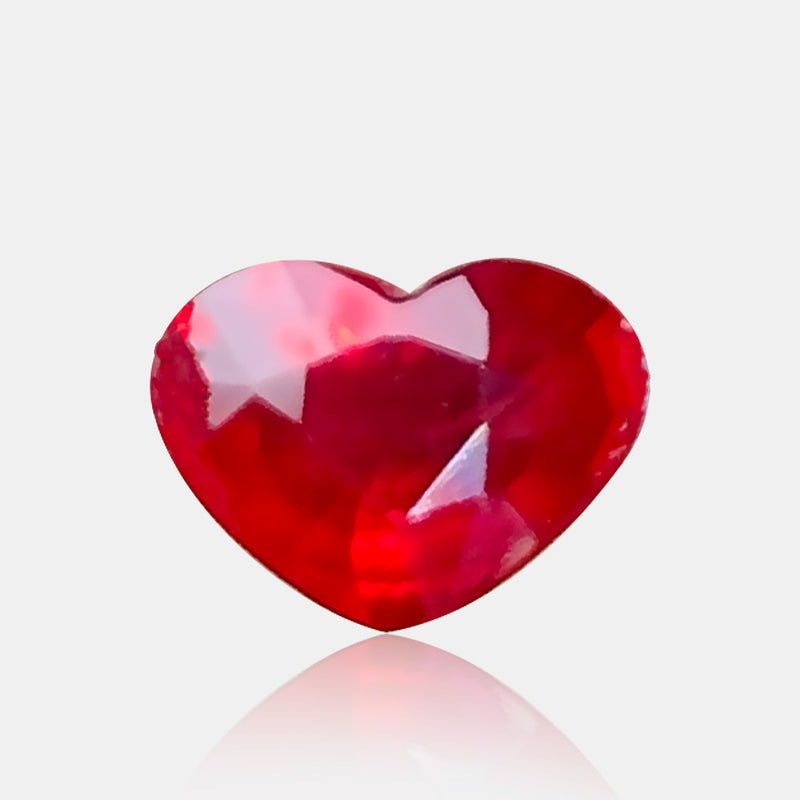
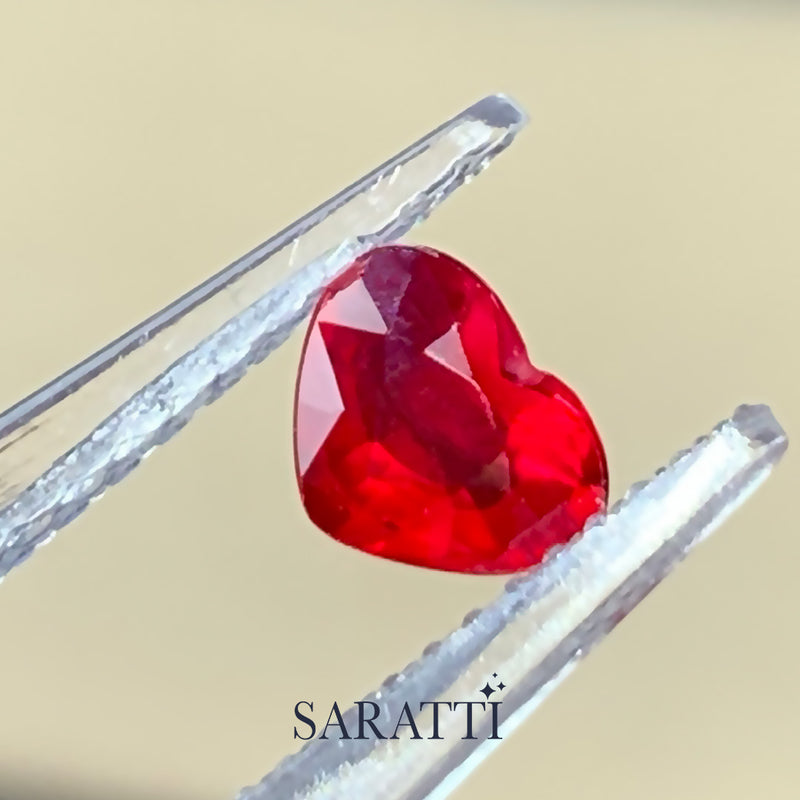
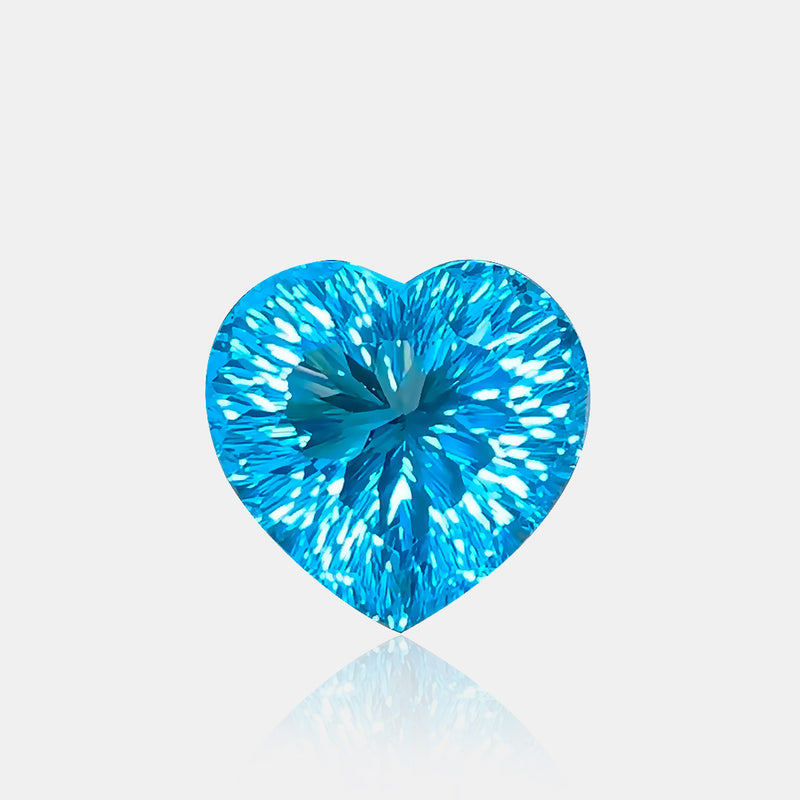
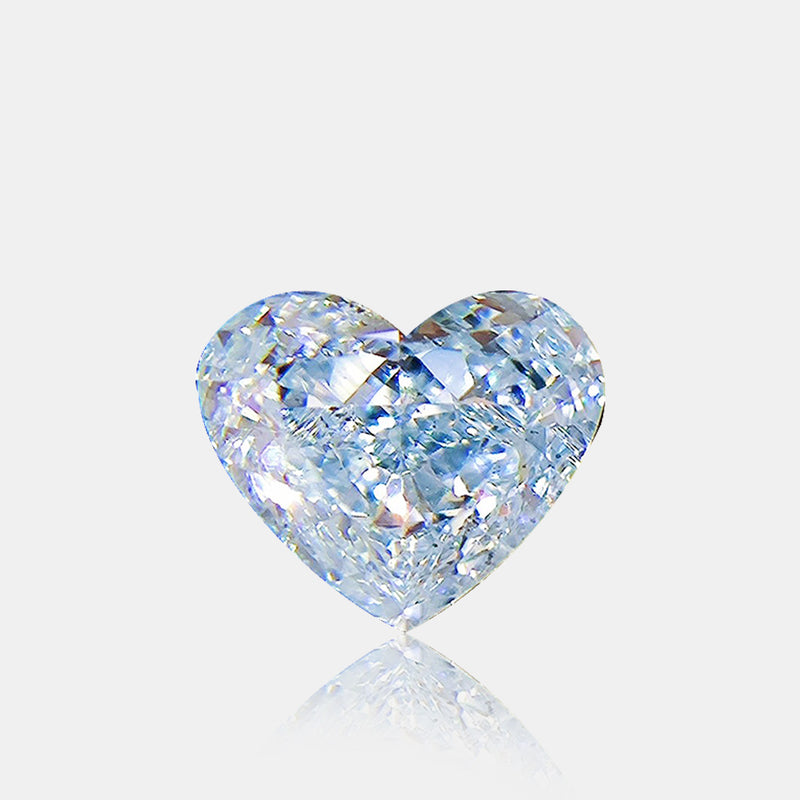
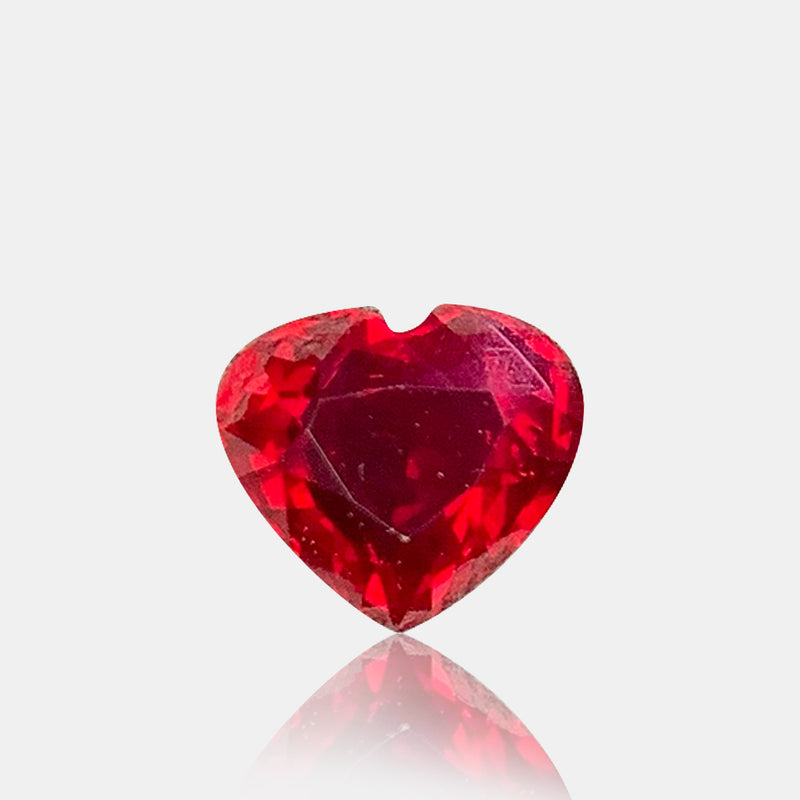
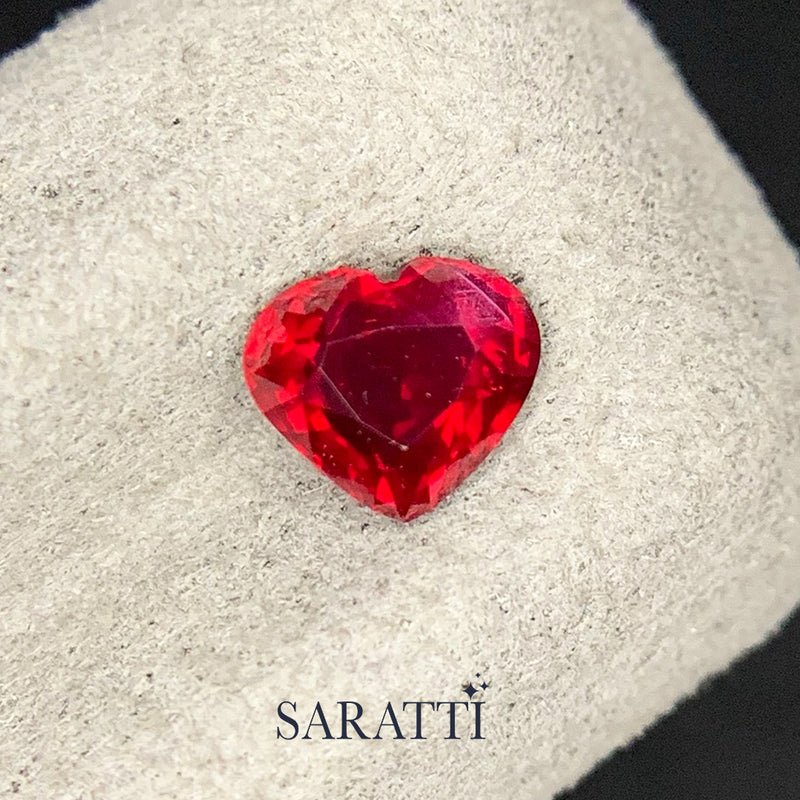
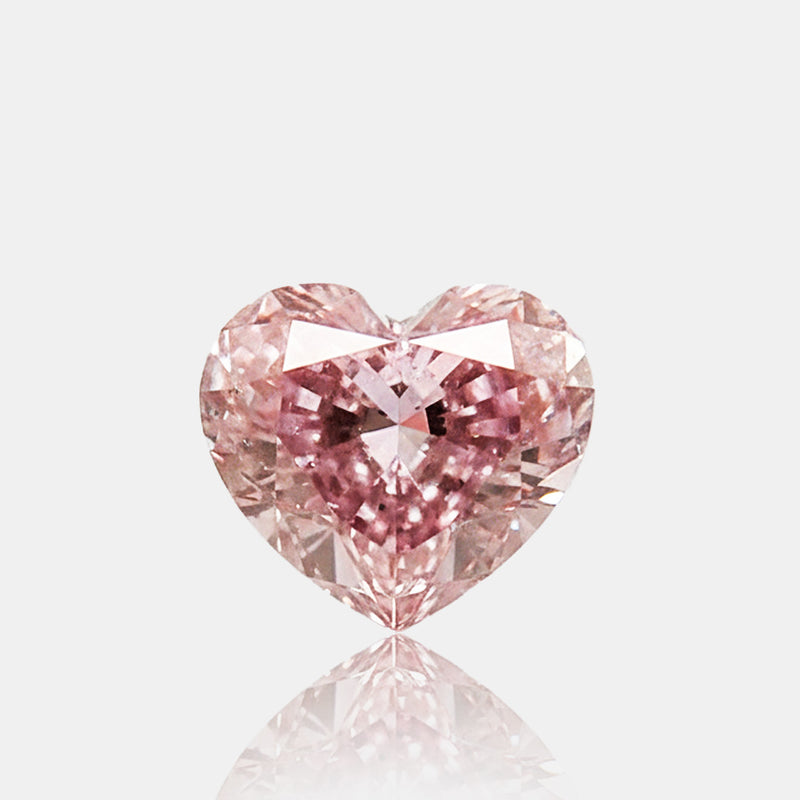
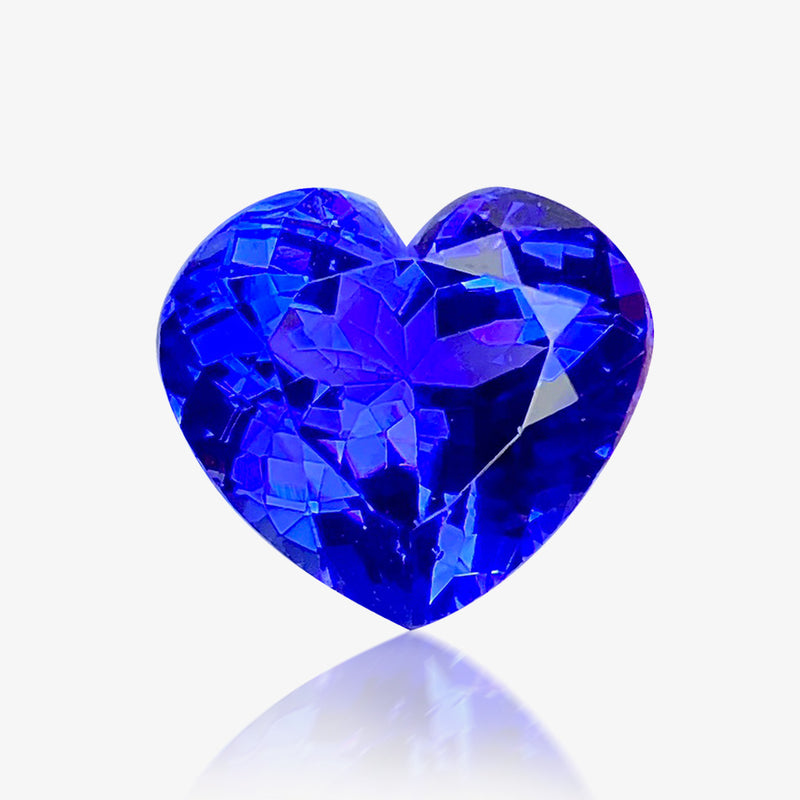
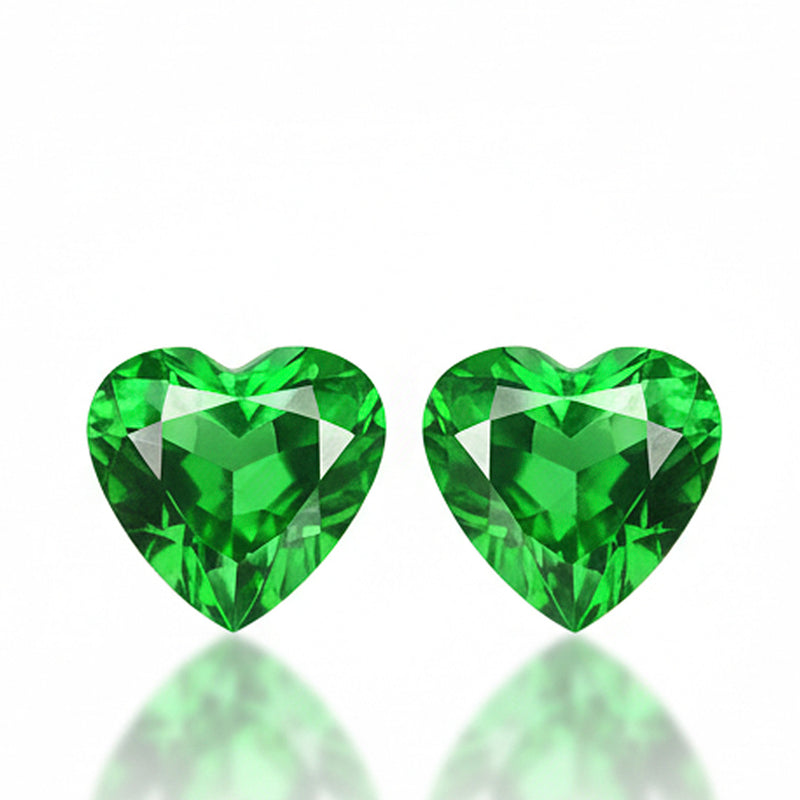
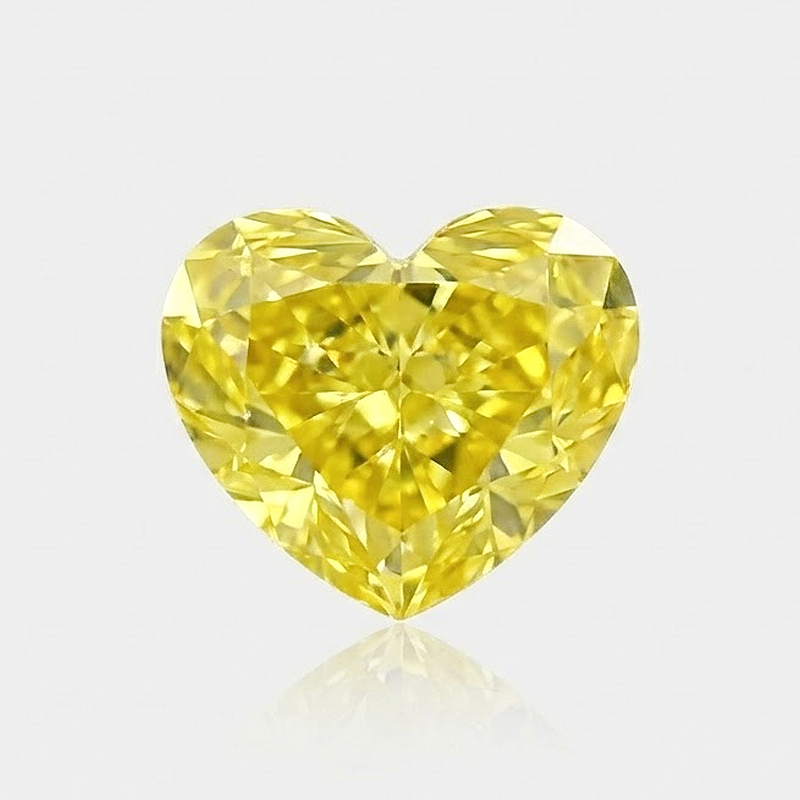
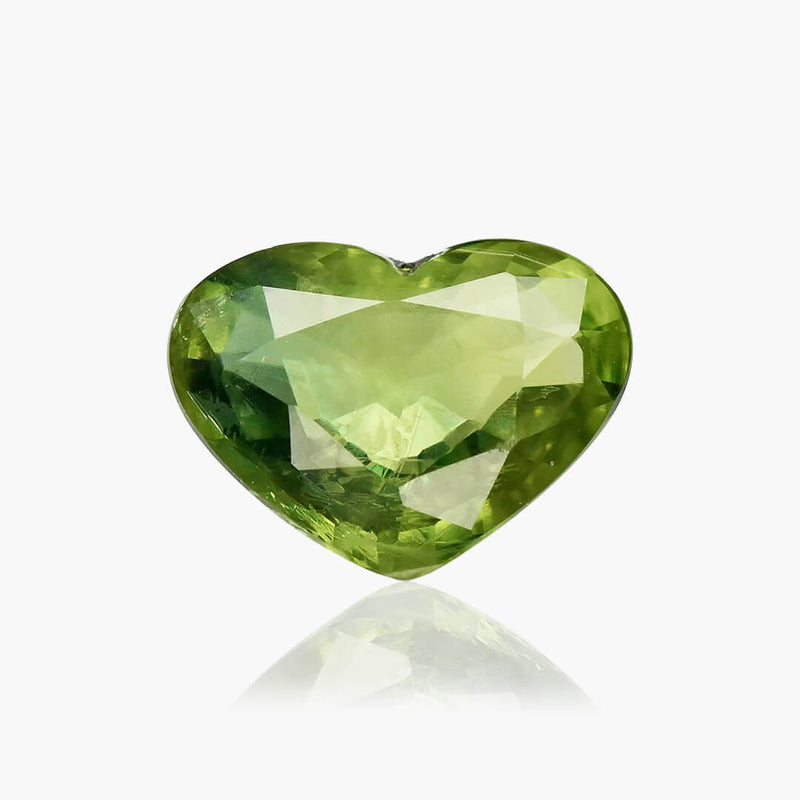
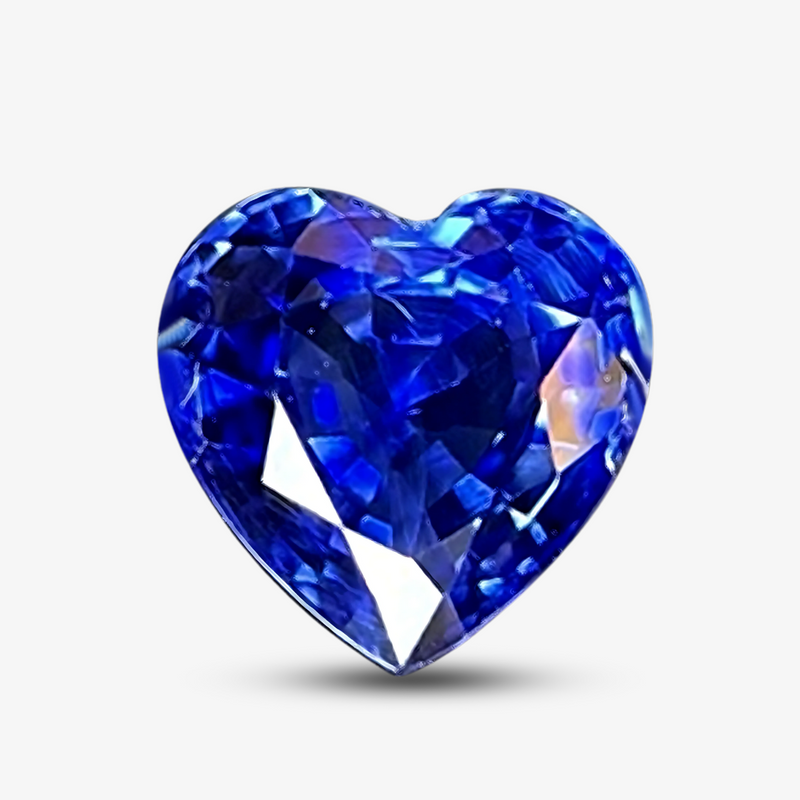
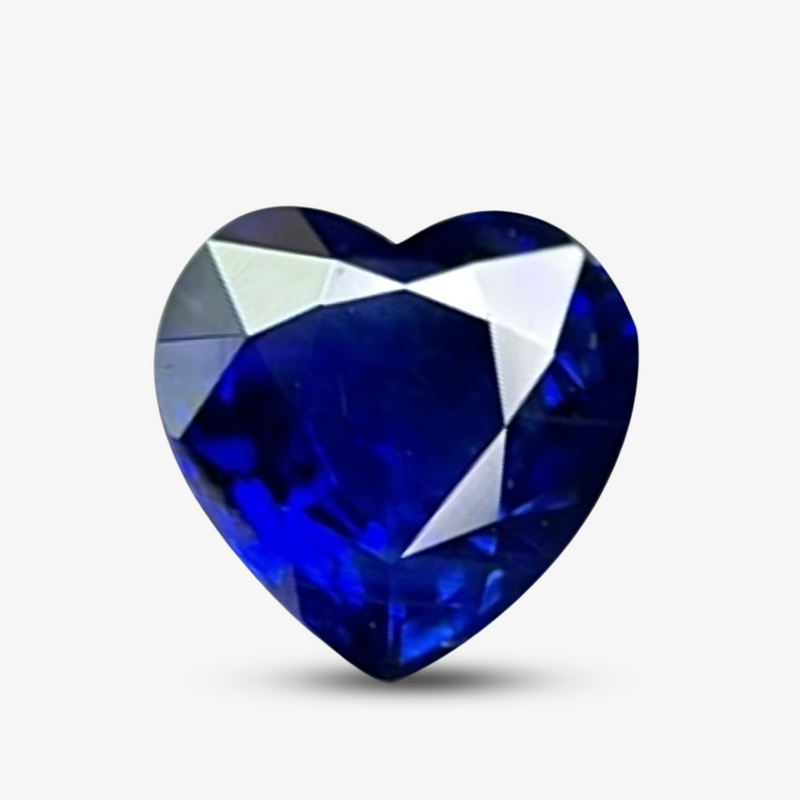
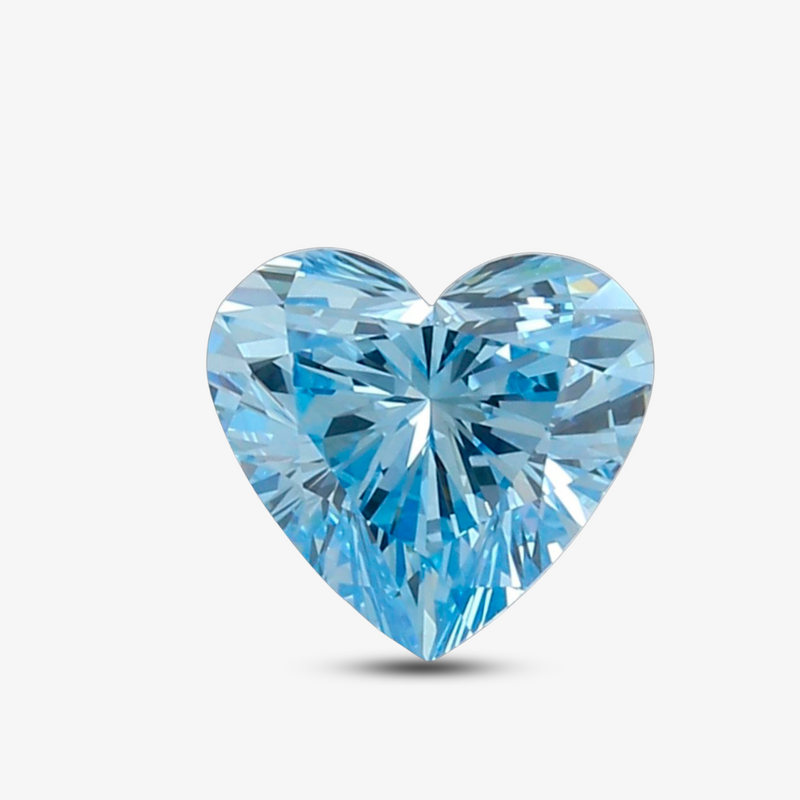
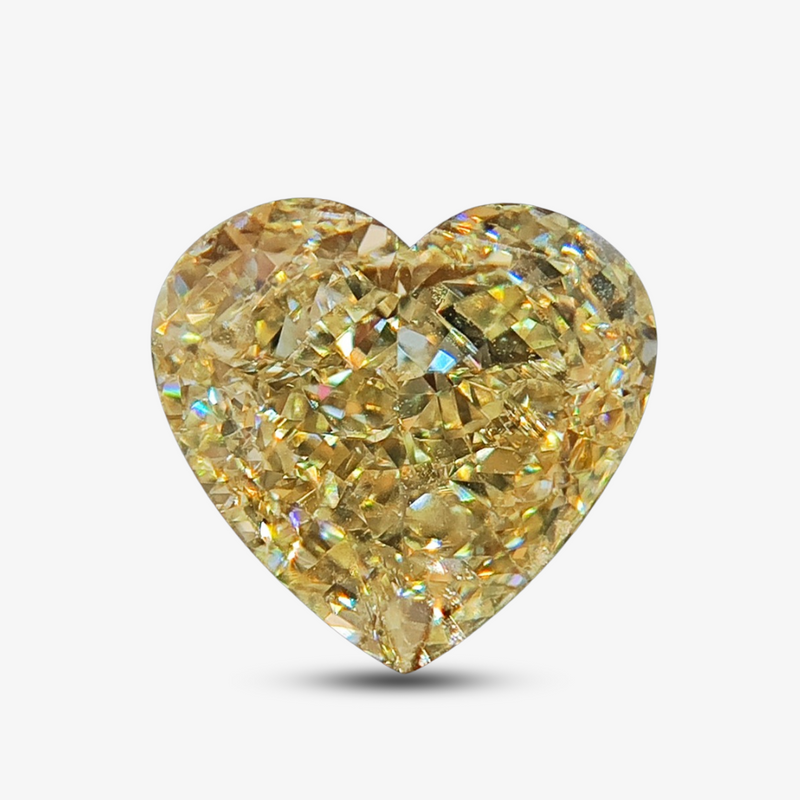
What a Heart Cut Is
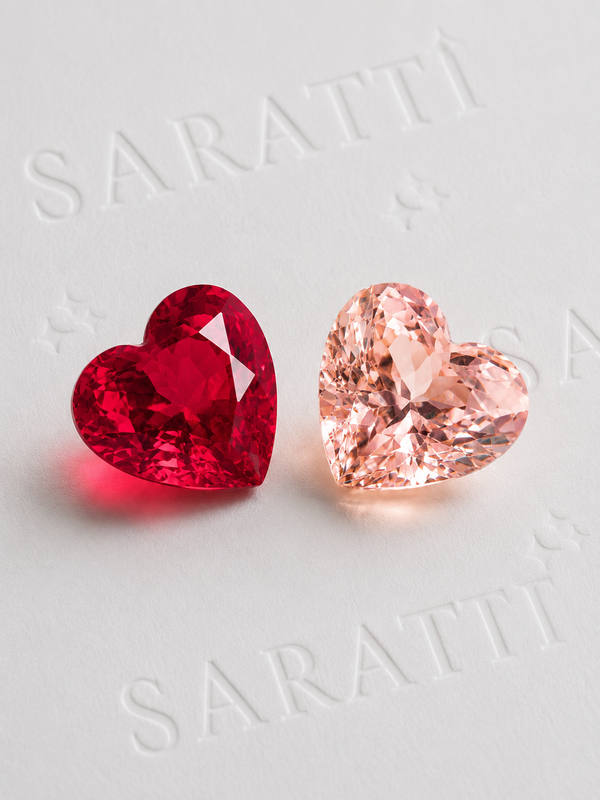
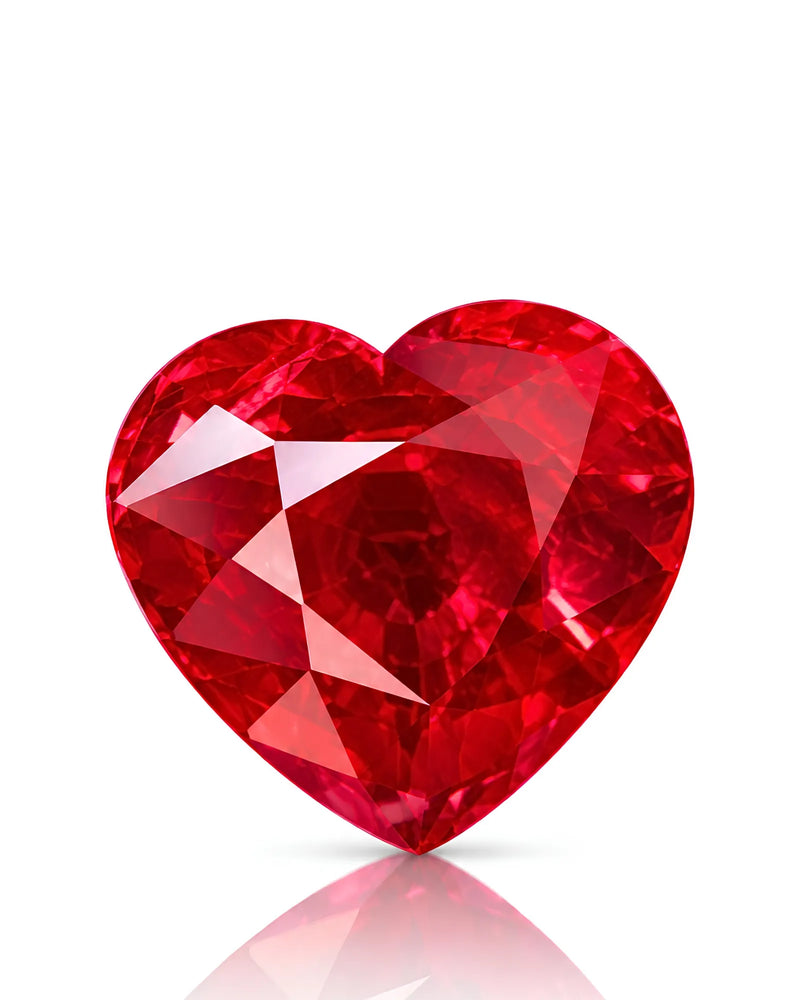
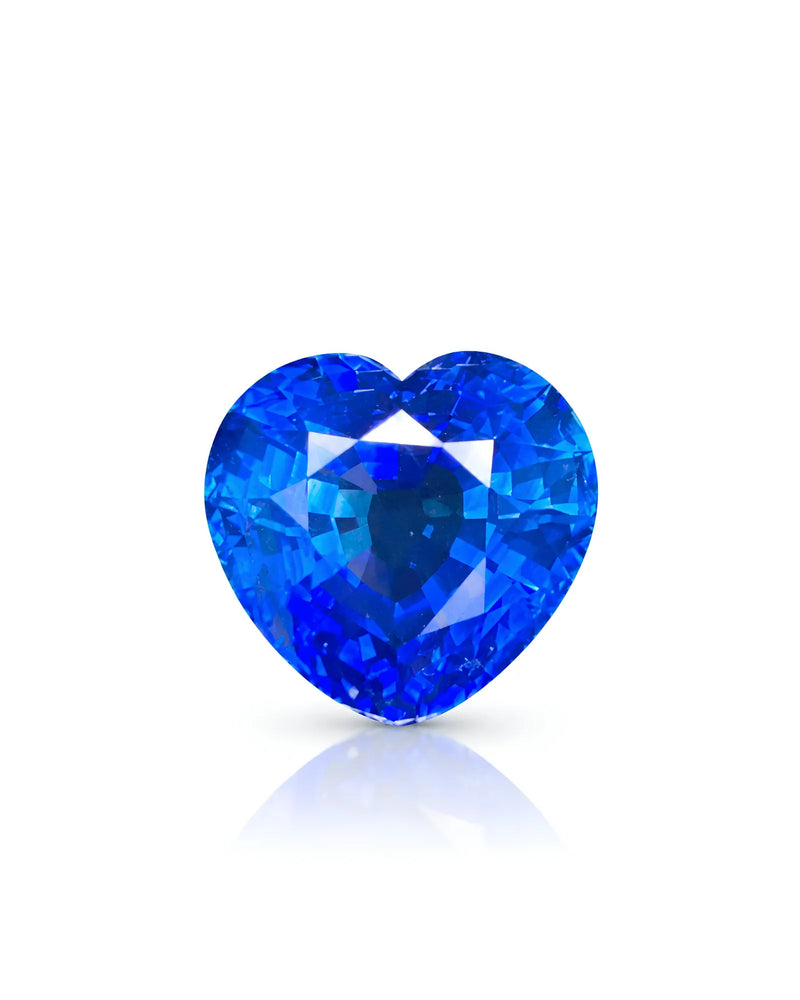
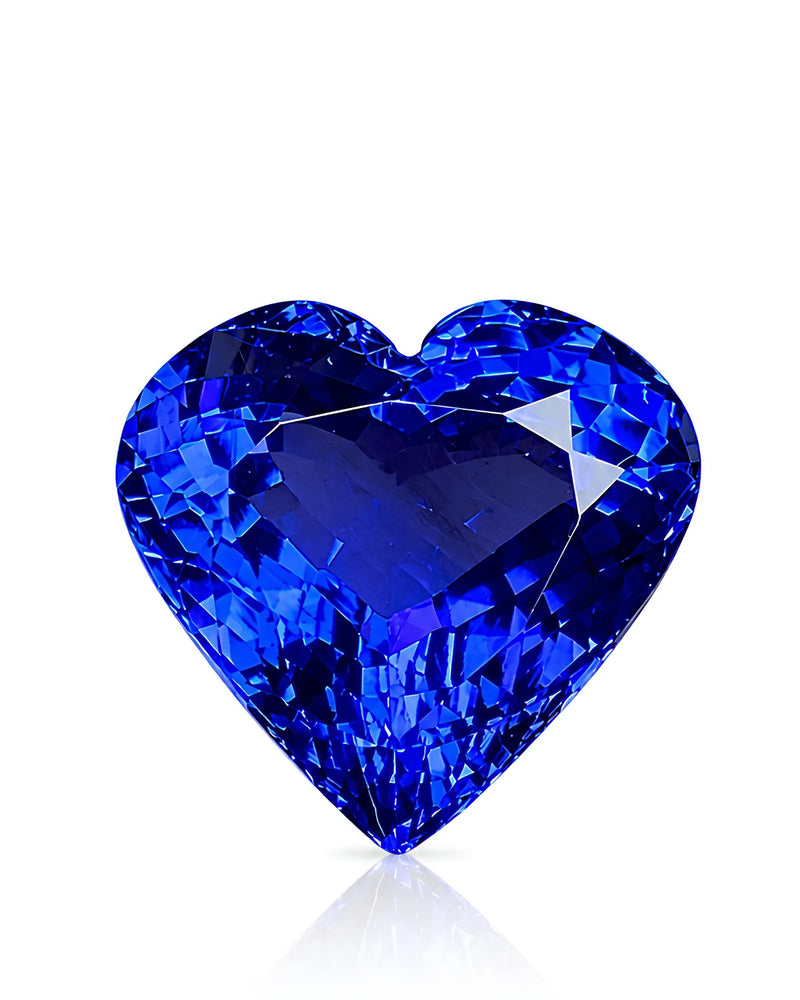
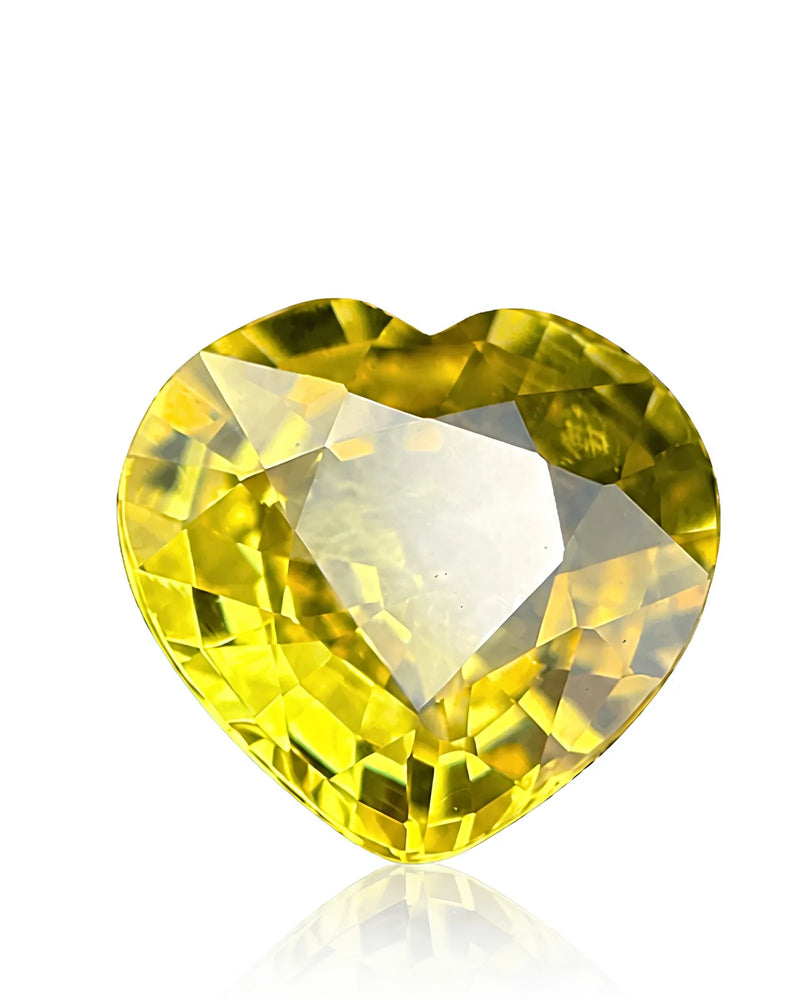
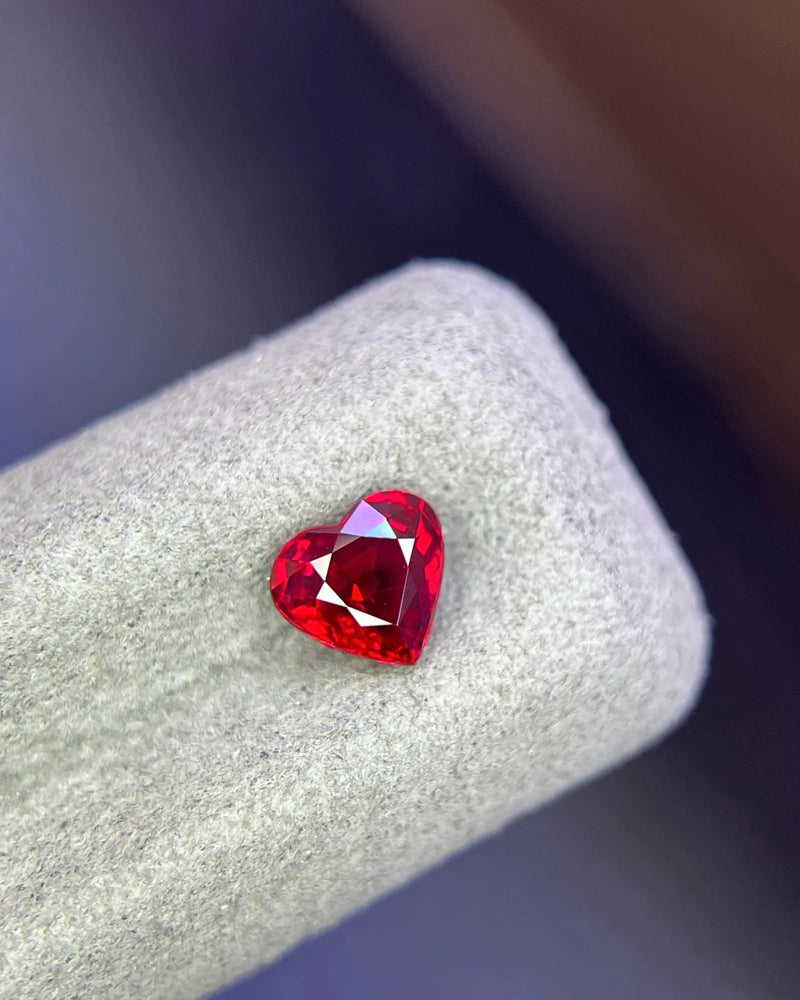
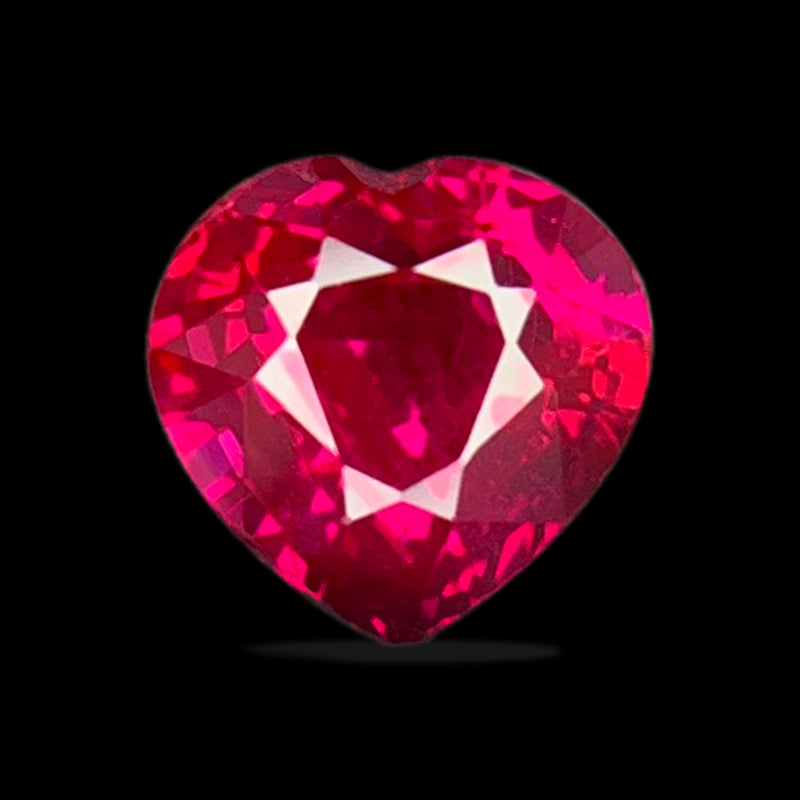
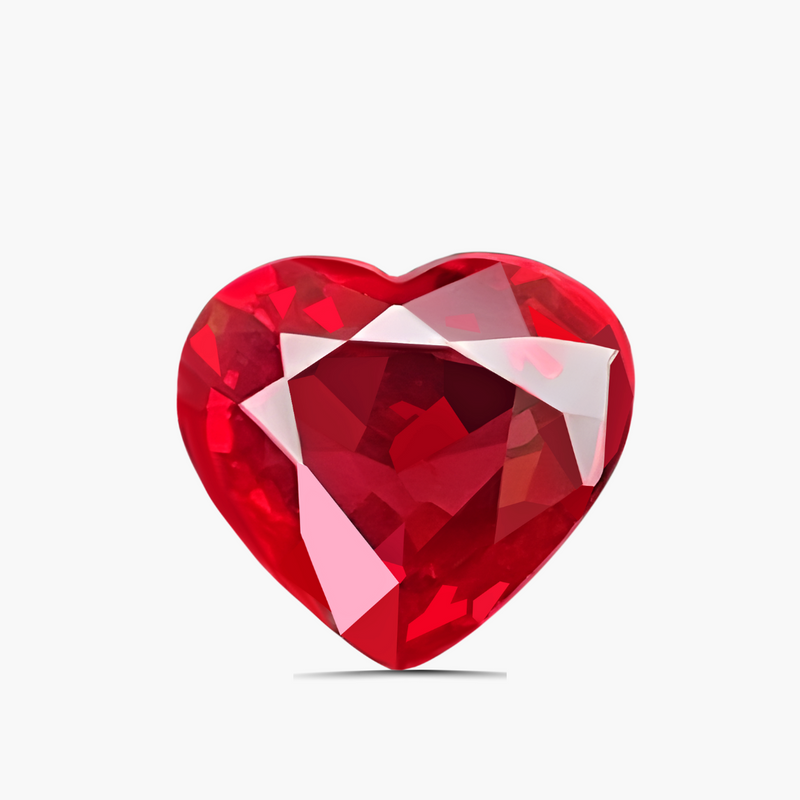
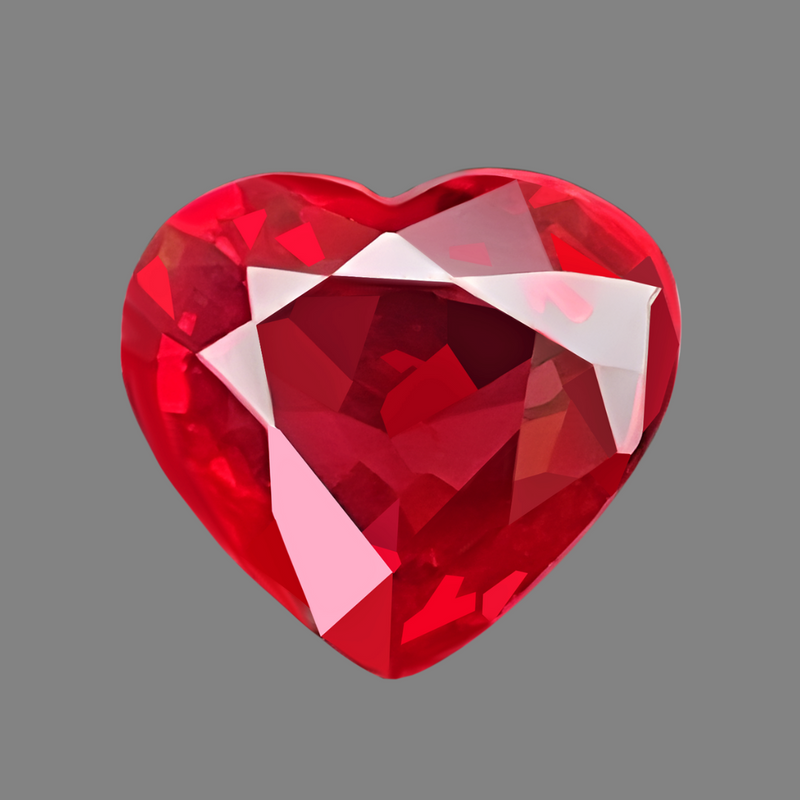
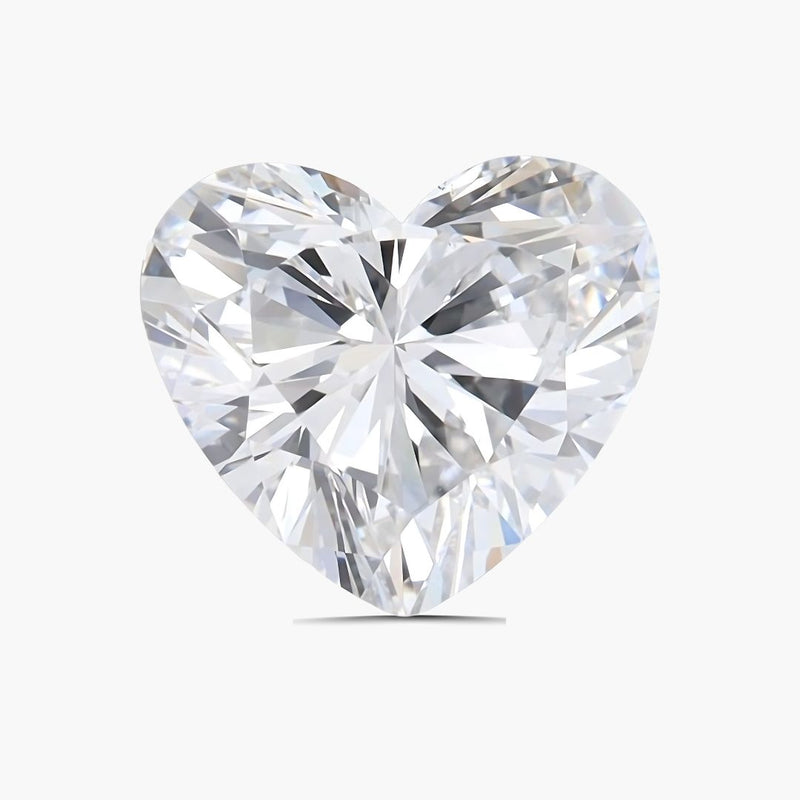
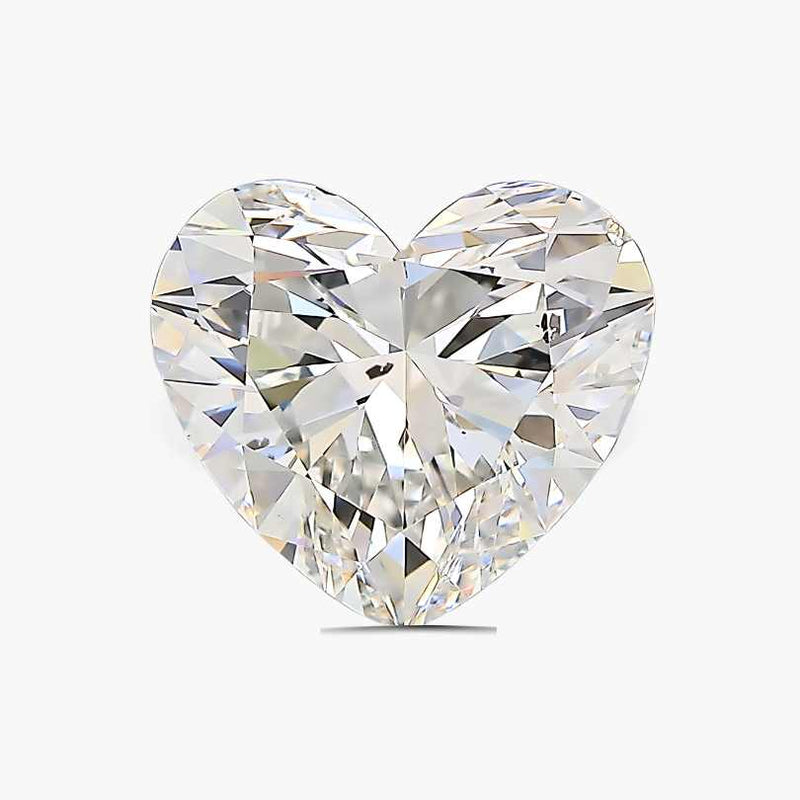
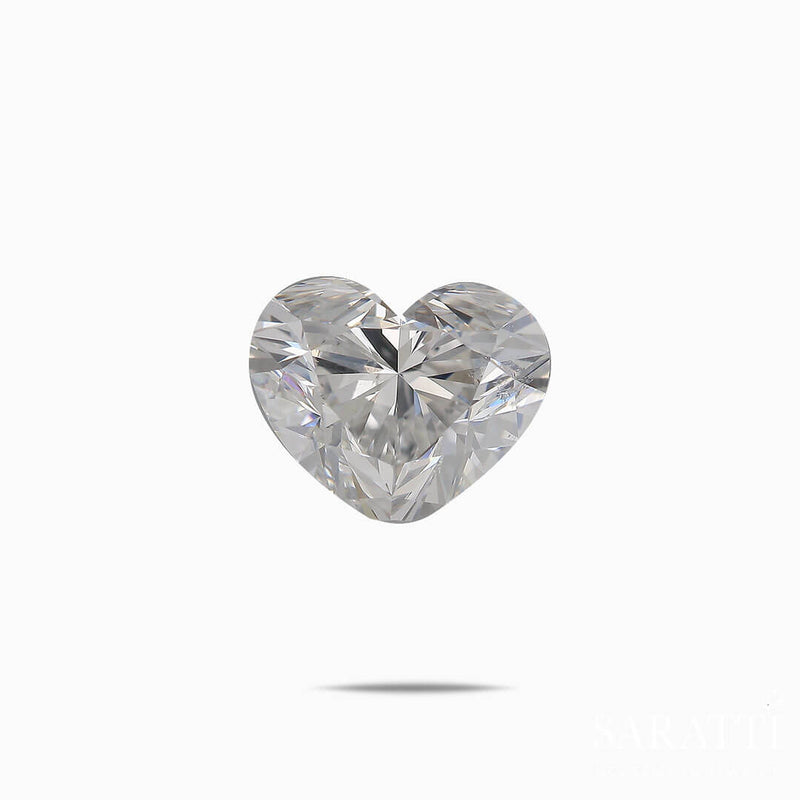
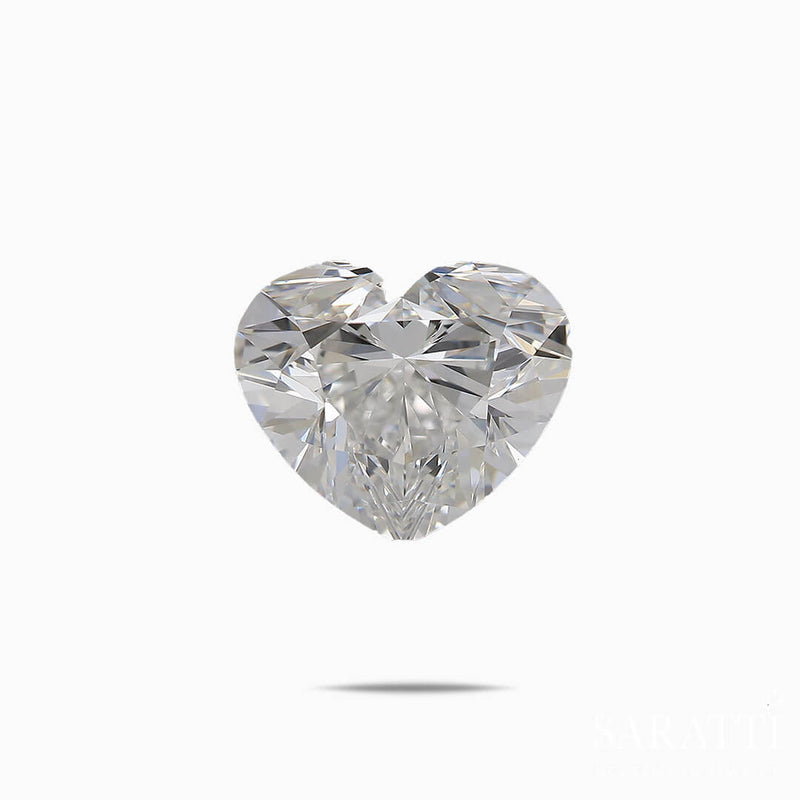
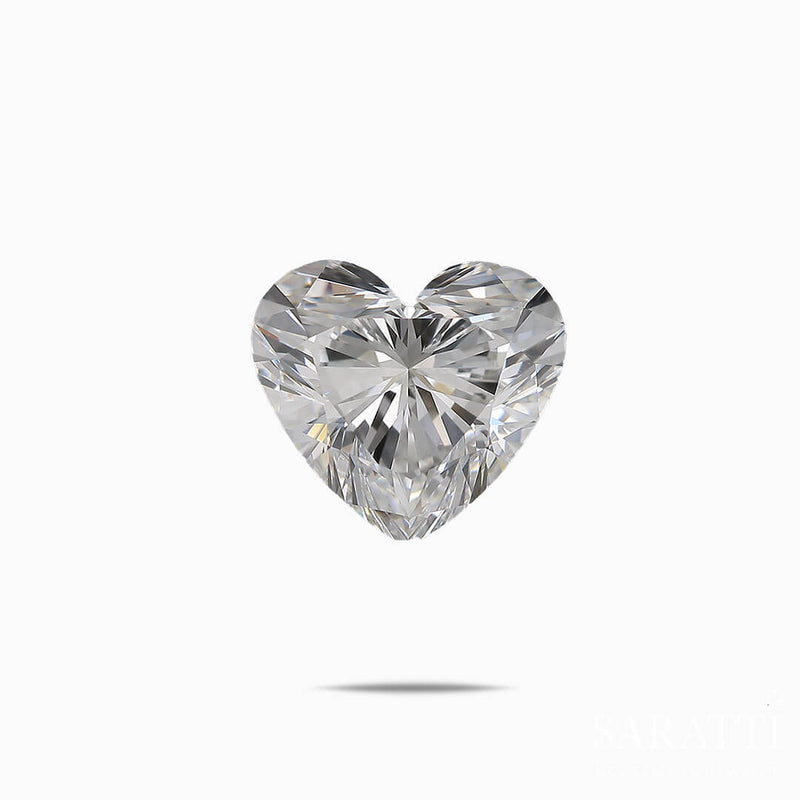
A heart is a modified brilliant — the optical arrangement of a round brilliant, redistributed to fill a different outline. Structurally it is a pear with a notch cut into the rounded end, and the faceting follows the pear almost exactly: a broad pavilion beneath the rounded masses, tapering facets running down to a single apex. What makes the heart difficult is not the facet plan but the outline, and specifically the two features the pear does not have — a cleft, the V-shaped notch at the top, and the pair of lobes it divides.
The shape is old. Heart-shaped stones appear in European jewellery from at least the sixteenth century, and the association with love long predates any ability to cut the outline precisely. For most of that history the heart was a silhouette achieved in a cabochon or a piece of enamel, not a faceted brilliant with mirrored lobes. The heart as we now understand it is a product of modern cutting, and one of the least reliably executed shapes in the trade.
The sentiment is real and there is no arguing with it. It is also why so many badly cut hearts sell: a buyer moved by the shape stops looking once the outline is recognisable. Our heart shape gemstones are grouped by outline rather than species; what follows is what to examine first.
Why the Heart Is the Hardest Shape to Cut
Four problems, genuinely separate: a cutter can solve any three and still produce a poor stone.
The first is the cleft. It must be sharp, centred, and ground in without splitting the material, and the deeper and cleaner the V, the more the shape reads. A shallow cleft is quicker, safer and wastes less, and it is the corner most often cut.
The second is mirroring. The two lobes must be reflections of one another in width, in height, in the curve of their outer edges and the facet pattern over them. That is harder than it sounds, because the cutter works the halves at different times on different index settings, with no continuous curve guiding the hand.
The third is the point. A heart terminates in an apex exactly as a pear does: material narrows to a thin wedge where two curved girdle edges converge, and force applied anywhere on the stone concentrates there. It is the first place a heart chips, in wear and on the setter's bench.
The fourth is yield, and it decides the price. A heart is inscribed inside a rough crystal very inefficiently: the cleft removes material from the widest part of the stone, precisely where a pear or an oval would keep it, and the lobes throw away more at the shoulders. Add the longer cutting time and the higher risk of loss, and a heart costs more per carat to cut than a round while returning less finished weight from the same rough than any other common shape.
Symmetry Is the Whole Grade
Any asymmetry in a heart is visible immediately, to anyone, without training. That is perception rather than gemmology: human vision is unusually sensitive to faces and to symmetrical forms, and a heart hands the eye an axis and two halves to compare. A stone a fraction of a millimetre out reads as wrong before the viewer can say why.
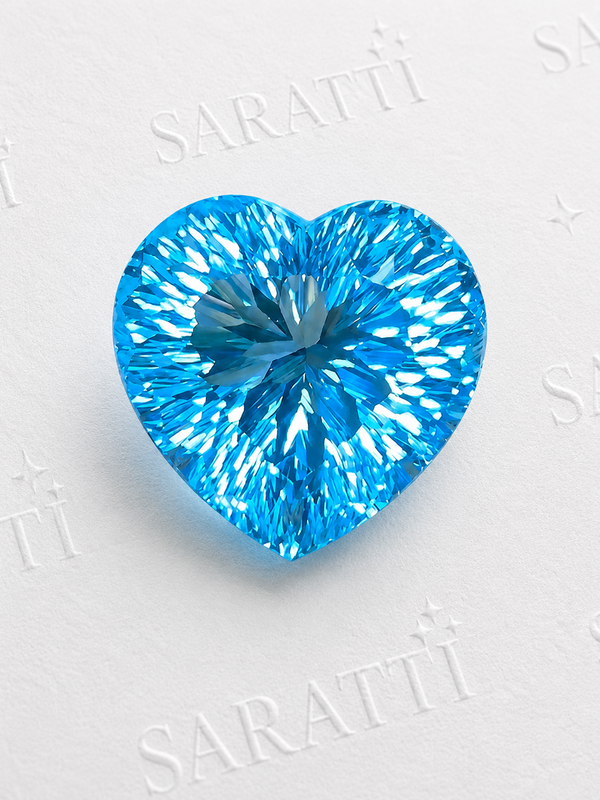
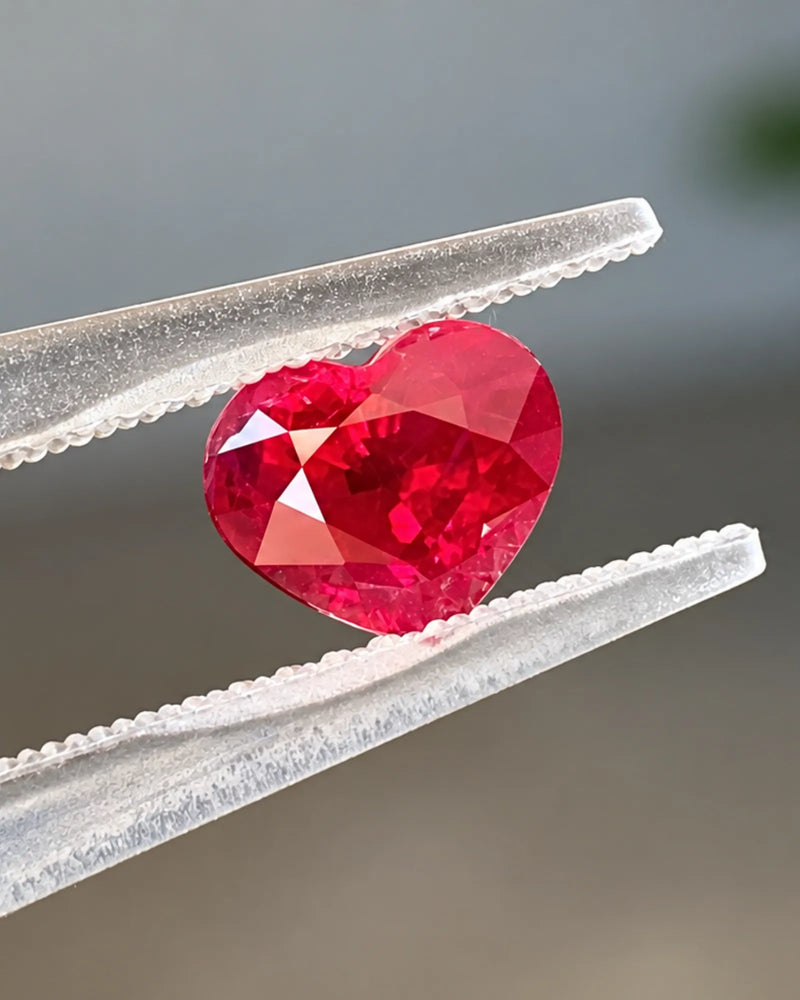
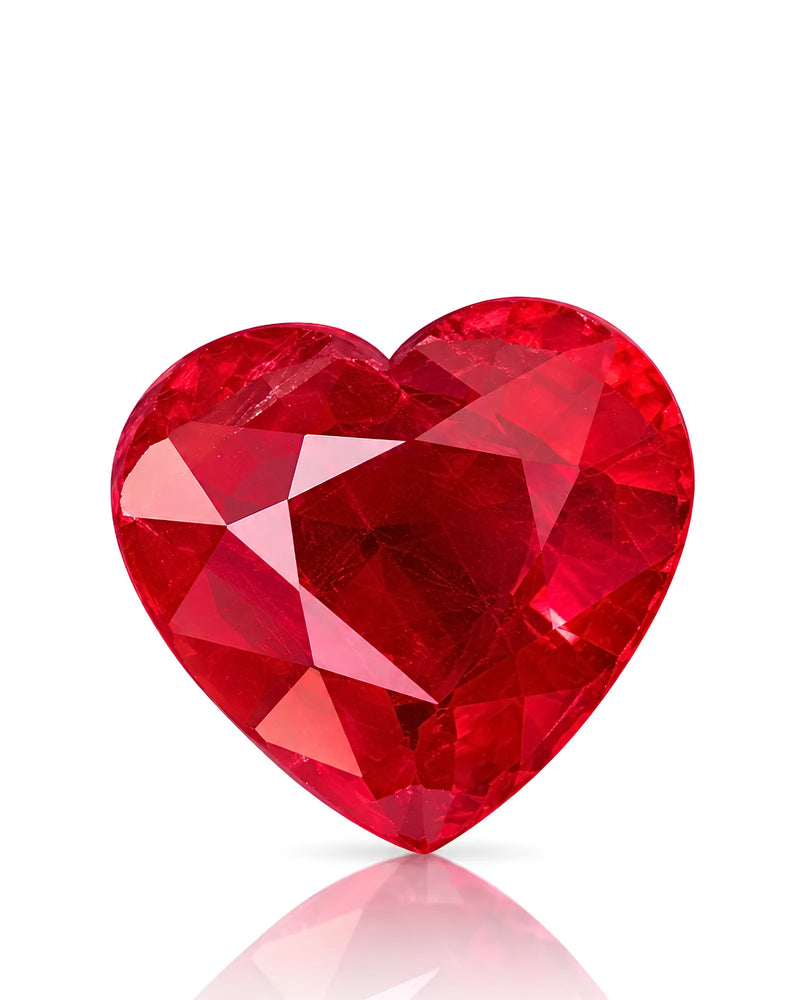
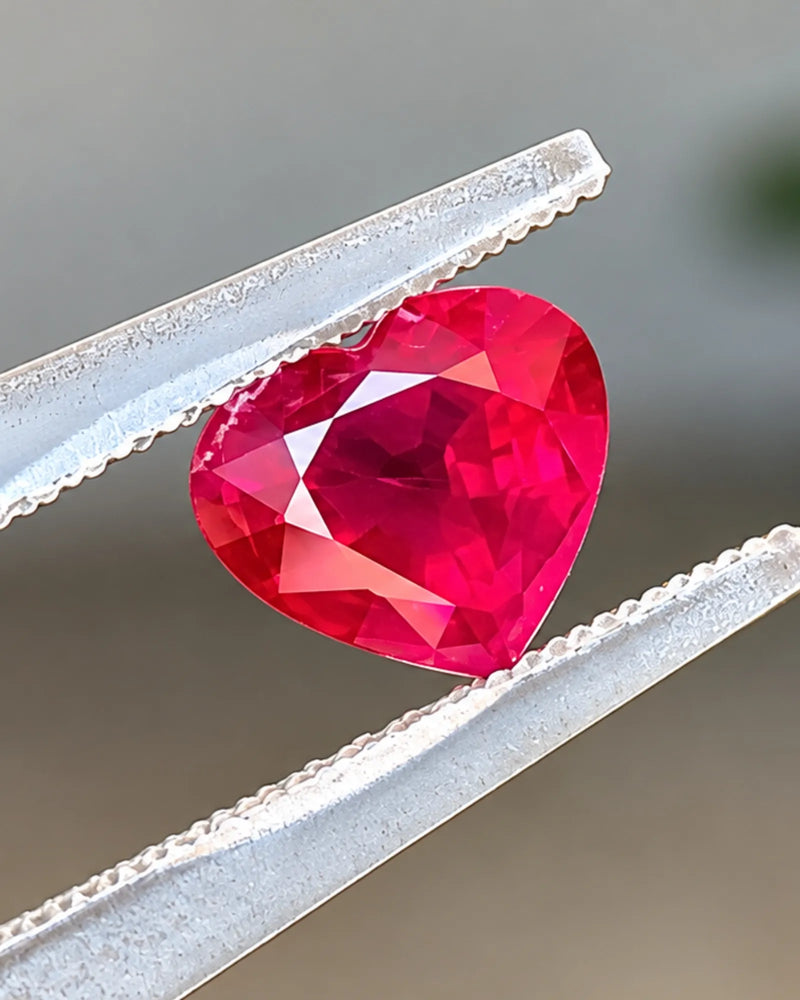
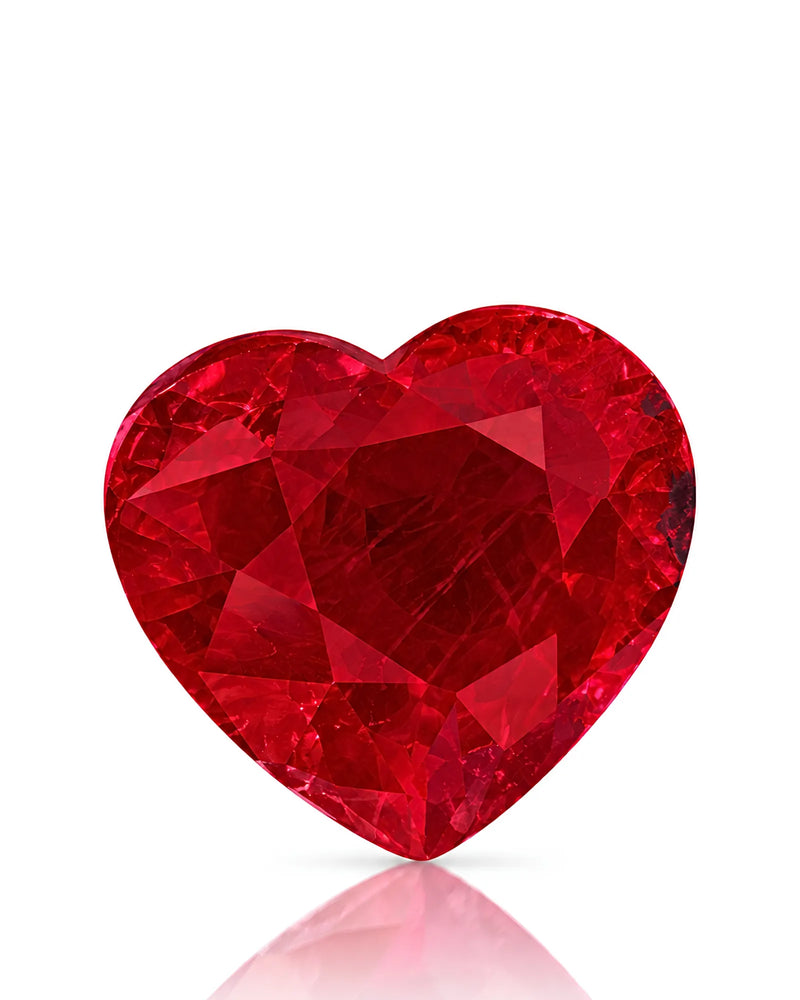
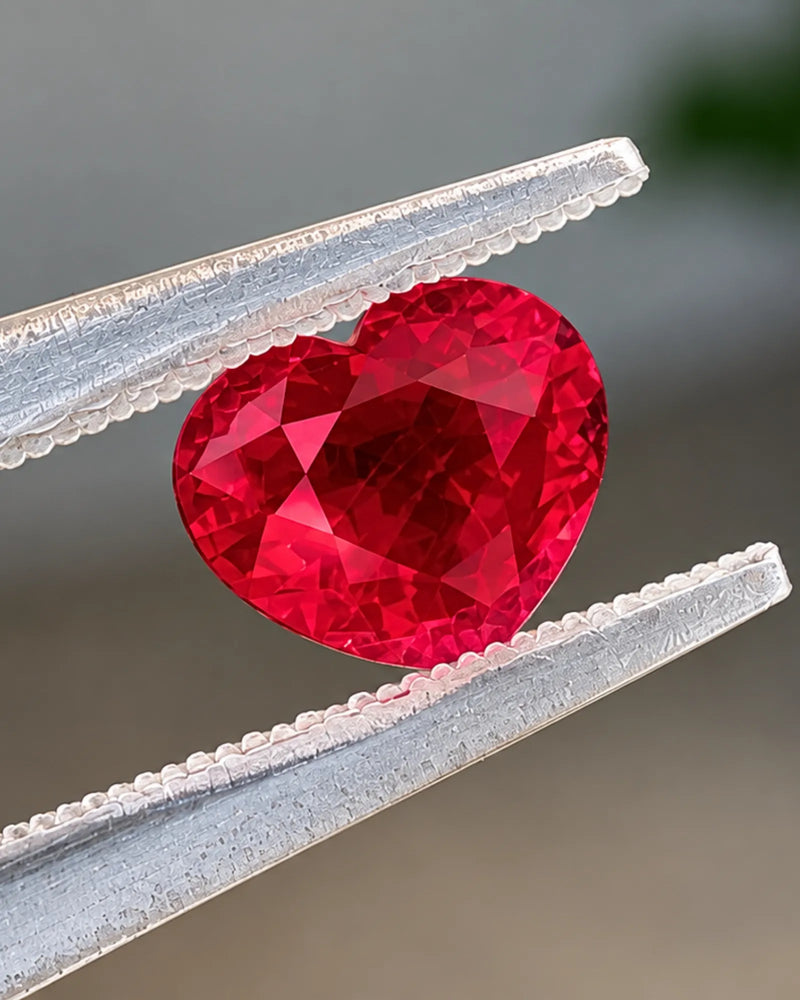
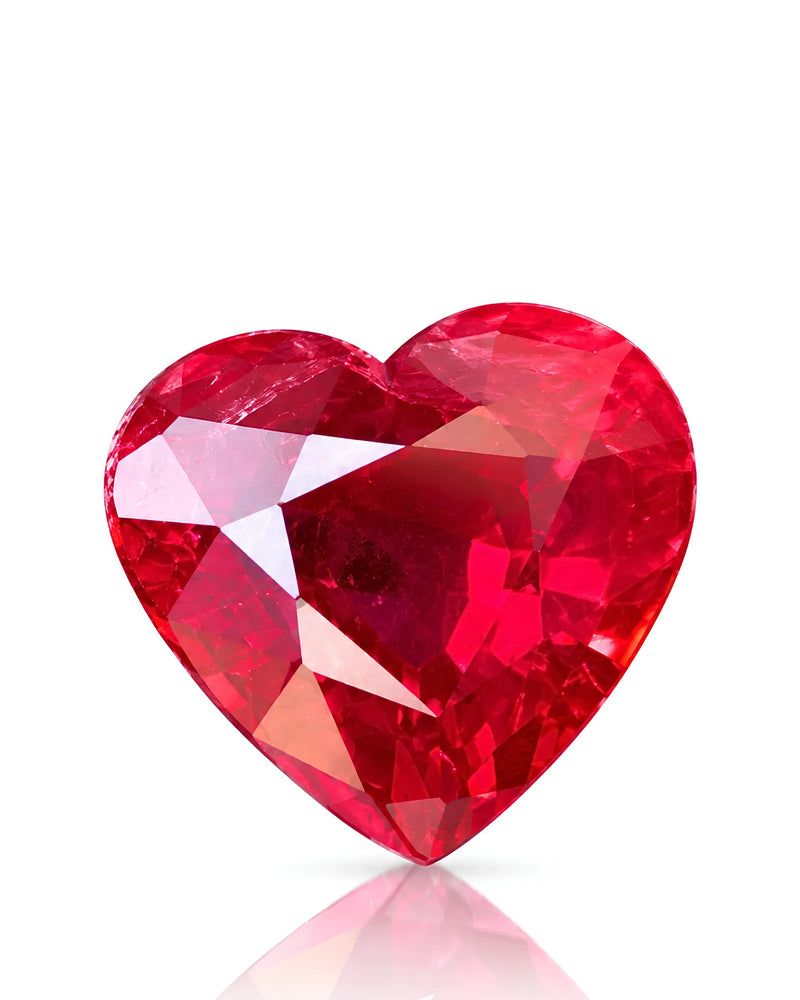
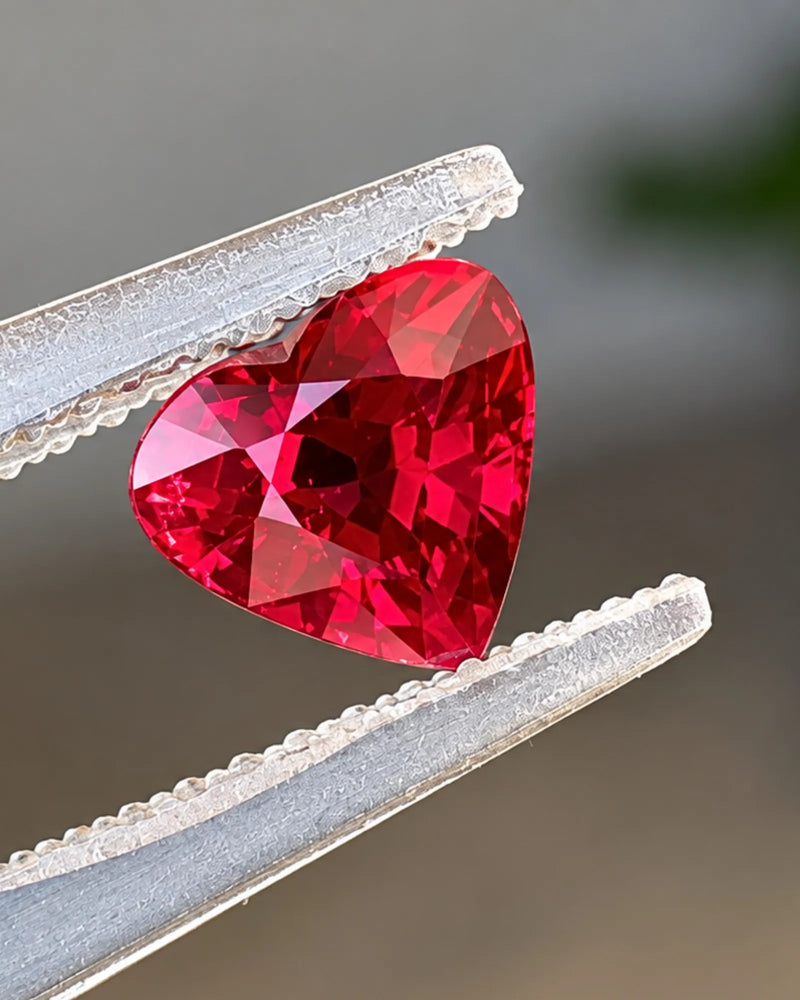
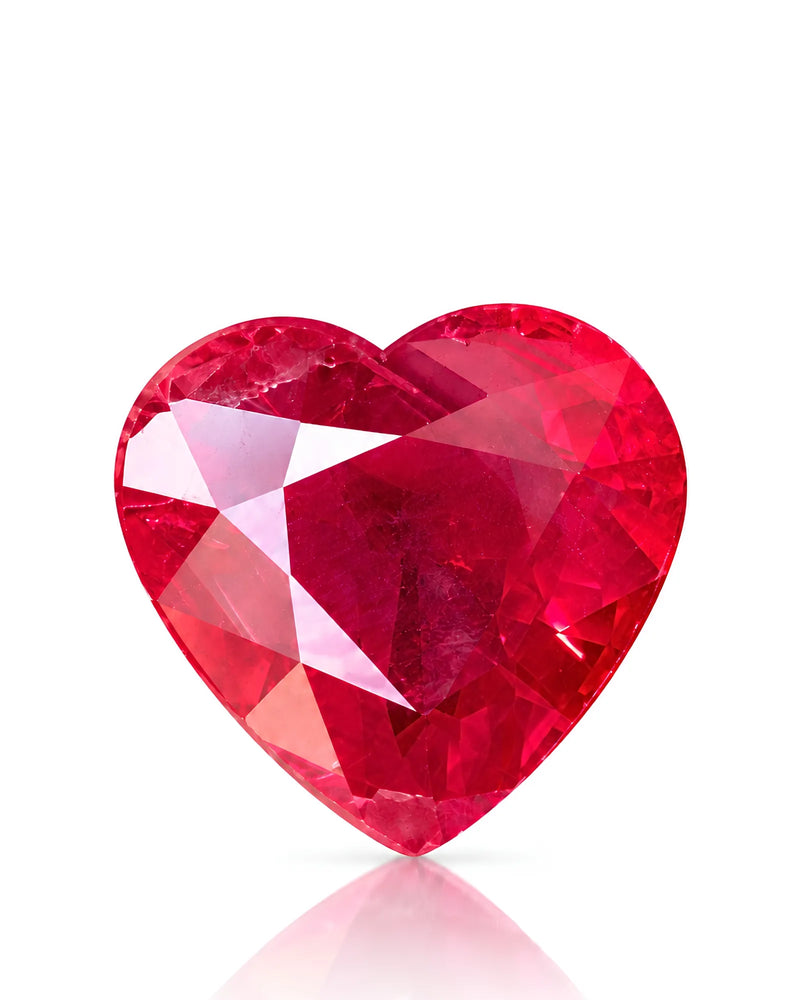
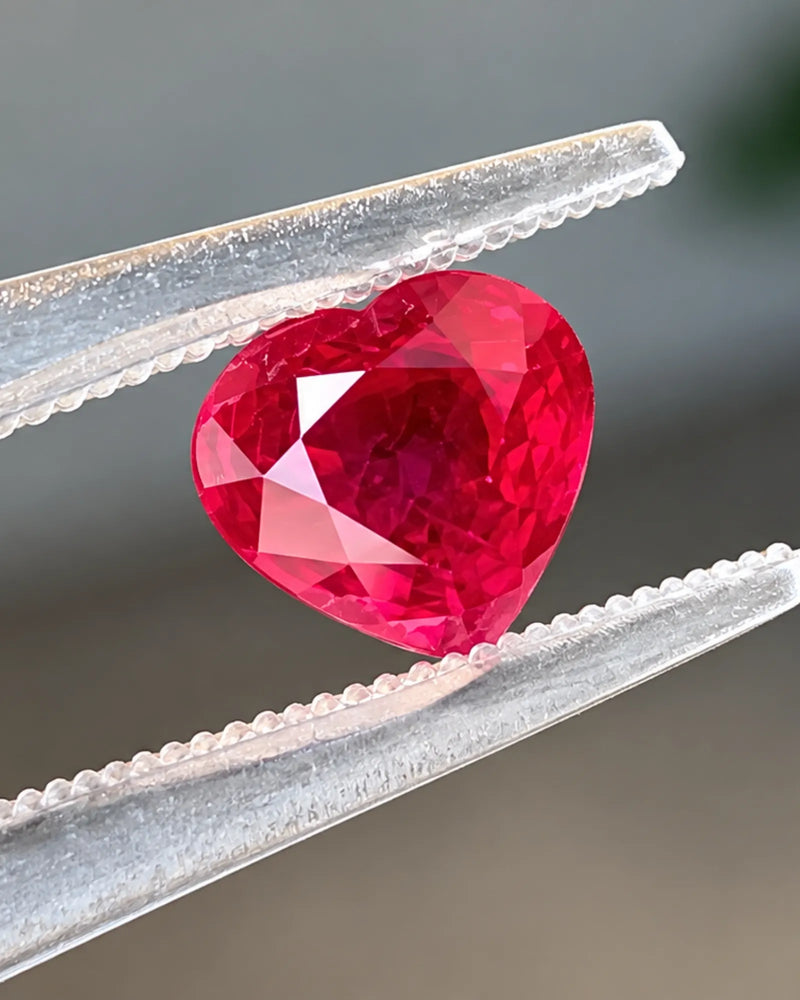
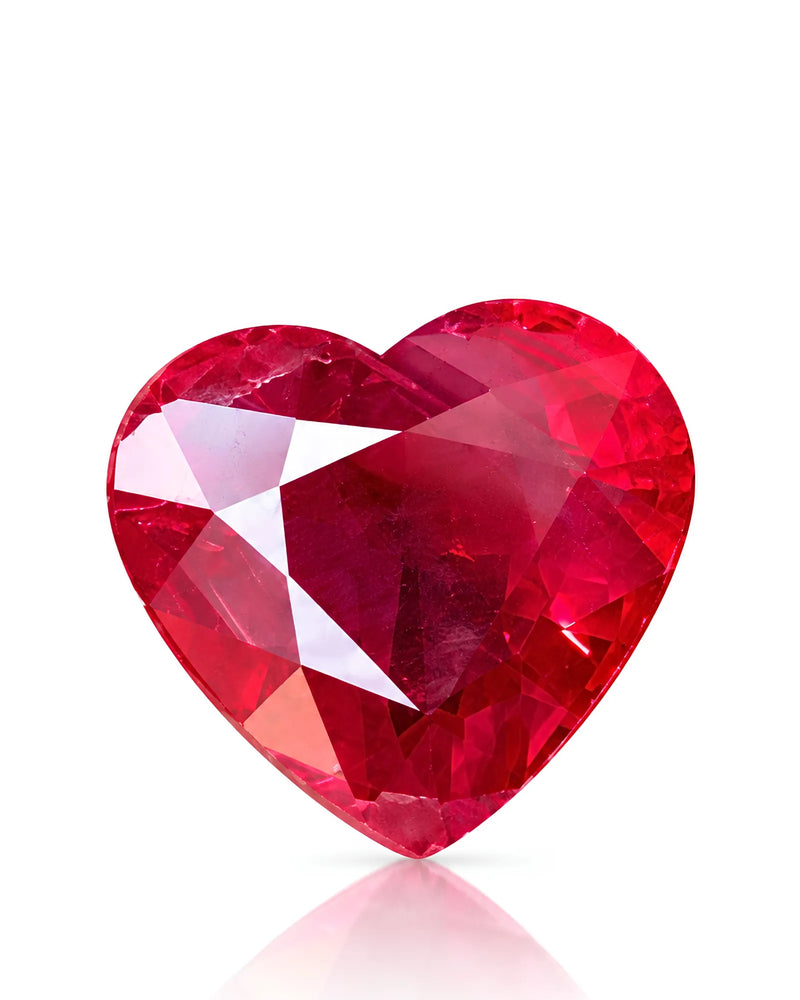
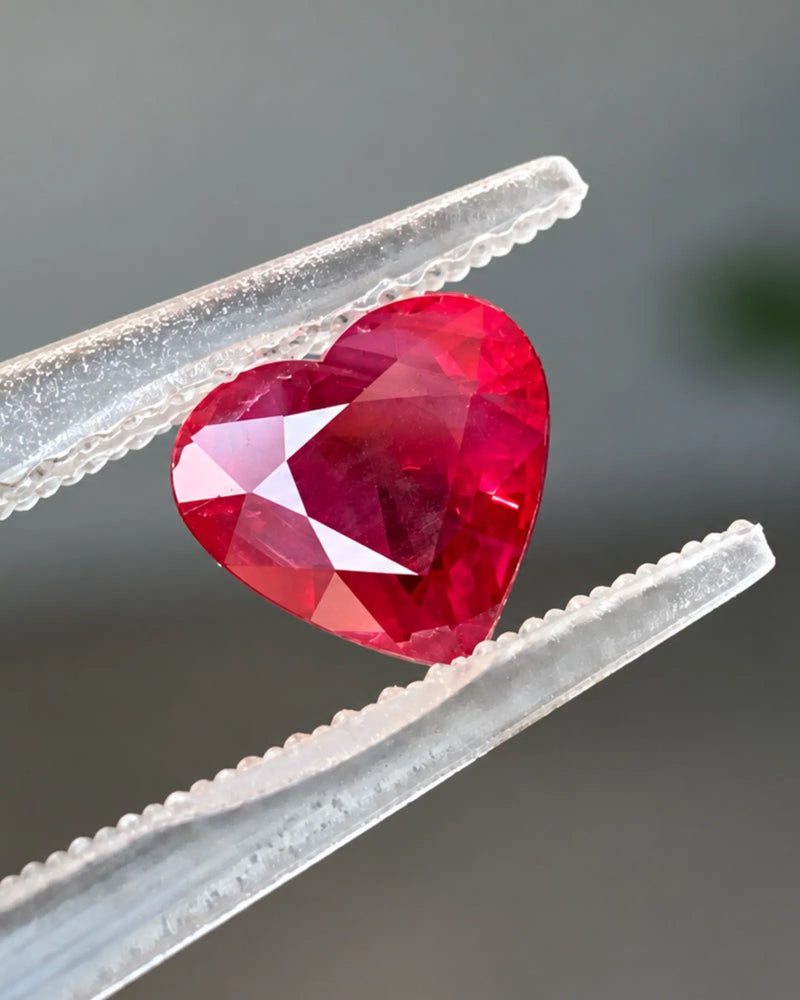
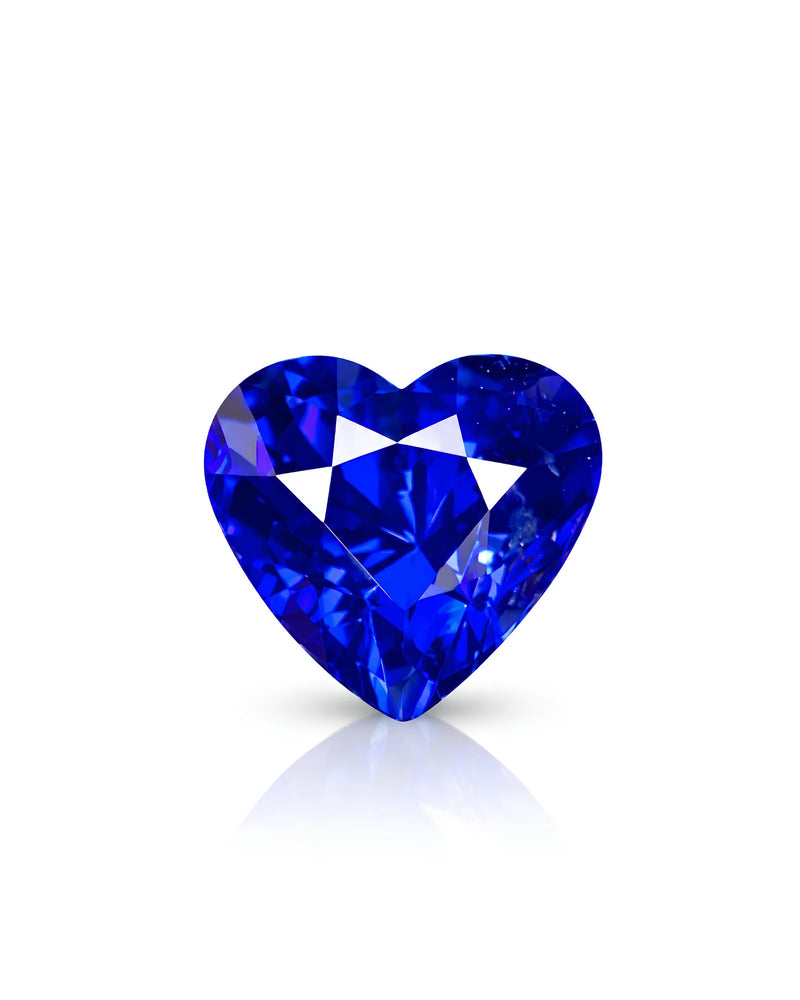
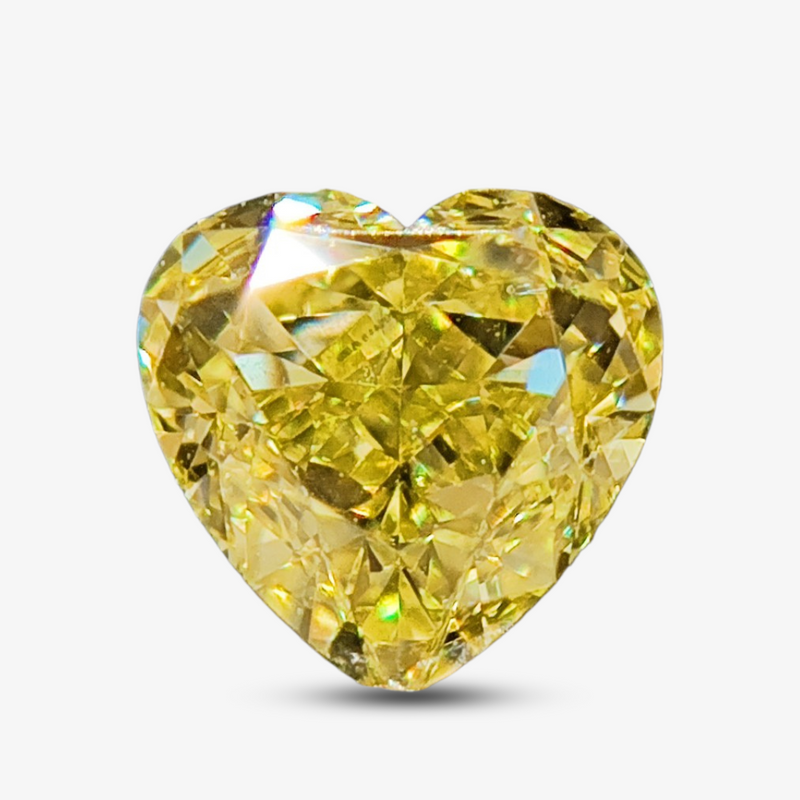
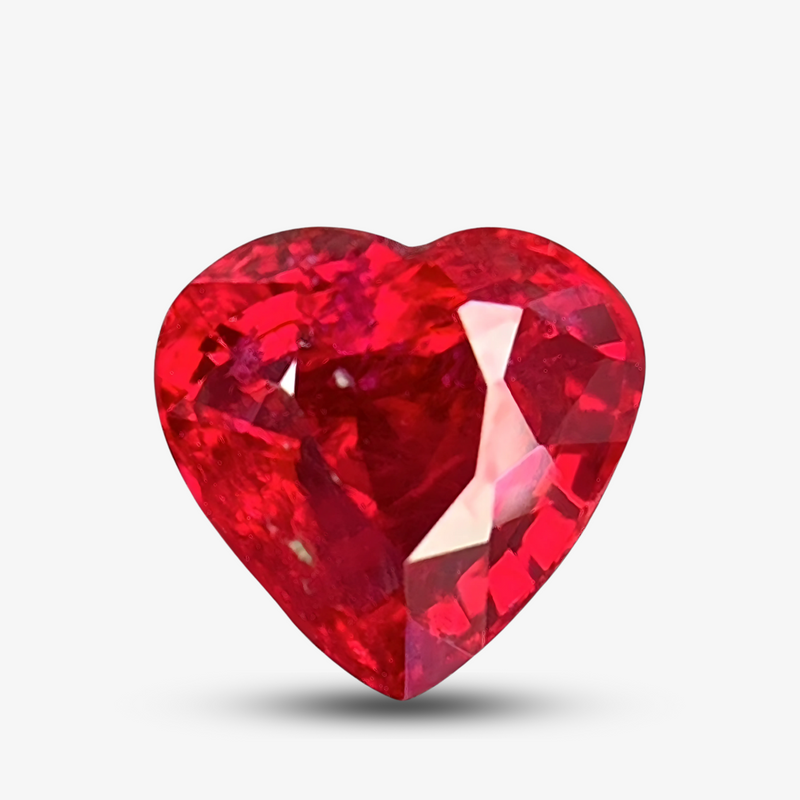
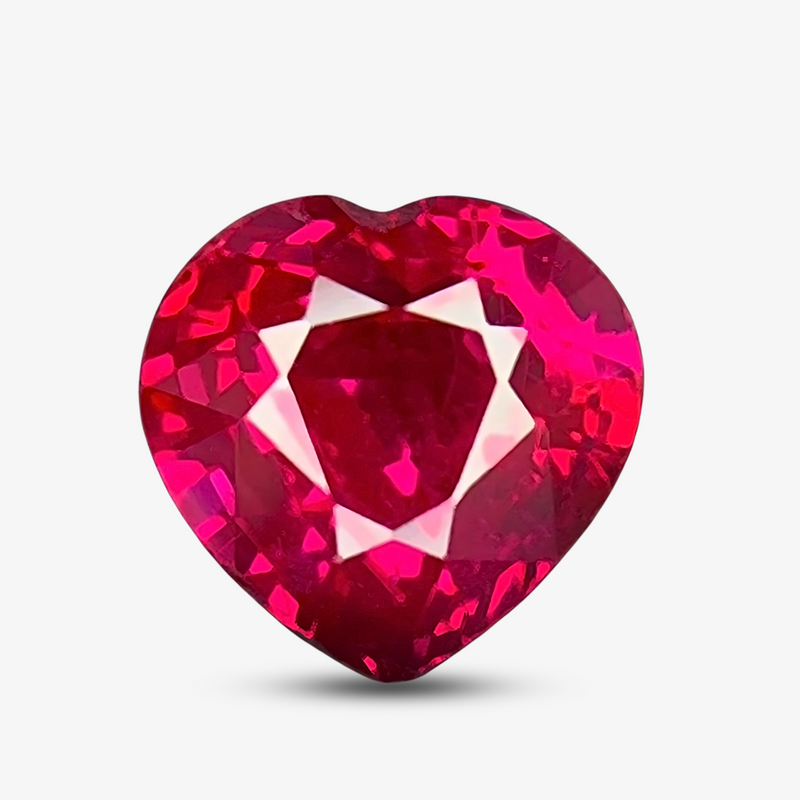
There are four checks, each taking seconds on a straight face-up photograph. Are the lobes equal in width and equal in height? Does the cleft sit on the centre line — not merely near the middle, but on the axis the whole stone is built around? Does the point sit on that same axis, so a line from the base of the cleft to the apex runs straight? And are the shoulders equal, the curves carrying each lobe down towards the point mirroring one another rather than one running fuller?
A heart with poor symmetry is worth substantially less than a well-cut one of identical species, colour, clarity and weight, and it is the aspect of this shape most often compromised, because symmetry is what a cutter sacrifices to hold weight. Laboratory symmetry grading for fancy shapes covers less than buyers assume, so this is a judgement to make with your own eyes. What we disclose is set out in how SARATTI grades gemstones.
Size Matters More Here Than Anywhere
Almost nobody states this, and it decides more purchases than ratio does.
Below roughly six millimetres across, a heart stops reading as a heart at normal viewing distance. The cleft is a small feature in absolute terms, and as the stone shrinks it closes up visually until the outline resolves into a rounded triangle with a dent in the top. From arm's length — which is how everyone but the wearer sees jewellery — the shape is not legible.
So hearts do not work in melee sizes. A row of two-millimetre heart accents is wasted work: they cost more to cut than rounds and look like nothing in particular. The shape belongs where it has room — a pendant, a centre stone, a single stone in each of a pair of earrings — and from eight millimetres upwards it comes into its own.
Length-to-Width Ratio
The length-to-width ratio of a heart is its length, from the base of the cleft to the point, divided by its width at the widest part of the lobes. The useful range runs from roughly 0.95 to 1.10, much tighter than the range for a pear or an oval.
Near 0.95 the stone is as wide as it is long or slightly wider: a full, broad heart that reads strongly at a distance and suits a pendant. Near 1.10 it is noticeably taller than wide, more upright and restrained, closer in feeling to a pear with a notch than to a classic heart. The difference between the two is far more visible than a difference in tone.
A very wide heart has less depth for its pavilion relative to its spread, and a cutter filling that outline is under pressure to leave it shallow. Shallow pavilions window. If a heart is markedly wider than long, ask for the depth as well as the face-up measurements.
The Bow-Tie, Windowing and the Cleft
Three optical faults account for most disappointing hearts; only one is unique to the shape.
The bow-tie is a dark band across the middle of the stone, waisting inward at the centre. It is a shadow rather than an inclusion, and what casts it is usually the viewer. A brilliant returns light off the pavilion and back through the crown, which needs light arriving at particular angles; in a shape stretched away from a circle, some pavilion facets need it from directly in front of the stone, which is where the wearer's own head and shoulders are. A faint softening is normal; a hard black band across the waist is a cutting failure and should be priced as one.
Windowing is a see-through patch where the pavilion is too shallow to return light and you can read through the stone to what lies behind it. In a heart it appears across the lobes first, because they are the broadest, flattest part of the outline and the easiest place to leave depth out. Tilt the stone: if the lobes go glassy while the lower half stays alive, that is a window.
The third fault belongs to this shape alone. A cleft ground in too shallowly, to preserve weight, leaves a flat dead zone across the top of the stone. No facet geometry can do useful work there, so it returns light poorly and destroys the outline at precisely the point the outline exists to make. A shallow cleft is the most common fault in commercial hearts and the one most often disguised by photographing the stone at an angle.
Which Gemstones Suit a Heart
The reasoning follows from yield. Because the shape wastes so much rough, it favours species where large clean material is affordable. Aquamarine and morganite are the obvious cases: both occur in sizeable clean crystals in which an eye-clean stone is the expectation, and both are cheap enough per carat that a cutter can be generous with the cleft. Tourmaline behaves similarly, amethyst is plentiful in large sizes at low cost, and garnet offers colour depth in untreated material available in size.
The honest warning concerns brittleness and cleavage. A heart has two vulnerable features rather than the pear's one: the point, and the thin edges either side of the cleft. In emerald, tanzanite, topaz and opal — fractured or cleavable material, and in opal's case soft besides — both are liabilities in wear and on the bench. That does not rule the shape out, but it dictates a pendant rather than a ring.
Strongly pleochroic material — tanzanite, kunzite, iolite — shows different colours along different crystal directions, so the cutter orients the rough for colour first and takes whatever outline the crystal then allows. Where the outline is the whole proposition, that is a serious restriction, and hearts in these species come in a narrower range of ratios and sizes.
Setting a Heart
The point takes a V-claw — a single claw formed into a V that wraps the apex from both sides and covers it from above. On a heart this is not optional. Beyond that, a claw sits on the outer curve of each lobe, giving three secure points and a stable mount.
The cleft is the real difficulty. It is the most exposed part of the outline after the point, and also the feature that must not be obscured, because covering it destroys the shape. A claw sitting in the cleft protects the stone and ruins the reason for buying it. The usual compromise is a small claw set just to one side of the notch, or one reaching in with a very fine tip; neither is wholly satisfactory. Bezels are harder still: a continuous rim must follow a curve that reverses direction twice, and most bezel-set hearts look soft and approximate at the cleft.
A pendant therefore suits a heart better than a ring. Hung from a bail at or just behind the cleft, the point hangs free and no metal need intrude on the outline.
Judging a Heart Before You Buy
Ask for the millimetre dimensions, calculate the ratio yourself, and check the stone is at least six millimetres across, preferably eight or more. Then look at a straight, uncropped, face-up photograph — not an angled one — and run the four symmetry checks: lobe width, lobe height, cleft on the centre line, point on the same line.
Then ask for video. Windowing and the bow-tie only reveal themselves in motion, and a shallow cleft is far easier to see when the stone is tilted than when it is lit from above to flatter it. Watch whether the area below the cleft returns any light, and ask whether the point has been abraded or previously set; small chips at the apex are common and easily hidden by a V-claw. Our buyer's guide to pear shaped gemstones sets out several of the same checks.
Choosing a Heart
Decide the size first, because here it is not a question of budget but of whether the outline works at all. Then the ratio — broad near 0.95, upright near 1.10 — and only then the species, the easiest of the three to change. A ring worn daily narrows the field to hard, tough material; a pendant opens the shape to almost everything, including material that could not survive a knuckle.
Judge the stones offered on symmetry and on the depth of the cleft before anything else. Both faults are permanent, uncorrectable after cutting, and the ones you will keep noticing for as long as you own the stone.
Every stone here is listed individually, with its own measurements, ratio and images, because in a shape like this the individual stone is the only thing that can honestly be described. Only part of what we can reach is listed online. If what you want is not listed — a particular size, a particular ratio, a particular species — describe it, and we will go and look.