What a Pear Cut Is
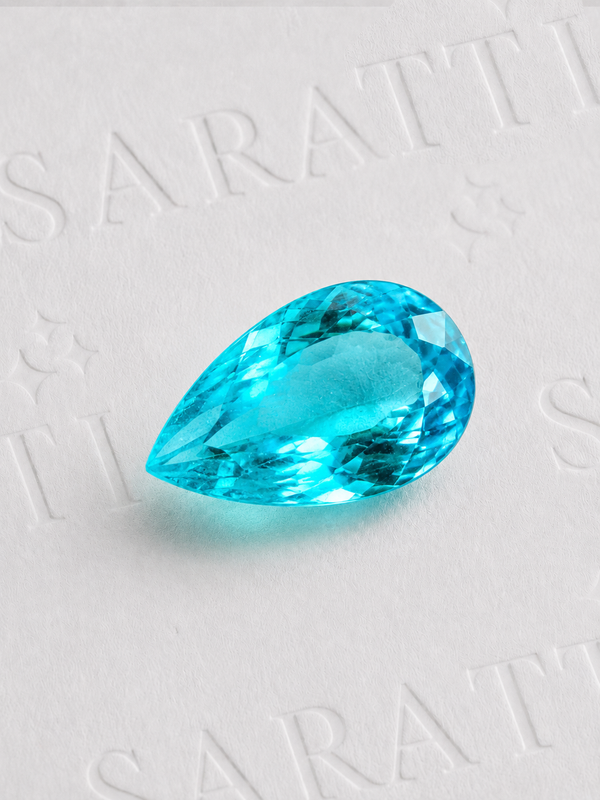
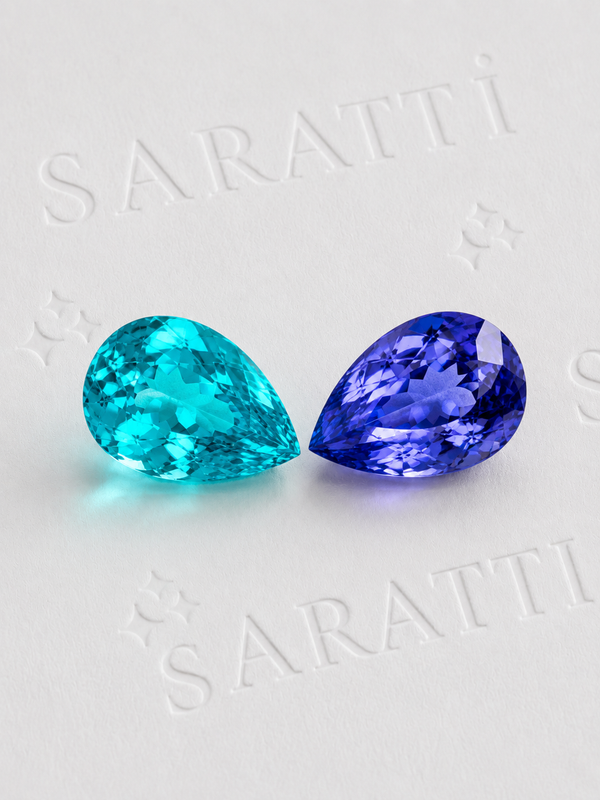
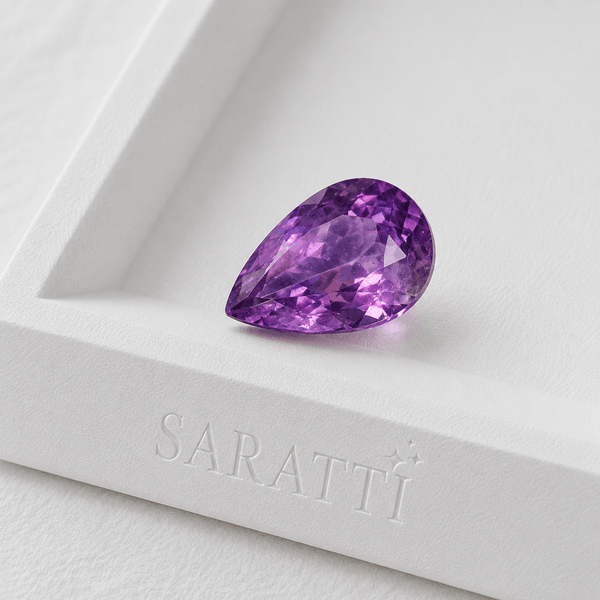
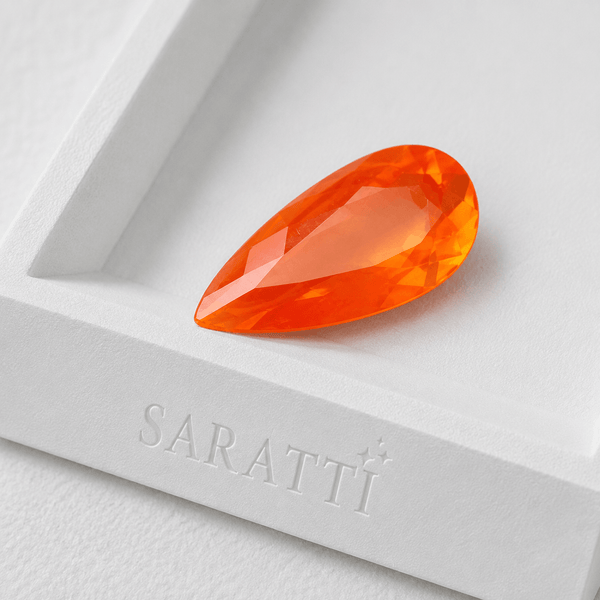
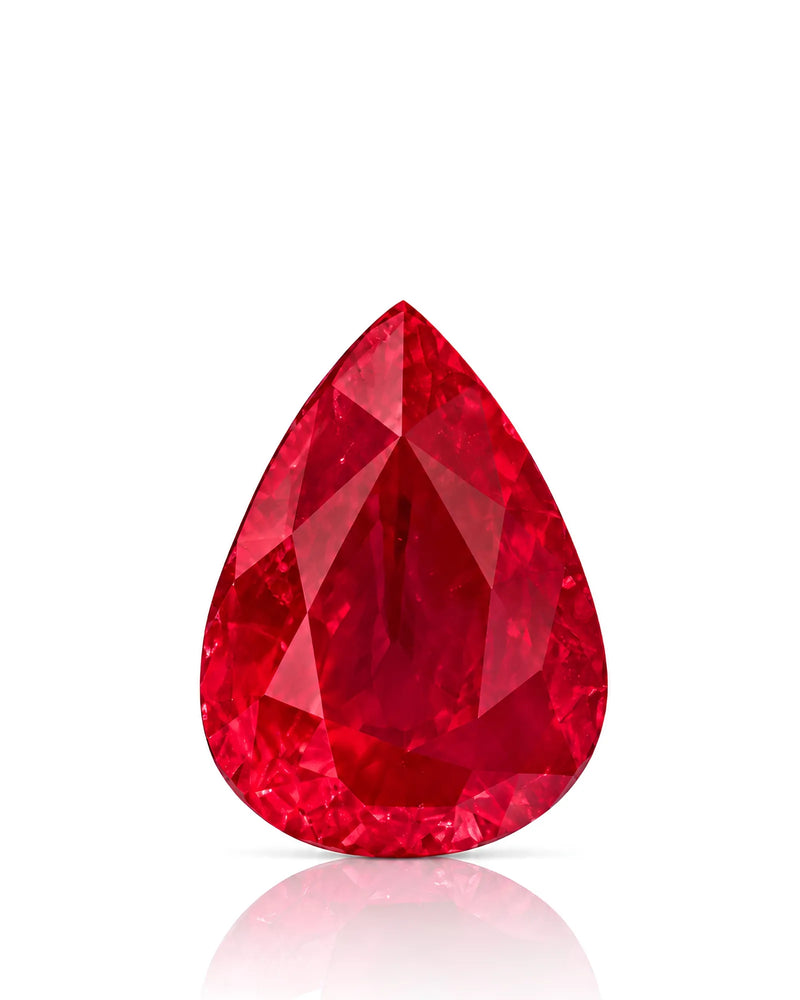
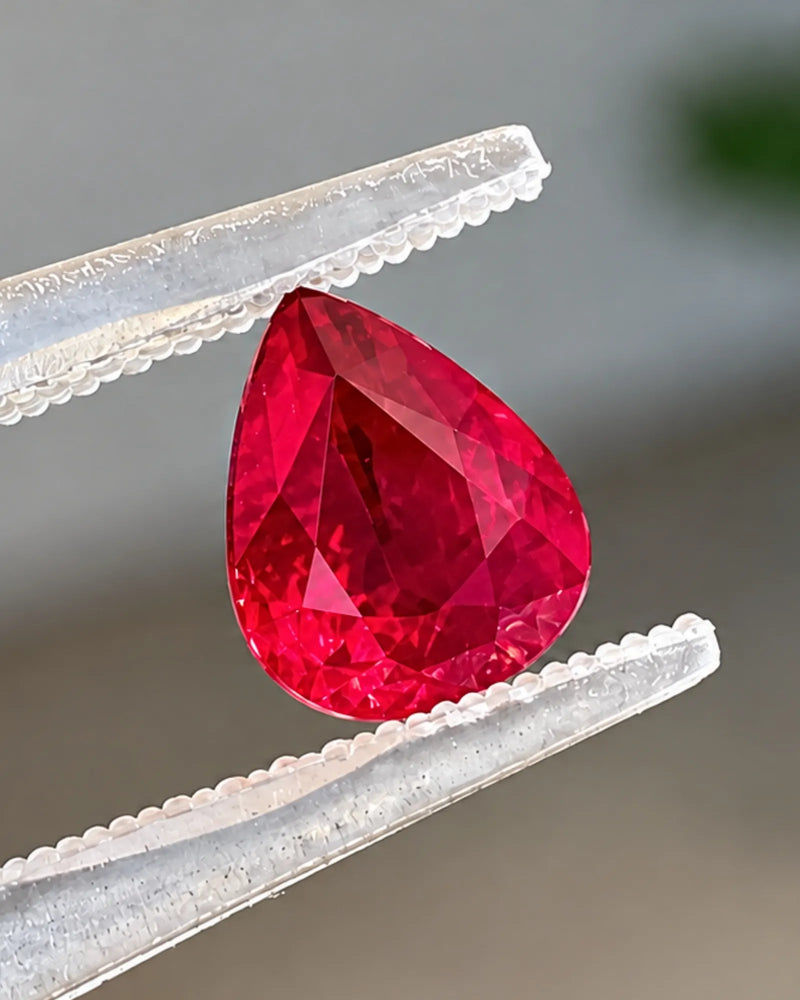
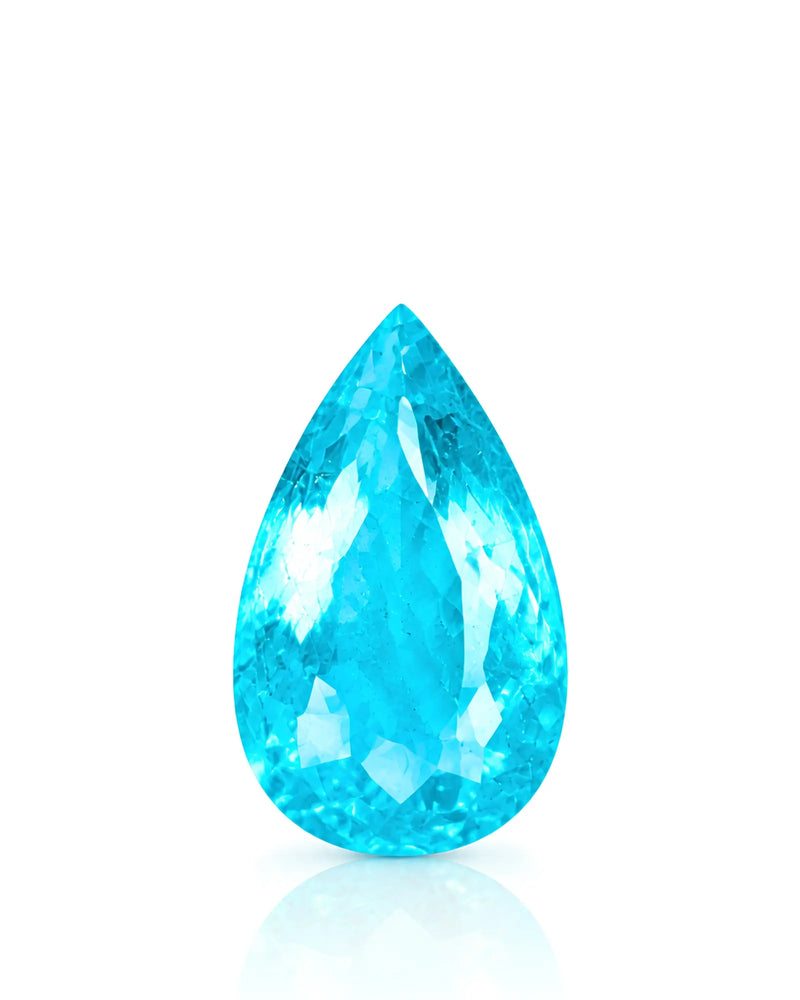
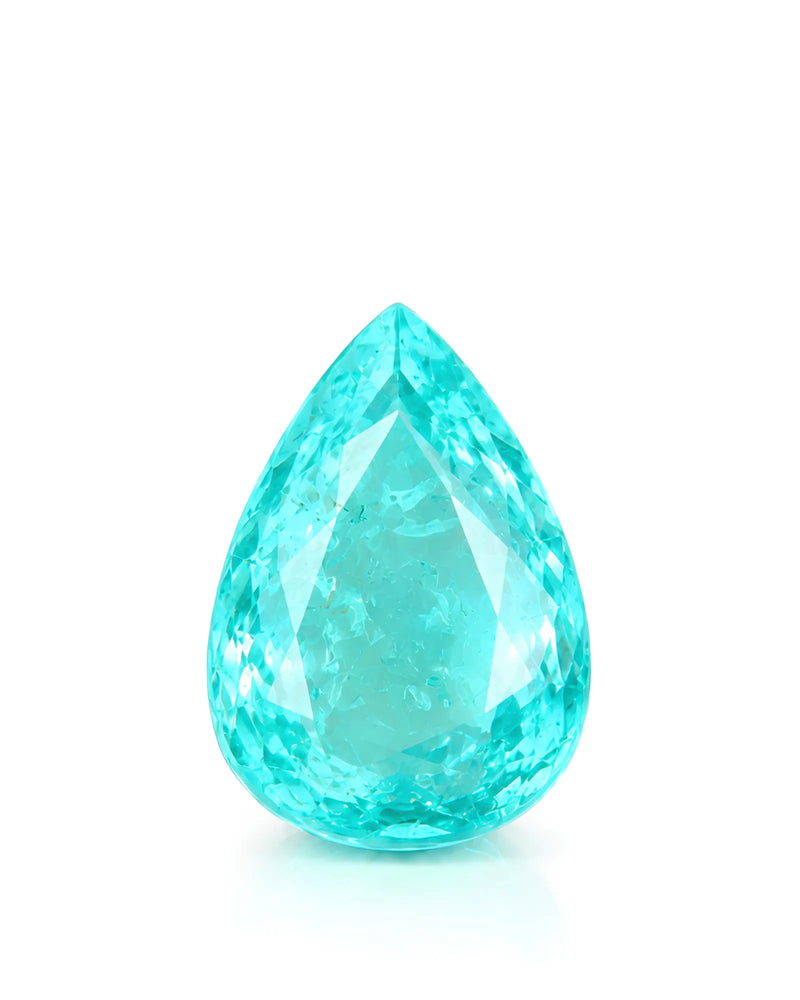
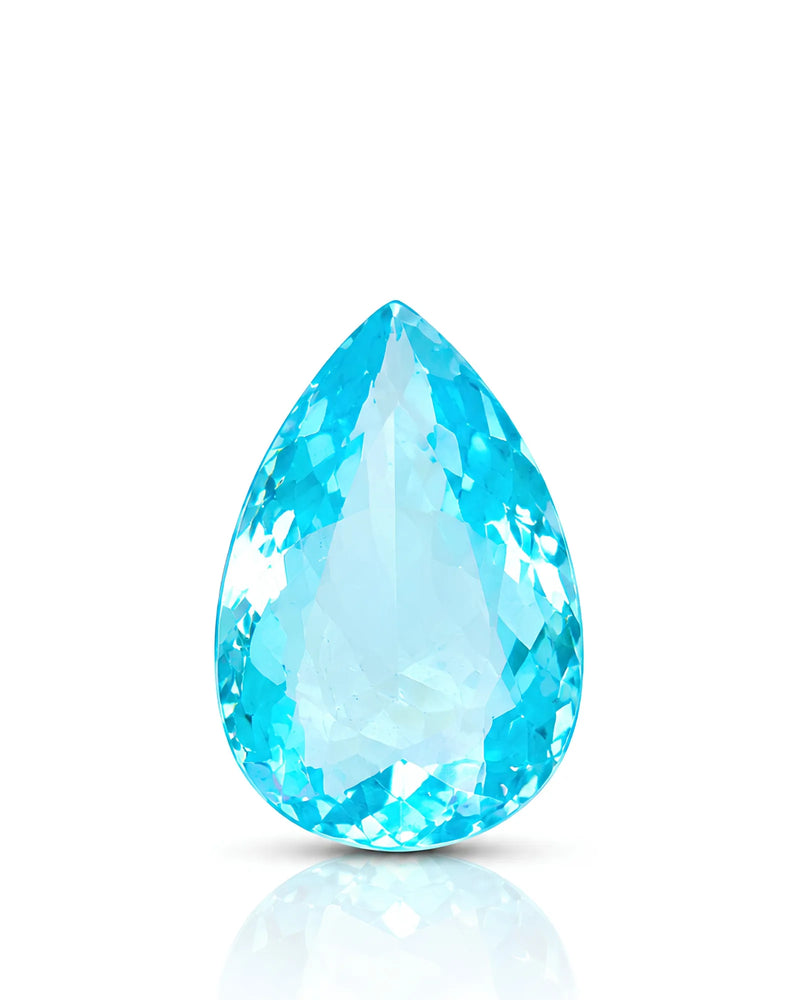
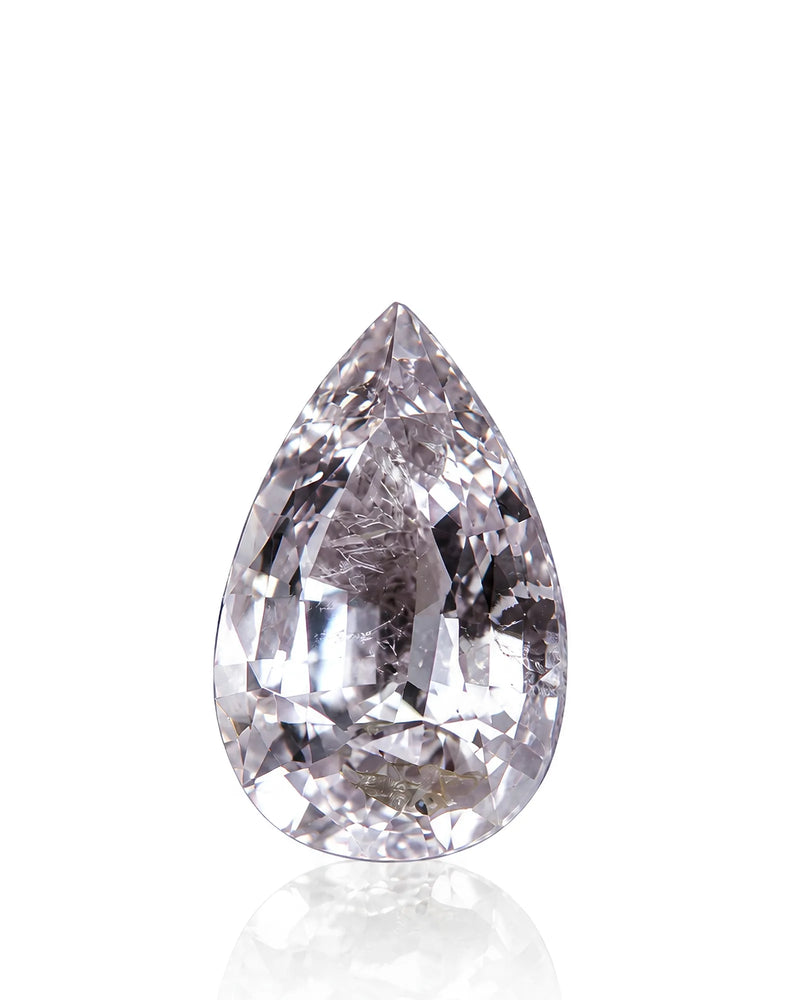
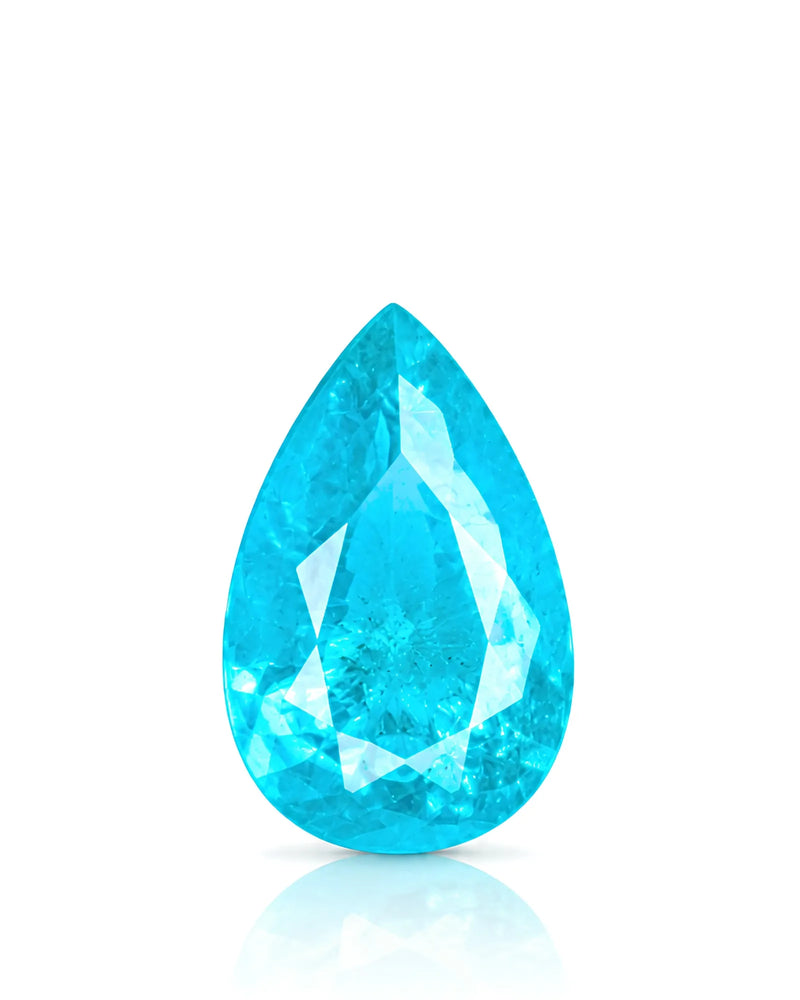
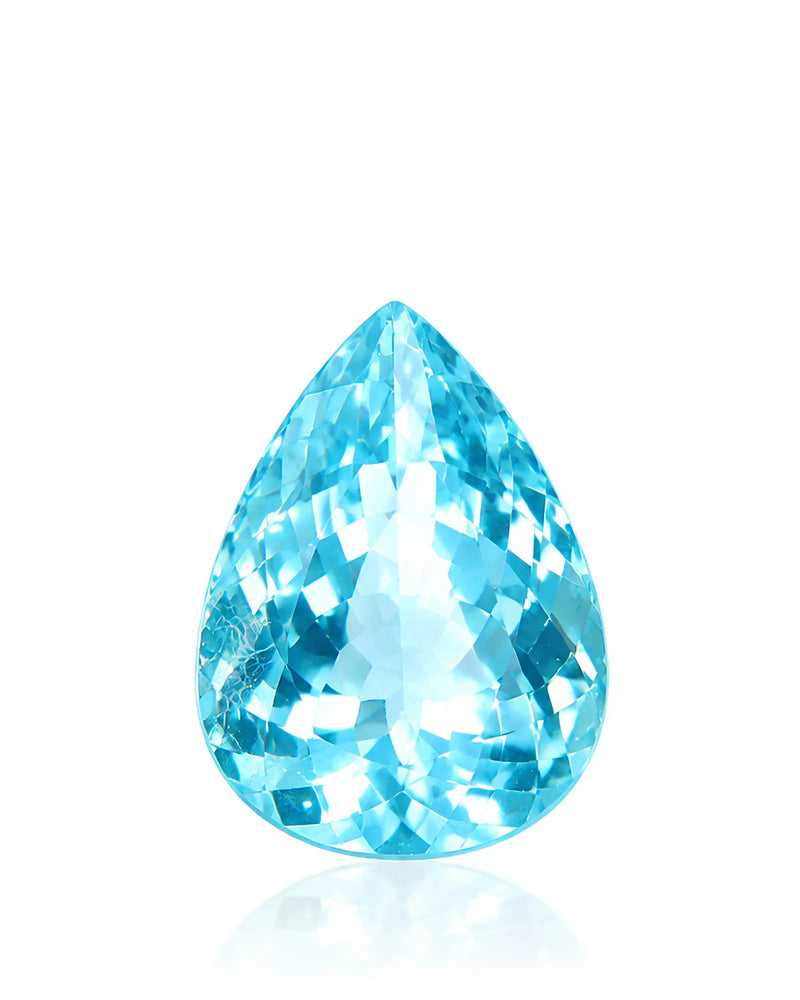
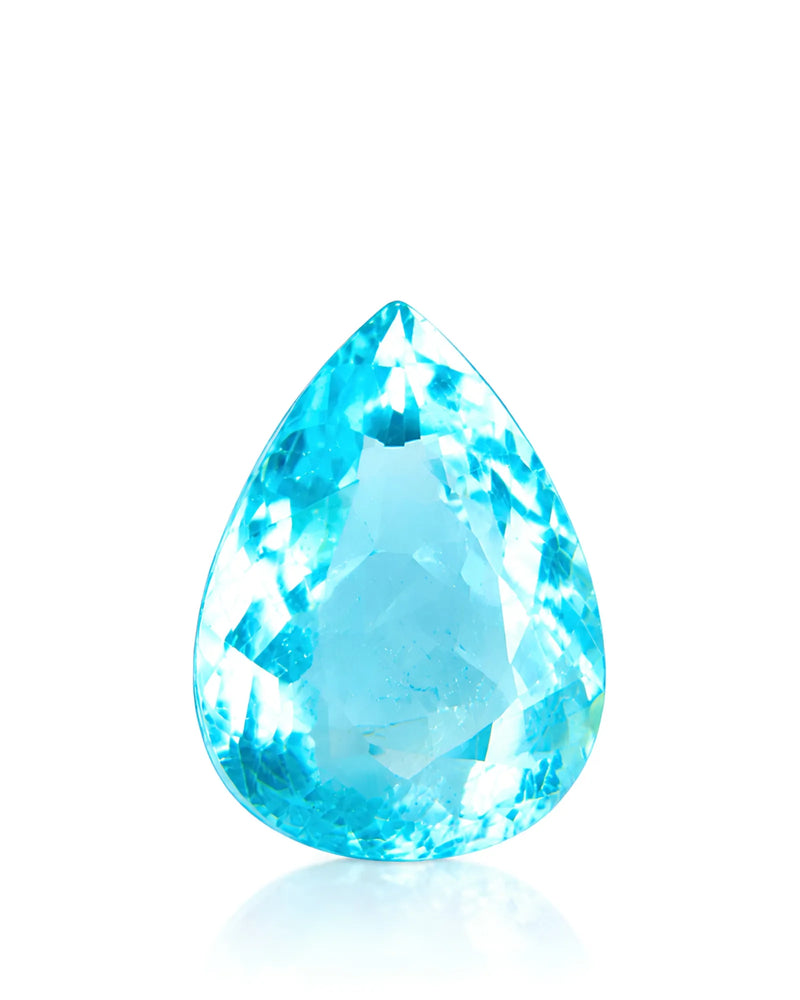
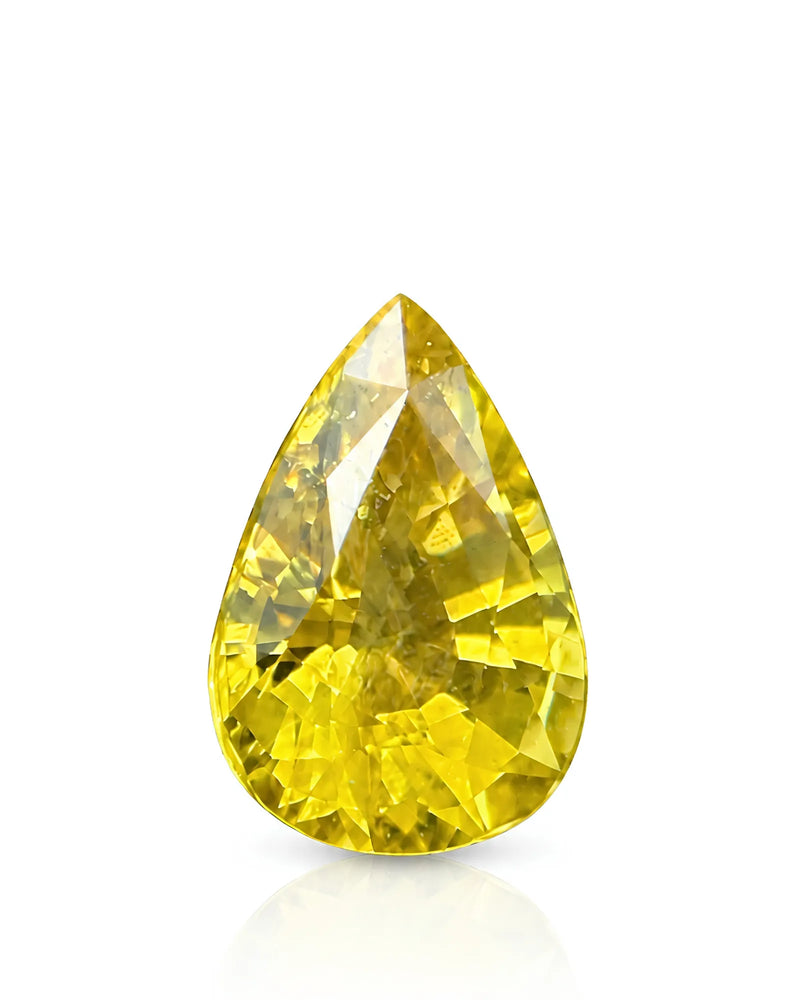
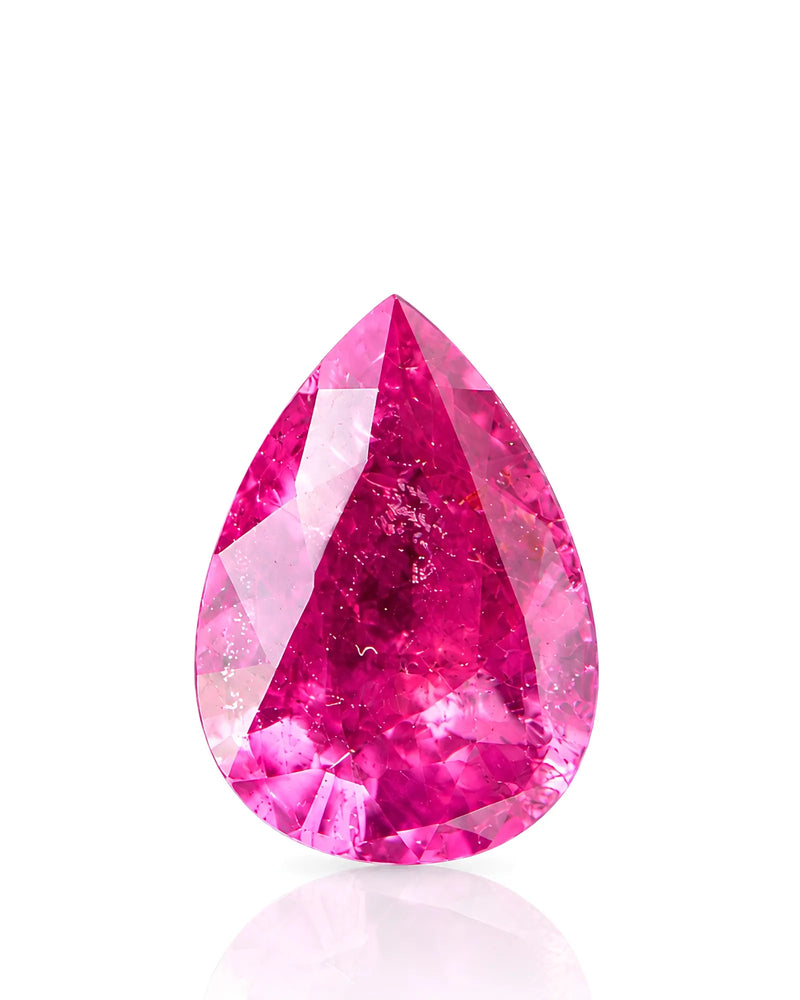
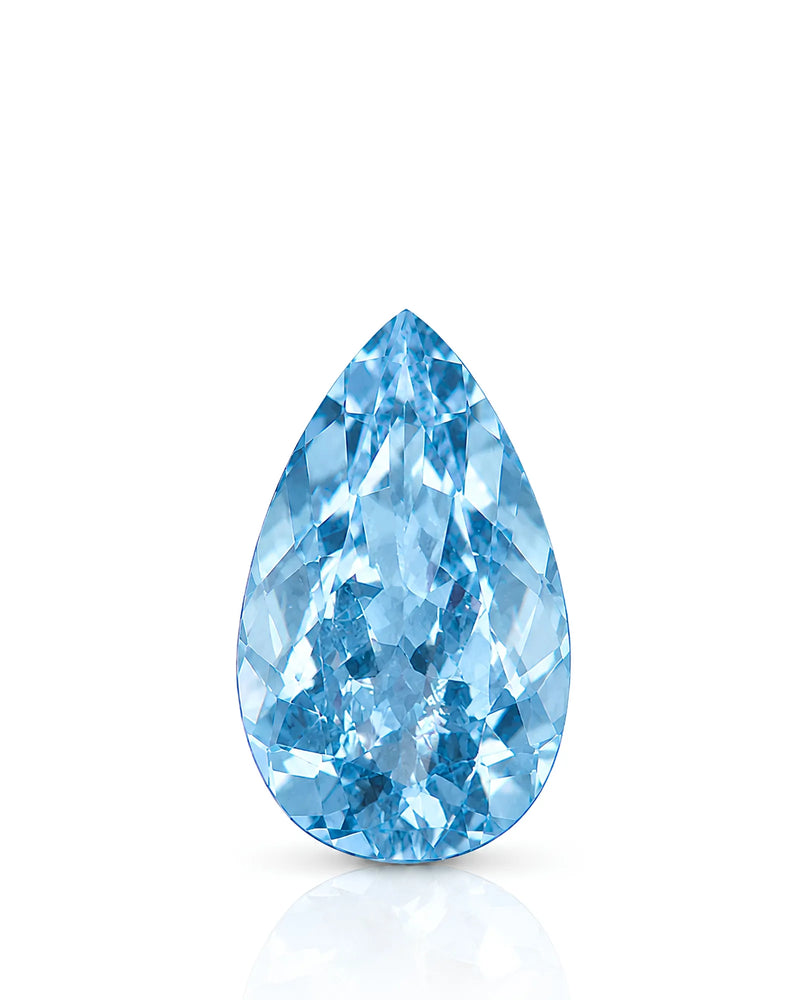
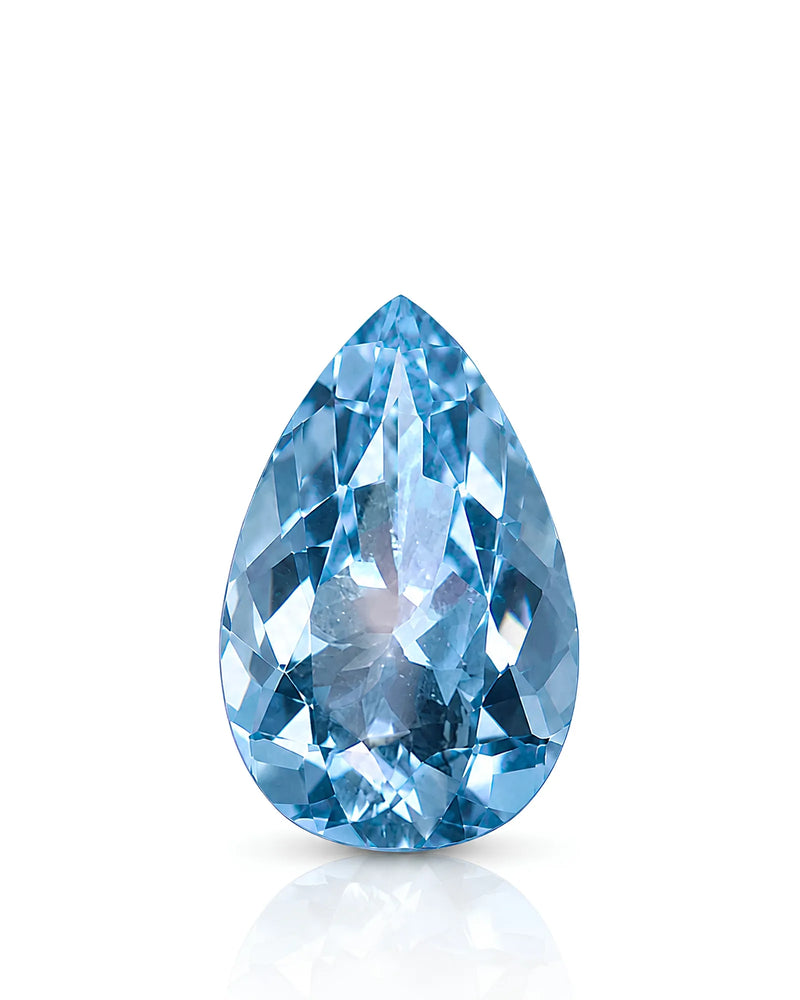
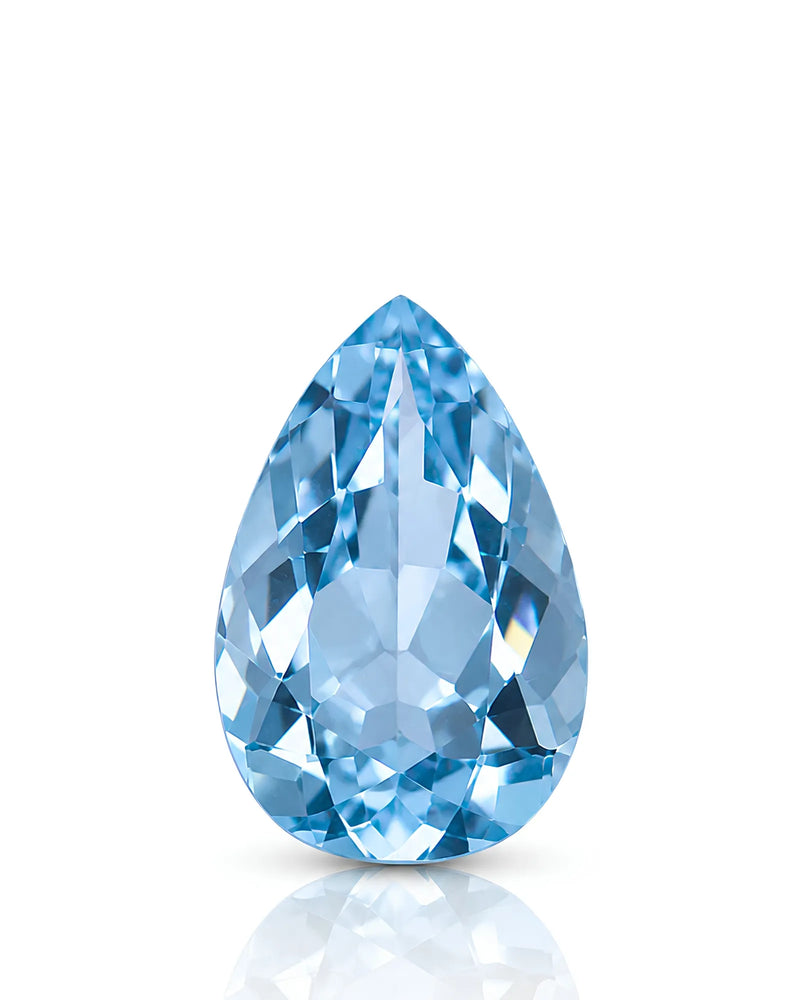
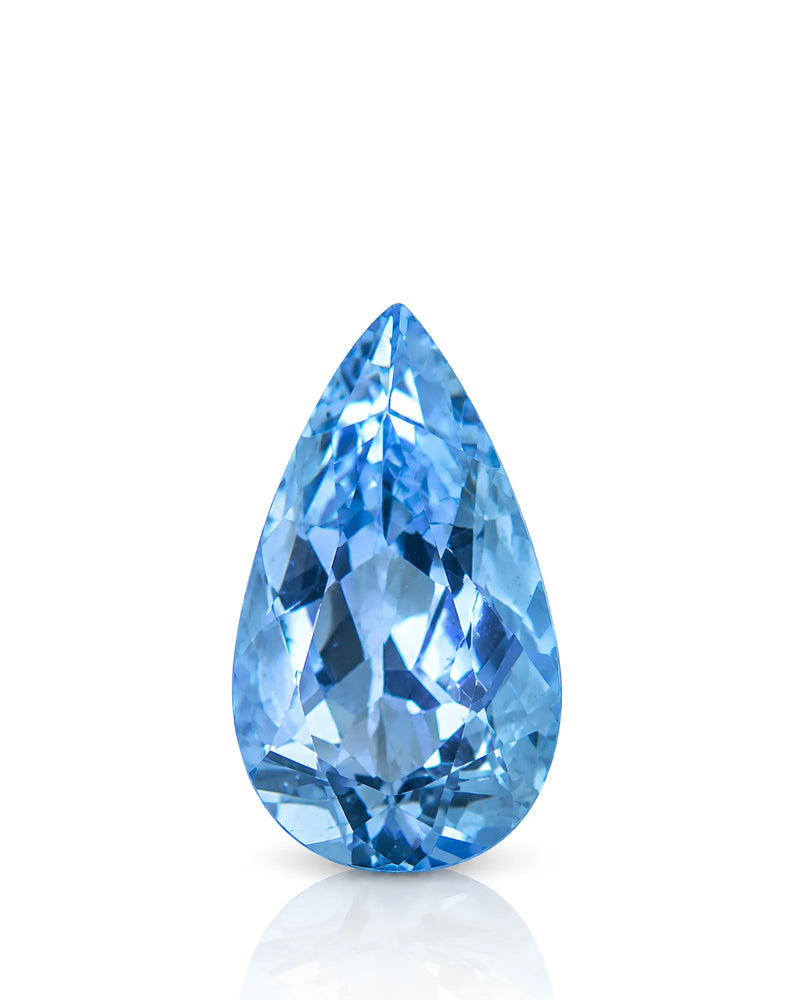
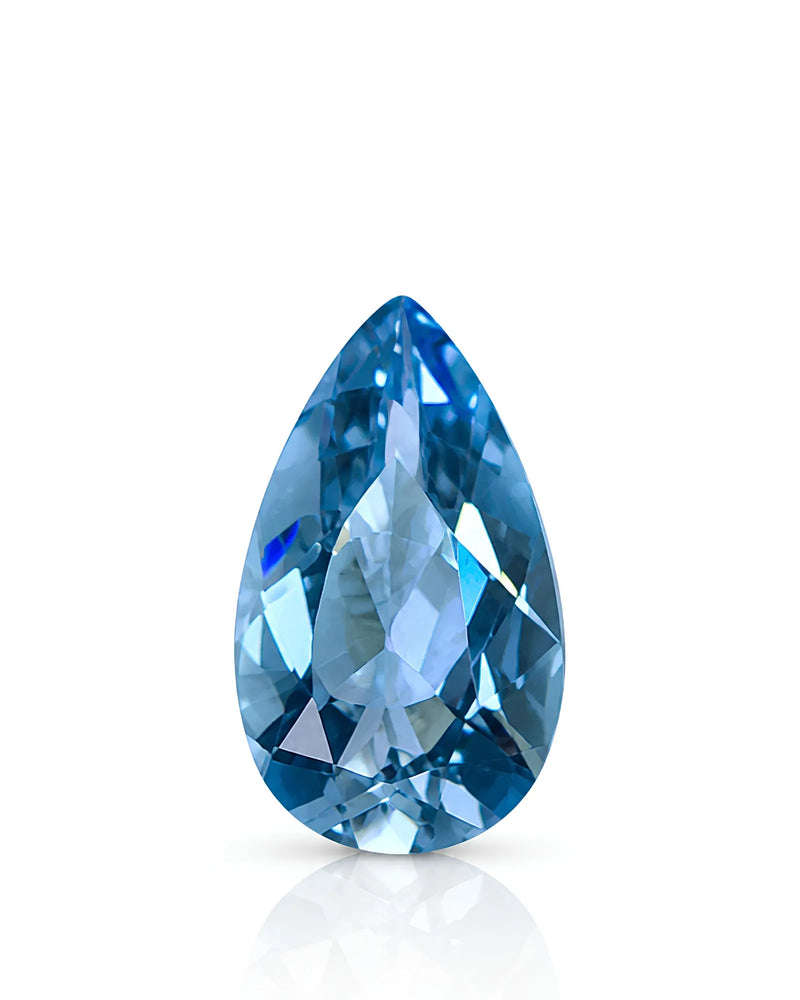
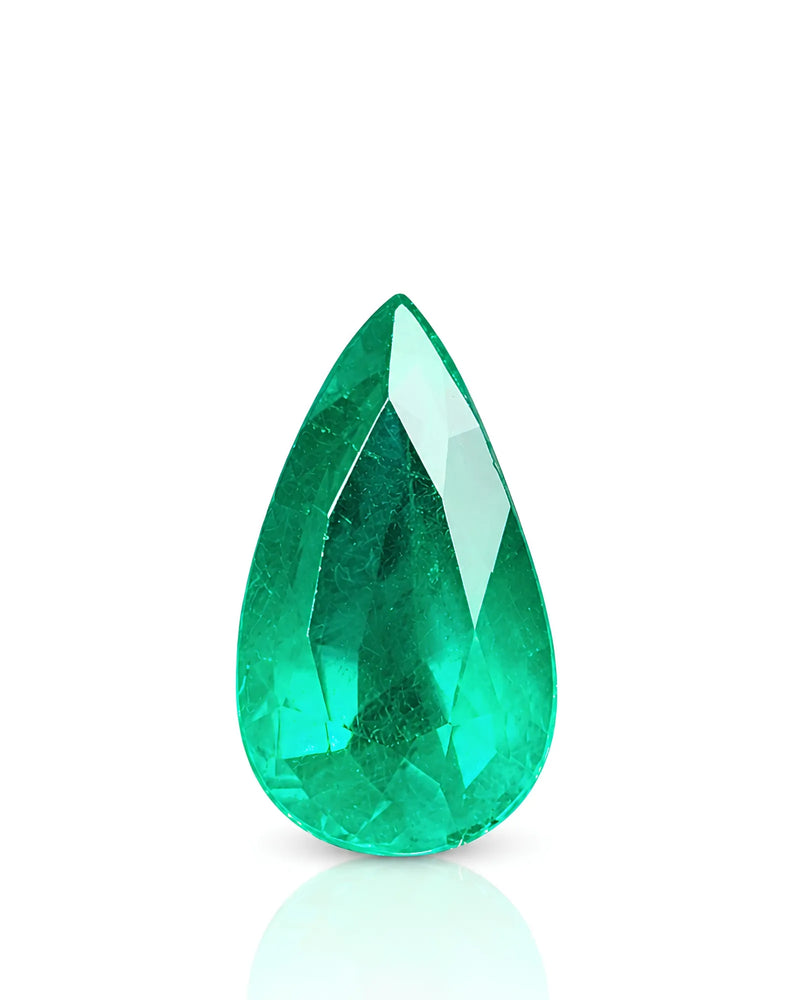
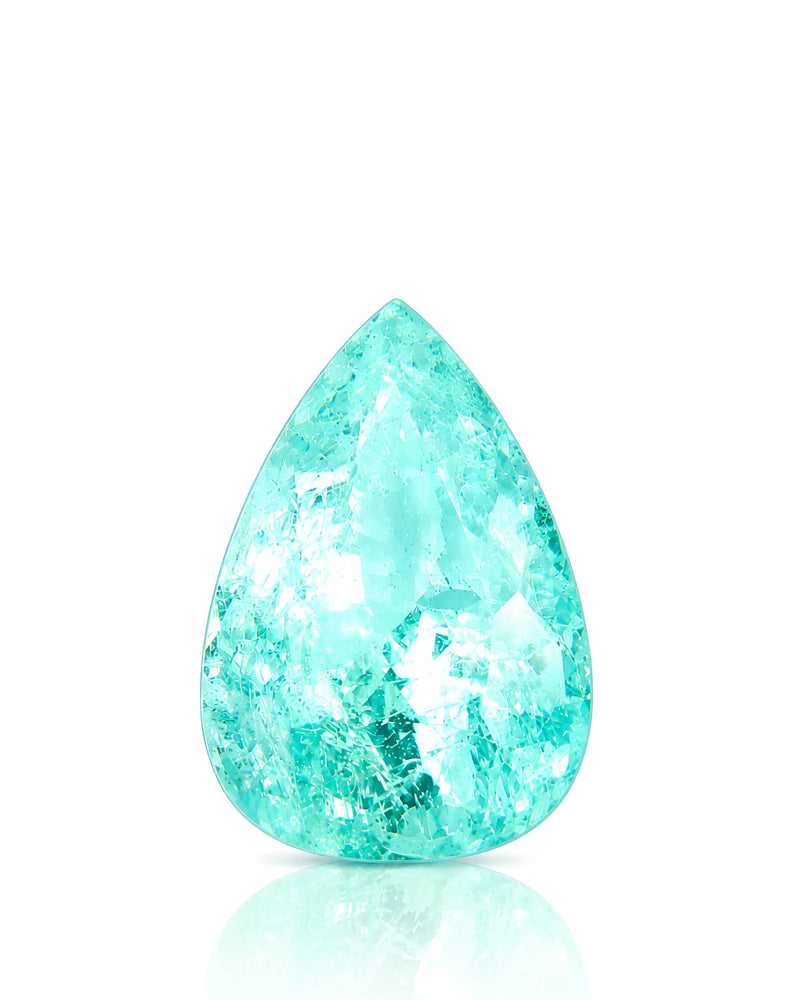
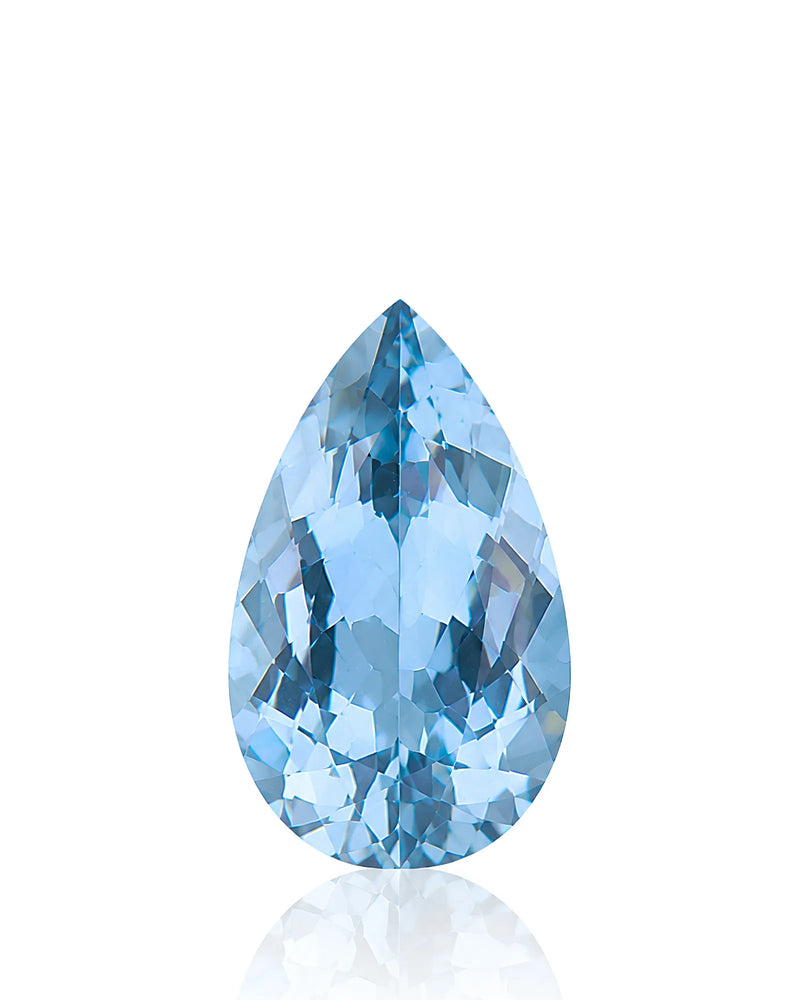
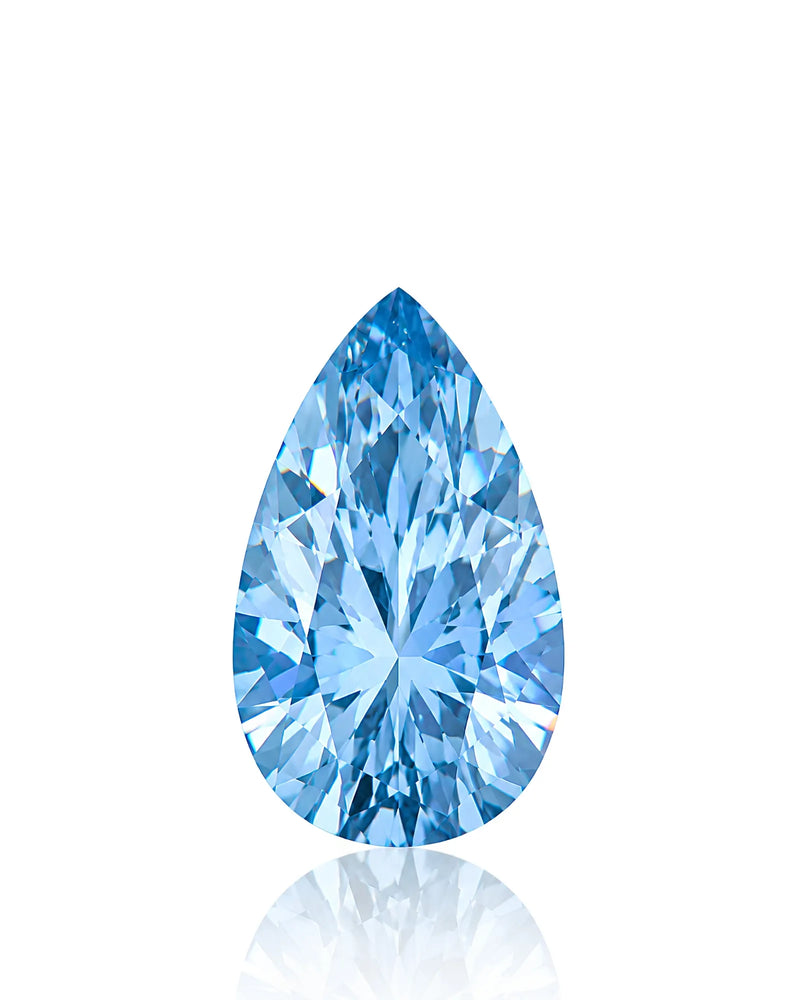
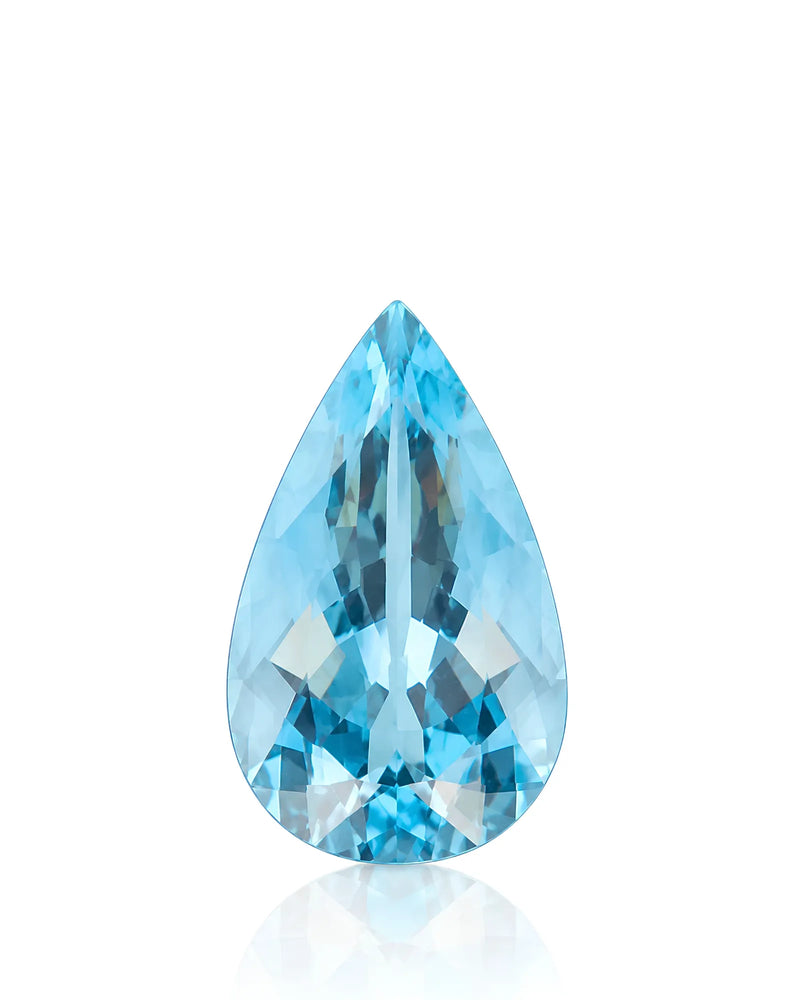
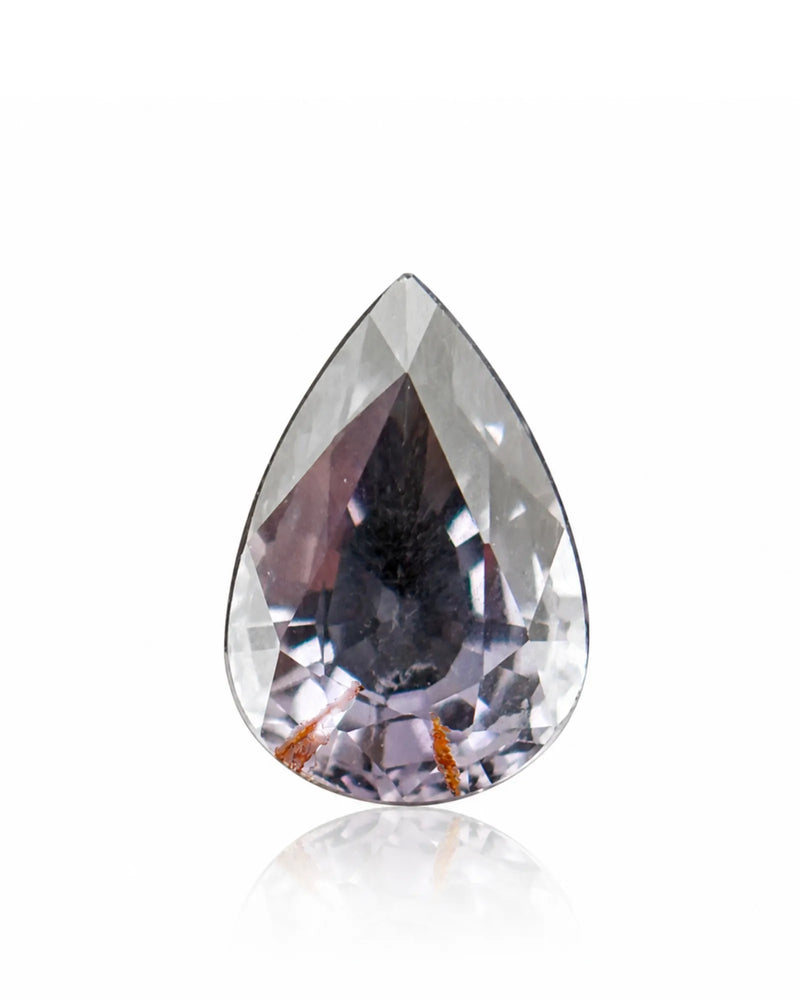
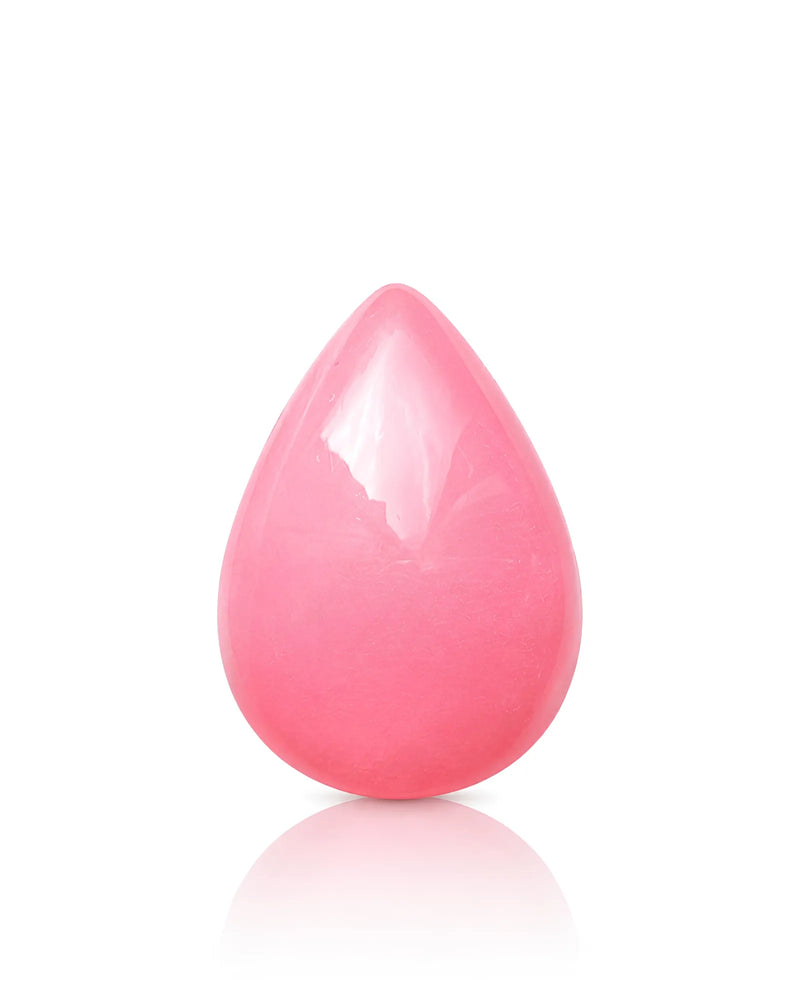
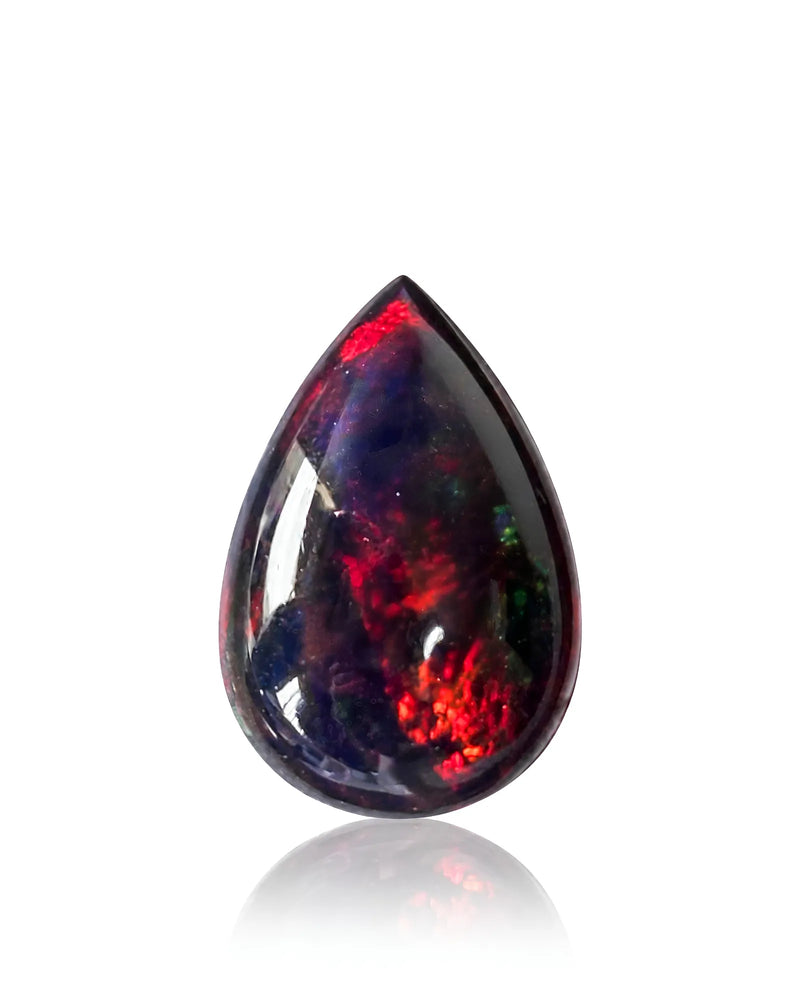
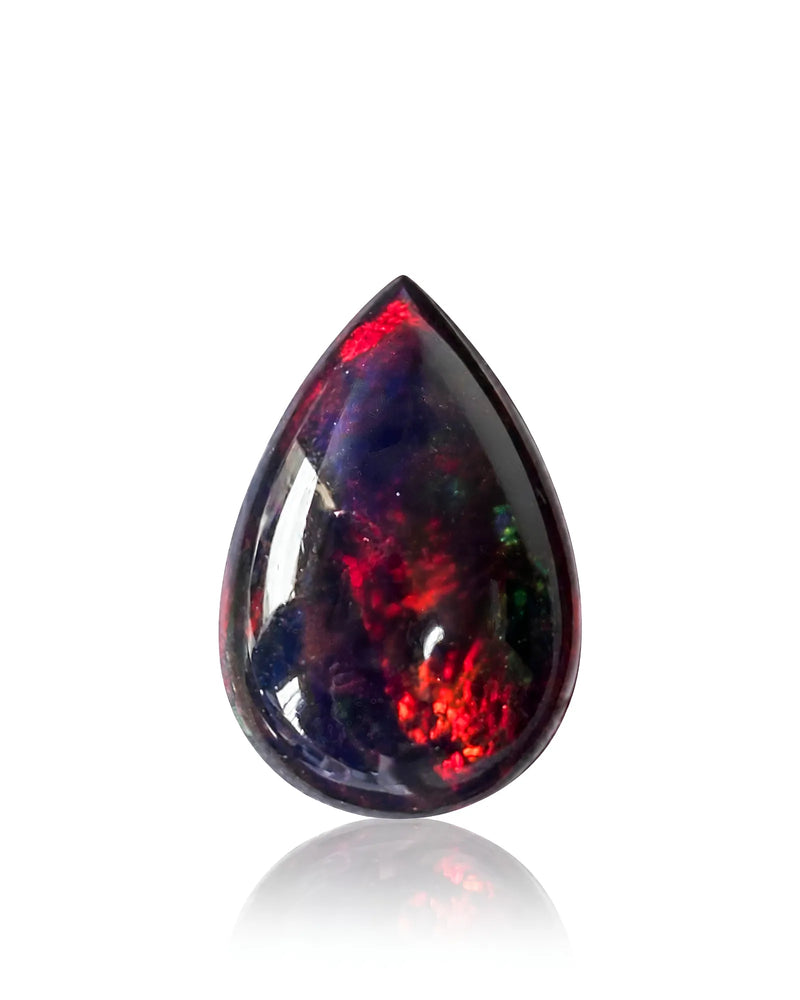
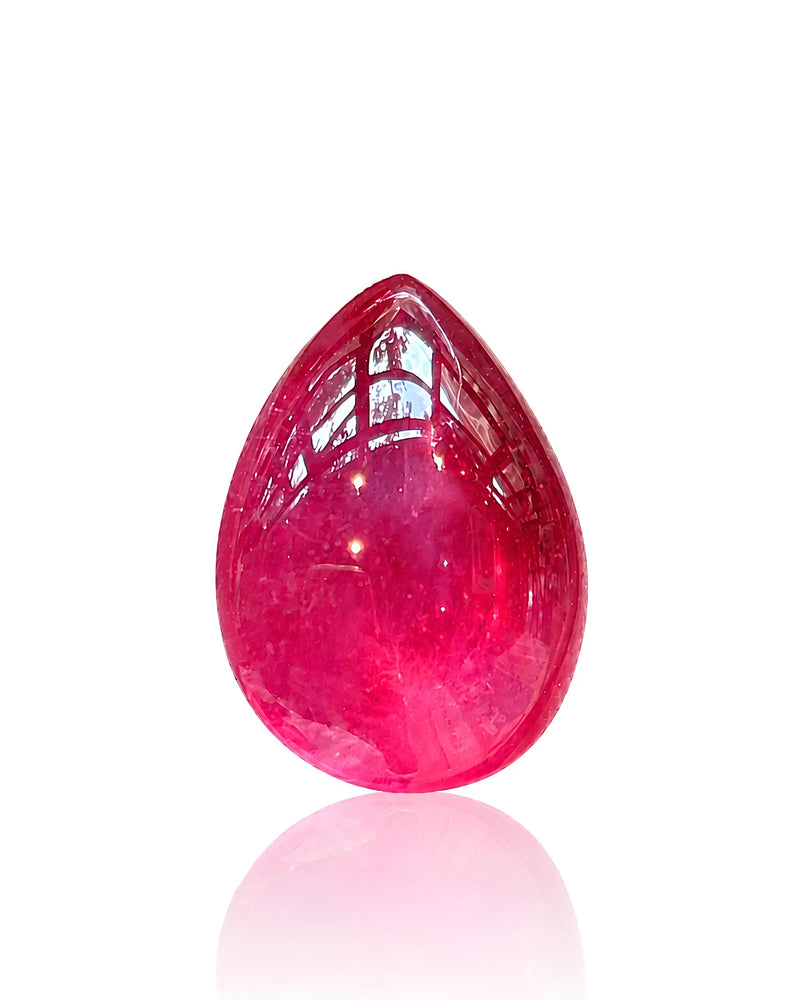
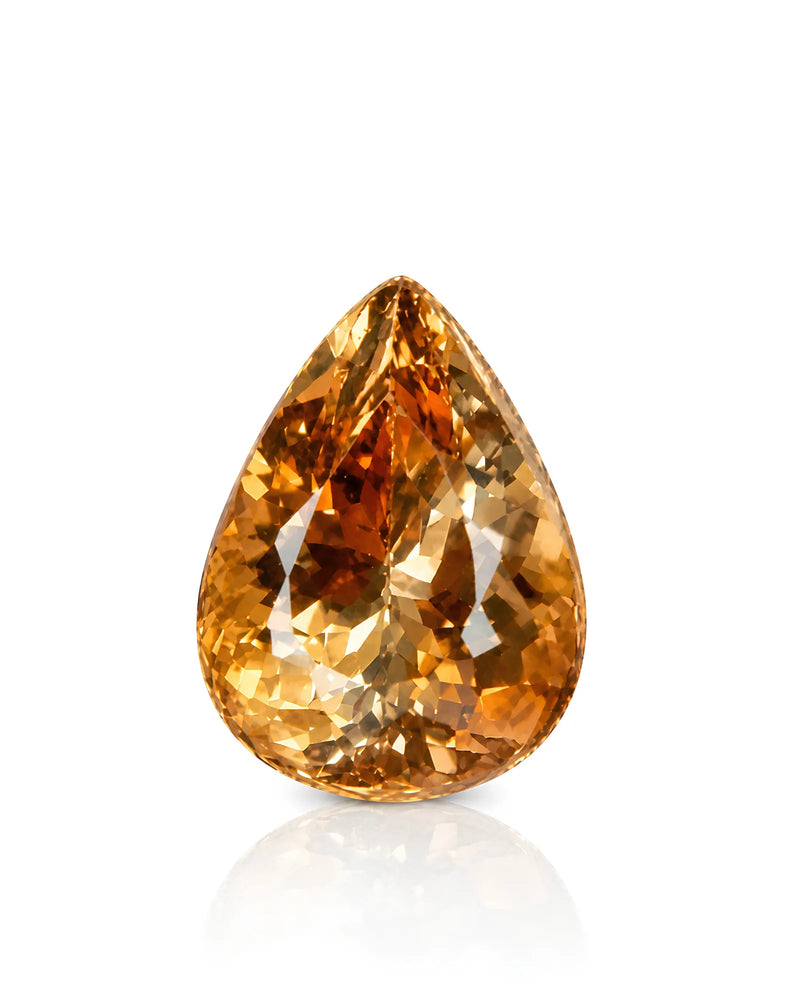
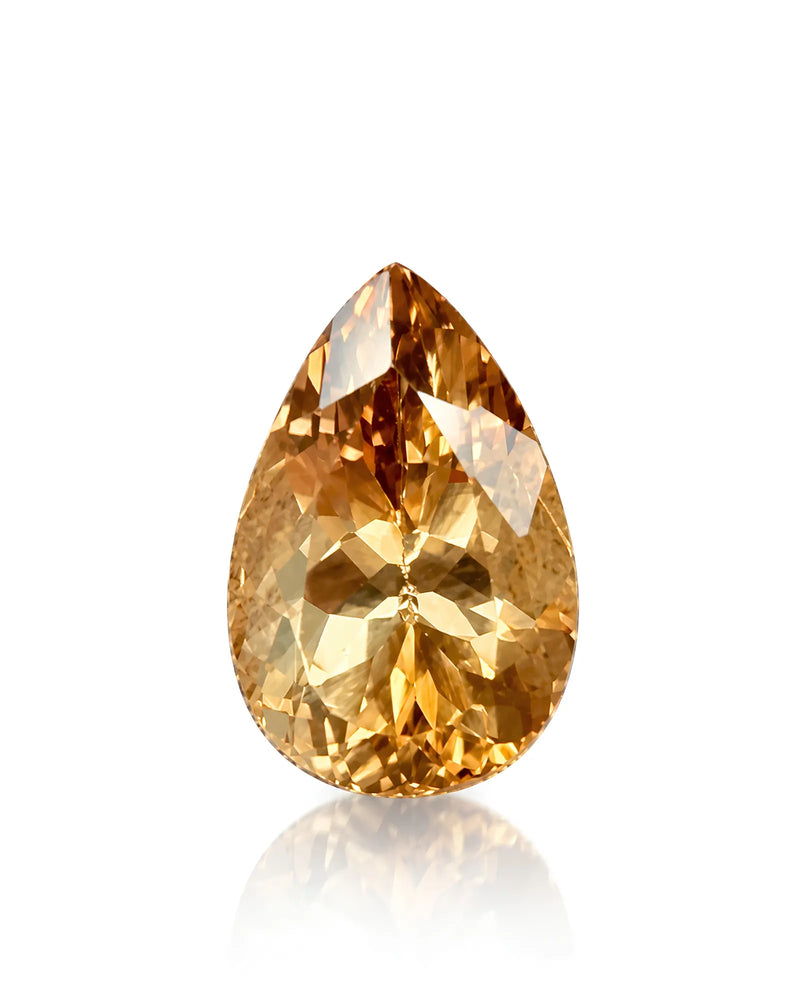
A pear is a modified brilliant — the optical arrangement of the round brilliant, its facet pattern stretched to fill an outline that is round at one end and comes to a point at the other. It is a hybrid: the rounded head behaves much like a round brilliant, the tapering end like half a marquise. Everything interesting about the shape, and every difficulty in buying one, follows from reconciling those two halves in one stone.
The shape is traditionally credited to Lodewyk van Berquem, a Flemish polisher working in Bruges in the fifteenth century, who is also said to have introduced symmetrical faceting. The attribution deserves caution: it rests on later accounts rather than contemporary documents, and the pear in anything like its modern form took centuries more to settle. What is safe to say is that it is old and has never gone out of use.
It is also called the pendeloque, from the French for a drop or pendant ornament, and in plain English the teardrop. Our pear shaped gemstones are grouped by outline rather than by species, which is the sensible way to shop for a shape.
The Point Is the Whole Problem
Say it first, because everything else follows from it. A pear has one sharp apex, and that apex is the most vulnerable piece of geometry in commercial gem cutting. The reason is mechanical: where two curved girdle edges converge, the material narrows to a thin wedge with facet edges meeting at an acute angle, and any force applied to the stone — a knock against a door frame, a setter's tool, the attrition of daily wear — concentrates there rather than spreading across a broad edge. A round brilliant has no such feature. A pear has exactly one, and it is the first thing to chip.
This is not a defect of the shape but the price of it, and it is managed rather than eliminated. A V-claw — a claw formed into a V that wraps the point from both sides and covers it from above — is the standard answer, and a pear set in a ring without one is worn on borrowed time. A bezel does the same with a wall of metal. The rest belongs to the cutter: a point finished with a tiny facet across the tip is more robust than a needle-sharp one.
Two consequences follow. The setting is part of the stone's survival rather than decoration, and the more brittle the species, the more the point matters.
Why the Outline Flatters
Elongated shapes look larger than round stones of the same weight because they spread more material across the face-up view instead of burying it in depth. That property is face-up spread. Worn point-outward along a finger, the outline also draws the eye lengthways, which is the source of the claim that a pear lengthens the hand. It does, mildly.
The qualification is the same one we give the oval. The gain is real but modest — a few per cent more face-up area per carat than a well-proportioned round, not a category more — and it evaporates in a deep stone, since a pear cut with a heavy pavilion to save weight can spread less than a round of the same weight. So compare millimetres, not carats. Two stones both described as three carats can differ by well over a millimetre in length, and the larger measurement is the one that looks bigger on the hand.
Length-to-Width Ratio
The length-to-width ratio is length divided by width at the broadest part of the head. It is the single number that tells you what a pear actually looks like, and carat weight will not reveal it.
The useful range runs from roughly 1.45 to 1.75. Below about 1.50 the stone reads short and full — plump, broad-shouldered, with a stubby taper, and closer to a heart in feeling. Some want exactly that in a solitaire. Above about 1.70 the pear turns distinctly slender, elegant in a drop earring, and closer in character to a marquise. Around 1.55 to 1.65 is where most buyers settle without being told to.
Elongation costs something. A longer, narrower pear has a more acute and so more fragile apex, and a longer run of shallow pavilion at the narrow end, which makes the dark band described below more visible. Very short pears have the opposite problem: a wide belly looks heavy and the point gets lost. None of this makes one ratio correct — it is taste — but it must be checked, because weight alone tells you nothing about it.
The Bow-Tie
Look at almost any elongated brilliant face-up and you will see a darker band across the centre. That is the bow-tie, the most common complaint about the shape and the least understood.
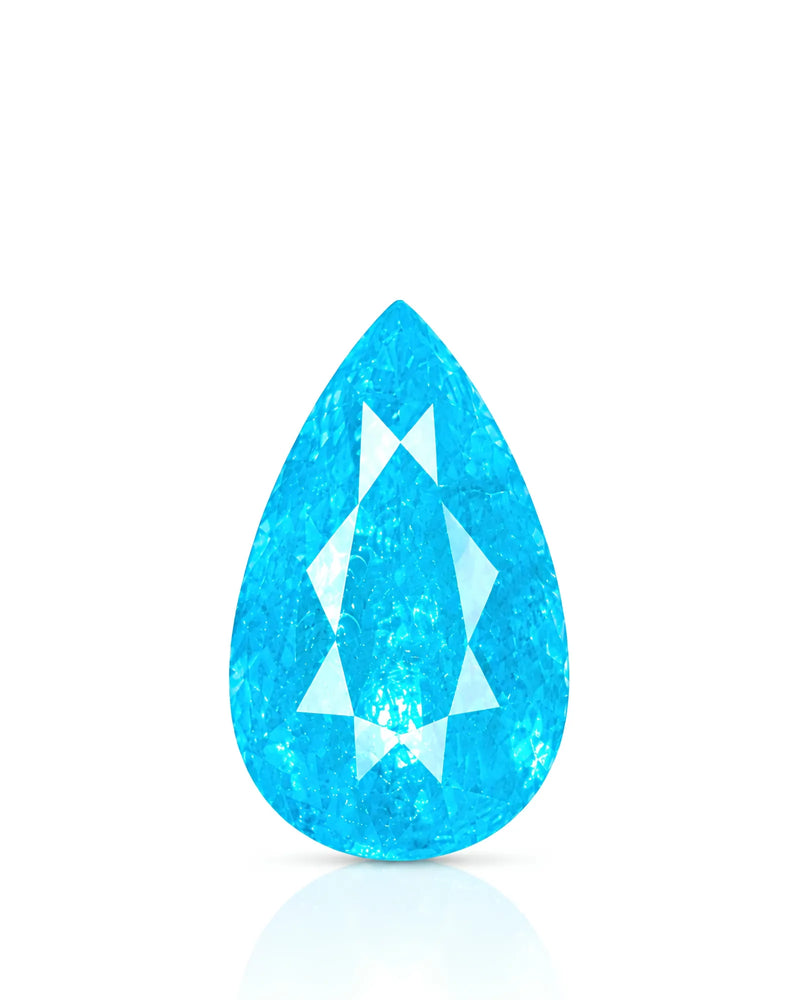
It is not an inclusion or a flaw in the material. It is a shadow, and the thing casting it is usually the viewer. A brilliant returns light by bouncing it off the pavilion and back through the crown, which requires light arriving at the right angles. Stretch the shape and some pavilion facets end up tilted so that the light they need would have to come from directly in front of the stone — where the wearer's own head and shoulders are. Those facets return darkness instead.
Nearly every pear has some. The question is never whether but how severe: a faint softening across the waist is normal and can add useful contrast, while a hard black band swallowing a third of the stone is a cutting failure and should be priced as one. Severity depends on pavilion angles and how evenly they are graduated along the taper, which is why two pears of identical ratio and certificate can look entirely different. A bow-tie will not appear in a still photograph lit evenly from above, because that lighting is chosen to eliminate it. It shows in the hand, and in honest video where the stone is tilted and rocked.
Symmetry Faults Specific to the Pear
This is where pears are won and lost. A pear is the easiest shape in which to see poor symmetry and the hardest in which to hide it, because the eye has an axis and a mirror line to check against and does the checking unprompted. Three faults matter. The first is point alignment: the apex must sit exactly on the axis running through the centre of the rounded end. Off by a fraction of a millimetre and the stone reads as leaning, and once seen it cannot be unseen. The second is mirroring. The shoulders — the curved sections where the head turns into the taper — must be true reflections of each other; if one is fuller, the outline looks pulled sideways.
The third is the shape of the shoulders themselves, a matter of degree rather than error. Shoulders too high, rising abruptly from the widest point, give the head a squared-off look that fights the curve. Shoulders too flat leave a featureless droplet with no shape at the top. Between them is a curve that looks inevitable, and there is no measurement for it — it is judged by eye. All three faults show in a plain face-up photograph, and none appears reliably in a certificate.
Which Gemstones Suit a Pear
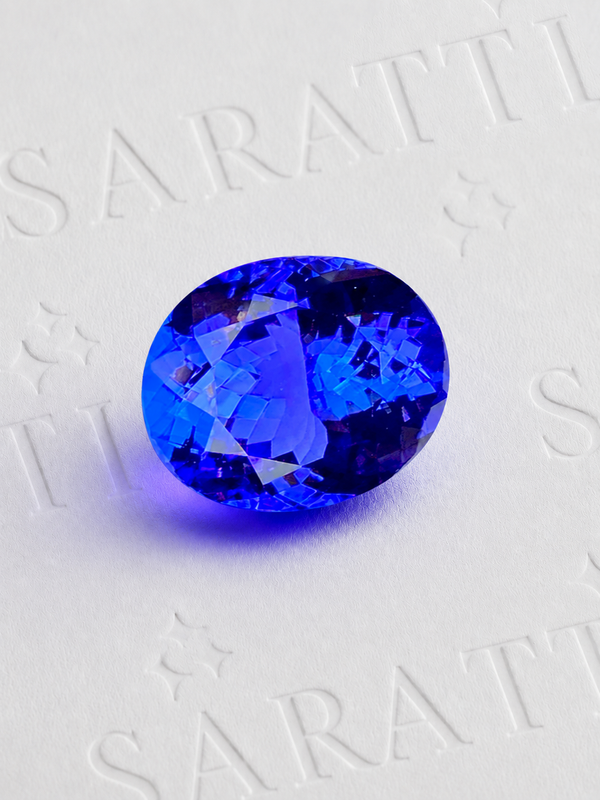
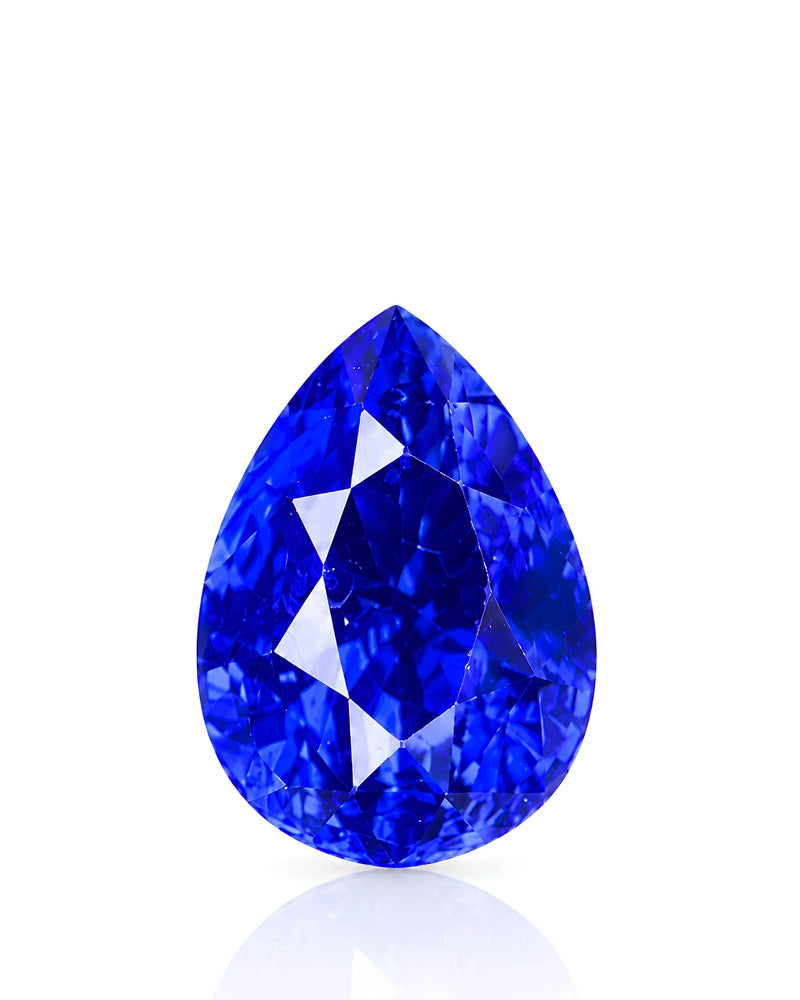
The shape is not equally kind to every species, and the reasoning divides three ways. Some materials are pleochroic, showing different colours along different crystal directions, and there the cutter's freedom over the outline is constrained before aesthetics enter the argument. Tanzanite is the clearest case: it shows blue, violet and a burgundy tone along three axes, and orientating the rough to face up blue dictates where the long axis must run. Kunzite behaves similarly, its best pink along one direction only. In such stones ratio and point placement are compromises with the crystal, which is why the range of ratios offered is narrower than in corundum.
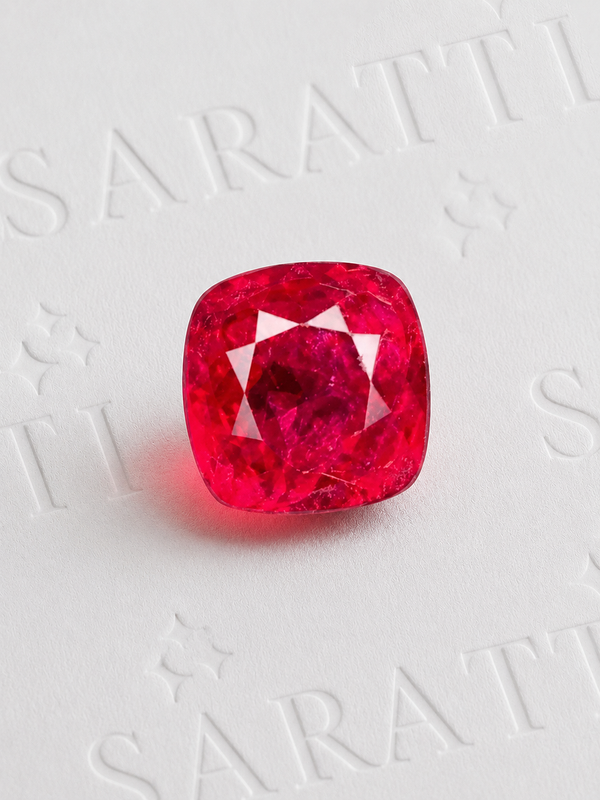
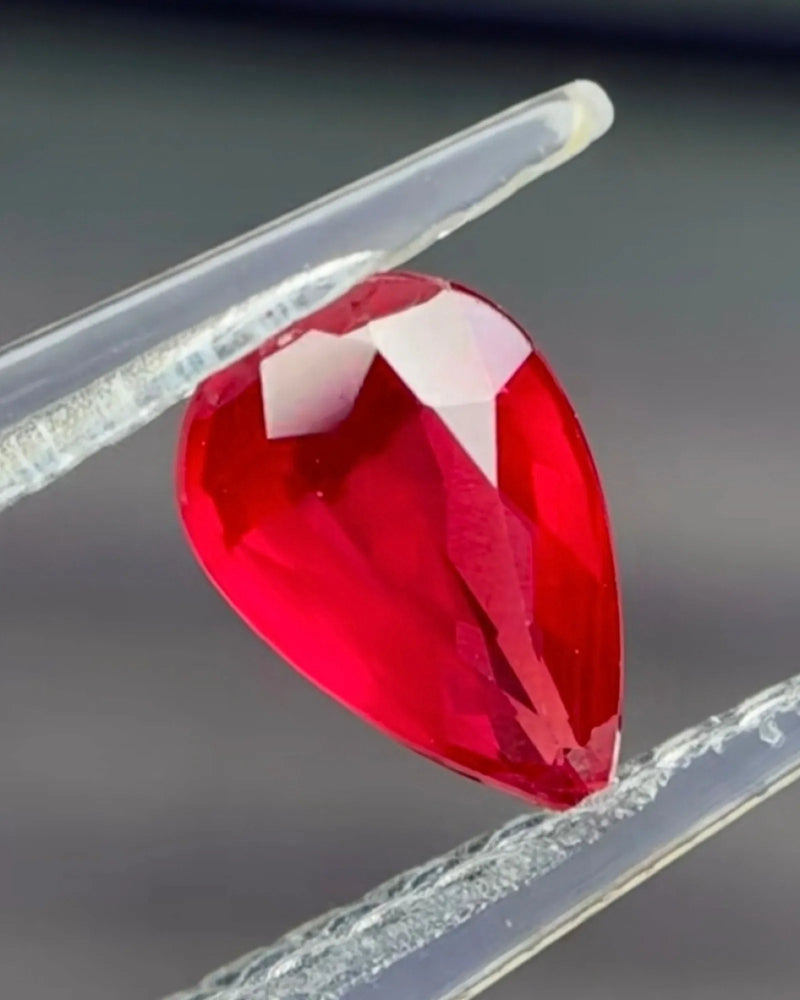
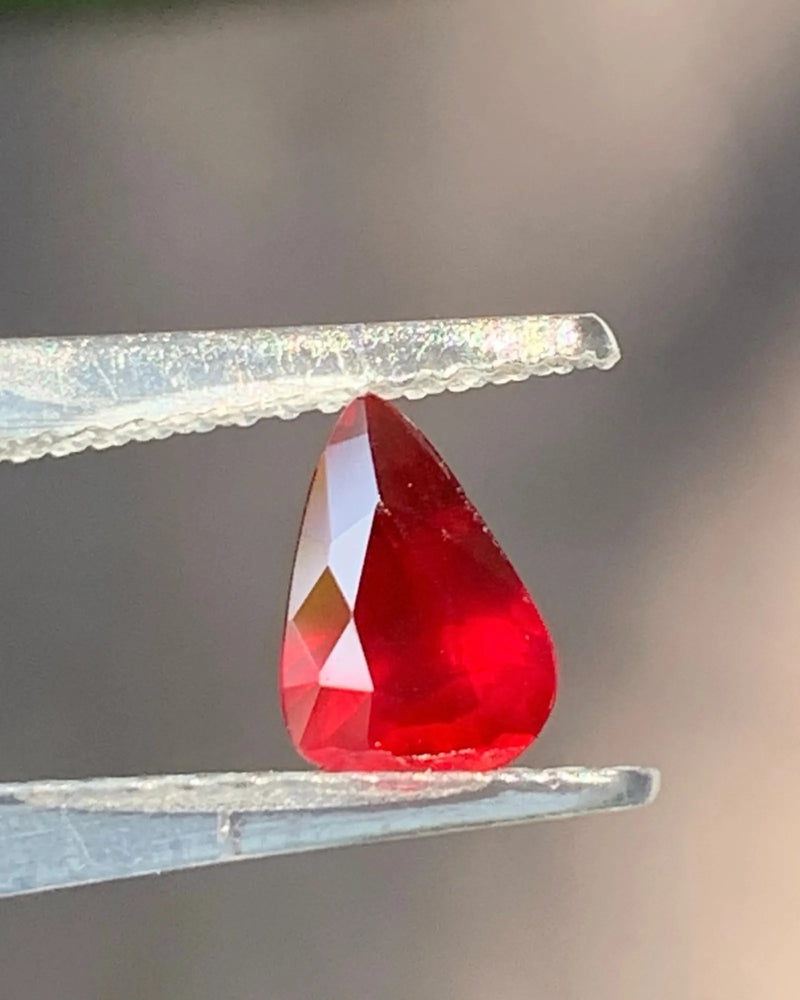
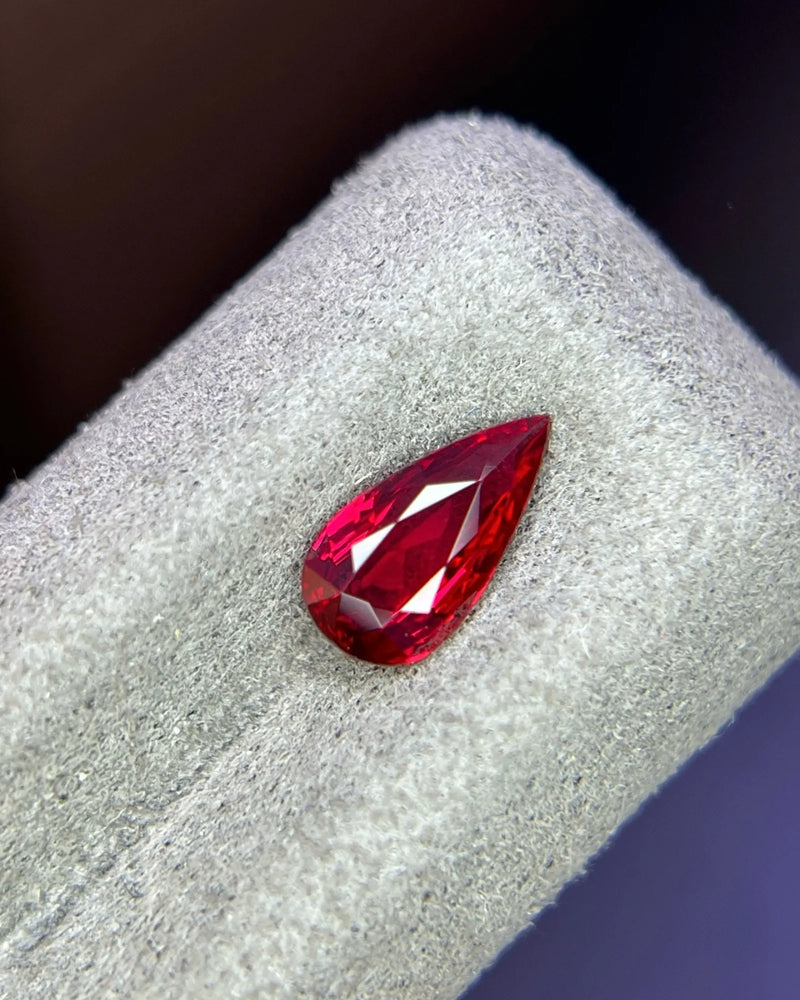
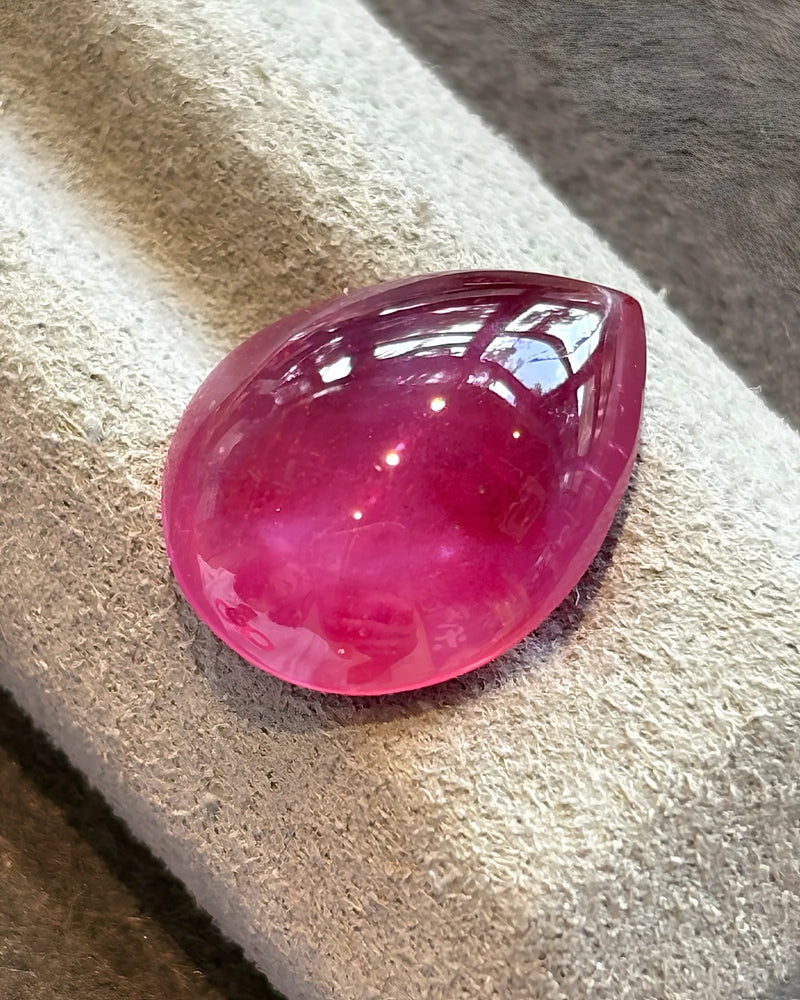
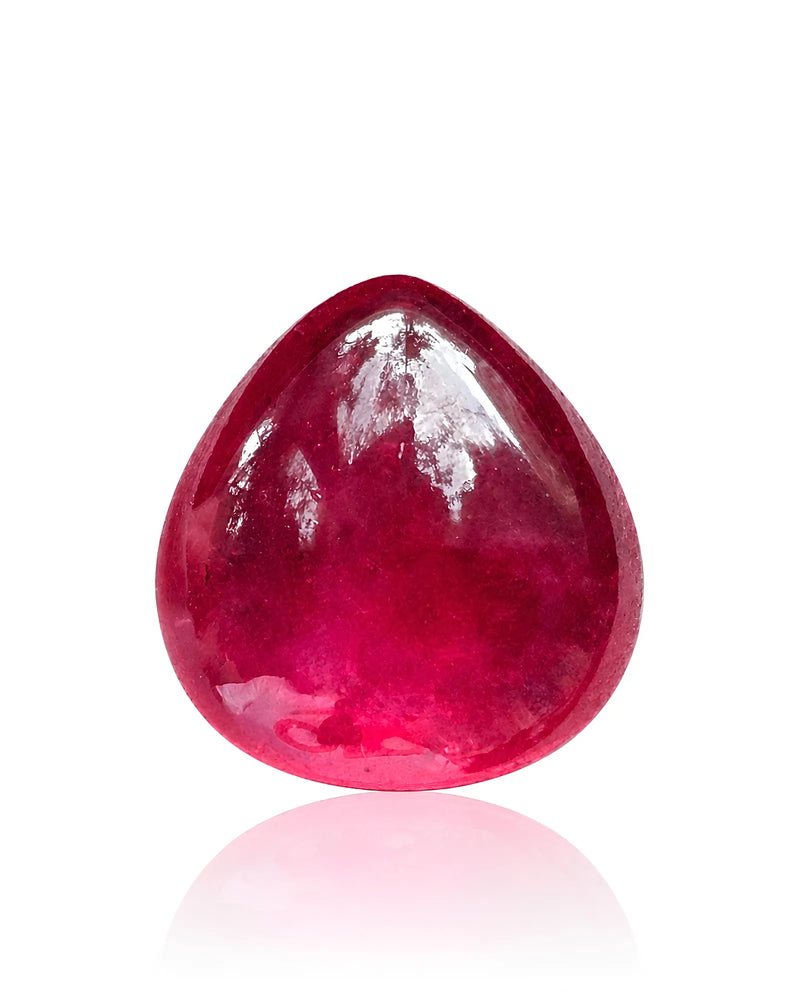
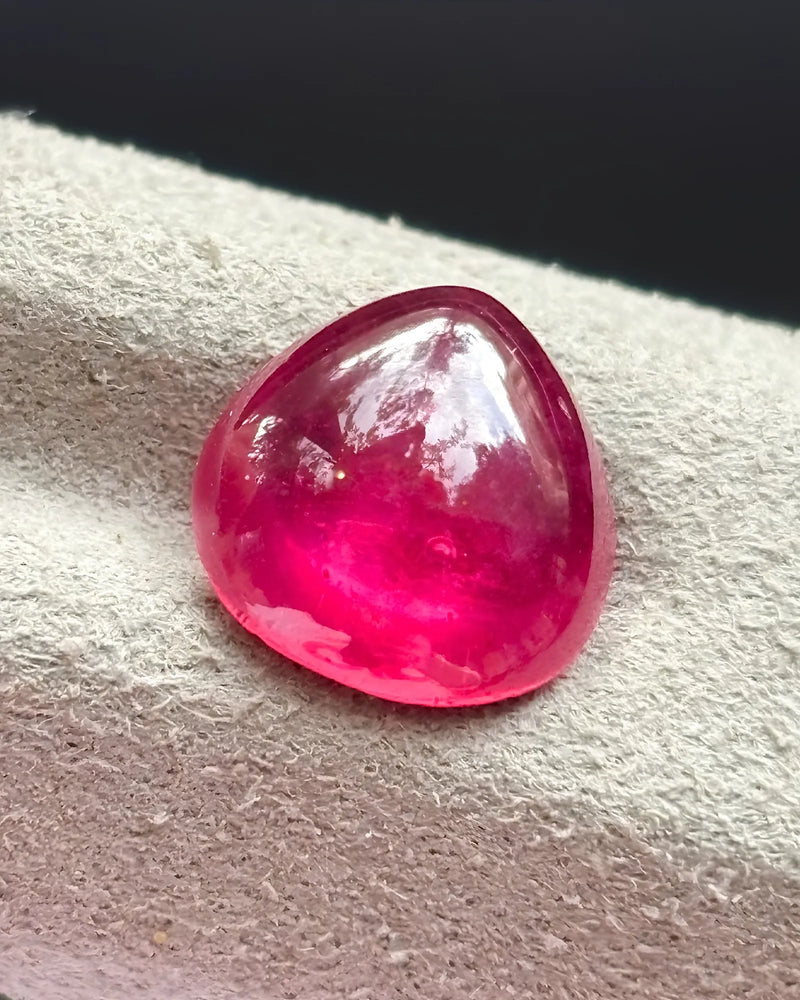
Second, and more importantly, brittleness. Emerald with its internal fractures, tanzanite with its cleavage, topaz with perfect basal cleavage, and opal, soft besides — in all four a sharp apex is a real liability, and the shape dictates a protective setting. Corundum has no such problem: a pear in sapphire or ruby at Mohs 9 is as durable as the shape allows, and our note on why the cut of your ruby matters sets out what the teardrop does for a red stone.
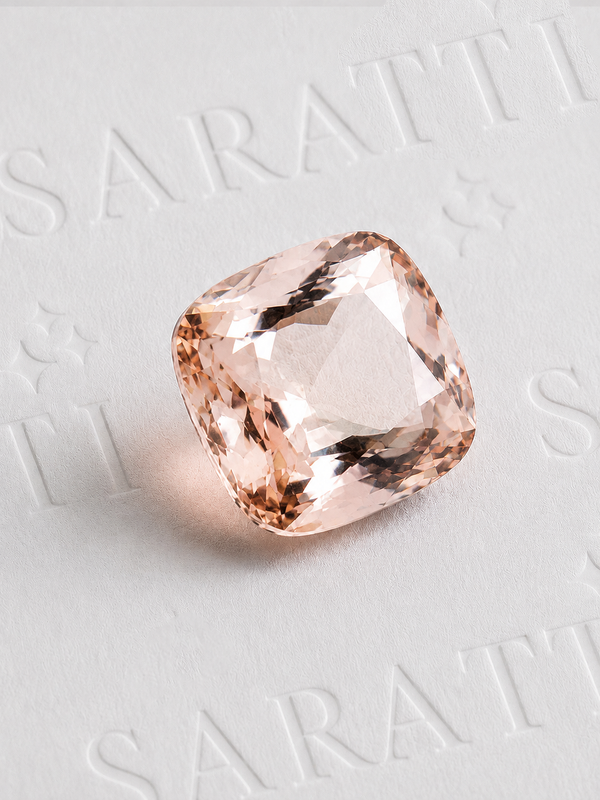
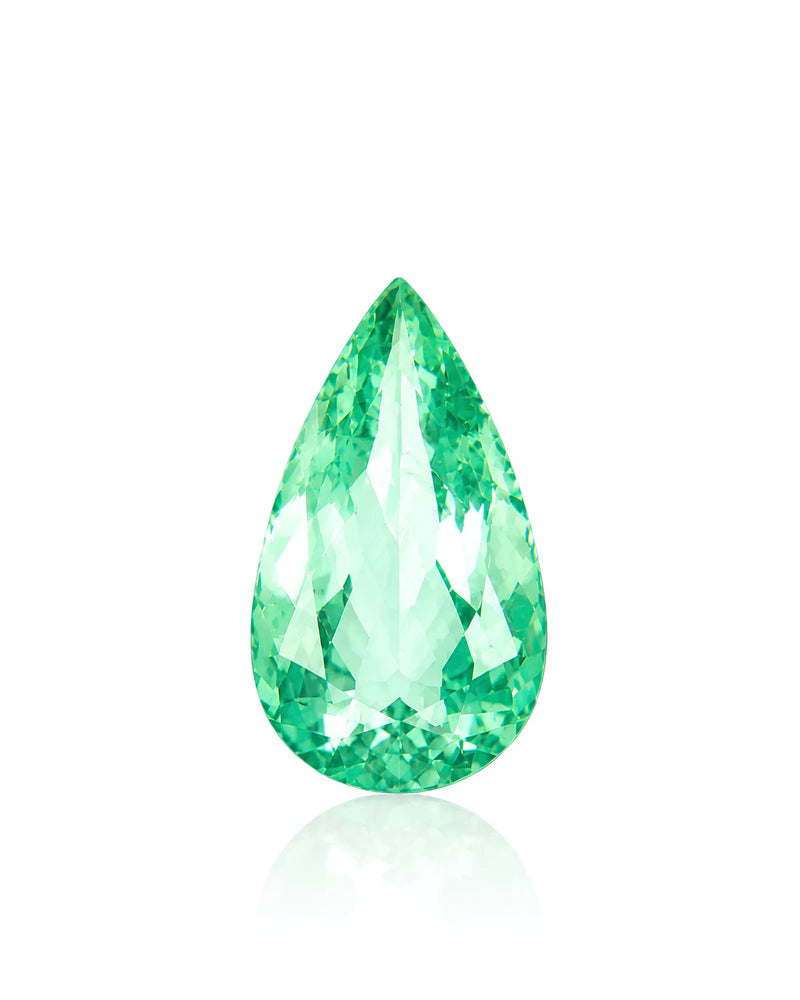
Third, pale material benefits. Colour intensity depends on the path light travels through a stone, and an elongated brilliant with a well-judged pavilion gives light a longer run than a shallow round of the same weight, so pale aquamarine, morganite and light sapphire read deeper as pears. All of which points to one conclusion: for the fragile species, a pear belongs in a pendant, protected from most of what damages ring stones. The shape was designed for suspension in the first place.
Setting a Pear
A V-claw at the point is close to compulsory and the first thing to look for in any finished ring. Beyond that, claw count follows the outline: four suit a fuller pear, while an elongated one needs five or six so the long sides cannot rock in the mount. A bezel gives the best protection and suits brittle material; a half-bezel capping the point and head while leaving the sides open is a fair compromise between security and light.
Orientation is a design decision with practical consequences. Point-up, apex towards the fingertips, is the classic ring position and the most flattering to the hand, but it puts the point where knocks happen. Point-down protects the apex behind the knuckle. East-west, set across the finger, makes the point the most exposed feature on the ring and should be kept for hard species in a bezel. In a pendant the question is only whether the point hangs downwards as a traditional drop, or upwards from a bail at the head.
Judging a Pear Before You Buy
Ask for millimetre dimensions and work out the ratio yourself; never accept a weight alone. Look at the outline face-up in a straight, uncropped photograph and check that the point sits on the centre line, that the shoulders mirror each other, and that the long sides run cleanly.
Then ask for video. A bow-tie only reveals itself in motion, and so does windowing — a see-through patch where the pavilion is too shallow to return light and you can read through the stone. In a pear it appears at the narrow end first, because that is where a cutter chasing weight is tempted to leave the pavilion flat. Watch whether the taper stays alive as the stone tilts or goes glassy.
Finally, examine the point under magnification and ask whether it is abraded. Small chips at the apex are common in stones previously set, and a V-claw hides them once mounted. If the seller cannot show you the point clearly, that is an answer in itself. The buyer's guide to pear shaped gemstones covers these checks at length, and what we disclose is set out in how SARATTI grades gemstones.
Choosing a Pear
Decide first where the stone will live. A pendant or drop earrings opens the shape to the fragile species and lets you take a longer ratio without worrying about the apex; a ring worn daily narrows the field to hard, tough material and makes the V-claw or bezel non-negotiable. Then choose the outline before the species, and judge what is offered in it on symmetry and bow-tie before anything else, because neither is correctable after cutting.
Every stone here is listed individually, with its own measurements and images, because in this shape the individual stone is the only thing that can honestly be described. Only part of what we can reach is listed online. If what you want is not listed, describe it, and we will go and look.