


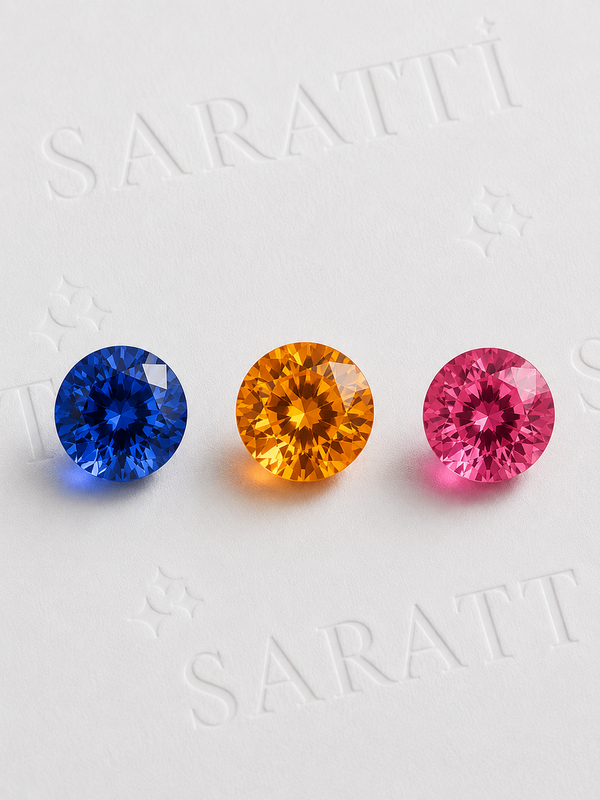
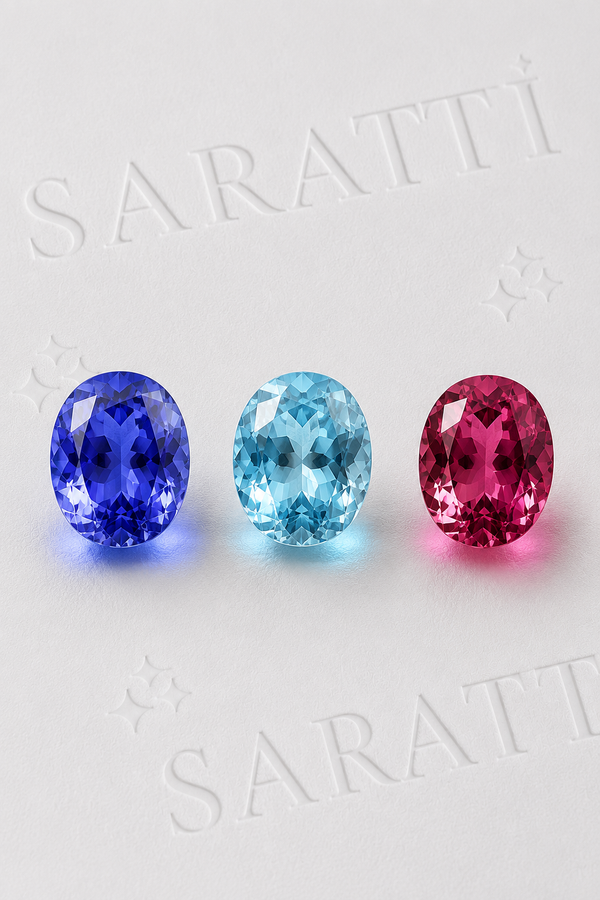
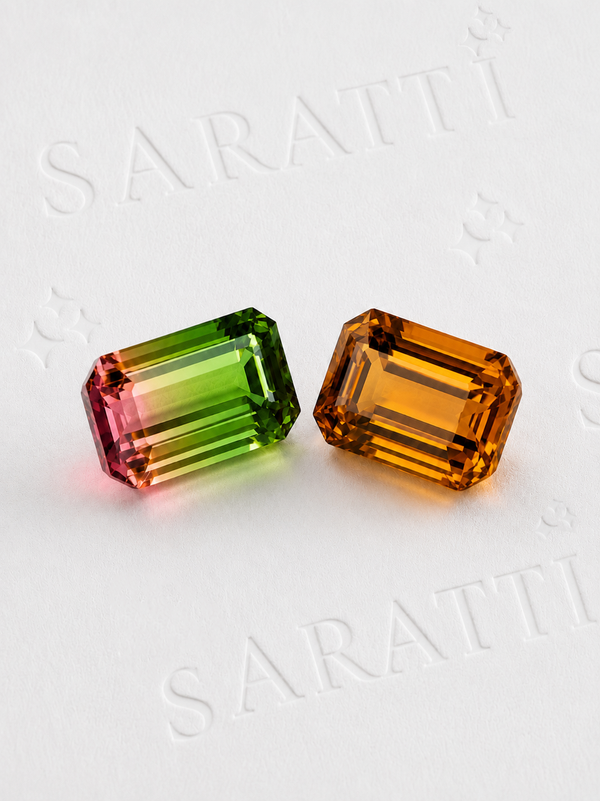
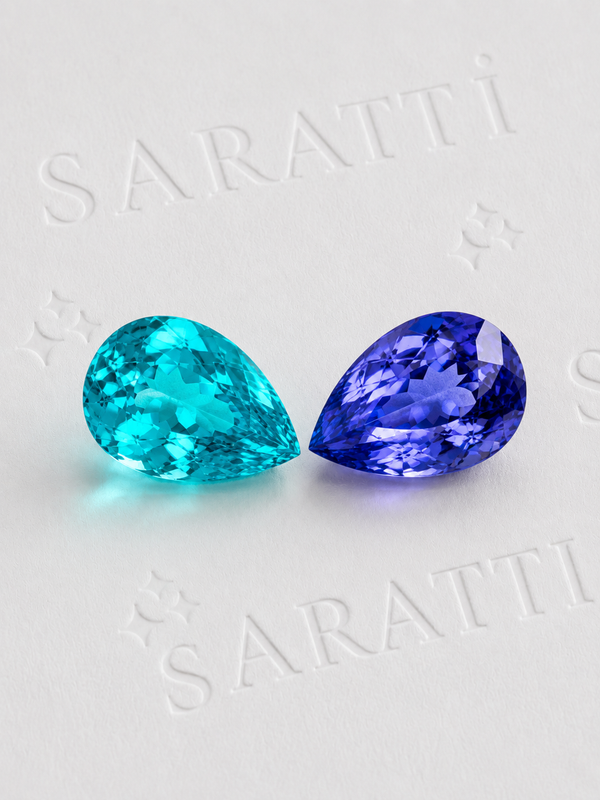
Few gemstones create the same immediate impression as Paraiba tourmaline. Its electric, almost illuminated color has made it one of the most coveted stones in the fine jewelry world, and that fascination is precisely why Paraiba tourmaline price per carat varies so dramatically. A small, softly colored stone may sit in one price bracket, while a vivid, copper-bearing gem of fine origin and strong clarity can command a figure that feels closer to a collector’s object than a conventional colored stone purchase.
 For buyers, collectors, and anyone researching a Paraiba tourmaline price guide, the most important thing to understand is that value is never set by carat weight alone. Color, origin, treatment, clarity, cut, certification, and rarity all shape the final number. The market rewards beauty first, but it also rewards proof: proof of natural origin, proof of copper-bearing chemistry, and, in many cases, proof of geographic source from a respected laboratory.
What Is Paraiba Tourmaline?
Paraiba tourmaline belongs to the tourmaline mineral family, but it occupies a rarefied category within it. In modern gemological terms, the name refers to a copper- and manganese-bearing tourmaline whose color falls within a recognized range of vivid blue, violet-blue, greenish blue, bluish green, or green. GIA notes that the trade definition centers on both chemistry and appearance, not chemistry alone.
The gemstone was first discovered in Brazil in the late 1980s, in the state of Paraiba, and its visual signature quickly separated it from nearly every other colored gemstone on the market. Later, copper-bearing material was identified in Nigeria and Mozambique as well, expanding supply but not eliminating rarity. In fact, Brazilian stones retained an aura of prestige, while fine African material created a broader but still highly selective market.
 Why Paraiba Tourmaline Is So Valuable
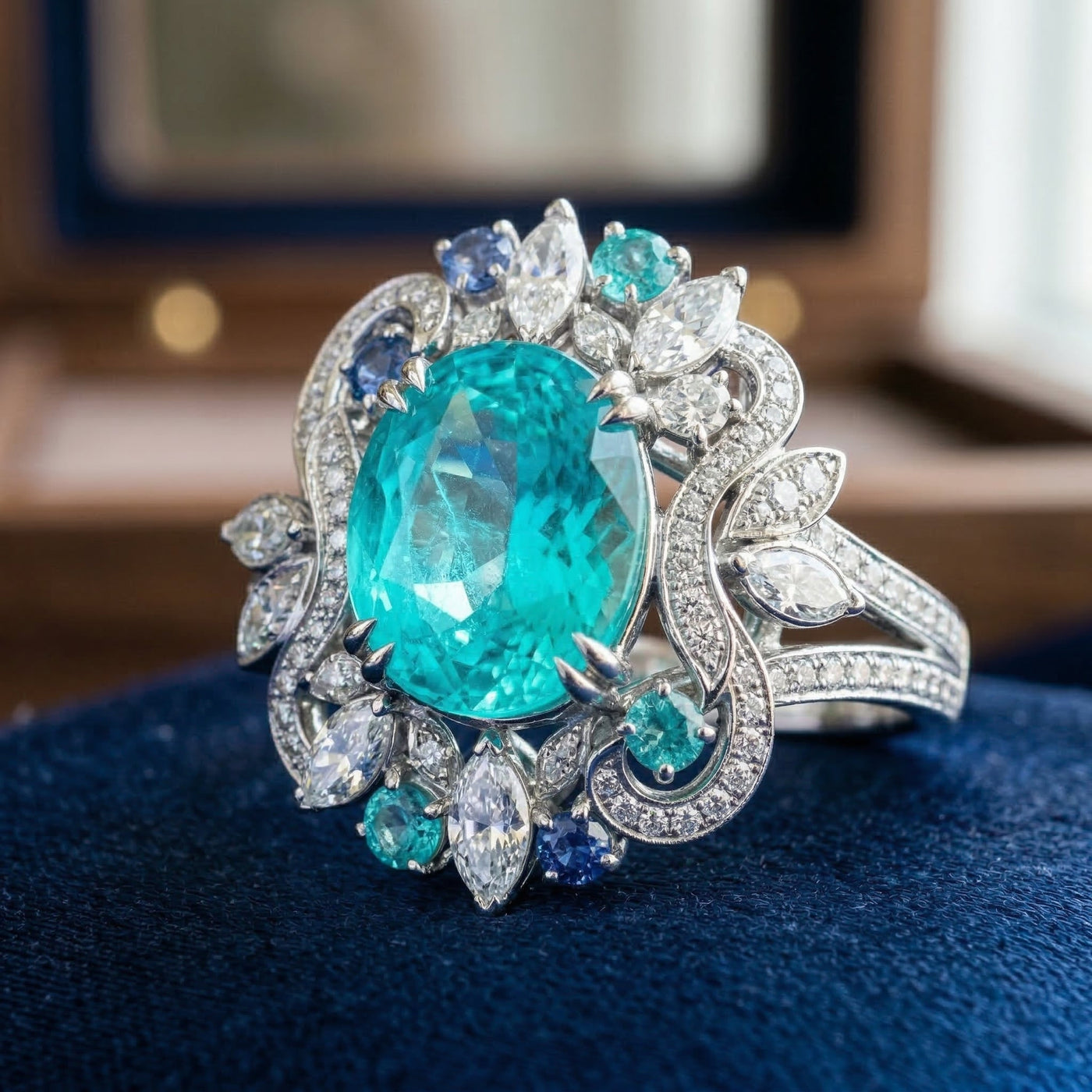
The answer begins with rarity, but rarity alone is not enough. Paraiba tourmaline is prized because its best stones combine scarcity with a color effect that is unusually vivid even by colored-stone standards. SSEF describes the finest examples as possessing the celebrated “neon” or “electric” blue appearance that is not known from any other gemstone in nature in quite the same way.
That color comes from copper, with manganese also playing an important role. Because the market places exceptional emphasis on this optical character, Paraiba tourmaline gemstone value rises sharply when a stone shows strong saturation, lively brightness, and a clean, glowing face-up appearance. Buyers are not simply paying for a blue stone; they are paying for a very particular kind of light performance and chromatic intensity.
Luxury demand has also pushed values higher. The Financial Times reported that prices for desirable Paraiba stones had doubled or more over a period of recent years as high jewelry houses and serious collectors intensified interest while supply remained constrained. That helps explain why rare Paraiba tourmaline price levels can feel dramatically higher than those of more common tourmalines.
 Paraiba Tourmaline Price Per Carat: A Realistic Market View
Any honest discussion of Paraiba tourmaline cost per carat has to begin with a caution: there is no single fixed market rate. Prices shift according to quality, origin, treatment status, and the sales channel. Wholesale, retail, dealer asking prices, and auction results can all differ substantially.
That said, broad market observations are still useful. Trade-facing and retail-facing pricing references show that lower-grade or smaller stones can begin in the hundreds or low thousands of dollars per carat, especially when color is lighter, inclusions are obvious, or origin prestige is lower. Fine Mozambique stones commonly move into the several-thousand to low-five-figure range per carat, while vivid Brazilian stones can reach well into the tens of thousands per carat. Exceptional examples, especially larger stones with remarkable color and documentation, can exceed those figures by a considerable margin.
Auction evidence reinforces how wide that spectrum can be. Christie’s reported a December 10, 2025, result of $4.223 million for a Tiffany & Co. necklace featuring a 13.54 ct Paraiba-type tourmaline and matching earrings, describing it as a world auction record for a Paraiba tourmaline. While jewelry auction prices should never be treated as a simple per-carat formula for loose stones, they do show how exceptional provenance, design, and stone quality can move Paraiba into a very different tier of the luxury gemstone market.
Typical Paraiba Tourmaline Price Ranges
While every gemstone must be evaluated individually, broad market observations suggest the following approximate ranges:
| Quality Level | Typical Price Per Carat | What to Expect |
|---|---|---|
| Commercial quality | $500 – $3,000 | Lighter color, may be included; ideal for everyday fashion jewelry. |
| Fine Mozambique | $3,000 – $15,000 | Vivid color, good clarity; an excellent balance of beauty and value. |
| Exceptional Mozambique | $15,000 – $50,000+ | Intense neon color, eye-clean; a true collector's stone. |
| Top Brazilian | $50,000 – $100,000+ | The pinnacle of rarity and color; an heirloom investment. |
Prices can vary significantly depending on color intensity, clarity, size, treatment status, and laboratory documentation.
The Biggest Price Factor: Color
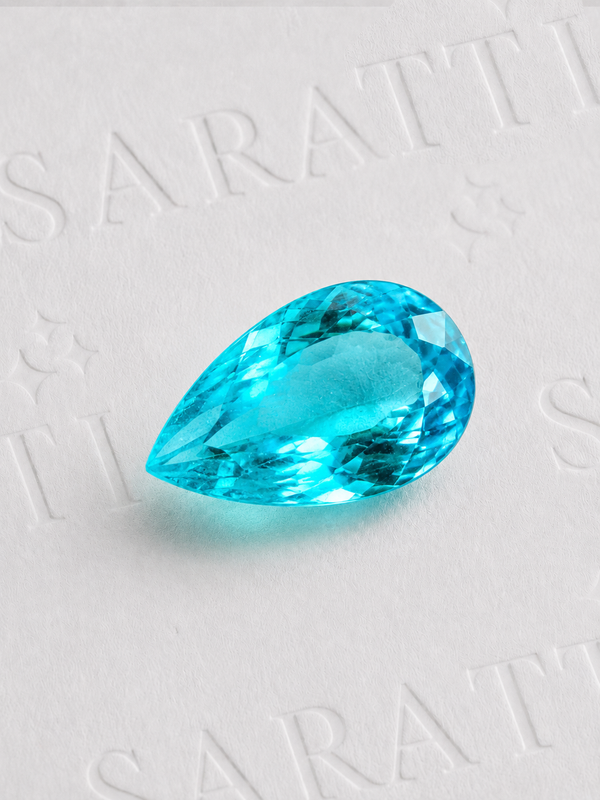
If you want to understand Paraiba tourmaline color value, start here: color is usually the strongest driver of price. The market consistently rewards gems with vivid electric blue, neon blue-green, or intensely luminous green-blue tones. Stones that appear bright from across the room will often outperform heavier stones with weaker or grayer color.
 This is why neon blue Paraiba tourmaline price searches so often lead to much higher numbers. The finest gems appear almost internally lit, with medium-light to medium tone and strong saturation. When color becomes too dark, too gray, too included, or too washed out, value usually softens. In Paraiba, beauty is not merely hue; it is hue plus saturation plus brightness.
It is also worth noting that not every copper-bearing tourmaline qualifies visually as “Paraiba” in the stricter gemological sense. SSEF has emphasized that lightly saturated copper-bearing stones may fall outside the color range it considers appropriate for Paraiba tourmaline. That distinction matters because labeling alone does not guarantee top-tier value.
Origin Matters: Brazilian vs Mozambique vs Nigeria
One of the most searched questions in any Paraiba tourmaline carat price comparison is whether Brazilian stones always cost more. In practice, Brazilian origin usually carries the strongest prestige premium, particularly when the color is vivid, and the stone is accompanied by respected documentation. The original Brazilian deposits gave the gem its name, and the market still tends to treat top Brazilian stones as the benchmark.
 That does not mean African stones are inferior by default. Mozambique has produced remarkable material, including large and vividly colored gems. GIA documented the significance of Mozambique copper-bearing tourmaline as early as the 2000s, and SSEF has more recently highlighted exceptional Mozambique stones of impressive size, color, and clarity. For many buyers, Mozambique Paraiba tourmaline price offers a more attractive balance between visual impact and relative affordability.
Nigeria also contributes to the market, though pricing tends to be more variable depending on color and documentation. GIA’s chemical fingerprinting work showed that copper-bearing tourmalines from Brazil, Nigeria, and Mozambique can be separated analytically, which helps explain why Paraiba tourmaline origin value remains such an important part of certification and pricing.
Clarity, Transparency, and the Reality of Inclusions
Like many prized colored stones, Paraiba tourmaline often contains inclusions. GIA’s work on Mozambique material noted partially healed fractures and hollow tubes as common internal features, and auction descriptions of important stones frequently mention slight inclusions, minor clarity enhancement, or similar qualifiers.
Still, Paraiba tourmaline clarity value matters greatly. Eye-clean stones with strong transparency are rarer and correspondingly more expensive, especially when color remains vivid. If two gems share similar color and origin, the cleaner stone will usually command the stronger price. Conversely, if inclusions interfere with brilliance, create visible fractures, or reduce transparency, they can materially affect Paraiba tourmaline value per carat.
In high-end Paraiba buying, clarity should be judged in context. A small amount of internal character may be acceptable if the color is extraordinary. The best stones are often not completely inclusion-free; they are valued because their inclusions do not meaningfully diminish the gem’s signature glow.
Cut Quality and Face-Up Beauty
A refined cut helps reveal what the market is actually paying for. Paraiba tourmaline is frequently evaluated face-up, meaning the buyer responds first to brightness, saturation, and liveliness rather than an abstract grading table. A well-cut gem minimizes windowing, distributes color attractively, and presents a shape that flatters both the stone and the setting.
This is why Paraiba tourmaline gemstone quality involves more than just hue and weight. Poor cutting can leave even a good stone looking sleepy. Fine cutting, by contrast, can enhance the apparent intensity of a gem and support higher Paraiba tourmaline retail price expectations. In practical buying terms, beauty in the hand often matters more than paper specifications alone.
 Carat Weight: Important, but Not by Itself
Carat weight certainly affects Paraiba tourmaline market price, but in this category it behaves differently than many buyers expect. A larger stone is not automatically more valuable if its color is weak or its inclusions are distracting. Yet when a Paraiba tourmaline combines larger size with vivid color and good clarity, the price per carat can rise sharply because those combinations are genuinely rare.
This is especially true in Brazilian material. Several pricing guides and dealer references suggest that top Brazilian stones above a few carats become extraordinarily scarce, which is why Brazilian Paraiba tourmaline price figures at the top of the market can feel so steep. Auction houses also underscore this pattern by attaching significant estimates to larger documented stones from Brazil or fine Mozambique material with premium color.
Treatments and Disclosure
Untreated Paraíba tourmalines can command higher prices, particularly when they display vivid neon color and strong transparency without enhancement. Stones that show this celebrated glow entirely as a result of natural geological conditions are extraordinarily scarce. In practice, truly fine Paraíba tourmalines that have not undergone heating are encountered only rarely in the market.
It is important to understand that the majority of Paraíba tourmalines have undergone heat treatment to refine or stabilize their color. Heating is widely accepted within the gemstone trade and is considered a routine process that helps many stones reach the vivid blue or blue-green appearance associated with Paraíba tourmaline.
For this reason, treatment alone rarely defines a stone’s value. In the life of a Paraíba tourmaline, collectors and gem professionals generally speak far more about color than treatment status.
In practice, color remains the single most important factor in Paraíba tourmaline pricing. A stone with extraordinary neon saturation and brightness will often command a stronger price—even if heated—than an untreated stone with weaker color.
Are There Synthetic or Lab-Created Paraiba Tourmalines?
Because Paraiba tourmaline can command very high prices, buyers often ask whether synthetic, lab-created, or imitation stones exist in the market. This is an important question, especially for anyone comparing stones online across very different price points.
In practice, the greater risk is often not a classic laboratory-grown Paraiba tourmaline, but rather misrepresentation. Some stones may be marketed using terms such as “Paraiba-colored,” “Paraiba-type,” or simply “Paraiba” without clear documentation of chemistry, treatment, or origin. Other listings may involve imitations or stones whose trade description suggests a rarity and value they do not actually possess.
That is why unusually low prices should always be approached with caution. In a gemstone category where natural copper-bearing chemistry, vivid color, and credible disclosure play such a major role in value, the difference between a properly documented stone and a loosely described one can be substantial.
For buyers, the safest approach is to focus on independent laboratory documentation. A respected gemological report can help confirm whether a stone is natural, whether it is copper-bearing, whether treatment is present, and, in some cases, whether a geographic origin opinion is offered. In the Paraiba market, verification is not a minor extra; it is one of the clearest protections a buyer has.
Why Certification Matters So Much
Paraíba is one of those gemstones where documentation can significantly influence confidence and value. Because the market cares deeply about whether a stone is natural, copper-bearing, and in some cases associated with a particular origin, independent laboratory reporting plays a central role in the buying process. Auction listings for important Paraíba jewelry frequently reference reports from laboratories such as GIA, SSEF, AGL, AIGS, GUILD, or Gübelin, often noting treatment disclosure, geographic origin opinions, or specific trade nomenclature.
It is also important to understand that different laboratories may use slightly different terminology. Depending on the laboratory’s classification standards and the characteristics of the gemstone, a report may describe the stone as “Paraíba tourmaline,” “Paraíba-type tourmaline,” or “copper-bearing tourmaline.” These variations reflect differences in reporting style rather than fundamental differences in the gemstone itself.
 For buyers, a credible laboratory report is often an essential part of the stone’s value proposition. When comparing Paraíba tourmaline prices from different sellers, always ask what documentation accompanies the gemstone. A loose stone supported by a respected laboratory report is not directly comparable to an uncertified listing described only with marketing language.
At the same time, buyers should understand that lower-priced stones—often those under a few hundred dollars or in the lower commercial price ranges—may not come with reports from major laboratories. In these cases, the cost of testing can exceed the value of the stone itself. Such gems are typically commercial-grade material, often showing lighter color, lower clarity, or less refined cutting. When purchasing in this category, buyers are generally relying more on the reputation and transparency of the jeweler than on formal laboratory certification.
At the higher end of the market, however, proper documentation can be the difference between a confident acquisition and an expensive misunderstanding.
Is Paraiba Tourmaline a Good Investment?
Paraiba tourmaline is often discussed as a collectible gemstone because of its rarity, distinctive color, and limited global supply. Exceptional stones with vivid neon color and credible documentation have attracted strong interest from collectors and high-jewelry houses, and market reports have noted meaningful price appreciation in the upper tiers of the category.
That said, gemstones are not uniform financial instruments. Value depends heavily on the individual stone. Color intensity, transparency, size, origin, treatment status, and laboratory certification all influence how a Paraiba tourmaline performs in the market.
For this reason, the most accurate way to view Paraiba tourmaline is as a collector gemstone rather than a guaranteed investment. The finest examples—those with remarkable color, strong clarity, and trusted documentation—can hold enduring appeal among collectors, but value remains highly dependent on quality and rarity.
How to Buy Well: A Practical Paraiba Tourmaline Buying Guide
For buyers looking to add a Paraíba tourmaline to their collection, it is important to focus on the qualities that truly determine value rather than simply reacting to price or size.
Color should always come first. The most sought-after stones display the vivid neon blue or blue-green glow that defines Paraíba tourmaline. After color, consider the gemstone’s brightness and transparency, followed by clarity, documentation, and finally origin.
A beautifully vivid Mozambique stone with strong transparency and proper certification can be a far better purchase than a Brazilian stone chosen only for its geographic prestige but lacking visual intensity.
Whenever possible, request a reputable gemological report. A proper report should confirm that the gemstone is natural, disclose any treatments such as heating, and in some cases provide an opinion on geographic origin. Depending on the laboratory’s standards, the stone may be described as Paraíba tourmaline, Paraíba-type tourmaline, or copper-bearing tourmaline.
Above all, judge the gemstone by its beauty. In the Paraíba market, a smaller stone with exceptional color and brilliance may command far greater value than a larger gem with weaker saturation. Understanding this principle helps explain the wide variation seen in Paraíba tourmaline prices across the market.
Conclusion
Paraíba tourmaline occupies a singular place in the gemstone world. It combines remarkable geological rarity with a visual intensity that few other gemstones can match. Its price per carat is shaped first by color, then further refined by clarity, cut quality, origin, size, treatment disclosure, and the strength of its certification.
The finest stones display an almost luminous appearance, as though light itself were captured within the gem. This distinctive glow is what ultimately defines the most desirable examples and explains why exceptional Paraíba tourmalines command such attention among collectors.
At SARATTI, our approach to Paraíba tourmaline is grounded in careful gemological evaluation, transparency, and thoughtful selection. Each gemstone is chosen for its beauty, its documentation, and its lasting significance—because truly exceptional stones deserve to be presented with the same level of care with which they were formed.


