


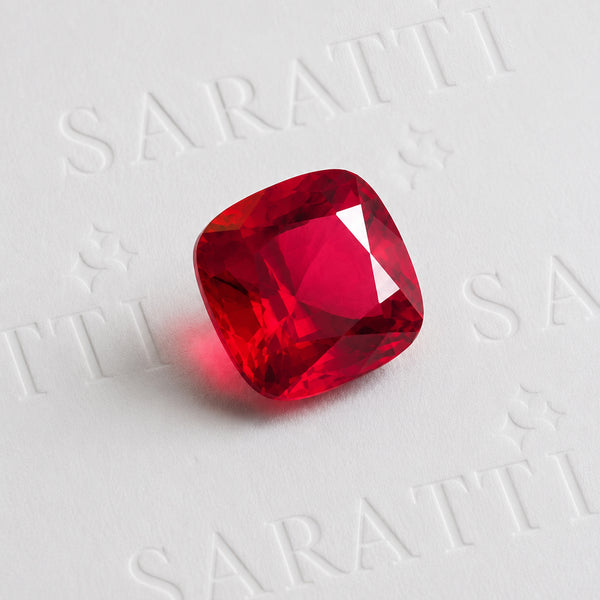
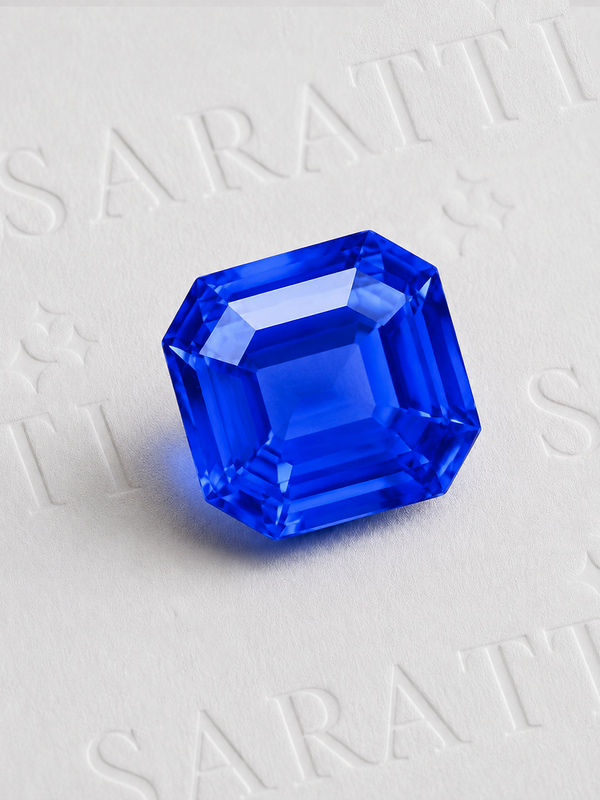
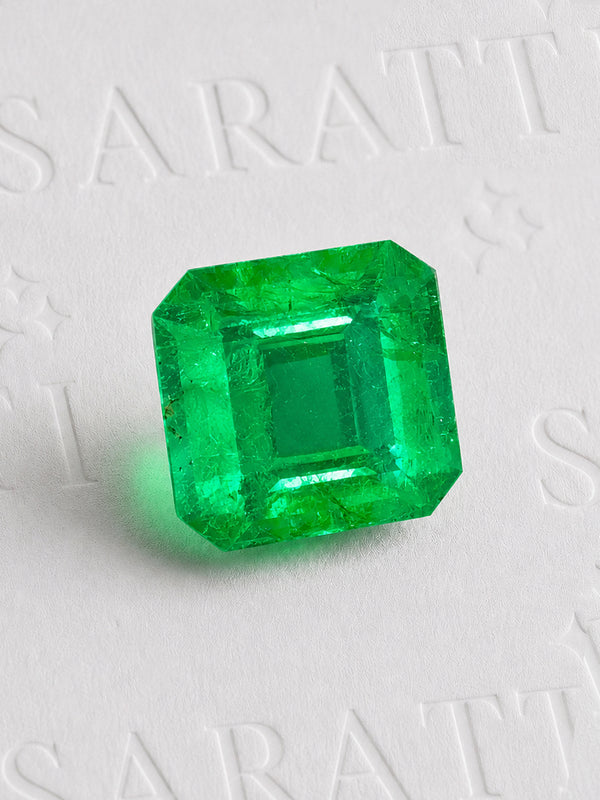
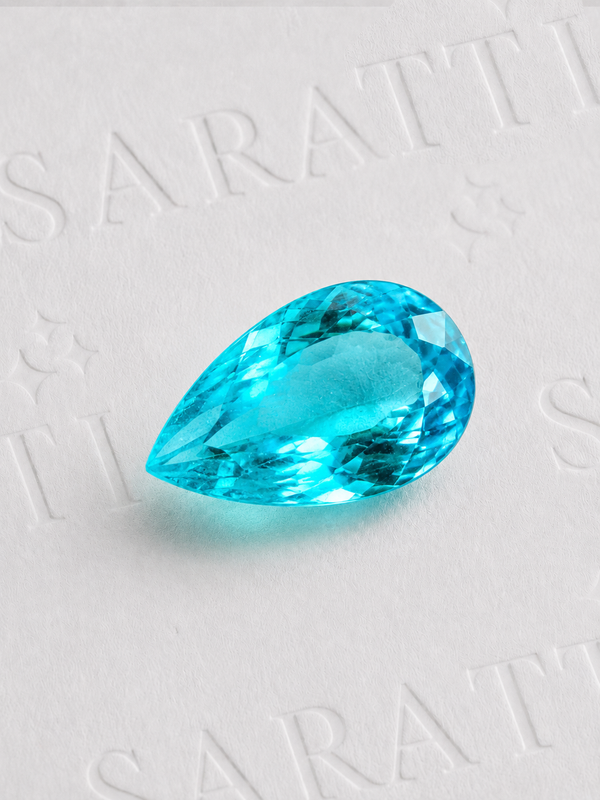
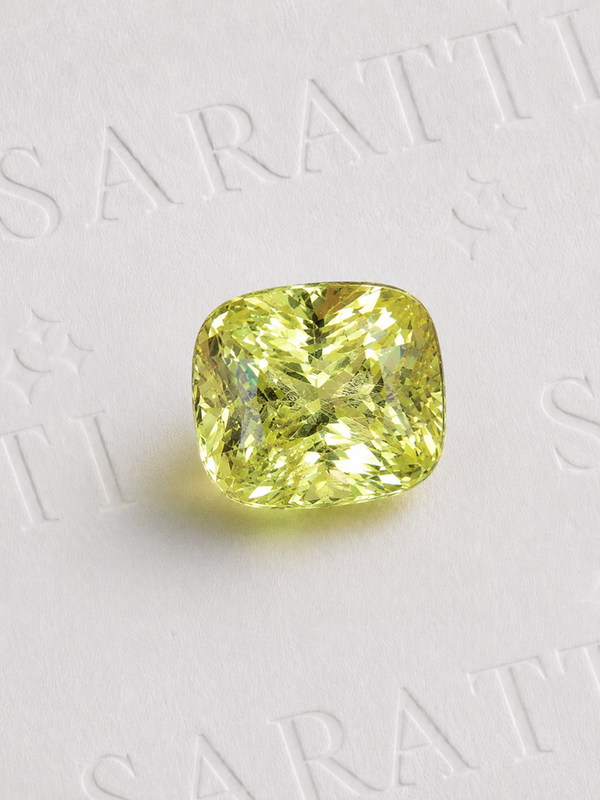
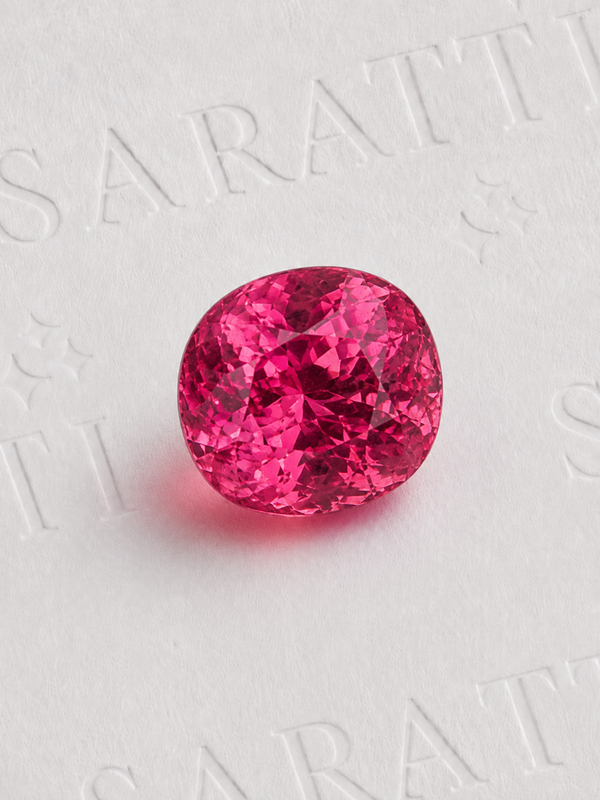
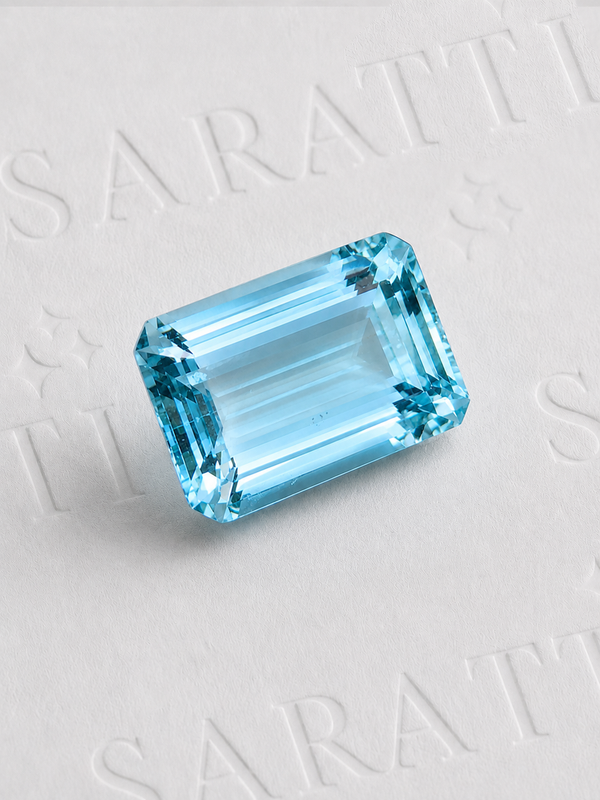
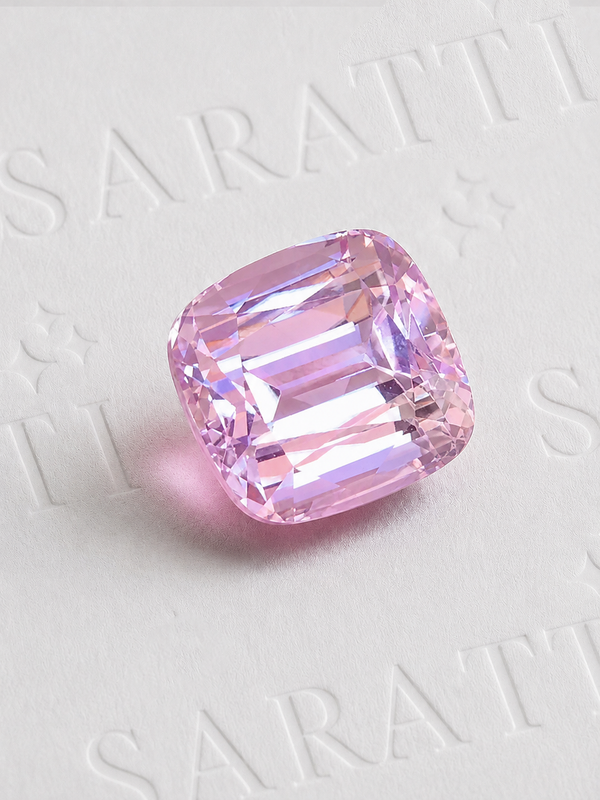
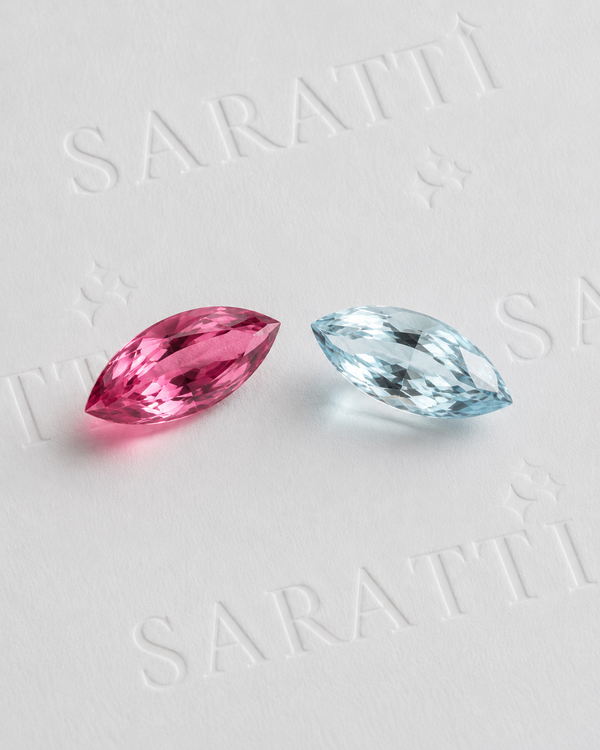
At first glance, it is easy to understand why aquamarine and Paraiba tourmaline are often compared. Both are blue gemstones. Both feel luminous. Both belong to that part of the gemstone world that reminds us of water, light, and clarity. For many buyers, that is enough to make them seem closely related.
But the similarity ends much earlier than most people think. Aquamarine and Paraiba may share a blue palette, yet they do not offer the same kind of beauty, and they are not chosen for the same reasons. One is loved for calm elegance and openness. The other is prized for rarity, intensity, and a glow that feels almost impossible to ignore.

This is where the comparison becomes more interesting. Many people begin by asking which stone is more expensive or which one is rarer, but those are only final-layer questions. To understand the difference properly, you have to begin with what these gemstones are, how they carry color, how they are judged, and what kind of feeling each one leaves behind.
In the simplest terms, aquamarine is the blue of still water. Paraiba is the blue of light moving through water. That contrast is the best place to begin, because once you understand it, everything else starts to make sense.
At First Glance, They Seem Similar
The first reason people compare these gemstones is obvious: they both live in the blue world. They can both look bright, fresh, and water-like, and in jewelry they can create a similar first impression for someone who is not yet familiar with their differences. That surface similarity is real, but it is also what creates confusion.
In gemstones, visual resemblance can be misleading. Two stones may appear close in color, yet belong to different mineral families, carry color for different chemical reasons, and occupy completely different positions in the market. That is exactly what happens with aquamarine and Paraiba tourmaline.
This is why buyers should not stop at first impressions. These stones may seem related at a glance, but they do not behave the same in light, they are not judged by the same standards, and they do not create the same experience in fine jewelry.
Aquamarine and Paraiba Are Not the Same Kind of Gemstone
Aquamarine belongs to the beryl family. It is the blue to blue-green variety of beryl, the same broader mineral family that includes emerald. It has long been admired for its transparency, calm color, and ability to look graceful even in generous sizes. Much of its beauty comes from the fact that it tends to look clear, open, and refined.
Paraiba belongs to the tourmaline family, and more specifically, it is a copper-bearing tourmaline. That detail is not minor. It is the reason Paraiba looks so visually different from most other blue gemstones. The presence of copper helps create that vivid, electric effect that made Paraiba famous from the moment it entered the gem market.

This mineral difference changes the entire comparison. When gemstones come from different families, they do not simply look different. They form differently, they carry color differently, and they are valued differently. Aquamarine is not a softer version of Paraiba, and Paraiba is not just a rarer aquamarine. They are separate gemstones with separate identities.
Origin and Source: Where These Gemstones Come From
Aquamarine has a broad and established geographic presence. Fine material has been found in Brazil, Madagascar, Pakistan, and Nigeria, among other locations. Because it is more widely available, buyers often have more room to choose between different sizes, tones, clarities, and price levels. That accessibility has helped aquamarine remain one of the most recognized blue gemstones in fine jewelry.
Paraiba tourmaline has a more dramatic origin story. It first became famous through discoveries in Brazil, in the state of Paraíba, where vivid copper-bearing material stunned the trade with a color that looked unlike anything expected from tourmaline. Later, similar copper-bearing stones were found in Mozambique and Nigeria, which expanded supply but did not change the gem’s essential rarity.
Origin matters far more in the Paraiba conversation than it does in the aquamarine one. With aquamarine, origin can matter, but buyers usually focus more on beauty and overall quality. With Paraiba, origin can influence naming, rarity perception, and pricing. Brazilian material often carries particular prestige because of its historical importance and exceptional scarcity.
The Real Difference Begins With Color
If there is one section that matters most in this comparison, it is this one. Aquamarine and Paraiba are separated first and most clearly by color. That is not only because they show different shades of blue, but because they express blue in completely different ways.

Aquamarine gets its color from trace amounts of iron. That chemistry produces tones that usually range from pale blue to blue-green, sometimes with a cool, airy softness and sometimes with more depth. Even when aquamarine is strong in color, it usually remains composed. It does not feel aggressive. It feels clear, elegant, and breathable, as though there is space inside the stone.
The finest aquamarine color is often described as Santa Maria blue. This term refers to a richer, more saturated blue associated historically with material from Santa Maria de Itabira in Brazil. Santa Maria aquamarine represents the upper tier of the category because it combines stronger color with the clarity and balance that aquamarine needs in order to look truly beautiful. It is not loud blue. It is refined depth.

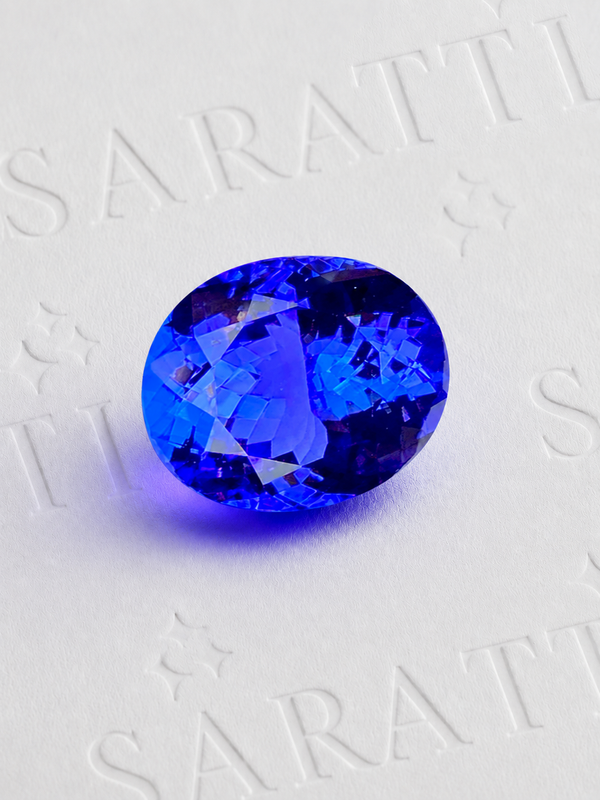
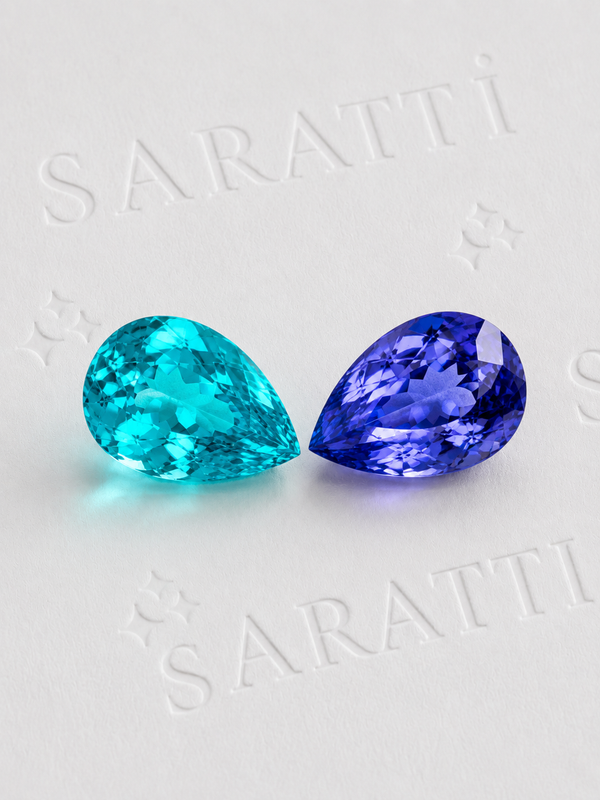
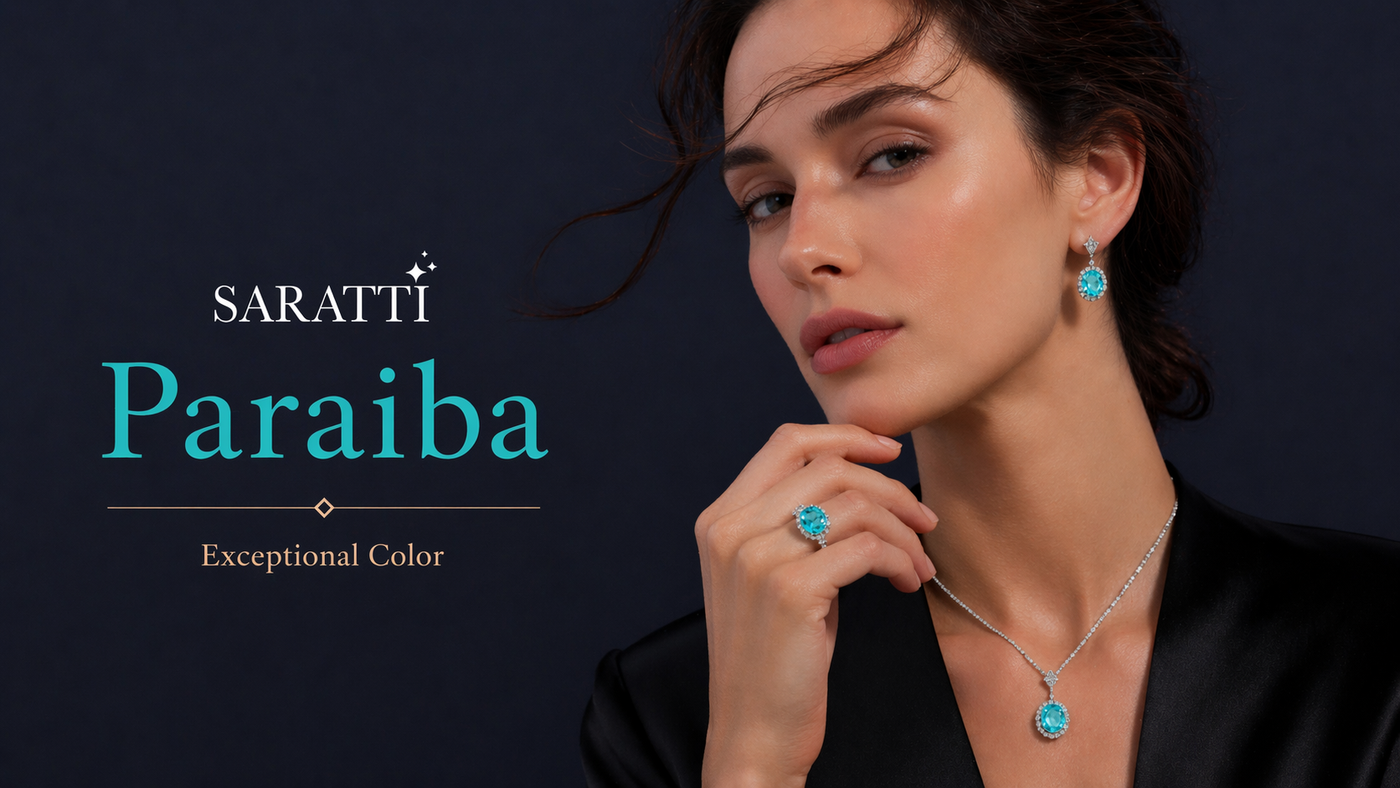
Paraiba behaves differently from the very beginning. Its color comes from copper, often in combination with manganese, and that chemistry creates the vivid blue to blue-green appearance that people so often describe as neon. The finest Paraiba stones do not merely look saturated. They appear luminous, almost internally lit, as if the stone is carrying its own light.
This is why the top Paraibas are so unforgettable. In the highest qualities, often called Neon Blue Paraiba, the gem looks alive in a way that very few blue stones can match. Even when the stone is small, the color can feel powerful and immediate. That is why Paraiba can command extraordinary prices without depending on size in the way many other gemstones do.

The easiest way to remember the difference is this: aquamarine feels like still water, while Paraiba feels like living light. Aquamarine draws the eye inward. Paraiba catches it in a flash. That emotional contrast is one of the most important parts of the entire comparison.
Why They Are Judged Differently for Clarity
One of the biggest mistakes buyers make is assuming that all gemstones should be judged by the same clarity standard. That is not how gem buying works. Clarity expectations depend on what makes a particular gemstone beautiful in the first place.
With aquamarine, clarity matters a great deal. Fine aquamarines are usually expected to be eye-clean, and top stones are prized for looking bright, transparent, and visually open. If an aquamarine is cloudy, sleepy, or heavily included, it loses much of what gives it refinement. Since its beauty depends so strongly on transparency, clarity becomes central to value.

Paraiba is judged differently. Inclusions are more common in Paraiba, and the market is often more forgiving of them as long as the gemstone still shows strong color and life. Buyers are not looking first for perfect openness. They are looking for glow, vividness, and internal energy. If those qualities are present, some inclusions can be accepted in a way they would not be in aquamarine.
That distinction matters because it changes how you assess quality. A fine aquamarine should feel clear and poised. A fine Paraiba should feel bright and magnetic. If you judge Paraiba by aquamarine’s clarity rules, you will miss what makes it special. If you ignore clarity in aquamarine, you will miss what gives it elegance.
Cut, Size, and Visual Impact
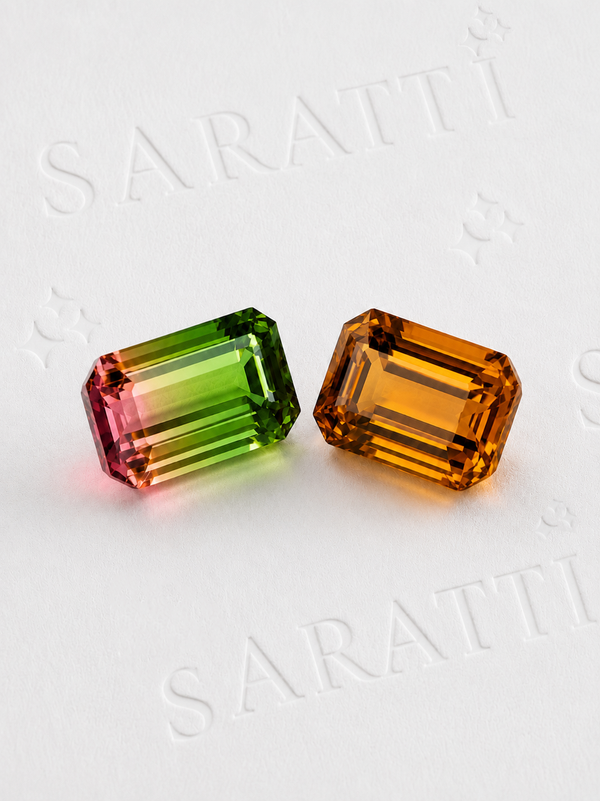
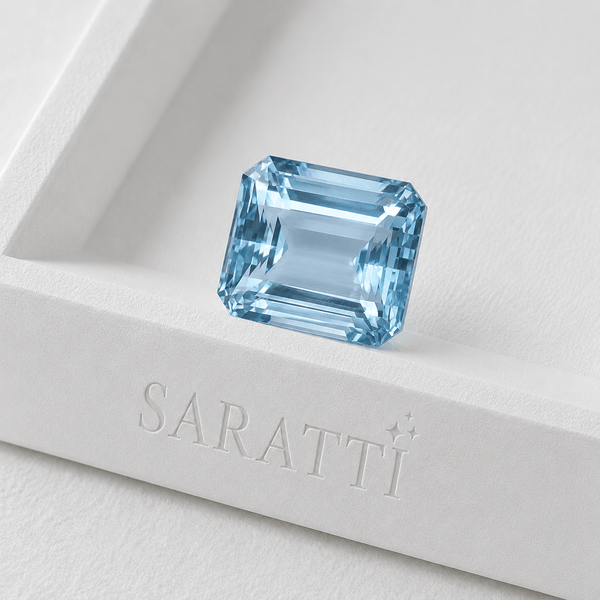
Aquamarine is often cut in ways that highlight its clarity and inner openness. Step cuts and emerald cuts are especially common because they suit the crystal shape well and allow the stone’s transparency to speak for itself. These cuts give aquamarine a graceful, architectural look that feels very natural to the gem.

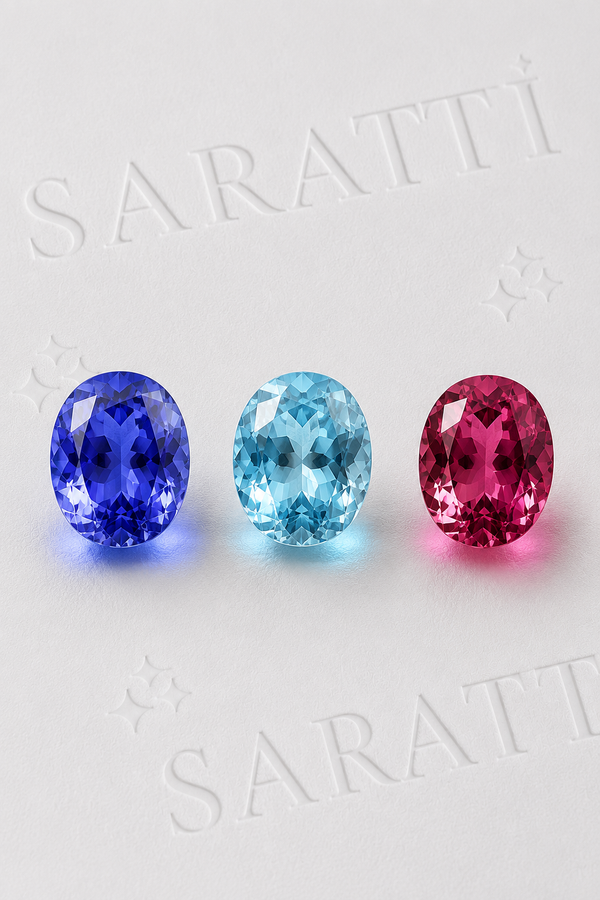
Paraiba is usually cut with different priorities. Shapes such as oval, cushion, and pear are often chosen to intensify color and improve light return. There is also a practical reason behind many Paraiba cuts: the rough is rare and valuable, so cutters often try to preserve as much weight as possible while still bringing life to the stone.
Size changes the conversation further. Aquamarine is one of the few blue gemstones that often becomes more beautiful as it becomes larger. In smaller sizes, its color can sometimes feel delicate or pale. In larger sizes, the tone often has more room to develop, which makes aquamarine especially attractive in statement rings, pendants, and bold fine jewelry designs.

Paraiba does not depend on size in the same way. A fine Paraiba can feel visually strong even when it is small. In fact, that is one of the marvels of the gemstone. Its intensity can make a modest-sized stone feel more memorable than a much larger gem in another category. This is why aquamarine often wins in graceful scale, while Paraiba wins in concentrated presence.
Durability and Everyday Wear
Aquamarine has a hardness of about 7.5 to 8 on the Mohs scale, which makes it durable enough for many types of everyday fine jewelry when worn with reasonable care. It is not indestructible, and it can still chip if struck sharply, but overall it tends to be a comfortable and practical choice for rings, pendants, and other frequently worn pieces.

Paraiba tourmaline usually falls around 7 to 7.5 on the Mohs scale. That still makes it wearable, but it is generally a little more vulnerable to abrasion and impact over time. For that reason, Paraiba is often better suited to protected settings, and owners tend to treat it with slightly more caution, especially in rings that receive daily wear.
This difference is not purely technical. It also affects the ownership experience. Aquamarine often feels easier to live with because it offers beauty without the same level of emotional caution. Paraiba, because it is rarer, more expensive, and often more delicate in perception, tends to feel more precious from the moment it is purchased.
Lifestyle also matters here. Someone who wants a larger blue gemstone for regular wear may find aquamarine the more natural answer. Someone who is drawn to rarity and is comfortable wearing a stone a little more intentionally may find Paraiba more compelling, especially in earrings, pendants, or carefully designed rings.
Rarity and Value: Why the Price Gap Can Be So Large
Aquamarine is respected and often deeply beautiful, but it remains available enough that buyers can search for quality with some freedom. Value in aquamarine is usually shaped by the balance of color, clarity, and size. Larger stones with good transparency and stronger blue color can be impressive and valuable, especially when they reach the Santa Maria tier.

Paraiba lives in a different rarity category. Fine copper-bearing material with vivid blue to blue-green color is genuinely scarce, and when that rarity meets a look the market instantly recognizes, value rises very quickly. This is why Paraiba is not just rare within tourmaline. It is rare across the wider world of colored gemstones.

The most important value lesson is this: aquamarine is often priced for what it offers, while Paraiba is often priced for how difficult it is to replace. A beautiful aquamarine can be searched for and selected with relative patience. A great Paraiba often feels like something that must be found and secured before it disappears. That difference creates very different buying psychology.
This is also why smaller Paraibas can sit in a completely different pricing universe from much larger aquamarines. Aquamarine offers beauty with breadth. Paraiba offers beauty with scarcity. Neither story is wrong, but they belong to different kinds of buyers.
Treatments and What Buyers Should Ask
One of the most important things any buyer can understand is that natural does not always mean untreated. A gemstone may be natural in origin and still have undergone treatment to improve its appearance. That is why disclosure matters.
Aquamarine is commonly heat treated to reduce greenish tones and bring out a purer blue color. This is a well-known and generally accepted practice in the trade when it is properly disclosed. It does not make the stone less real, but it does mean buyers should understand what they are purchasing.
Paraiba may also be heated or otherwise treated, and this is one reason certification and disclosure become especially important in the category. Because Paraiba carries such strong value implications around color, copper-bearing identity, and sometimes origin, clarity in documentation becomes part of smart buying.

A buyer should always ask a few basic questions. Is the stone natural? Has it been heated or otherwise treated? Is the treatment clearly disclosed? Is there a laboratory report? These questions do not suggest suspicion. They simply reflect informed buying, which is exactly what fine jewelry deserves.
Aquamarine vs Paraiba Tourmaline: Side-by-Side Comparison
| Feature | Aquamarine | Paraiba Tourmaline |
|---|---|---|
| Mineral Family | Beryl | Tourmaline |
| Color Style | Calm, transparent blue | Neon, glowing blue-green |
| Color Cause | Iron | Copper + Manganese |
| Finest Quality | Santa Maria Blue | Neon Blue (Copper-bearing) |
| Clarity | Usually eye-clean | Often included |
| Size | Common in large stones | Rare in large sizes |
| Durability | Slightly stronger | Slightly more delicate |
| Rarity | Moderately available | Extremely rare |
| Value Driver | Size + clarity + color | Color + rarity |
A comparison table is useful because it helps the differences become instantly visible. Still, tables only simplify the facts. The actual choice between these gemstones is often emotional as much as technical, and that part only becomes clear when you understand how each stone feels in person.
Which One Should You Choose?
Choose aquamarine if you are drawn to calm elegance, clear-looking stones, and a larger face-up presence. It is an especially strong choice for buyers who want a refined blue gemstone that feels easy to wear and naturally graceful in a variety of jewelry settings. If you love openness and quiet sophistication, aquamarine will often feel like the right answer.

Choose Paraiba if you are looking for rarity, intensity, and a gemstone that creates immediate visual impact. It is for the buyer who wants something more unusual, more vivid, and more unforgettable at first glance. If you love exceptional color and want a stone that stands apart from the familiar, Paraiba belongs in a different league.

Lifestyle should also guide the decision. Aquamarine usually suits more active, everyday wear, especially when larger stones are desired. Paraiba often makes more sense when the buyer is comfortable with a rarer, more intentional kind of ownership. The better question, then, is not which gem is better, but which one expresses your taste, your purpose, and the way you want the jewel to feel.
How They Compare Within the World of Blue Gemstones
Aquamarine holds an important place because it represents the classic side of blue gemstone beauty. It is widely recognized, deeply loved, and tied to a long history of elegant jewelry design. Its appeal is built on familiarity, grace, and transparency.
Paraiba represents something more modern and disruptive. It is one of those rare gemstone discoveries that changed expectations in the market. Rather than fitting neatly into the traditional blue gemstone story, it redefined what blue gemstones could look like by introducing a level of luminous intensity that felt entirely new.
That is part of what makes this comparison so compelling. Aquamarine stands for timeless blue beauty. Paraiba stands for rare blue excitement. Together, they show two very different ways a gemstone can become desirable.
Why This Comparison Matters in Fine Jewelry
Fine jewelry is never only about material specifications. It is also about the role a gemstone plays in the life of the wearer and in the identity of the piece. Some stones feel reassuring and enduring. Others feel exceptional and hard to forget. Aquamarine and Paraiba reflect those different emotional paths very clearly.
Aquamarine offers familiarity, balance, and elegance. Paraiba offers rarity, voltage, and exclusivity. Understanding that difference helps a buyer move beyond surface comparisons and toward a more satisfying decision. That matters because long-term pleasure in fine jewelry often comes not from choosing the “best” stone in abstract terms, but from choosing the stone that feels most true to the wearer.
Conclusion
Aquamarine and Paraiba tourmaline may share a blue palette, but they do not share the same character. Aquamarine belongs to a world of calm transparency, graceful size, and beauty that unfolds slowly. Paraiba belongs to a world of glow, scarcity, and color so vivid that it can feel lit from within.
Both can be extraordinary, and both deserve respect. The right choice depends on what kind of beauty you are drawn to. If you want clarity, poise, and elegance, aquamarine is one of the finest blue gemstones you can choose. If you want rarity, intensity, and something impossible to forget, Paraiba stands almost alone.
That is what makes this comparison meaningful. It is not just about which stone is more expensive or more rare. It is about understanding that these gemstones answer different desires. Once you see that clearly, the choice becomes far more natural.
At SARATTI, we believe the most meaningful gemstone choice is the one that reflects both beauty and character. Whether you are drawn to the calm refinement of aquamarine or the vivid rarity of Paraiba tourmaline, understanding the difference helps you choose with more confidence and intention.


