
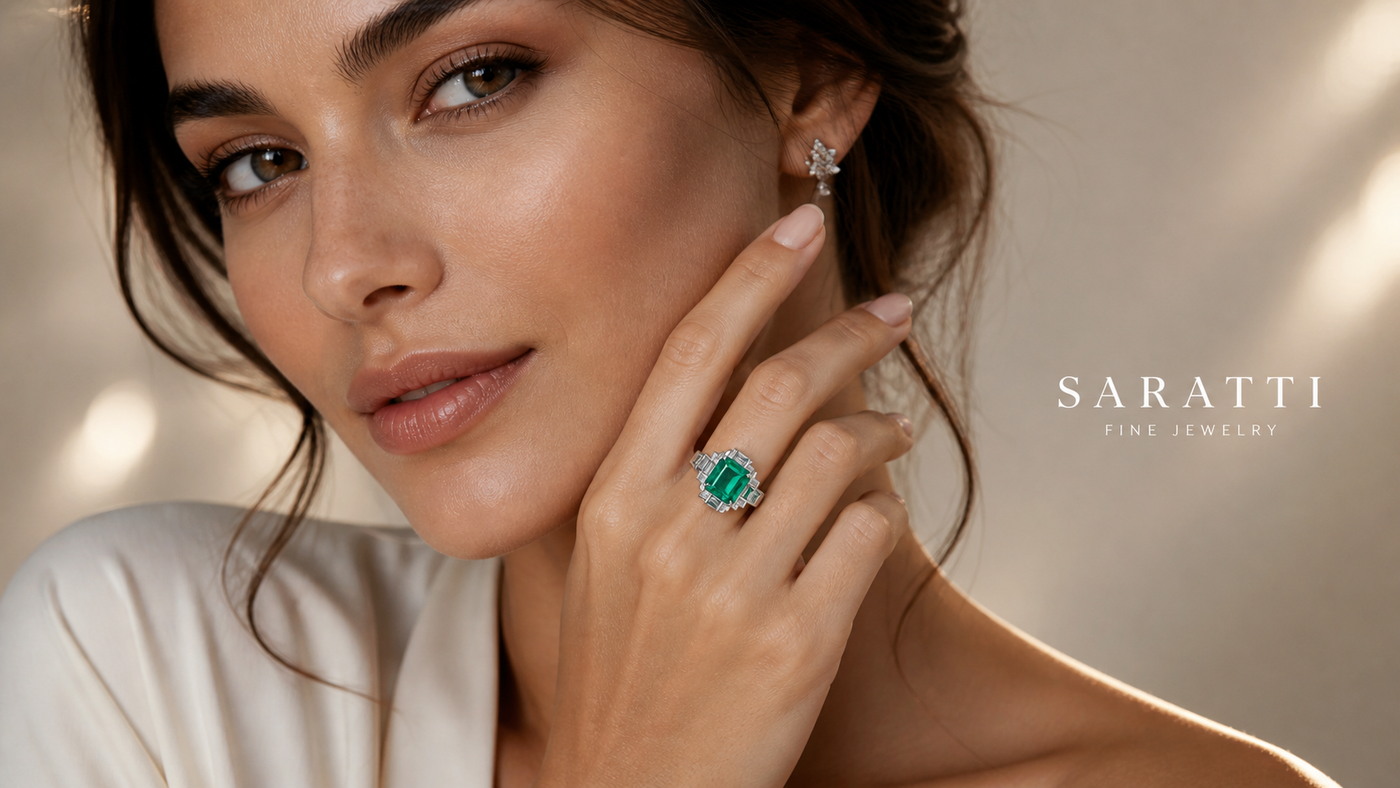
Choosing an emerald engagement ring is a deeply personal decision. It is not only about choosing a beautiful green gemstone, but also about understanding how emeralds behave, how they are valued, and how they should be worn over time. Emeralds have a very different personality from diamonds, sapphires, or rubies, and that is what makes them so special.
An emerald engagement ring feels romantic, expressive, and timeless. Its green color carries meaning, history, and individuality, but emeralds also require more knowledge before purchase. Color, clarity, treatment, setting, durability, and care all matter because they affect how the ring looks today and how well it lasts in everyday life.
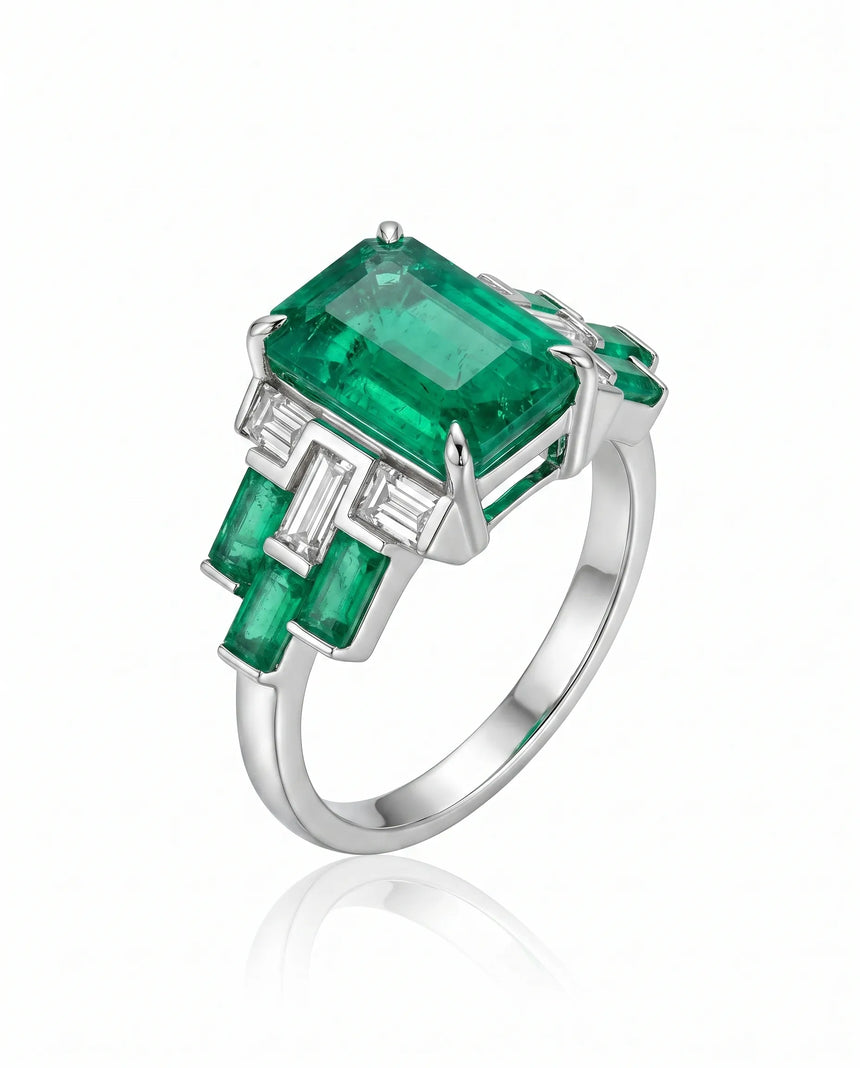
This emerald engagement ring buying guide explains everything clearly. You will learn what makes a good emerald, which setting protects it best, what clarity is acceptable, how treatments affect value, and how to care for the ring properly. The goal is simple: to help you choose an emerald engagement ring with confidence.
What to Know Before Choosing an Emerald Engagement Ring
Emeralds are not judged the same way as diamonds. With diamonds, people often focus heavily on brilliance, clarity, and cut precision. With emeralds, the first and most important quality is color. A rich, lively green emerald with natural character is often more desirable than a cleaner stone with weak or dull color.
Natural emeralds almost always have inclusions. These internal features are often called the “jardin,” or garden, because they can look like tiny natural patterns inside the stone. Inclusions are not automatically bad in emeralds. What matters is whether they affect beauty, transparency, or strength.

Emeralds are also more delicate than many people expect. They are reasonably hard, but their internal inclusions can make them more vulnerable to knocks. This means an emerald engagement ring can be worn and loved for many years, but it should be chosen with a protective setting and cared for properly.
Emerald Engagement Ring Meaning
Emeralds have long been connected with love, renewal, growth, harmony, and devotion. Their green color naturally suggests life and new beginnings, which makes them especially meaningful for an engagement ring. For someone who wants a ring with emotional depth, emerald can feel more symbolic than a traditional clear gemstone.
An emerald engagement ring also speaks to individuality. It is chosen by someone who wants color, character, and a slightly more personal expression of love. The stone does not feel ordinary or expected, and that makes it powerful for a proposal.
This meaning becomes even stronger when the design matches the wearer’s style. A vintage emerald ring can feel romantic and heirloom-like, while a sleek bezel emerald ring can feel modern and confident. The gemstone gives the ring its soul, but the design shapes its personality.
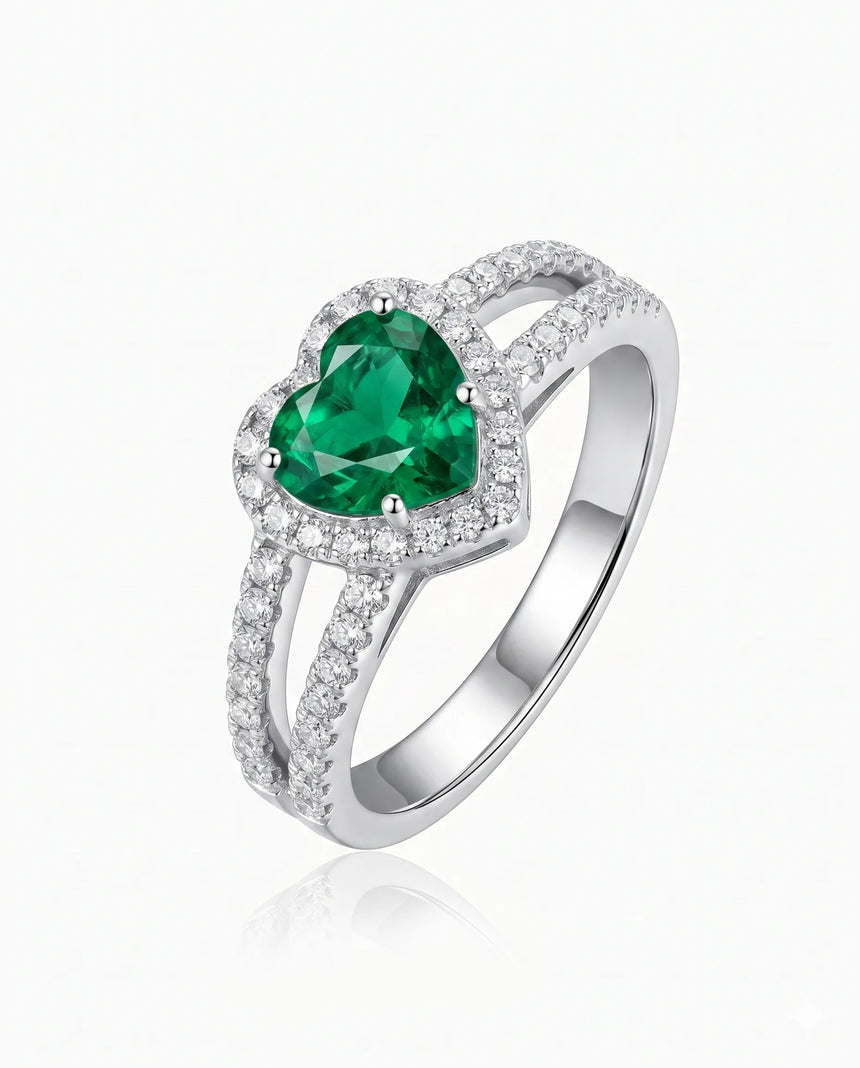
At SARATTI, we see emerald engagement rings as more than beautiful green gemstones; they are deeply personal pieces that carry meaning, character, and intention from the moment they are chosen.
Emerald Origin: Why It Matters
Emeralds are found in several important regions, and origin can influence color, reputation, and price. The most famous emerald sources include Colombia, Zambia, and Brazil. Each origin can produce beautiful stones, but they often have slightly different visual qualities.
Colombian emeralds are widely admired for their rich green color, often with a slightly bluish undertone and strong saturation. They are historically important and often highly valued, especially when the color is vivid and the stone has good transparency. However, not every Colombian emerald is automatically superior. The individual stone still matters most.

Zambian emeralds often show a deeper, cooler green tone. Many have good clarity compared with emeralds from some other origins, and their color can appear slightly darker or more bluish-green. They can be excellent choices when the stone is lively, balanced, and well cut.

Brazilian emeralds can vary more widely in color and tone. Some may be lighter, while others can show attractive green shades with good brightness. For most people, origin should be considered as one part of the decision, not the whole decision. A beautiful emerald with strong color and good structure is always more important than a famous origin alone.
Emerald Engagement Ring Color: What Really Matters
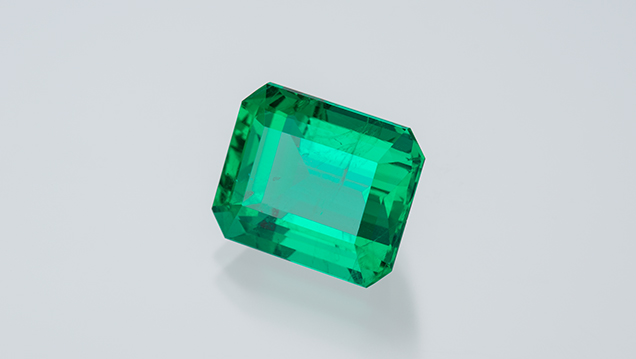
Color is the heart of an emerald engagement ring. It is the first thing the eye notices and the main reason emeralds are loved. A strong emerald color should feel rich, alive, and balanced, not flat or overly dark.
The best emerald engagement ring color is usually a vivid green with strong saturation. Some fine emeralds show a slight bluish-green tone, which can add depth and elegance. A stone that is too yellowish may feel less refined, while a stone that is too dark may lose brightness and look heavy in certain lighting.
To understand emerald color, think about hue, tone, and saturation. Hue is the type of green you see. Tone is how light or dark that green appears. Saturation is the strength or intensity of the color. A good emerald has a pleasing green hue, enough depth to feel luxurious, and enough brightness to stay lively.
When looking at emeralds, avoid judging them only under bright display lighting. A stone may look strong under jewelry-store lights but darker in normal daylight or indoor lighting. A beautiful emerald should still feel attractive in different environments, especially if it will be worn often.
Visit our uncut blog to know more about green gemstone: Types of Green Gemstones
Emerald Engagement Ring Clarity: Why Inclusions Are Normal
Clarity is the one of the most misunderstood part of choosing an Emerald center stone for your dream emerald engagement ring. Natural emeralds usually contain inclusions, and this is not unusual. In fact, a completely clean natural emerald is very rare and can be extremely expensive. Looking for one is a little like looking for a perfect leaf in a wild garden — possible, but not something you should expect every time.
The right way to judge emerald clarity is not to search for perfection. Instead, look at how the inclusions affect the stone’s overall beauty. If the emerald still has rich color, good transparency, and a pleasing appearance, inclusions may be acceptable.
Some inclusions are more concerning than others. Small internal features that do not dominate the stone are usually normal. Large cracks that reach the surface, heavy cloudiness, or inclusions that make the stone look dull can be more problematic. In an engagement ring, it is especially important that inclusions do not weaken the stone or make it more likely to chip.

A good emerald engagement ring should feel balanced. The stone can have natural character, but it should still look elegant and stable. The goal is not a flawless emerald. The goal is a beautiful emerald that feels alive, wearable, and secure.
Understanding Emerald Quality: The 4Cs Adapted for Emeralds
The 4Cs are a simple way to understand gemstone quality: color, clarity, cut, and carat weight. These factors are often used when comparing diamonds, but they can also help you understand colored gemstones like emeralds. The important thing is that the 4Cs do not carry the same weight for every stone.
In diamonds, people often give strong attention to brilliance, clarity, and cut precision because diamonds are loved for sparkle. Emeralds are different. Their beauty comes first from the richness of their green color, then from how clear, well-cut, and balanced the stone appears overall.

Color: Color is the most important quality factor in an emerald. A good emerald should show a rich, vivid green that feels lively and balanced. If the stone looks too pale, too dark, or dull, the overall beauty will be weaker, even if the clarity is good.
Clarity: Clarity refers to the natural internal features inside the gemstone. In emeralds, inclusions are normal and expected, so the goal is not to find a flawless stone. Instead, look for an emerald where the inclusions do not overpower the color, reduce transparency too much, or make the stone feel fragile.
Cut: Cut refers to how the emerald has been shaped and faceted. A good cut helps the stone show its best color, improves its brightness, and can make inclusions less noticeable. Since emeralds are naturally more delicate, the cut should also support the stone’s structure.
 la
la
Carat Weight: Carat weight refers to the size or weight of the gemstone. Larger emeralds can be more valuable, especially when they also have strong color and good overall appearance. However, size should never be chosen over quality, because a smaller emerald with beautiful color may look far better than a larger stone that appears dull or heavily included.
So a richly colored emerald with some inclusions can be more valuable than a cleaner emerald with weak color. This is why color should be the first thing you evaluate. If the green is not attractive, the rest of the qualities will not fully rescue the stone.
Clarity is still important, but it should be judged realistically. Cut matters because it affects how the color appears and how visible the inclusions are. Carat weight matters because larger fine emeralds are rare, but size should never be chosen at the expense of color and durability.
The best emerald engagement ring is not the one that wins in only one category. It is the one where color, clarity, cut, carat weight, setting, and overall design work together beautifully.
Emerald Treatments: What You Must Know
Most natural emeralds are treated to improve their appearance. This is one of the most important things to understand before choosing an emerald engagement ring. The most common treatment is clarity enhancement, often through oiling.
Emeralds naturally form with fractures and inclusions. Oiling fills some surface-reaching fractures, making the stone appear clearer and more attractive. This treatment is widely accepted in the emerald trade, but the amount of treatment matters.
Treatment levels are often described as minor, moderate, or significant. Minor treatment usually means the emerald has only slight enhancement and may hold higher value. Moderate treatment is common and can still be acceptable when disclosed. Significant treatment may affect value more strongly because the appearance depends heavily on enhancement.
Disclosure is essential. A trustworthy jeweler should explain whether the emerald has been treated and, when possible, how much treatment is present. This matters for value, care, and long-term confidence. A natural emerald can still be beautiful and desirable with treatment, but you should know what you are choosing.
Natural vs Lab-Grown Emerald Engagement Rings
Emerald engagement rings may feature natural emeralds or lab-grown emeralds. Both can be green and beautiful, but they are not the same. Understanding the difference helps you choose based on value, meaning, and preference.
Natural emeralds form in the earth over long periods of time. They often contain inclusions, color variations, and unique internal features. These natural characteristics give each stone individuality and make it feel one of a kind.

Lab-grown emeralds are created in controlled environments. They usually cost less and may appear cleaner or more uniform. They can be attractive, but they do not carry the same natural rarity or long-term emotional value for someone seeking a true natural gemstone.

A natural emerald engagement ring is often chosen for its rarity, character, and story. A lab-grown emerald can be a more accessible choice, but it should be clearly described so there is no confusion.
Emerald vs Emerald-Cut Engagement Rings
Many people confuse emerald engagement rings with emerald-cut engagement rings. These are not the same thing. An emerald engagement ring means the center stone is an emerald gemstone. An emerald-cut engagement ring refers to the shape of the stone.
The emerald cut is a rectangular step cut with long, clean facets. It can be used for diamonds, emeralds, sapphires, and other gemstones. So a ring can be an emerald-cut diamond ring without containing any emerald at all.

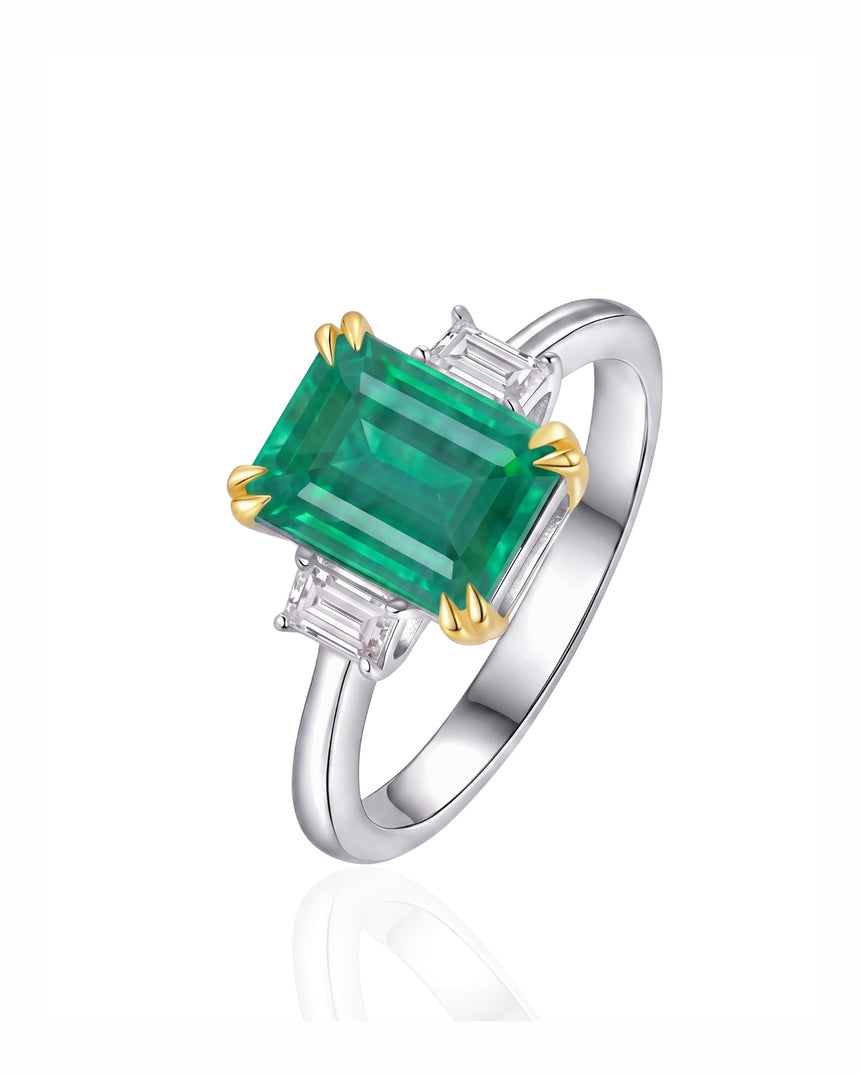
An emerald cut emerald engagement ring uses both the gemstone and the cut. This style can look very elegant because the long facets highlight the depth of the green color. However, step cuts can also make inclusions more visible, so clarity and transparency should be checked carefully.
Emerald Engagement Ring Durability: Daily Wear Considerations
Emeralds are often listed as 7.5 to 8 on the Mohs hardness scale. This means they are fairly resistant to scratching. However, hardness is not the same as toughness. This distinction is very important for emeralds.
Hardness tells you how well a gemstone resists scratches. Toughness tells you how well it resists breaking, chipping, or cracking. Emeralds can have natural inclusions and fractures, so their toughness is not as strong as their hardness number may suggest.

This does not mean emeralds are unsuitable for engagement rings. It means they should be worn with care and set properly. If you plan to wear the ring every day, choose a protective design and remove the ring during activities that could cause impact.
A well-made emerald engagement ring can last beautifully with mindful wear. Many antique and vintage emerald rings still exist today, which shows that emeralds can endure when properly protected.
Emerald Engagement Ring Setting: Choosing the Right Protection
The setting is one of the most important decisions for an emerald engagement ring. A beautiful emerald still needs a design that protects it. This is especially important if the ring will be worn every day.
A bezel setting is one of the most protective options. It surrounds the emerald with metal, helping protect the edges from knocks and chips. This setting is especially useful for active hands or for someone who wants extra security without sacrificing elegance.
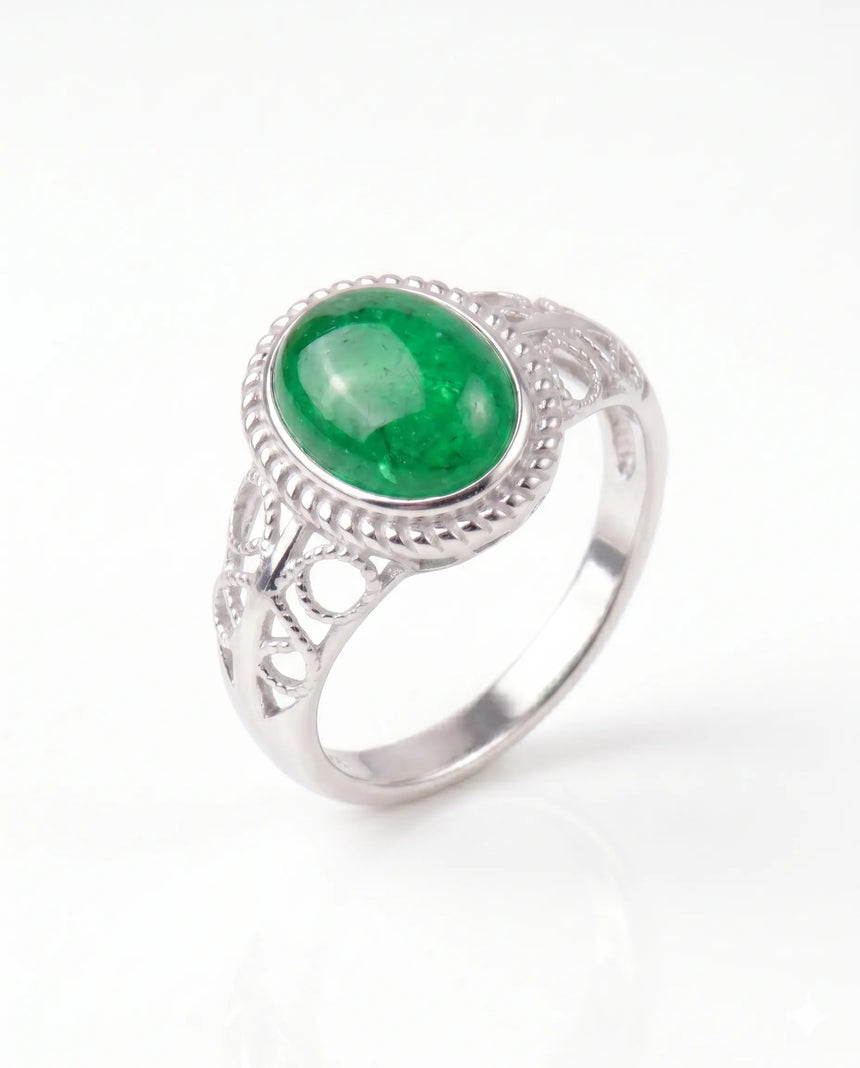
A halo setting is also a strong option. The surrounding diamonds or gemstones can add brightness and visual size while offering some extra protection around the center stone. Halo settings are especially popular for emerald and diamond engagement rings because they balance green color with sparkle.
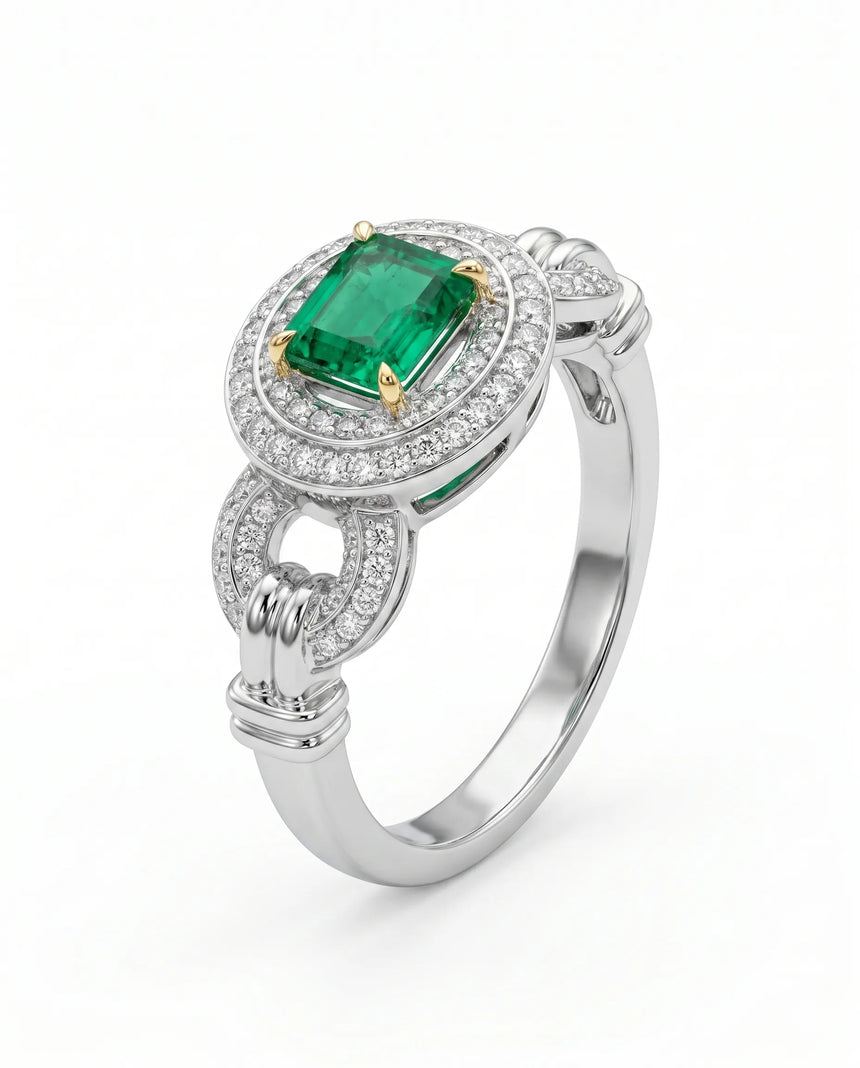
Prong settings can be beautiful, but they leave more of the emerald exposed. If choosing prongs, the corners and edges should be carefully protected, especially with emerald-cut stones. Three-stone settings can also work well, but the design should keep the emerald secure and balanced.
Best Metal for Emerald Engagement Ring
Metal choice changes the entire mood of an emerald engagement ring. The same emerald can look warm, modern, romantic, or vintage depending on the metal around it.
Yellow gold creates a classic and luxurious look. It enhances the warmth of the green and often gives the ring a rich, vintage-inspired feeling. It is a beautiful choice for someone who loves traditional elegance.
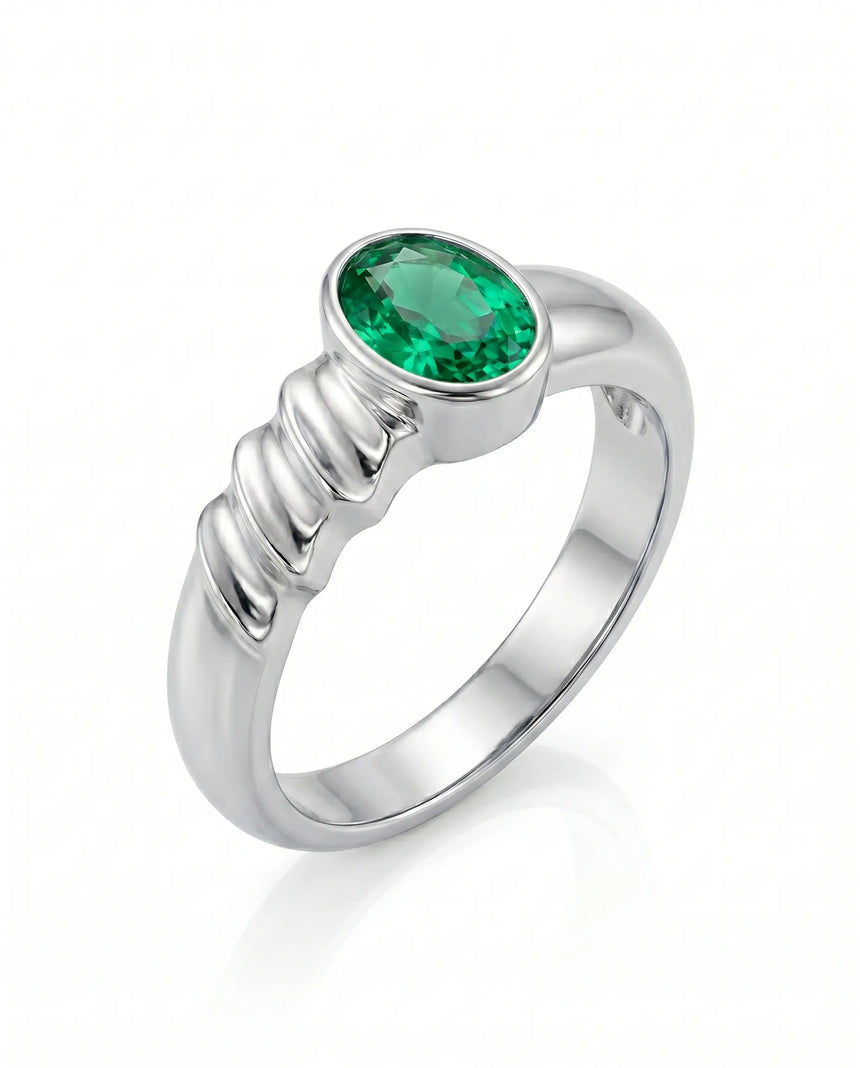
White gold and platinum create stronger contrast. They make the green look crisp and vivid, especially when diamonds are included in the design. Platinum is also very durable, which makes it a strong option for an engagement ring.
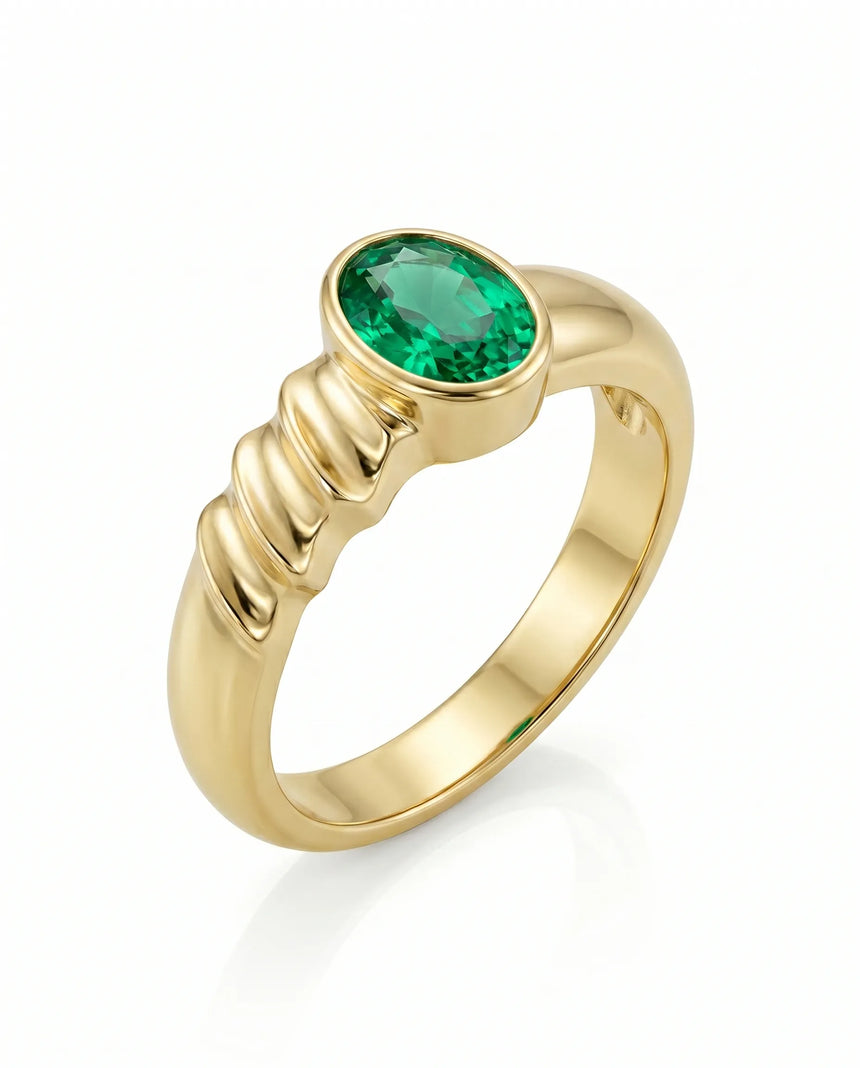
Rose gold adds softness and romance. It creates a warmer, more feminine look and works well for vintage-inspired or delicate designs. The best metal is the one that complements both the emerald and the wearer’s personal style.
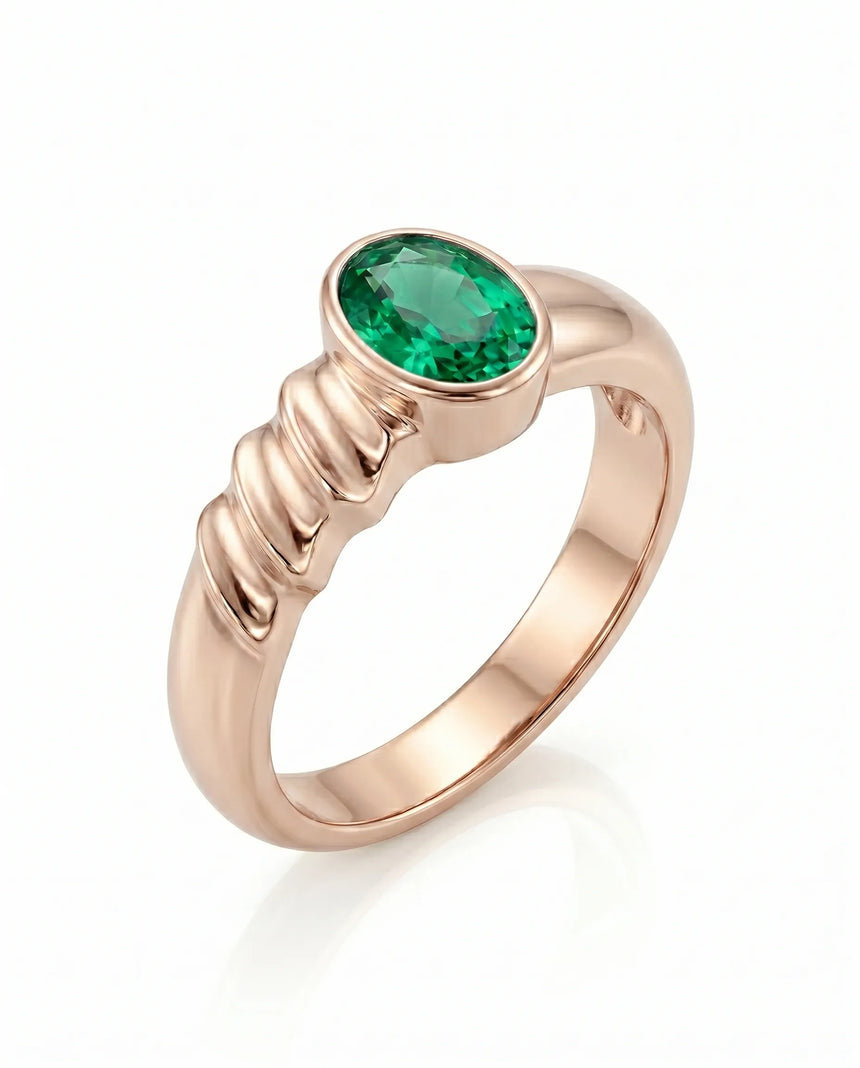
Emerald Engagement Ring Styles to Consider
Emerald engagement rings come in many styles, and each style creates a different feeling. The right choice depends on whether you want the ring to feel classic, romantic, modern, bold, or heirloom-inspired.
An emerald cut emerald engagement ring feels elegant and architectural. Its long lines show the color beautifully and create a calm, refined look. This style is excellent for someone who prefers clean design and timeless structure.
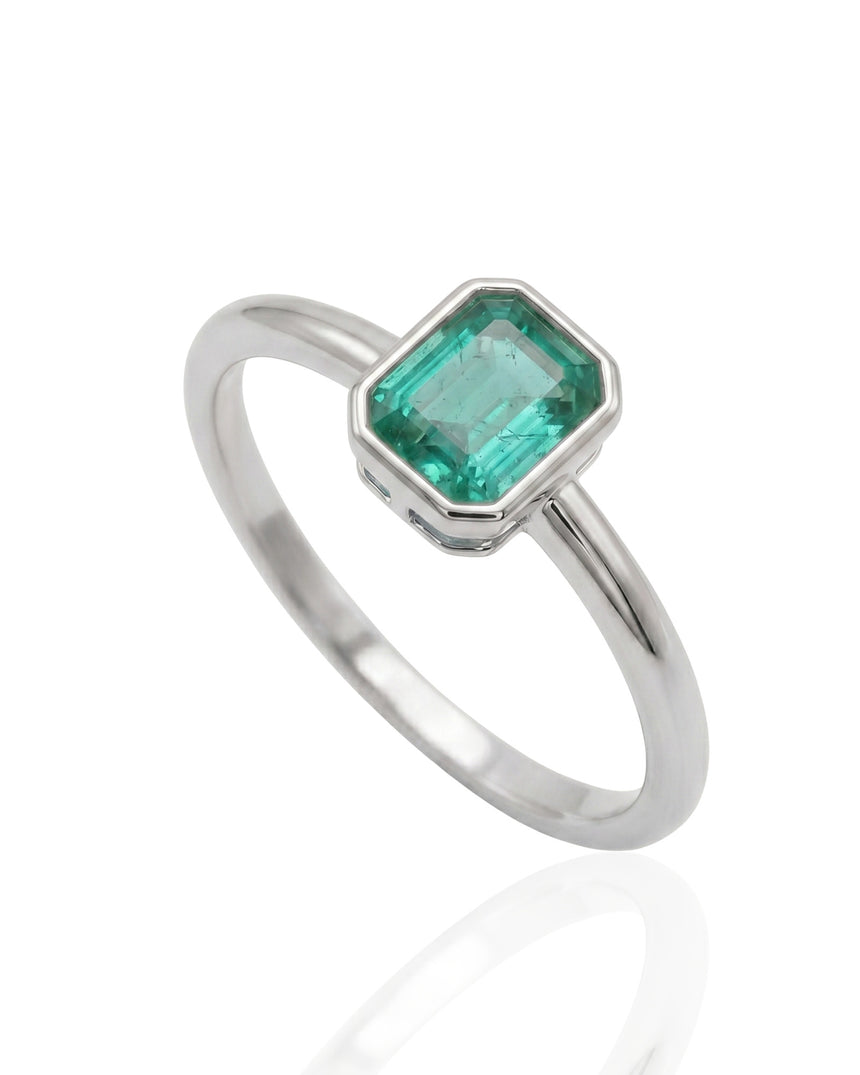
A vintage emerald engagement ring often includes milgrain, engraving, halos, or intricate details. These rings feel romantic and old-world, especially when paired with yellow gold or diamond accents. They are ideal for someone who loves jewelry with history and character.
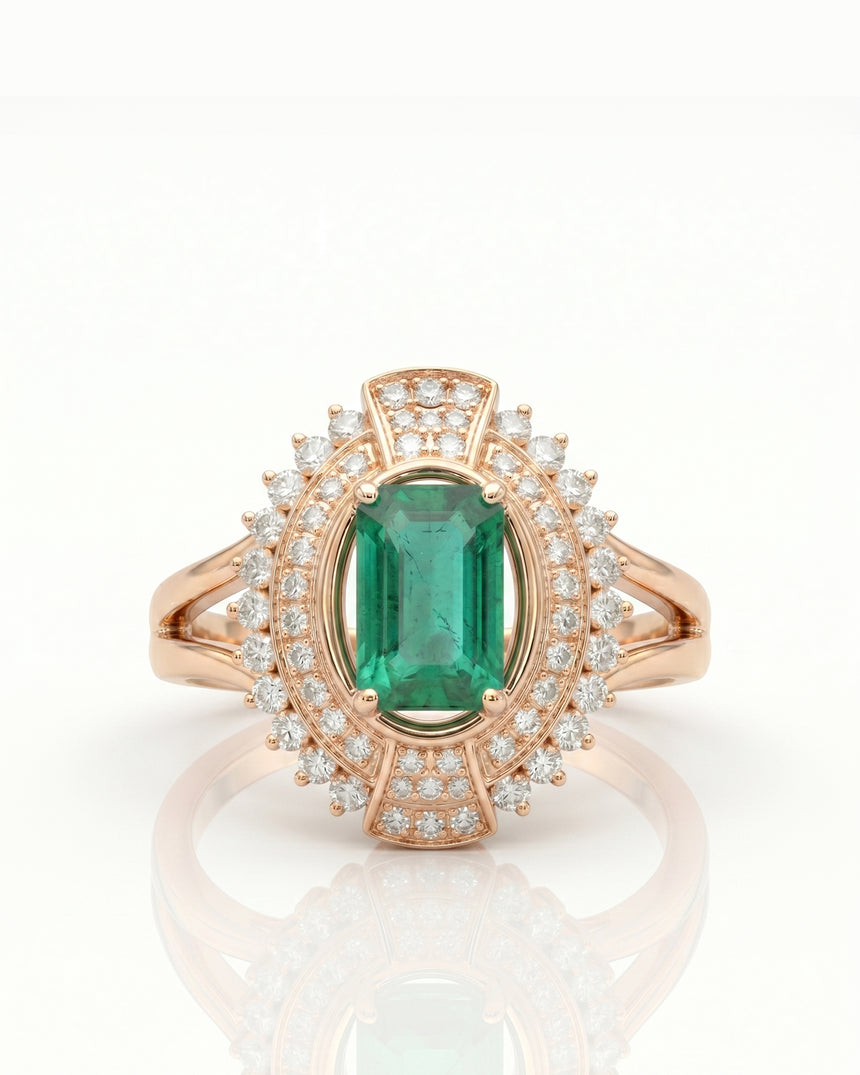
An emerald and diamond engagement ring adds brightness and contrast. Diamonds can frame the emerald, sit beside it, or form a halo around it. This style is excellent when you want the depth of emerald with the sparkle of diamonds.

Celebrity-Inspired Emerald Engagement Ring Styles
Emerald engagement rings have often been chosen by public figures and style icons because they feel distinctive. They are not the most expected choice, which is exactly why they stand out. Emerald rings tend to communicate personality, confidence, and individuality.
Celebrity-inspired emerald rings often feature bold shapes, large center stones, halo settings, vintage details, or unusual pairings. Pear-shaped emeralds can feel graceful and dramatic. Toi et moi designs can feel symbolic because they bring two stones together in one ring.

The lesson is not to copy a celebrity ring exactly. The useful idea is that emerald engagement rings work beautifully when the design reflects the person wearing it. The most memorable emerald rings are usually the ones with a clear personality.
Emerald Engagement Rings as a Statement of Personal Style
An emerald engagement ring is rarely chosen by someone who wants the most common option. It is often chosen by someone who wants meaning, color, and a ring that feels personal. The green gemstone immediately creates a different presence on the hand.
A sleek bezel emerald ring can feel modern and confident. A vintage halo can feel romantic and heirloom-like. A diamond-accented emerald ring can feel luxurious and formal. A simple solitaire emerald ring can feel refined and quietly powerful.
This is why the design matters as much as the gemstone. The emerald provides the color and symbolism, but the setting expresses the wearer’s style. A complete ring should feel visually beautiful and emotionally aligned.
Pros and Cons of Emerald Engagement Rings
Emerald engagement rings have many advantages. They offer a rich and distinctive look, strong symbolism, and a sense of individuality. They are ideal for someone who wants a ring that feels expressive rather than traditional.
Emeralds also have a timeless quality. Their green color has been admired for centuries, and they work beautifully in both vintage and modern designs. When paired with diamonds or fine metalwork, they can feel deeply luxurious.

There are also practical considerations. Emeralds need more care than diamonds and should be protected from strong impact. They also do not sparkle like diamonds because their beauty comes from color and depth, not brilliance. If you understand this, emerald becomes much easier to appreciate on its own terms.
What Makes an Emerald Engagement Ring Expensive?
The price of an emerald engagement ring depends on several factors. Color is the most important. A vivid, rich green emerald with strong saturation will usually cost more than a pale or dull stone.
Transparency and clarity also affect value. Since inclusions are expected, the most valuable emeralds are those that still look lively and clear enough to show their color beautifully. Stones with heavy cloudiness or distracting fractures are usually less desirable.

Carat weight also matters, especially when the emerald maintains good color and appearance in a larger size. Fine large emeralds are rare, so prices can rise quickly. Origin can also influence price, especially for fine Colombian emeralds.
Treatment level is another major factor. An emerald with minor treatment is usually more valuable than one with significant treatment, assuming the beauty is similar. Craftsmanship, metal choice, diamond accents, and setting design also affect the final price of the ring.
Enrich your knowledge with our uncut blog for Fancy Colored Diamonds: Fancy Colored Diamonds: The Ultimate Guide to Color, Rarity, Value, and Buying with Confidence
Certification: Why It Matters
Certification gives important information about an emerald engagement ring. A reputable gemological report can confirm whether the emerald is natural and may describe its treatment level. For higher-value emeralds, this documentation is especially helpful.
A certificate does not replace looking at the stone with your own eyes. Beauty still matters most. However, certification supports trust and transparency, especially when origin, treatment, or value are part of the decision.

When choosing a natural emerald engagement ring, ask whether documentation is available. This helps you understand what you are choosing and protects confidence in the purchase.
Emerald Engagement Ring Care Tips
Emerald rings should be cleaned gently. The safest method is warm water, mild soap, and a soft cloth. A very soft brush can be used carefully around the setting, but harsh scrubbing should be avoided.
Avoid ultrasonic cleaners and steam cleaners. These can be risky for emeralds because of natural inclusions and treatments. Strong vibrations or heat may affect the stone or its clarity enhancement.
Emerald rings should also be kept away from harsh chemicals, perfumes, cleaning products, and sudden impact. Remove the ring before exercise, heavy housework, gardening, or swimming. When storing it, keep it separate from harder gemstones to avoid scratches.
Regular professional checks are also helpful. A jeweler can inspect the setting, prongs, and overall condition of the stone. This is especially important for a ring worn every day.
Wedding Band Pairing with Emerald Engagement Rings
A wedding band should complement the emerald engagement ring without overpowering it. Because emerald already has strong color, the band should create balance. Simple metal bands often work beautifully because they allow the emerald to remain the focus.
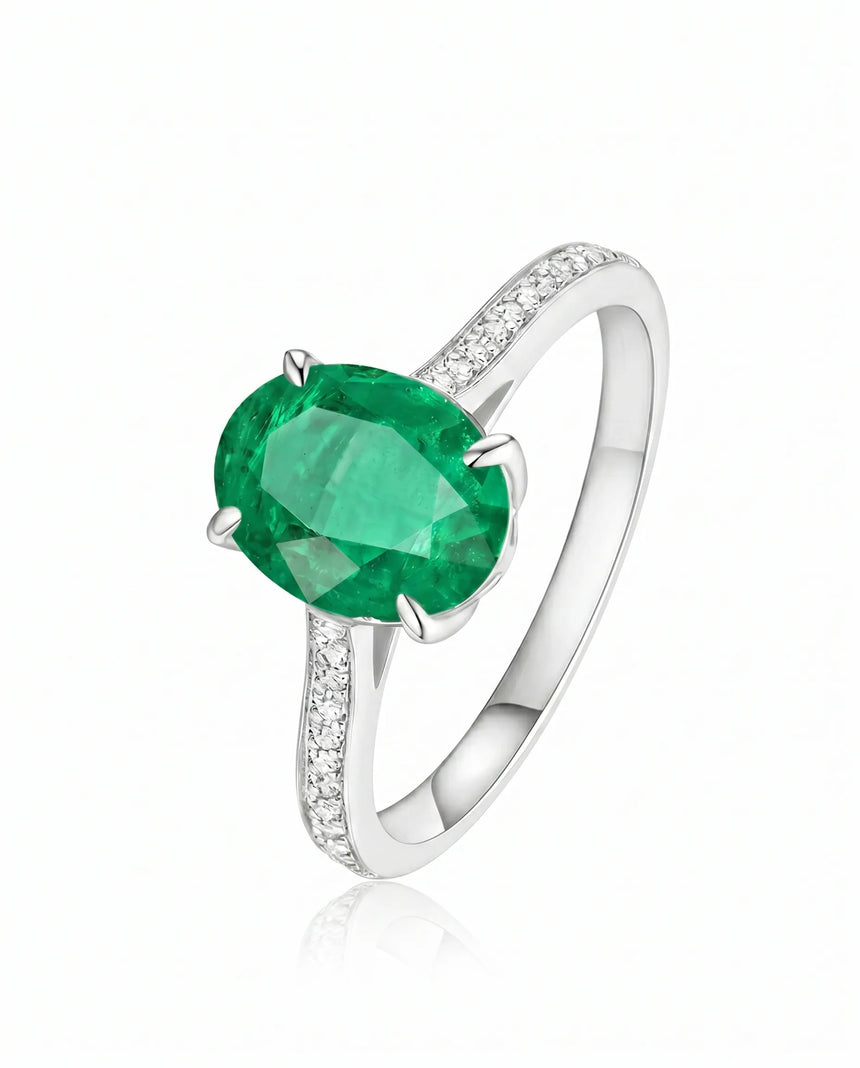
Diamond wedding bands can also pair well with emerald rings. They add brightness and contrast, especially when the engagement ring includes diamond accents. However, the band should sit comfortably beside the emerald ring and should not rub against the center stone or setting.
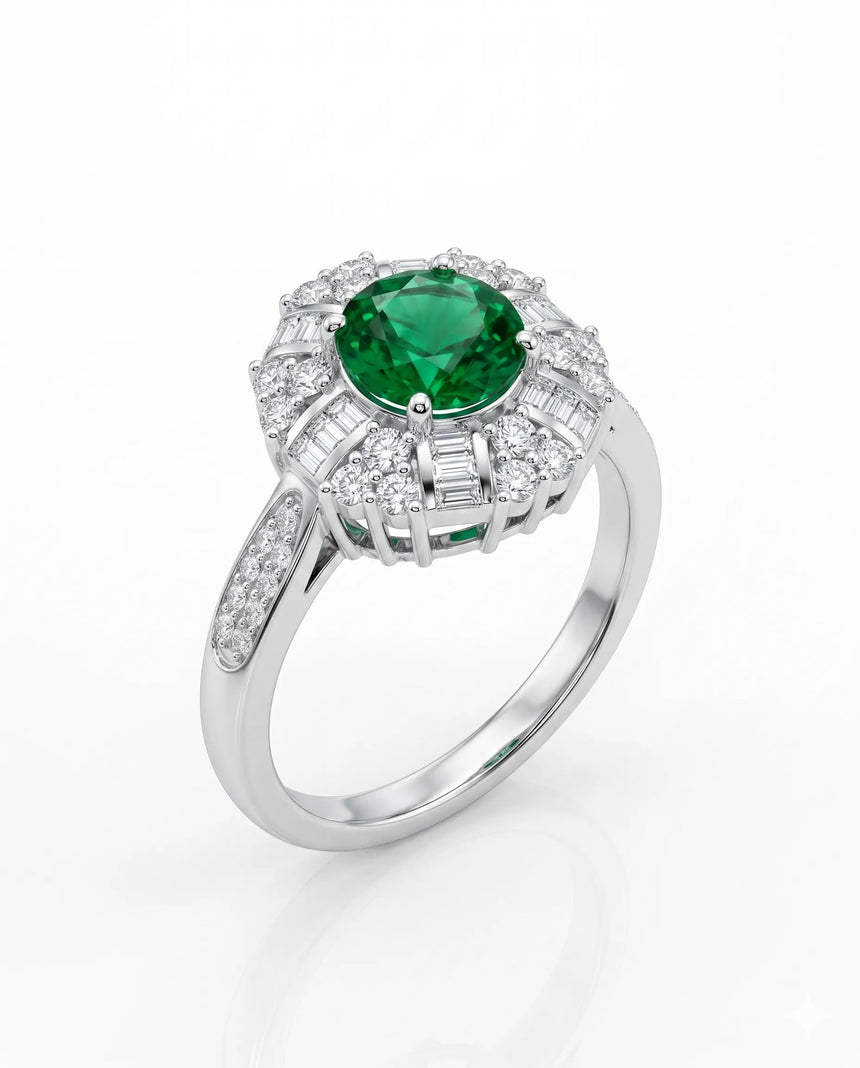
Curved or contoured bands can be useful if the emerald setting is low or unusually shaped. The goal is to create a comfortable pair that looks intentional together. A wedding band should support the engagement ring, not compete with it.
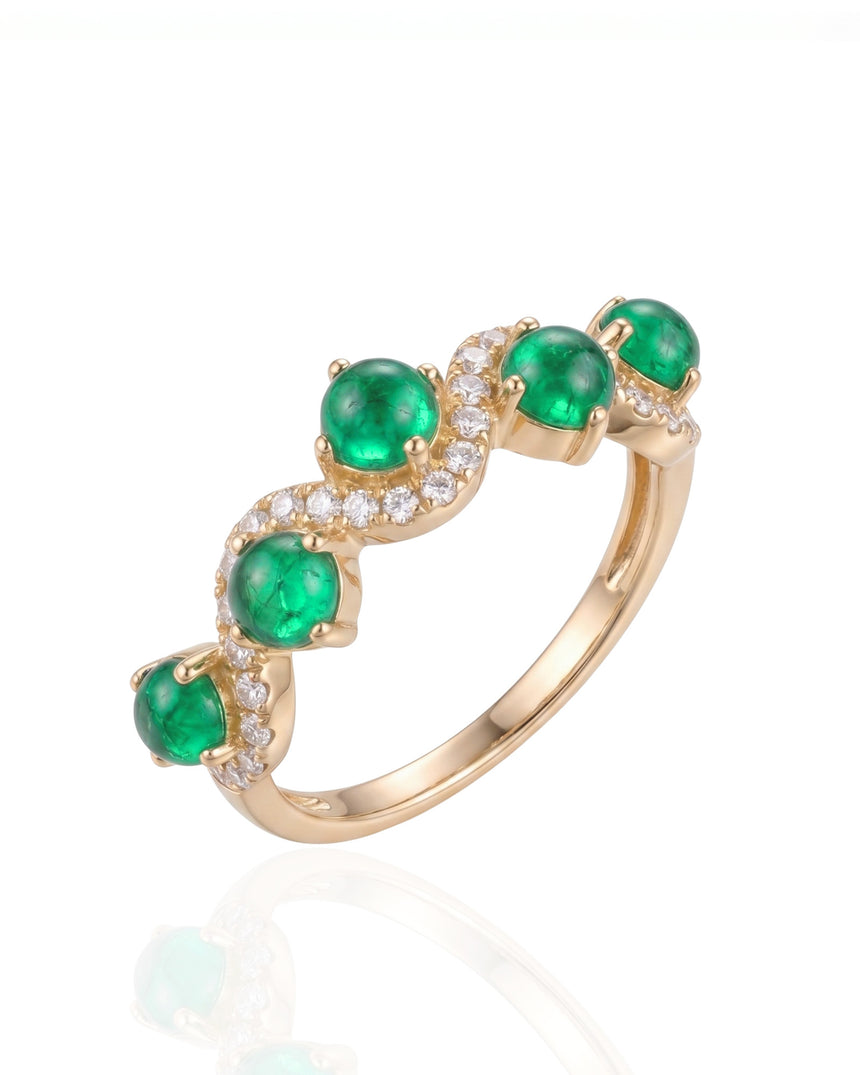
Emerald Engagement Ring vs Diamond Engagement Ring
Emerald and diamond engagement rings offer very different experiences. Diamonds are known for brilliance, hardness, and traditional engagement symbolism. They are extremely durable and often chosen for maximum sparkle.

Emeralds are known for color, meaning, and individuality. They do not sparkle in the same way as diamonds, but they offer a rich visual depth that diamonds cannot imitate. Their beauty is quieter, more expressive, and more character-driven.
The right choice depends on what feels more meaningful. If you want maximum brilliance and low-maintenance durability, diamond may feel more practical. If you want color, symbolism, and a ring that feels less expected, emerald may feel more personal.
How to Choose the Best Emerald Engagement Ring
Start with color. Look for a green that feels rich, lively, and balanced. Avoid stones that look too pale, too dark, or lifeless. The color should feel beautiful in different lighting, not only under strong showroom lights.
Next, examine clarity realistically. Natural inclusions are expected, but they should not dominate the stone or make it look cloudy. The emerald should still feel elegant, stable, and visually pleasing.
Then consider the setting. A protective design is very important, especially for daily wear. Bezel, halo, and well-made prong settings can all work when designed properly. Finally, choose a metal and style that match the wearer’s personality. The best emerald engagement ring is not simply the biggest or most expensive one. It is the one where color, character, protection, comfort, and meaning all come together.

At SARATTI, every emerald engagement ring is chosen with a focus on natural beauty, balance, and long-term wearability. The goal is not just to offer a gemstone, but to present a piece that feels meaningful and personal. Each design reflects careful attention to color, setting, and craftsmanship, so the ring feels right both visually and emotionally. This approach helps ensure that every emerald ring becomes something truly lasting.
Final Thoughts
An emerald engagement ring is a beautiful choice for someone who wants color, meaning, and individuality. It is not about chasing perfection. It is about choosing a gemstone with depth, character, and emotional presence.
At SARATTI, we believe an emerald engagement ring should feel personal from the beginning. The right ring should reflect the wearer’s style, the meaning behind the proposal, and the care taken in choosing something lasting. When color, setting, craftsmanship, and intention come together, the ring becomes more than jewelry.

With the right knowledge, emerald becomes a confident choice. Understand the color, respect the inclusions, ask about treatment, choose a protective setting, and care for the ring gently. When selected thoughtfully, an emerald engagement ring can become a lasting symbol of love, growth, and personal expression.


